预约演示
更新于:2025-12-20
CCR3 modulators(Boehringer Ingelheim)
更新于:2025-12-20
概要
基本信息
在研机构- |
权益机构- |
最高研发阶段无进展药物发现 |
首次获批日期- |
最高研发阶段(中国)- |
特殊审评- |
关联
100 项与 CCR3 modulators(Boehringer Ingelheim) 相关的临床结果
登录后查看更多信息
100 项与 CCR3 modulators(Boehringer Ingelheim) 相关的转化医学
登录后查看更多信息
100 项与 CCR3 modulators(Boehringer Ingelheim) 相关的专利(医药)
登录后查看更多信息
16
项与 CCR3 modulators(Boehringer Ingelheim) 相关的文献(医药)2025-04-08·ANALYTICAL CHEMISTRY
Uncovering the Mechanism of Protein Sulfination in Regulating Atherosclerotic Plaque Calcification via Fluorescence Imaging
Article
作者: Zhang, Shengyue ; Li, Guanghan ; Huang, Xiaoqing ; Zhou, Yinkao ; Gao, Wen ; Tang, Bo
Atherosclerotic plaque calcification is an oxidative-stress-dependent process involved in the onset of plaque disruption and subsequent atherothrombotic events. Excessive reactive oxygen species (ROS) production determines the structural modification of protein cysteine sulfhydryl (Cys-SH), leading to the alteration of protein functions and redox signaling outputs. Although these redox-centered signaling pathways have been found to play important roles in plaque calcification, the extent of protein Cys-SH modifications and the regulatory regions of specific proteins remains unclear. This is due to the lack of tools that can visually distinguish and characterize the oxidation products of different Cys-SH proteins, especially protein sulfination (Cys-SO2H). Herein, we present a novel "turn-on" fluorescent probe (Z-1) for the in situ visualization of Cys-SO2H modifications and investigate its effects on the initiation of vascular smooth muscle cell (VSMC) calcification. In vitro and in vivo imaging with Z-1, cigarette smoking-induced VSMC calcification, display a significant increase in protein Cys-SO2H levels. Protein spectrum analysis reveals that Cys-SO2H modification occurred at the sulfhydryl active sites of the Kelch-like ECH-associated protein (Keap1). These oxidative modifications are desired to dysregulate the ROS/Keap1/nuclear factor-E2-related factor 2 (Nrf2) antioxidant signaling pathway and accelerate the calcification process. Furthermore, elevated levels of Cys-SO2H observed in serum samples from patients with acute myocardial infarction and cerebral infarction give clinical evidence of the relevance of protein Cys-SO2H modification in pathological calcification.
2025-03-01·INTERNATIONAL IMMUNOPHARMACOLOGY
Bifidobacterium longum subsp. longum XZ01 delays the progression of colon cancer in mice through the interaction between the microbial spatial distribution and tumour immunity
Article
作者: Chen, Ying ; Li, Pei ; Chen, Yanlong ; Deng, Song ; Xiao, Xiaoyi ; Pei, Chaoying ; Cai, Kaiwei ; Zhang, Xingyuan ; Xie, Zhiyong ; Chen, Ye ; Wu, Jinyun ; Liao, Qiongfeng
Studies have shown that the colonisation of active microorganisms is more conducive to the development of tumour immunotherapy, but intuitive evidence regarding shaping of the tumour immune microenvironment is lacking. In this study, we used Bifidobacterium longum subsp. longum (XZ01) to intervene in a colon cancer mouse model and found that its mechanism may be related to the interaction between the spatial distribution of microorganisms and tumour immunity. Through the visualisation method we established, for the first time, we showed that harmful active bacteria such as Streptococcus and Rhodococcus specifically accumulate in the middle and upper layers of tumour tissue. These bacteria likely participate in signalling pathways that affect macrophages by directly contacting or invading the macrophages, leading to a nondifferentiated state in macrophages and the loss of some immune functions. Furthermore, the accumulation of Streptococcus and Rhodococcus fragments in the deep layer of tumour tissue likely upregulates the expression of IL-10 in tumour tissue and inhibits other immune cells, such as CD8+ T cells, DC and NK cells. In contrast, XZ01 can specifically compete for the growth sites of Streptococcus and Rhodococcus in the middle and upper layers of tumour tissue and probably protects macrophages from being invaded by harmful bacteria. XZ01 directly regulates the polarisation of M0 macrophages towards the M1 phenotype by upregulating IFN-γ, thus activating tumour immunity to inhibit the growth of tumour cells. This study revealed that the influence of active microorganisms on the tumour immune microenvironment is crucial for effective immunotherapy intervention, potentially offering new targets for improving patient prognosis.
2024-09-26·JOURNAL OF MEDICINAL CHEMISTRY
Discovery of 2-Aryl-4-aminoquinazolin-Based LSD1 Inhibitors to Activate Immune Response in Gastric Cancer
Article
作者: Chen, Xiao-Bing ; Zhang, Cheng ; Wang, Shu-Wu ; Dai, Xing-Jie ; Wang, Sai-Qi ; Liu, Hui-Min ; Wang, Shao-Peng ; Gao, Ya ; Wang, Bo ; Mardinoglu, Adil ; Zhou, Ying ; Ji, Shi-Kun ; Liu, Hong-Min ; Zheng, Yi-Chao
LSD1 (histone lysine-specific demethylase 1) has been gradually disclosed to act as an immunomodulator to enhance antitumor immune response. Despite the identification of numerous potent LSD1 inhibitors, there remains a lack of LSD1 inhibitors approved for marketing. Novel LSD1 inhibitors with different mechanisms are therefore needed. Herein, we reported a series of novel quinazoline-based LSD1 inhibitors. Among them, compound Z-1 exhibited the best LSD1 inhibitory activity (IC50 = 0.108 μM). Z-1 also acted as a selective and cellular active as an LSD1 inhibitor. Furthermore, Z-1 promoted response of gastric cancer cells to T-cell killing effect by decreasing PD-L1 expression and further attenuated the PD-1/PD-L1 interaction. In vivo, Z-1 exhibited significant suppression effect on the growth of gastric cancer cells without obvious toxicity. Therefore, Z-1 represents a potential novel immunomodulator that targets LSD1, providing a lead compound with new function mechanism for gastric cancer treatment.
100 项与 CCR3 modulators(Boehringer Ingelheim) 相关的药物交易
登录后查看更多信息
研发状态
10 条进展最快的记录, 后查看更多信息
登录
| 适应症 | 最高研发状态 | 国家/地区 | 公司 | 日期 |
|---|---|---|---|---|
| 自身免疫性疾病 | 药物发现 | 欧洲 | - | |
| 炎症 | 药物发现 | 欧洲 | - |
登录后查看更多信息
临床结果
临床结果
适应症
分期
评价
查看全部结果
| 研究 | 分期 | 人群特征 | 评价人数 | 分组 | 结果 | 评价 | 发布日期 |
|---|
No Data | |||||||
登录后查看更多信息
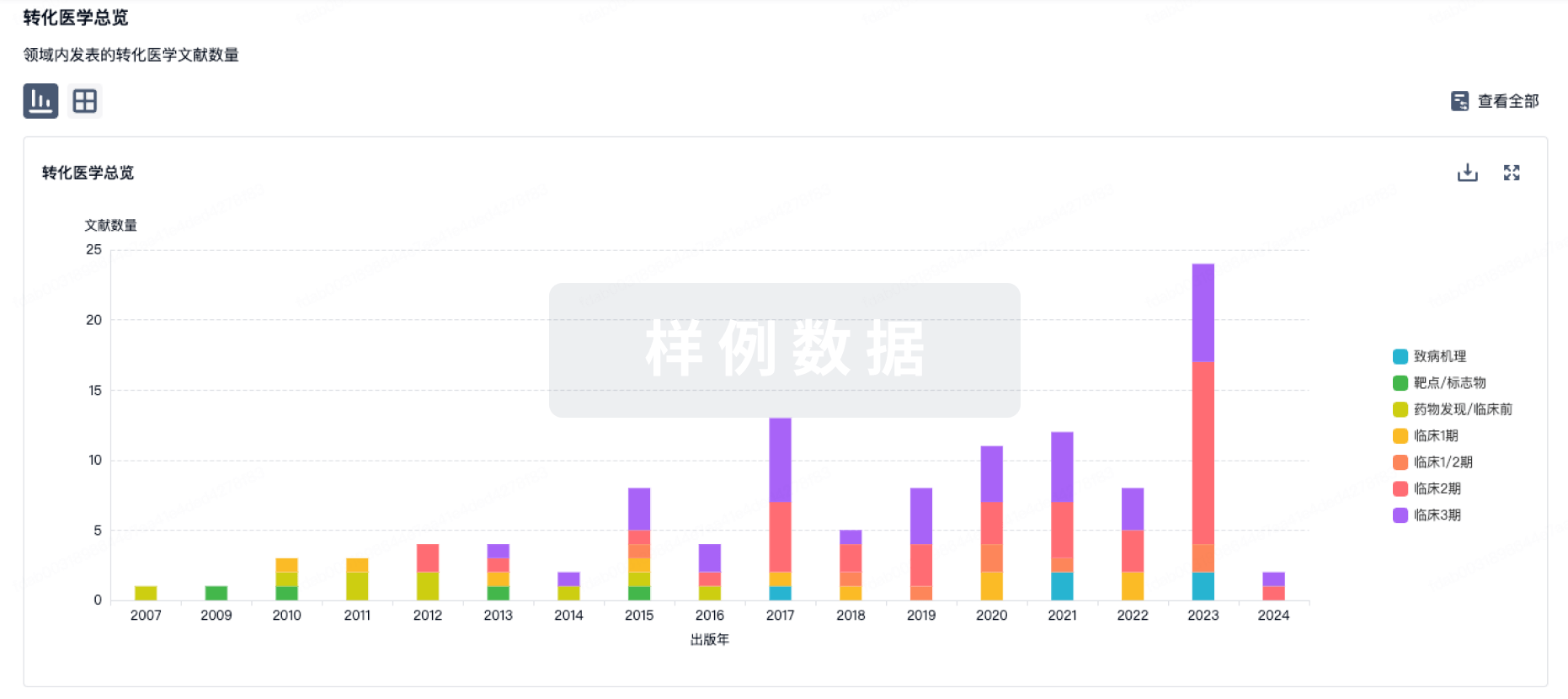
转化医学
使用我们的转化医学数据加速您的研究。
登录
或
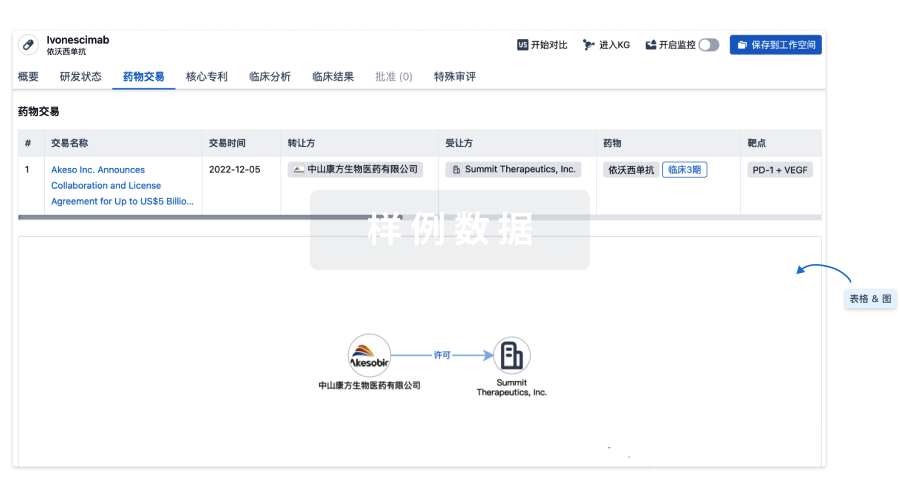
药物交易
使用我们的药物交易数据加速您的研究。
登录
或
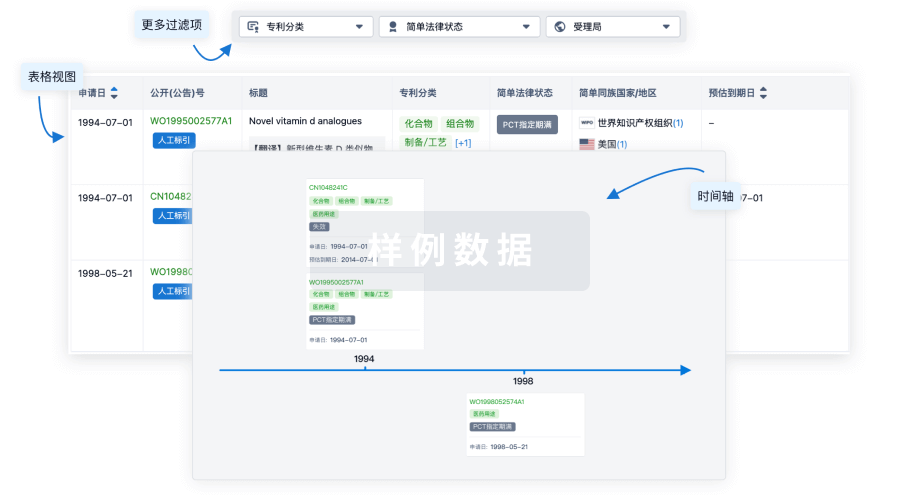
核心专利
使用我们的核心专利数据促进您的研究。
登录
或
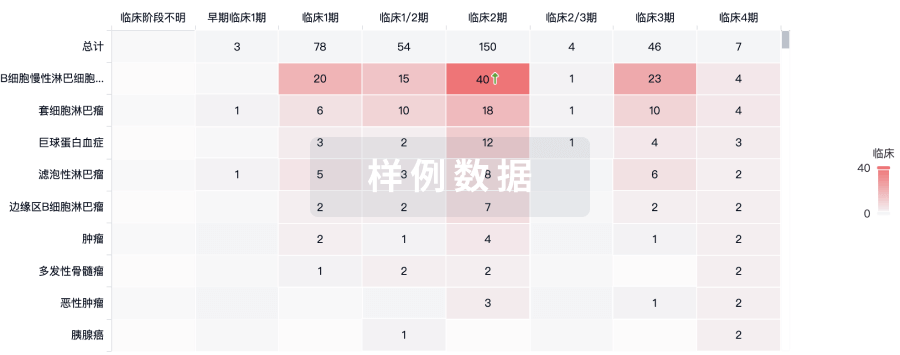
临床分析
紧跟全球注册中心的最新临床试验。
登录
或
批准
利用最新的监管批准信息加速您的研究。
登录
或
特殊审评
只需点击几下即可了解关键药物信息。
登录
或
生物医药百科问答
全新生物医药AI Agent 覆盖科研全链路,让突破性发现快人一步
立即开始免费试用!
智慧芽新药情报库是智慧芽专为生命科学人士构建的基于AI的创新药情报平台,助您全方位提升您的研发与决策效率。
立即开始数据试用!
智慧芽新药库数据也通过智慧芽数据服务平台,以API或者数据包形式对外开放,助您更加充分利用智慧芽新药情报信息。
生物序列数据库
生物药研发创新
免费使用
化学结构数据库
小分子化药研发创新
免费使用