预约演示
更新于:2026-09-05
GNKG-168
更新于:2026-09-05
概要
基本信息
药物类型 CpG ODN |
别名 CpG ODN、CPG-ODN、CPG 685 + [3] |
靶点 |
作用方式 激动剂 |
作用机制 TLR9激动剂(Toll样受体9激动剂) |
在研适应症- |
原研机构 |
在研机构- |
权益机构- |
最高研发阶段终止临床1期 |
首次获批日期- |
最高研发阶段(中国)- |
特殊审评- |


登录后查看时间轴
结构/序列
使用我们的RNA技术数据为新药研发加速。
登录
或
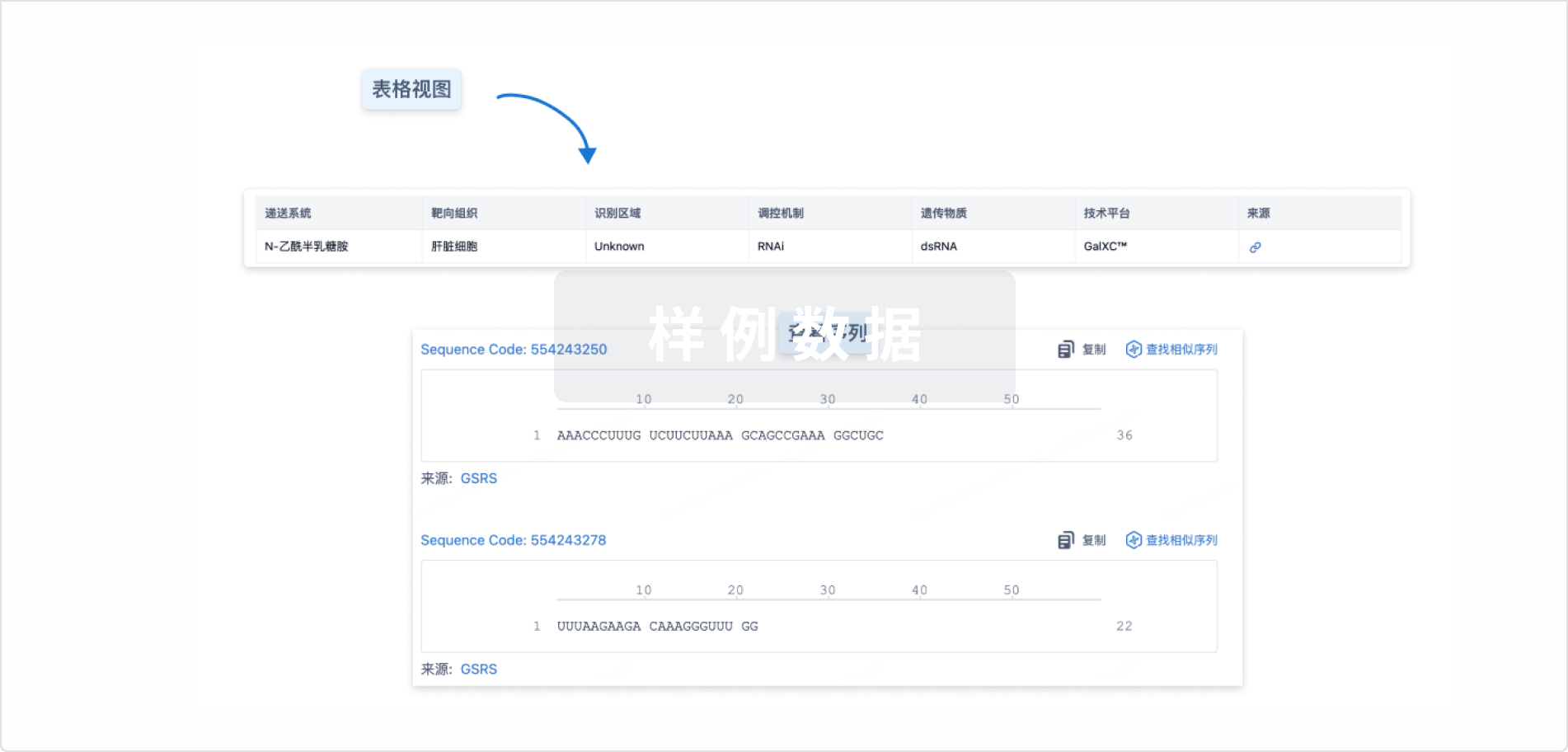
Sequence Code 29304404
来源: *****
关联
4
项与 GNKG-168 相关的临床试验ISRCTN17285423
A phase Ib, open-label, randomised, single-centre, multiple-dose-escalation study of the safety, tolerability, pharmacokinetics and pharmacodynamics of CpG ODN D35 after subcutaneous administration in participants with cutaneous leishmaniasis
ISRCTN15458851
A Phase I, double-blind, randomised, single-centre, parallel-group, single ascending dose, placebo-controlled study of the safety, tolerability, pharmacokinetics, and pharmacodynamics of CpG ODN D35 after subcutaneous administration in healthy male subjects
NCT01743807
A Phase I Study of GNKG168 in Pediatric Patients With Acute Lymphoblastic Leukemia or Acute Myeloid Leukemia (IND#113600)
100 项与 GNKG-168 相关的临床结果
登录后查看更多信息
100 项与 GNKG-168 相关的转化医学
登录后查看更多信息
100 项与 GNKG-168 相关的专利(医药)
登录后查看更多信息
808
项与 GNKG-168 相关的文献(医药)2026-07-01JOURNAL OF PHOTOCHEMISTRY AND PHOTOBIOLOGY B-BIOLOGY
Photothermal–immunotherapy enhances antitumor efficacy and modulates the tumor immune microenvironment in anaplastic thyroid carcinoma
Article
作者: Yang, Fan ; Xu, Yi ; Huang, Duping ; Huang, Yuqi
A combination of rapid disease progression and insufficient therapeutic options continues to complicate the clinical management of anaplastic thyroid carcinoma (ATC). The antitumor effect of photothermal therapy (PTT) arises from heat generated in situ, leading to tumor cell damage. However, its therapeutic efficacy is constrained by insufficient tissue penetration and inadequate immune activation, making complete tumor eradication challenging. Despite its ability to induce antitumor immune responses, CpG oligodeoxynucleotide (CpG ODN)-mediated immunotherapy shows limited efficacy as a standalone approach and does not sufficiently improve the immunosuppressive conditions within the tumor microenvironment. Photothermal therapy (PTT), when used alongside CpG ODN-mediated immunotherapy, may provide enhanced antitumor effects arising from their complementary functions. In this study, we developed a nanoplatform integrating CpG ODN-mediated immune activation with the photothermal properties of Fe3+-doped polydopamine for the treatment of ATC. Assessment of the nanoplatform revealed satisfactory compatibility in biological contexts, accompanied by reproducible photothermal conversion performance. In vitro assessment revealed enhanced dendritic cell maturation, accompanied by an increase in pro-inflammatory cytokine production following this treatment. The combined treatment, when evaluated in vivo, was linked to decreased tumor growth and coincided with immunogenic cell death, increased dendritic cell maturation, enhanced T cell infiltration, and alterations in the immunosuppressive tumor microenvironment. Use of the combinational strategy resulted in greater antitumor effects than monotherapies, accompanied by direct tumor ablation and the activation of systemic immune responses. A therapeutic benefit for ATC may be achieved through the integration of photothermal therapy with immunotherapy.
2026-06-25JOURNAL OF MEDICINAL CHEMISTRY
Development of Circular CpG Oligodeoxynucleotides for Prolonged Immunostimulation and Synergistic Antitumor Chemotherapy in Melanoma
Article
作者: Man, Yizhi ; Hu, Yuqiang ; Feng, Di ; Amu, Gubu ; Wang, Jing ; Wang, Qian ; Jing, Nannan ; Tang, Xinjing
Cancer immunotherapy harnesses the host immune system to treat tumors. TLR-9, a key bridge between innate and adaptive immunity, is activated by CpG oligodeoxynucleotides (ODNs). However, linear CpG ODNs suffer from rapid nuclease degradation in vivo, resulting in a short half-life and reduced immunostimulatory activity. Here, we developed covalently closed circular CpG ODNs based on FDA-approved sequences (1018 and 7909). The circular CpG ODNs exhibited superior nuclease resistance and significantly enhanced immunostimulatory activity in both human and murine immune cells. In the poorly immunogenic B16-F10 melanoma model, combining circular CpG ODNs with dacarbazine (DTIC) chemotherapy produced markedly stronger and more sustained antitumor efficacy, with enhanced tumor regression and improved survival, compared to linear CpG ODN/DTIC combinations. Our findings establish circular CpG ODNs as a promising platform for cancer immunotherapy, offering improved long-term stability and potent immunomodulatory capacity, particularly in combination with chemotherapy.
2026-06-01Drug Delivery and Translational Research
Intralesional injection of CpG ODNs complexed with glatiramer acetate mitigates systemic cytokine toxicities and synergistically advances checkpoint blockade efficacy
Article
作者: Forrest, Marcus Laird ; Abdelaziz, Moustafa M ; Gong, Huan ; Wu, Xiaoqing ; Griffin, J Daniel ; Groer, Chad E ; Berkland, Cory J ; Xu, Liang ; Li, Mengyue
PD-L1/PD-1 checkpoint inhibitors (CPIs) are mainstream agents for cancer immunotherapy, but the prognosis is unsatisfactory in solid tumor patients lacking preexisting T-cell reactivity. Adjunct therapy strategies including the intratumoral administration of immunostimulants aim to address this limitation. CpG oligodeoxynucleotides (ODNs), TLR9 agonists that can potentiate adaptive immunity, have been widely investigated to tackle PD-L1/PD-1 resistance, but clinical success has been hindered by inconsistent efficacy and immune-related toxicities caused by systemic exposure. Here, we utilized glatiramer acetate (GA), the FDA-approved, lysine-rich polypeptides to complex CpG into polycationic nanoparticles (R4B) and investigated the safety and antitumor efficacy of CpG ODNs in the murine CT26 colorectal carcinoma model. In a maximum tolerated dose study, repetitive R4B treatment displayed comparable antitumor efficacy to CpG alone treatment within a dose range from 15 µg to 150 µg while significantly attenuating systemic proinflammatory cytokine IL-6 release. A pharmacokinetic and biodistribution analysis confirmed that R4B localized and gradually released CpG around the lesions within 96 h while 'naked' CpG quickly diffused from the injection site. Genome-wide transcriptome analysis validated that R4B treatment activated prominent TLR9-driven immune system responses in both lesions and spleens. In a CT26 multiple tumor model, intratumoral administration of R4B generated systemic immune efficacy, evidenced by an abscopal effect on untreated tumors. Notably, R4B treatment accomplished these effects with mitigated systemic proinflammatory cytokines when compared with CpG alone. We further discovered that combining R4B with anti-PD-1 treatment led to the most pronounced effects on tumor growth and longest benefits to survival time. Our investigation into possible mechanisms underlying this phenomenon included increased recruitment of cytotoxic CD8+ T cells and natural killer (NK) cells to the tumor microenvironments and the reversal of PD-L1/PD-1 axis inhibition. In summary, these results warrant further investigation for safely improving clinical responses in CPI-resistant solid tumor patients with localized CpG ODN therapy.
14
项与 GNKG-168 相关的新闻(医药)2026-08-07
·中生药协
100 项与 GNKG-168 相关的药物交易
登录后查看更多信息
研发状态
10 条进展最快的记录, 后查看更多信息
登录
| 适应症 | 最高研发状态 | 国家/地区 | 公司 | 日期 |
|---|---|---|---|---|
| 复发性急性淋巴细胞白血病 | 临床1期 | 美国 | 2014-03-26 | |
| 治疗相关性急性髓系白血病 | 临床1期 | 美国 | 2014-03-26 | |
| 慢性淋巴细胞白血病 | 临床1期 | 美国 | 2009-09-01 |
登录后查看更多信息
临床结果
临床结果
适应症
分期
评价
查看全部结果
登录后查看更多信息
转化医学
使用我们的转化医学数据加速您的研究。
登录
或

药物交易
使用我们的药物交易数据加速您的研究。
登录
或

核心专利
使用我们的核心专利数据促进您的研究。
登录
或

临床分析
紧跟全球注册中心的最新临床试验。
登录
或

批准
利用最新的监管批准信息加速您的研究。
登录
或

特殊审评
只需点击几下即可了解关键药物信息。
登录
或

提出任何生物医药研究问题
让每一步生物医药决策都精准制胜
基于十亿级生物数据与全球情报的精准 AI,赋能早期药物发现
立即开始免费试用!
智慧芽新药情报库是智慧芽专为生命科学人士构建的基于AI的创新药情报平台,助您全方位提升您的研发与决策效率。
立即接入生物医药数据包
智慧芽新药库数据也通过智慧芽开放平台,以MCP或API服务形式对外开放。立即使用我们的MCP服务定制您的LLM智能体。
生物序列数据库
生物药研发创新
免费使用
化学结构数据库
小分子化药研发创新
免费使用