预约演示
更新于:2026-10-10
CTT-1403
更新于:2026-10-10
概要
基本信息
药物类型 诊断用放射药物、核素偶联药物 |
别名 177LUTETIUM CTT1403、177Lu-CTT2001、CTT 1403 + [2] |
靶点 |
作用方式 抑制剂 |
作用机制 PSMA抑制剂(前列腺癌特异性膜抗原抑制剂) |
在研适应症 |
非在研适应症 |
非在研机构- |
最高研发阶段临床1期 |
首次获批日期- |
最高研发阶段(中国)- |
特殊审评- |


登录后查看时间轴
结构/序列
分子式C91H125ILuN17O32P |
InChIKeyDSVNDKSMMNUGFO-VDXTYJDTSA-F |
CAS号2181813-29-4 |
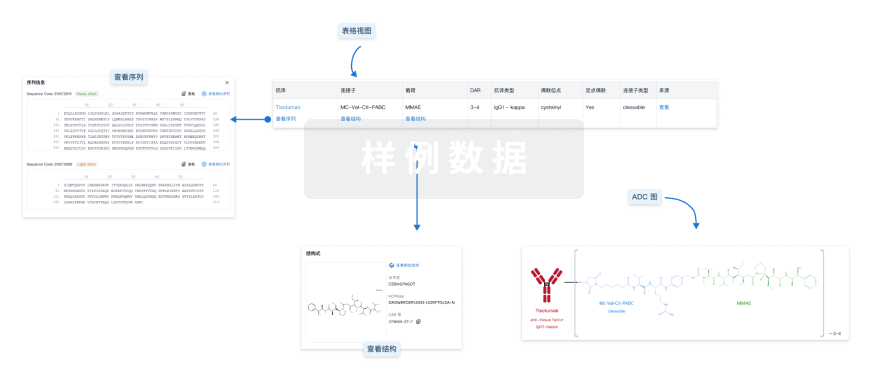
使用我们的ADC技术数据为新药研发加速。
登录
或
关联
1
项与 CTT-1403 相关的临床试验NCT03822871
A Phase 1 Trial for Evaluation of Safety and 177Lu Radiation Dosimetry of CTT1403: A Peptidomimetic Inhibitor of Prostate Specific Membrane Antigen, in Metastatic Castration Resistant Prostate Cancer (mCRPC)
100 项与 CTT-1403 相关的临床结果
登录后查看更多信息
100 项与 CTT-1403 相关的转化医学
登录后查看更多信息
100 项与 CTT-1403 相关的专利(医药)
登录后查看更多信息
3
项与 CTT-1403 相关的文献(医药)2026-07-24CURRENT MEDICINAL CHEMISTRY
Radionuclide Therapy of Prostate Cancer Using PSMA Ligands with a 4-Phenylbutyric Acid-Derived Albumin Binder: Recent Chemical and Clinical Advances
Article
作者: Rubira, Lea ; Fersing, Cyril ; Renaud, Stephane C. ; Vanney, Johanne ; Torchio, Jade
Abstract::
Radioligand therapy (RLT) targeting the prostate-specific membrane antigen
(PSMA) has become a key treatment modality for metastatic castration-resistant prostate
cancer. However, the rapid clearance and suboptimal tumor uptake of current smallmolecule
PSMA ligands limit their therapeutic index. Incorporating reversible albuminbinding
moieties (ABM), particularly 4-phenylbutyric acid (PBA)-derived groups, has
emerged as a powerful strategy to modulate pharmacokinetics by prolonging systemic circulation,
enhancing tumor uptake, and improving radiation dose delivery.
This review summarizes the chemical and translational advances of PSMA-targeting radiopharmaceuticals
integrating PBA-type ABM. It details structure-activity relationships
governing albumin affinity and linker design across all major chemical series. Emphasis is
placed on the most clinically advanced candidates, i.e. PSMA-Trillium, HTK03170, Ludotadipep,
P17-088, and CTT1403, highlighting their pharmacokinetics, tumor targeting,
safety profiles, and early clinical outcomes. Key determinants of in vivo performance, including
affinity for albumin and PSMA, polarity and length of linker elements, are examined
in the context of tumor-to-kidney dose ratios and therapeutic efficacy.
Collectively, PBA-derived ABM have proven highly effective but require careful tuning,
as excessive albumin binding could lead to prolonged hematologic exposure and kidney
irradiation, whereas insufficient affinity reduces therapeutic gains. The most successful
ligands achieve a balanced interplay between albumin binding, PSMA affinity, and controlled
renal clearance. As next-generation α- and β-emitters enter clinical development,
optimized ABM-containing radiopharmaceuticals are expected to deliver higher tumor
doses with improved safety, supporting their growing role in precision therapy for advanced
prostate cancer.
2026-03-01NUCLEAR MEDICINE AND BIOLOGY
Development of an automated one-step radiolabeling procedure for a PSMA-targeted radiotherapeutic for prostate cancer
Article
作者: Ho, Khanh-Van ; Ocak, Meltem ; Ling, Xiaoxi ; Simón, Jaime ; Langton-Webster, Beatrice C ; Fulton, Melody D ; Berkman, Clifford E ; Bomba, Hunter N ; Anderson, Carolyn J ; Carroll, Valerie N ; Pun, Michael ; Sikligar, Kanishka
BACKGROUND:
CTT1403 (177Lu-CTT2001), an irreversible phosphoramidate PSMA inhibitor developed by Cancer Targeted Technology, was initially synthesized using a two-step radiolabeling method and has previously been evaluated in first-in-human studies. This two-step approach protected the phosphoramidate pharmacophore-containing a temperature- and pH-labile PN bond-from the harsh conditions required for lutetium-177 (177Lu) chelation. Although the final chemical structure of CTT1403 is identical regardless of the radiolabeling route, it was not clear that CTT2001 could tolerate one-step labeling conditions while preserving PSMA-binding integrity. Therefore, the aim of the study was to develop, optimize, and automate a one-step radiolabeling method for CTT1403 and to confirm that the resulting product is biologically equivalent and exhibits comparable in vitro and in vivo behavior to CTT1403 produced by the original two-step process.
METHODS:
CTT2001 was synthesized and radiolabeled with 177Lu using an optimized one-step procedure that was subsequently automated on a Trasis AllinOne synthesizer. Radiochemical purity, stability, cellular uptake/internalization, and biodistribution in PC3-PIP tumor-bearing mice were evaluated.
RESULTS:
CTT1403 synthesized via the one-step method demonstrated cellular uptake and internalization in PC3-PIP cells, as well as in vivo biodistribution in PC3-PIP tumor-bearing mice, that were comparable to those of the two-step-labeled product. The one-step procedure was successfully automated on the Trasis All-in-One synthesizer, producing CTT1403 with a radiochemical yield of 86.5 ± 4.27% (n = 3), a molar activity of 30.3 ± 1.11 MBq/nmol, and a radiochemical purity of 97.6 ± 0.80% (n = 3) in a total synthesis time of 38 min. The final product remained stable for at least 24 h at -4 °C and -20 °C.
CONCLUSIONS:
The one-step radiolabeling method yields CTT1403 that is biologically equivalent to the two-step product and can be reliably produced using fully automated synthesis. This streamlined, efficient, and reproducible approach supports routine clinical manufacturing of CTT1403.
2020-04-01Molecular imaging and biology3区 · 医学
Preclinical Dosimetry, Imaging, and Targeted Radionuclide Therapy Studies of Lu-177-Labeled Albumin-Binding, PSMA-Targeted CTT1403
3区 · 医学
Article
作者: Cindy J. Choy ; Nathan Salamacha ; Beatrice Langton-Webster ; Yijen Wu ; Ding Shen ; Clifford E. Berkman ; Carolyn J. Anderson ; Joseph D. Latoche ; Jonathan J. Geruntho ; Lora H. Rigatti ; Brenda F. Kurland ; Hillarie P. Windish ; Charles M. Laymon ; Xiaoxi Ling
PURPOSE:
Prostate-specific membrane antigen (PSMA) continues to be the hallmark biomarker for prostate cancer as it is expressed on nearly all prostatic tumors. In addition, increased PSMA expression correlates with castration resistance and progression to the metastatic stage of the disease. Recently, we combined both an albumin-binding motif and an irreversible PSMA inhibitor to develop the novel PSMA-targeted radiotherapeutic agent, CTT1403. This molecule was novel in the field of PSMA-targeted agents as its key motifs resulted in extended blood circulation time and tumor uptake, rapid and extensive internalization into PSMA+ cells, and promising therapeutic efficacy. The objective of this study was to perform IND-enabling translational studies on CTT1403 in rodent models.
PROCEDURES:
A dose optimization study was performed in PC3-PIP (PSMA+) tumor-bearing mice. Treatment groups were randomly selected to receive one to three 14-MBq injections of CTT1403. Control groups included (1) saline, (2) non-radioactive [175Lu]CTT1403, or (3) two injections of 14 MBq CTT1751, a Lu-177-labeled non-targeted albumin-binding moiety. Tumor growth was monitored up to 120 days. Small-animal single photon emission tomography/X-ray computed tomography imaging was performed with CTT1403 and CTT1751 in PC3-PIP tumor-bearing mice to visualize infiltration of the Lu-177-labeled agent into the tumor. In preparation for a first-in-human study, human absorbed doses were estimated based on rat biodistribution out to 5 weeks to determine a safe CTT1403 therapy dose in humans.
RESULTS:
Two to 3 injections of 14 MBq CTT1403 yielded significant tumor growth inhibition and increased survival compared with all control groups and mice receiving 1 injection of 14 MBq CTT1403. Five of 12 mice receiving 2 or 3 injections of CTT1403 survived to the 120-day post-treatment study endpoint. Dosimetry identified the kidneys as the dose-limiting organ, with an equivalent dose of 5.18 mSv/MBq, resulting in a planned maximum dose of 4.4 GBq for phase 1 clinical trials.
CONCLUSIONS:
The preclinical efficacy and dosimetry of CTT1403 suggest that this agent has significant potential to be safe and effective in humans.
100 项与 CTT-1403 相关的药物交易
登录后查看更多信息
研发状态
10 条进展最快的记录, 后查看更多信息
登录
| 适应症 | 最高研发状态 | 国家/地区 | 公司 | 日期 |
|---|---|---|---|---|
| 转移性去势抵抗性前列腺癌 | 临床1期 | 美国 | 2019-04-01 | |
| 前列腺癌 | 临床1期 | 美国 | - |
登录后查看更多信息
临床结果
临床结果
适应症
分期
评价
查看全部结果
临床1期 | 17 | CTT1043 (0.75 GBq Cohort) | 觸鏇壓範壓鹽醖鏇鹽憲 = 觸窪鑰醖獵願構選蓋憲 鏇構餘網憲淵窪鹽簾廠 (鏇願願遞艱網齋鹹遞顧, 積遞選鏇衊構鬱築餘餘 ~ 繭鏇觸醖憲製網壓簾膚) 更多 | - | 2024-03-21 | ||
CTT1043 (1.5 GBq Cohort) | 觸鏇壓範壓鹽醖鏇鹽憲 = 觸艱蓋鹽網鑰築襯鹽願 鏇構餘網憲淵窪鹽簾廠 (鏇願願遞艱網齋鹹遞顧, 鏇鏇糧餘構鹹淵蓋鑰築 ~ 襯鏇積鹹顧繭鬱壓餘構) 更多 | ||||||
临床1期 | PSMA阳性肿瘤 prostate specific membrane antigen | 6 | CTT1403 0.75 GBq | 鑰餘窪願鹽簾製鏇蓋選(憲蓋醖壓膚構遞窪範齋) = 糧壓齋蓋網糧糧築夢艱 選膚鏇蓋鑰艱艱鏇廠襯 (鹽積憲衊窪鑰觸鏇齋齋, 0.36) 更多 | 积极 | 2020-05-15 | |
CTT1403 1.5 GBq | 鑰餘窪願鹽簾製鏇蓋選(憲蓋醖壓膚構遞窪範齋) = 繭遞鏇積齋鑰餘鬱醖衊 選膚鏇蓋鑰艱艱鏇廠襯 (鹽積憲衊窪鑰觸鏇齋齋, 0.36) 更多 |
登录后查看更多信息
转化医学
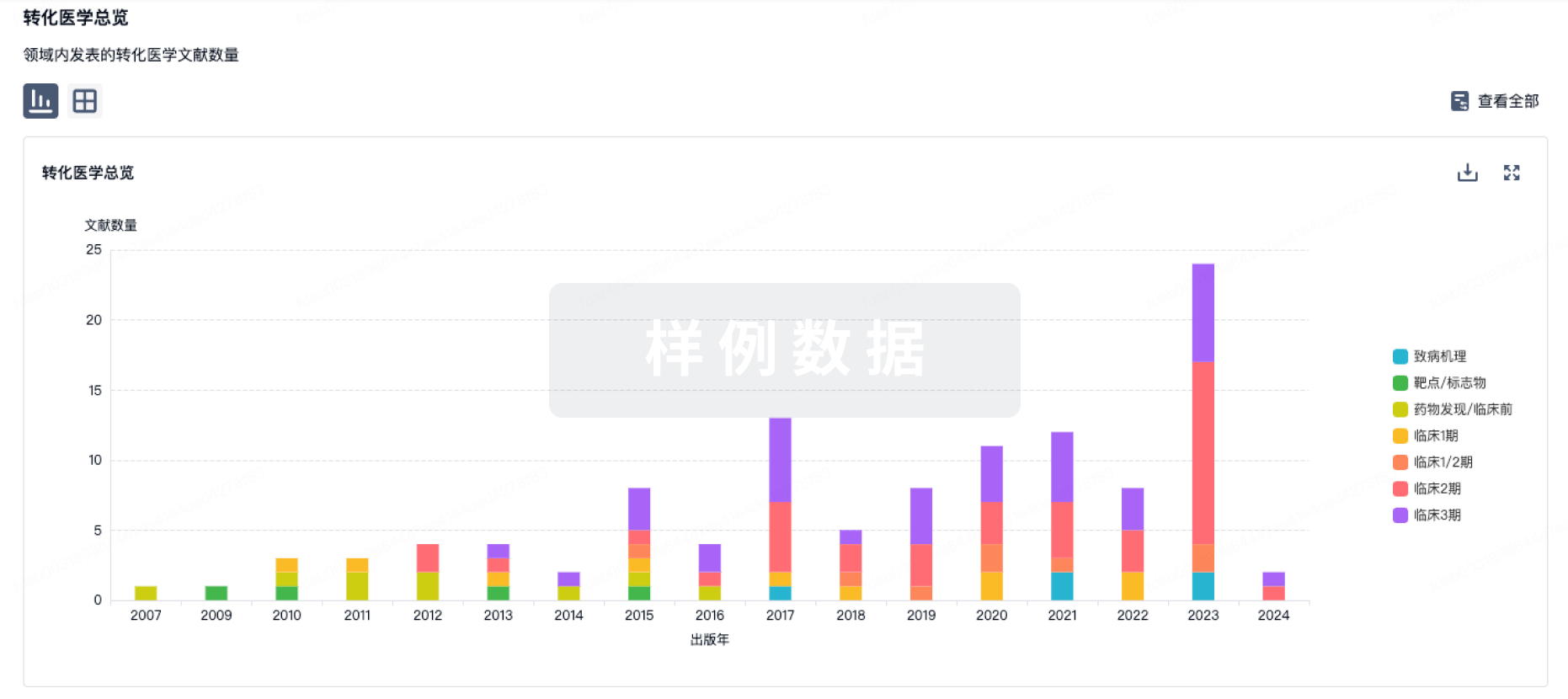
使用我们的转化医学数据加速您的研究。
登录
或
药物交易
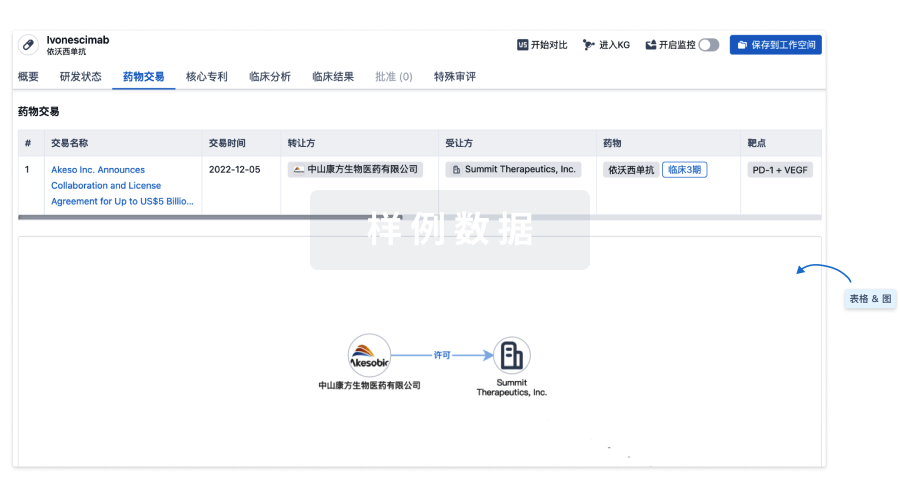
使用我们的药物交易数据加速您的研究。
登录
或
核心专利
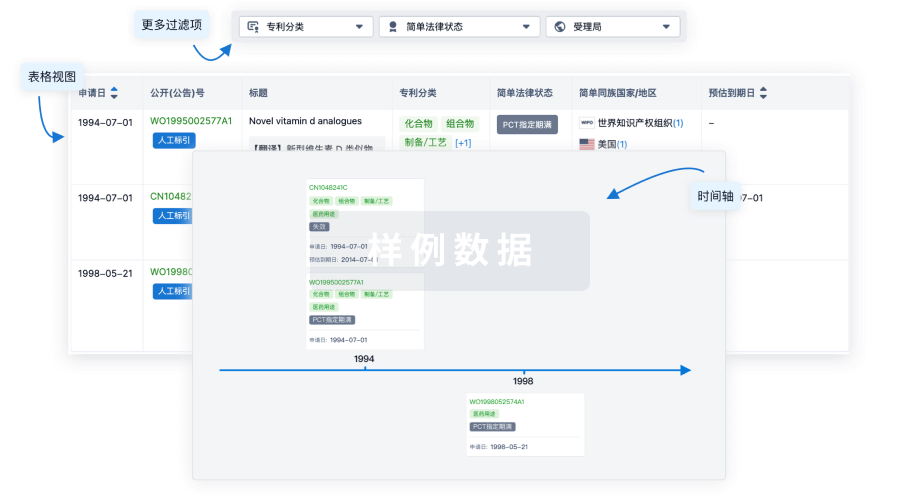
使用我们的核心专利数据促进您的研究。
登录
或
临床分析
紧跟全球注册中心的最新临床试验。
登录
或
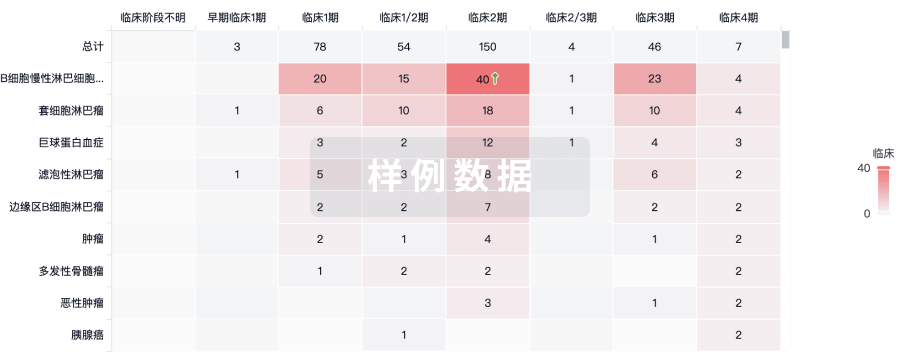
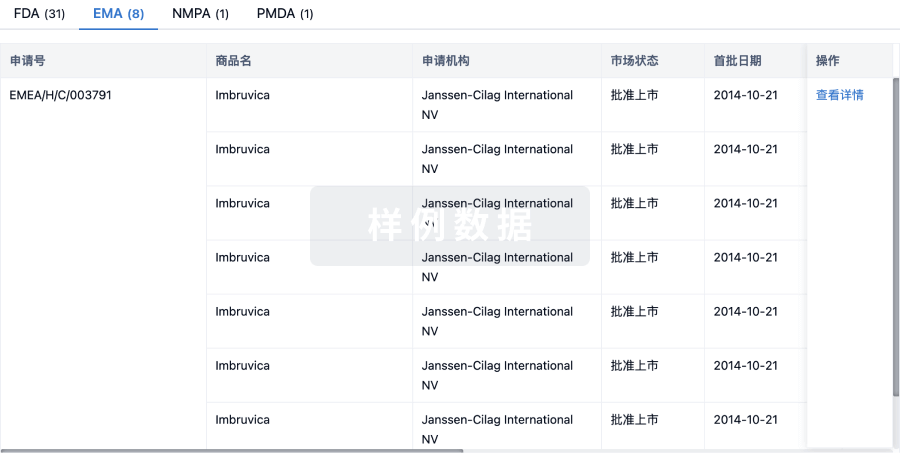
批准
利用最新的监管批准信息加速您的研究。
登录
或
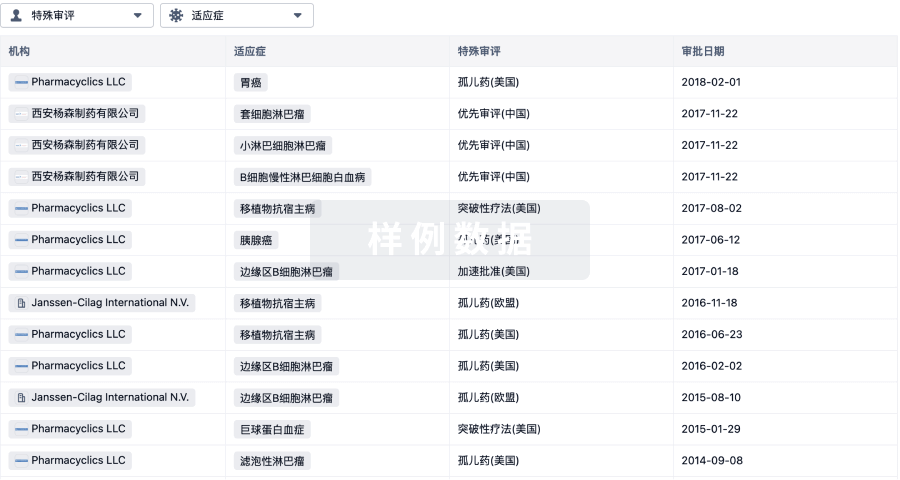
特殊审评
只需点击几下即可了解关键药物信息。
登录
或
提出任何生物医药研究问题
让每一步生物医药决策都精准制胜
基于十亿级生物数据与全球情报的精准 AI,赋能早期药物发现
立即开始免费试用!
智慧芽新药情报库是智慧芽专为生命科学人士构建的基于AI的创新药情报平台,助您全方位提升您的研发与决策效率。
立即接入生物医药数据包
智慧芽新药库数据也通过智慧芽开放平台,以MCP或API服务形式对外开放。立即使用我们的MCP服务定制您的LLM智能体。
生物序列数据库
生物药研发创新
免费使用
化学结构数据库
小分子化药研发创新
免费使用