预约演示
更新于:2026-08-11
Glycopeptide (ProtoKinetix)
更新于:2026-08-11
概要
基本信息
非在研机构- |
权益机构- |
最高研发阶段临床1期 |
首次获批日期- |
最高研发阶段(中国)- |
特殊审评- |

登录后查看时间轴
关联
100 项与 Glycopeptide (ProtoKinetix) 相关的临床结果
登录后查看更多信息
100 项与 Glycopeptide (ProtoKinetix) 相关的转化医学
登录后查看更多信息
100 项与 Glycopeptide (ProtoKinetix) 相关的专利(医药)
登录后查看更多信息
1,355
项与 Glycopeptide (ProtoKinetix) 相关的文献(医药)2026-12-01·Molecular & general genetics : MGG
Staphylococcus aureus resistance to non-β-lactam antibiotics: global genomic epidemiology and machine learning feasibility assessment
Article
作者: AlAbdulhadi, Saleh A S ; Hassan, Lina A ; Ahmed, Ahmed Shihab ; Sholeh, Mohammad ; Ahmed, Ali Batool ; Alazzam, Malik Bader ; Sharma, M K ; Najim, Maryam Abdulrahman ; Al-Khafaji, Zahraa Abbas ; Chaki, Saeid Sadeghi Ghazi
Staphylococcus aureus is increasingly resistant to β-lactam antibiotics, making non-β-lactam cell-wall-targeting drugs crucial alternatives. Growing resistance to these agents highlights the need to identify genomic factors influencing susceptibility. Machine learning can integrate genomic and phenotypic data to predict minimum inhibitory concentrations (MICs) and uncover resistance mechanisms across time and regions. We obtained 112,360 S. aureus genomes from NCBI GenBank (March 2024), applying quality filters and standardizing metadata. Resistance genes and mutations were identified using AMRFinderPlus and CARD, focusing on glycopeptide, lipopeptide, bacitracin, and fosfomycin resistance. MICs for five antibiotics were compiled, standardized, and log₂-transformed for analysis. Allelic profiles for seven housekeeping genes were assigned using PubMLST's BIGSdb and MLST CLI v2.19.0. Temporal and geographic resistance trends were modeled using logistic regression and statistical tests. Machine learning models (Random Forest, XGBoost, Elastic Net, Partial Least Squares (PLS)) predicted MICs from genomic features, with performance assessed via cross-validation. Statistical analyses and visualizations were performed in R, with all data and scripts provided for reproducibility. We analyzed 111,350 S. aureus genomes from 137 countries, with 78% from clinical sources, 10% from environmental, veterinary, or food-related origins, and some from animals. Glycopeptide MICs were low across all sources: vancomycin (0.96 µg/mL) and teicoplanin (0.52 µg/mL), while daptomycin showed more variability (0.44 µg/mL). Fosfomycin resistance genes, particularly fosB, were detected in 65.3% of genomes overall, with significantly higher prevalence in clinical isolates (32.5%) compared to environmental (2.1%), food (4.0%), and animal sources (7.5%). Bacitracin resistance genes (bcrAB) were detected in 6.2% of clinical isolates versus 1.3% environmental and 2.8% animal sources. However, phenotypic MIC data were severely limited (fosfomycin n = 1, bacitracin n = 1), precluding validation of genotype-phenotype correlations and limiting epidemiological interpretation to genetic prevalence alone. Resistance to glycopeptides and lipopeptides remained rare (< 0.1%). Fosfomycin resistance protein B (fosB) resistance increased by 0.20% annually, especially in clinical and animal sources, while other mutations like glpT_V213I and murA_D278E declined. Geographic trends showed fosB resistance exceeded 50% in North America, Europe, and South America, with MurA_G257D most prevalent in the Middle East. Machine learning models showed moderate predictive performance for daptomycin MICs (R² = 0.49), with mprF mutations as key predictors, but demonstrated poor accuracy for glycopeptides (vancomycin R² = 0.05; teicoplanin R² = -0.13) due to extremely limited MIC variability in the dataset. Fosfomycin and bacitracin models could not be trained due to insufficient phenotypic data (n = 1 each). This study highlights the growing challenge of S. aureus resistance, especially to non-β-lactam antibiotics such as fosfomycin and bacitracin, with clinical isolates showing the highest resistance. Geographic and temporal trends indicate an increasing prevalence of fosB resistance, particularly in clinical and animal sources. Machine learning models failed to predict glycopeptide MICs (vancomycin R² = 0.05; teicoplanin R² = -0.13) due to limited phenotypic variability, achieved moderate success for daptomycin (R² = 0.49), and could not be trained for fosfomycin and bacitracin (n = 1 MIC measurement each) despite high genetic prevalence of resistance determinants. These findings emphasize the critical need for integrated genomic and phenotypic surveillance, and highlight fundamental data requirements for ML-based resistance prediction.
2026-10-01·Neural Regeneration Research
Lycium barbarum glycopeptide protects neurons from amyloid-beta toxicity
Article
作者: Chen, Zihang ; So, Kwok-Fai ; Wang, Simin ; Wu, Zelin ; Chiu, Kin ; Zheng, Xiaofei ; Wang, Huajun ; Wang, Xiao
Abstract:
Oligomeric amyloid-beta deposition within neurons and its associated neurotoxicity are among the most direct indicators of the onset of Alzheimer’s disease. Investigations into strategies aimed at reducing amyloid-beta accumulation or promoting its clearance in neurons are currently being carried out.
Lycium barbarum
glycopeptide is rich in biologically active compounds and possesses antioxidant, anti-inflammatory, and neuroprotective properties. This study verified that the oligomer amyloid-beta1–42 induced toxic effects in mouse N2a neuroblastoma cells, resulting in elevated levels of reactive oxygen species and increased expression of the inflammatory enzyme inducible nitric oxide synthase.
Lycium barbarum
glycopeptide counteracted these effects by alleviating cell damage, enhancing cell viability, reducing the levels of reactive oxygen species and inducible nitric oxide synthase expression, and up-regulating the mRNA levels of antioxidant enzymes, including superoxide dismutase 1, superoxide dismutase 2, and glutathione peroxidase 4.
Lycium barbarum
glycopeptide also activated the phosphoinositide 3-kinase/Akt/p70S6K signaling pathway and promoted the expression of brain-derived neurotrophic factor, thus exerting neuroprotective effects. These findings indicate that
Lycium barbarum
glycopeptide may be a promising candidate for the treatment of Alzheimer’s disease.
2026-09-01·EUROPEAN JOURNAL OF CELL BIOLOGY
Immunogenicity of mRNA encoded MUC1 glycopeptides toward CAR-T cells
Article
作者: Wang, Nian ; Lai, Hanyu ; He, Yu ; Zhou, Bingchen ; Xu, Chenguang ; Mai, Xinjia ; Wang, Peng George ; Tong, Jiao ; Zhu, Chenxi ; Ji, Zhaohui ; Wang, Jingxia ; Zhou, Dapeng
Vaccines and antibodies targeting hypoglycosylated glycoproteins have been focus of cancer immunotherapy. mRNA vaccines have shown success in inducing effective T cell immunity and antibody responses to viral glycoproteins and tumor antigens. However, the immunogenicity of mRNA-encoded cancer glycoproteins such as MUC1 remains unknown. In this study, we employed chimeric antigen receptor T cells as a caliber to measure the signaling strength of MUC1 glycopeptides encoded by mRNA vaccines. The results showed that glycopeptide within a single tandem repeat showed higher stimulation than glycopeptide bearing multiple tandem repeat sequence. Furthermore, more than five-fold higher stimulation was achieved when MUC1 glycopeptide was fused to GPI-anchor. Molecular mobility of glycopeptide antigens was measured by total internal reflection fluorescence microscopy, and glycosylphosphatidylinositol (GPI)-anchored MUC1 antigens showed faster diffusion than MUC1 glycopeptide with its own transmembrane domain. Our study reveals complex mechanisms by which the glycoproteins interacts with CAR-T cells. The combined used of mRNA vaccines targeting CAR-T cells with those targeting B cells, may be further studied to synergize the cellular and humoral arms of immunity.
100 项与 Glycopeptide (ProtoKinetix) 相关的药物交易
登录后查看更多信息
研发状态
10 条进展最快的记录, 后查看更多信息
登录
| 适应症 | 最高研发状态 | 国家/地区 | 公司 | 日期 |
|---|---|---|---|---|
| 黄斑变性 | 临床1期 | 美国 | 2022-06-09 |
登录后查看更多信息
临床结果
临床结果
适应症
分期
评价
查看全部结果
| 研究 | 分期 | 人群特征 | 评价人数 | 分组 | 结果 | 评价 | 发布日期 |
|---|
No Data | |||||||
登录后查看更多信息
转化医学
使用我们的转化医学数据加速您的研究。
登录
或

药物交易
使用我们的药物交易数据加速您的研究。
登录
或

核心专利
使用我们的核心专利数据促进您的研究。
登录
或

临床分析
紧跟全球注册中心的最新临床试验。
登录
或

批准
利用最新的监管批准信息加速您的研究。
登录
或

生物类似药
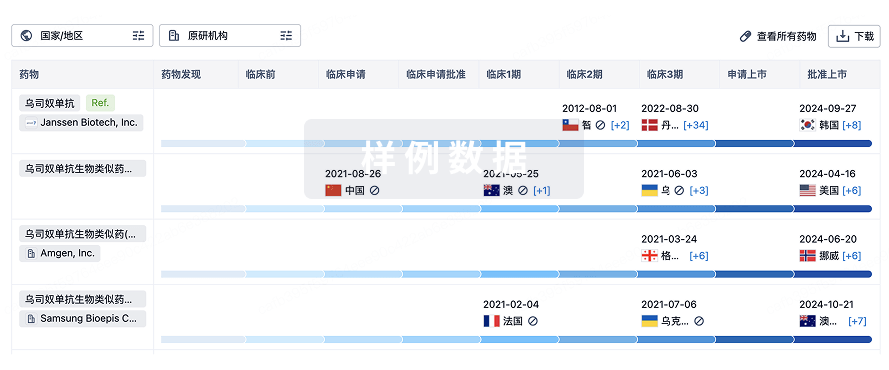
生物类似药在不同国家/地区的竞争态势。请注意临床1/2期并入临床2期,临床2/3期并入临床3期
登录
或
特殊审评
只需点击几下即可了解关键药物信息。
登录
或

提出任何生物医药研究问题
让每一步生物医药决策都精准制胜
基于十亿级生物数据与全球情报的精准 AI,赋能早期药物发现
立即开始免费试用!
智慧芽新药情报库是智慧芽专为生命科学人士构建的基于AI的创新药情报平台,助您全方位提升您的研发与决策效率。
立即接入生物医药数据包
智慧芽新药库数据也通过智慧芽开放平台,以MCP或API服务形式对外开放。立即使用我们的MCP服务定制您的LLM智能体。
生物序列数据库
生物药研发创新
免费使用
化学结构数据库
小分子化药研发创新
免费使用