预约演示
更新于:2025-12-09
Pepsin
胃蛋白酶
更新于:2025-12-09
概要
基本信息
原研机构 |
在研机构 |
非在研机构- |
权益机构- |
最高研发阶段批准上市 |
首次获批日期 中国 (1982-01-01), |
最高研发阶段(中国)批准上市 |
特殊审评- |

登录后查看时间轴
结构/序列
Sequence Code 57332638

来源: *****
关联
100 项与 胃蛋白酶 相关的临床结果
登录后查看更多信息
100 项与 胃蛋白酶 相关的转化医学
登录后查看更多信息
100 项与 胃蛋白酶 相关的专利(医药)
登录后查看更多信息
413
项与 胃蛋白酶 相关的文献(医药)2026-12-01·MOLECULAR BIOLOGY REPORTS
Anti-diabetic effect of camel milk and protein hydrolysates in rat model
Article
作者: Kapila, Rajeev ; Khan, Suhail Hakeem ; Devi, Usha ; Kapila, Suman ; Yadav, Radha ; Meena, Sunita
BACKGROUND:
Camel (Camelus dromedarius) milk has been traditionally valued for its therapeutic properties, for intense managing autoimmune and metabolic disorders. Due to its unique composition, camel milk is more digestible than bovine milk and contains bioactive components with potential anti-diabetic effects. This study investigates the insulinotropic and anti-diabetic potential of enzymatically hydrolyzed camel milk proteins, focusing on their effects on insulin secretion, β-cell proliferation, and metabolic regulation in streptozotocin-induced diabetic rats.
METHODS AND RESULTS:
Camel milk casein and whey proteins were hydrolyzed using pepsin, trypsin, and chymotrypsin. In vitro assays using RIN-5F β-cells revealed that pepsin- and trypsin-derived whey protein hydrolysates significantly enhanced β-cell proliferation and insulin secretion. In vivo, oral administration of camel milk and its hydrolysates improved glycemic control, insulin sensitivity, and body weight in diabetic rats. Biochemical and molecular studies further demonstrated favorable modulation of hepatic enzyme activity, lipid profiles, renal and liver function markers, along with significantly changes (*P < 0.05) in hepatic gene, Pepck, G6Pase, HMG-CoA, CYP7A1, and GLUT2 expression in diabetic rats compared to non-diabetic controls.
CONCLUSIONS:
The findings highlight the therapeutic potential of camel milk proteins and its pepsin- hydrolysed whey protein hydrolysates for functional dietary interventions in diabetes management by inhibiting enzymes involved in diabetes and modulation of hepatic gene expression with improvement of β-cell function.
2025-12-01·FOOD RESEARCH INTERNATIONAL
Characterization of different types of micellar casein isolates and comparison of their enzymatic coagulation behavior by chymosin and pepsin
Article
作者: Nielsen, Søren Drud-Heydary ; Bjørnshave, Ann ; Sangild, Per Torp ; Larsen, Lotte Bach ; Rodriguez, Hugo Alberto Vigil ; Morawska, Luiza Patrycja ; Li, Mengjia ; Poulsen, Nina Aagaard
Micellar casein isolate (MCI) and modified MCI (plasmin-treated MCI [PMCI], and calcium-reduced MCI [CaMCI]) were characterized to assess their potential applications in infant formula. Structural traits (protein composition, solubility, turbidity, particle size) and functional properties (enzyme-induced coagulation, hydrolysis) were systematically assessed, providing critical insights into gastric clotting and digestion behavior. Firstly, the protein profiling result proved that the degradation fragment peaks appeared in PMCI. Then, six kinds of protein blends were prepared by using different types of MCI and whey protein concentrate (WPC) at both human (40:60 w/w casein:whey) and bovine (80:20 w/w casein:whey) milk-equivalent ratios, the bovine milk was used as reference. For the 40:60 ratios mixtures, PMCI: WPC and CaMCI:WPC had better solubilities than normal MCI:WPC. Furthermore, CaMCI:WPC blends showed the lowest turbidity of both ratios (40:60 and 20:80). After the pepsin and chymosin treatment, pepsin-induced coagulation of MCI:WPC (80:20) resulted in lower gel strength compared with chymosin but still presented higher gel strength than PMCI:WPC (80:20). There was no difference in coagulation performance of PMCI blends between pepsin and chymosin, while MCI:WPC at 40:60 and CaMCI:WPC (both 40:60 and 80:20) samples did not coagulate at all. Based on levels of free N-terminal, for the MCI:WPC (80:20) and PMCI:WPC (80:20), chymosin and pepsin showed similar hydrolysis efficiency, while in their 40:60 blends, pepsin induced greater hydrolysis than chymosin. CaMCI blends had the highest soluble protein content, but the lowest hydrolysis efficiency. Correlation analysis further demonstrated the relationship between physicochemical properties of ingredient blends with functional metrics.
2025-12-01·FOOD RESEARCH INTERNATIONAL
Hydrolysates of rice vs. glutinous rice proteins via sequential pepsin-trypsin hydrolysis: Simulating in vitro digestion
Article
作者: Feng, Yuanyuan ; Yan, Zihang ; Shu, Weitong ; Zhao, Qiang ; Wang, Songyu ; Liu, Menglu ; Ouyang, Kefan ; Chen, Ziqi ; Huang, Fang
Low water solubility strictly limits the potential applications of rice (Oryza sativa) protein isolate and glutinous rice (Oryz asatin L. var. glutinosa Matsu) protein. This study aimed to enhance the solubility of rice protein isolate (RPI) and glutinous rice protein (GRP) through enzymatic hydrolysis using pepsin and trypsin. It evaluated the impact of hydrolysis time (30, 60, and 120 min) and enzyme types (pepsin and trypsin) on their physicochemical characteristics and functional properties. The solubility of GRP hydrolyzed by pepsin for 60 min reached 46.86 %, whereas that of RPI hydrolyzed under the same conditions for 120 min stood at 35.16 %. Microstructural analysis indicated that enzymatic hydrolysis destroyed the dense protein structure, leading to the formation of loose small particles. Surface hydrophobicity significantly decreased, and the emulsifying activity index (EAI) of GRP hydrolysates reached a maximum of 0.28 m2/g. Antioxidant assays confirmed that the DPPH (2,2-Diphenyl-1-picrylhydrazyl) radical scavenging rate of pepsin-hydrolyzed protein hydrolysate (60 min) reached 80 %, and the ABTS (2,2'-Azobis-3-ethylbenzothiazoline-6-sulfonic acid) radical scavenging rate of pepsin-trypsin-hydrolyzed products (30 min) was 70 %. This study provides quantitative data supporting the application of RPI and GRP in functional foods.
100 项与 胃蛋白酶 相关的药物交易
登录后查看更多信息
研发状态
10 条最早获批的记录, 后查看更多信息
登录
| 适应症 | 国家/地区 | 公司 | 日期 |
|---|---|---|---|
| 消化不良 | 中国 | 1982-01-01 |
登录后查看更多信息
临床结果
临床结果
适应症
分期
评价
查看全部结果
| 研究 | 分期 | 人群特征 | 评价人数 | 分组 | 结果 | 评价 | 发布日期 |
|---|
No Data | |||||||
登录后查看更多信息
转化医学
使用我们的转化医学数据加速您的研究。
登录
或

药物交易
使用我们的药物交易数据加速您的研究。
登录
或

核心专利
使用我们的核心专利数据促进您的研究。
登录
或

临床分析
紧跟全球注册中心的最新临床试验。
登录
或

批准
利用最新的监管批准信息加速您的研究。
登录
或

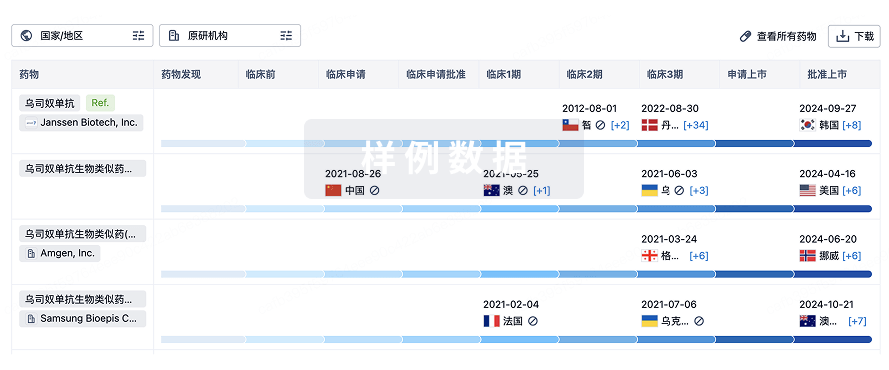
生物类似药
生物类似药在不同国家/地区的竞争态势。请注意临床1/2期并入临床2期,临床2/3期并入临床3期
登录
或
特殊审评
只需点击几下即可了解关键药物信息。
登录
或

提出任何生物医药研究问题
让每一步生物医药决策都精准制胜
基于十亿级生物数据与全球情报的精准 AI,赋能早期药物发现
立即开始免费试用!
智慧芽新药情报库是智慧芽专为生命科学人士构建的基于AI的创新药情报平台,助您全方位提升您的研发与决策效率。
立即接入生物医药数据包
智慧芽新药库数据也通过智慧芽开放平台,以MCP或API服务形式对外开放。立即使用我们的MCP服务定制您的LLM智能体。
生物序列数据库
生物药研发创新
免费使用
化学结构数据库
小分子化药研发创新
免费使用