预约演示
更新于:2026-01-17
Novobiocin Sodium
新生霉素钠
更新于:2026-01-17
概要
基本信息
最高研发阶段临床前 |
首次获批日期 美国 (1964-09-04), |
最高研发阶段(中国)- |
特殊审评- |

登录后查看时间轴
结构/序列
分子式C31H36N2NaO11 |
InChIKeyBZFOBLOAMAJKQV-RNROJPEYSA-N |
CAS号1476-53-5 |
关联
2
项与 新生霉素钠 相关的临床试验CTIS2025-522531-34-00
Methotrexate PK (in combination with Novobiocin) in RA patients
NCT05687110
A Phase 1 Study of the Polymerase Theta (POLθ) Inhibitor Novobiocin in BRCA- Mutant and Other DNA Damage Repair-Deficient Solid Tumors

100 项与 新生霉素钠 相关的临床结果
登录后查看更多信息
100 项与 新生霉素钠 相关的转化医学
登录后查看更多信息
100 项与 新生霉素钠 相关的专利(医药)
登录后查看更多信息
4,116
项与 新生霉素钠 相关的文献(医药)2026-02-01ENZYME AND MICROBIAL TECHNOLOGY
Identification of a 3-deoxy-D-manno-octulosonic acid kinase of lipid A in Vibrio parahaemolyticus
Article
作者: Wang, Xiaoyuan ; Yin, Hongchen ; Huang, Danyang ; Zhang, Xinrui ; Chen, Lingyan
Vibrio parahaemolyticus is a major seafood-associated foodborne pathogen whose lipopolysaccharide (LPS) plays an important role in virulence and antimicrobial resistance. The LPS of V. parahaemolyticus contains a single 3-deoxy-D-manno-octulosonic acid (Kdo) sugar with phosphorylation. Previously, we have characterized the gene VP_RS01035 is responsible for the addition of Kdo; in this study, we characterized another gene VP_RS00960 which is responsible for the Kdo phosphorylation of V. parahaemolyticus LPS. To investigate its function, we first constructed an LPS-deficient Escherichia coli WH600 strain using CRISPR/Cas9. Heterologous expression of VP_RS01035 alone or in combination with VP_RS00960 yielded recombinant strains WH600/pB1-1 and WH600/pB2-12, respectively. Analysis of total lipids from the recombinant strains by thin-layer chromatography and high-performance liquid chromatography-tandem mass spectrometry demonstrated that the VP_RS00960 gene encodes a Kdo kinase responsible for phosphorylating the 4-OH site of the Kdo sugar in V. parahaemolyticus. To further validate its role, we deleted VP_RS00960 gene in V. parahaemolyticus, resulting in mutant ΔRS00960. Notably, ΔRS00960 failed to produce polysaccharide-linked lipid A, although free lipid A synthesis remained unaffected. Furthermore, defective long-chain LPS assembly compromised outer membrane integrity, increasing permeability and hydrophobicity while reducing biofilm formation. Consequently, ΔRS00960 exhibited heightened susceptibility to membrane-targeting antibiotics, such as erythromycin and novobiocin. Macrophage infection assays using RAW264.7 cells revealed that VP_RS00960 deletion attenuated bacterial pathogenicity. These findings enhance the understanding of the pathogenicity and drug resistance of V. parahaemolyticus, and provide novel insights and strategies for addressing antibiotic resistance and food safety challenges posed by V. parahaemolyticus.
2025-12-12Epigenomics
Defect of MLH1 expression sensitized esophageal squamous cell carcinoma cells to Polθ inhibitor
Article
作者: Zhou, Bo ; Su, Xiaomo ; Zhang, Meiying ; Zhu, Cheng ; Guo, Mingzhou ; Gao, Aiai
BACKGROUND:
A large scale detection of MLH1 methylation is lacking in esophageal cancer. MLH1 is a well-known mismatch repair gene. The mechanism of MLH1 in DNA double strand break (DSB) repair remains unclear.
METHODS:
Esophageal cancer cell lines and 1018 cases of primary cancer samples were employed. Methylation specific PCR, Western Blot, and CRISPR/Cas9 knockout technique were utilized.
RESULTS:
Methylation of MLH1 was detected in 3.93%. MLH1 methylation was significantly associated with tumor differentiation, male gender, smoking, and tumor size (all p < 0.05). The median overall survival (OS) was 24.7 months (95% CI 13.4-36.0) and 51.5 months (95% CI 40.4-62.5) in MLH1 methylated and unmethylated groups, respectively. OS was shorter in MLH1 methylated compared to unmethylated group patients (p < 0.01). Multivariate factor analysis indicated that MLH1 methylation is an independent poor prognosis marker (p < 0.05). MLH1 promotes ataxia telangiectasia mutated (ATM), ataxia telangiectasia and RAD3-related (ATR), and non-homologous end-joining repair (NHEJ), while inhibiting microhomology-mediated end joining (MMEJ) repair signaling pathways. Deletion of MLH1 sensitized esophageal cancer cells to novobiocin.
CONCLUSIONS:
MLH1 plays important roles in DSB repair and deletion of MLH1 sensitizes ESCC cells to Polθ inhibitor.
2025-12-01Journal of Global Antimicrobial Resistance
Investigating the adjuvant activity of the proline-rich antimicrobial lipopeptide C12-PRP against antimicrobial-resistant veterinary bacterial isolates
Article
作者: Schweizer, Frank ; Mani, Ramesh Kumar ; Sharoze, Aimeen ; Gorityala, Bala Kishan ; Esenbekova, Meerim ; Kumar, Ayush ; White, Dawn ; Deo, Soumya
OBJECTIVES:
Farm animals exposed to excessive amounts of antibiotics are reservoirs for antimicrobial-resistance genes and multidrug-resistant bacteria. The goal of this study was to investigate the adjuvant activity of a previously synthesized, proline-rich lipopeptide called C12-PRP in combination with various antibiotics against multidrug-resistant E. coli isolated from chicken and cattle.
METHODS:
The microbroth dilution method was used to determine the minimum inhibitory concentration of 10 antibiotics against four E. coli isolates. The adjuvant activity of C12-PRP was then tested in combination with the same antibiotics using a checkerboard assay. The best synergistic antibiotic-C12-PRP combinations were tested with the most resistant E. coli isolate using the Galleria mellonella insect infection model. A fluorescence-based membrane permeabilization assay was used to investigate a possible mode of action for C12-PRP.
RESULTS:
The four E. coli isolates showed varying resistance to the antibiotics (0.008 µg/mL to ≥256 µg/mL), and overall, the addition of C12-PRP lowered the minimum inhibitory concentration. The two most-potent antibiotic-C12-PRP combinations were with novobiocin and erythromycin showing a susceptibility increase of 128-fold and up to 32-fold, respectively. G. mellonella survival was significantly improved when C12-PRP was included with novobiocin or erythromycin during treatment of infected larvae. Membrane permeabilization of an E. coli isolate was markedly higher in the presence of C12-PRP.
CONCLUSIONS:
We demonstrated the synergistic ability of C12-PRP to enhance antibiotic activity and reduce the virulence of the veterinary E. coli isolates, strengthening the potential promise of this adjuvant candidate as a therapeutic agent for multidrug-resistant bacteria.
100 项与 新生霉素钠 相关的药物交易
登录后查看更多信息
研发状态
批准上市
10 条最早获批的记录, 后查看更多信息
登录
| 适应症 | 国家/地区 | 公司 | 日期 |
|---|---|---|---|
| 细菌感染 | 美国 | 1964-09-04 |
未上市
10 条进展最快的记录, 后查看更多信息
登录
| 适应症 | 最高研发状态 | 国家/地区 | 公司 | 日期 |
|---|---|---|---|---|
| 肿瘤 | 临床前 | 英国 | 2022-01-30 |
登录后查看更多信息
临床结果
临床结果
适应症
分期
评价
查看全部结果
登录后查看更多信息
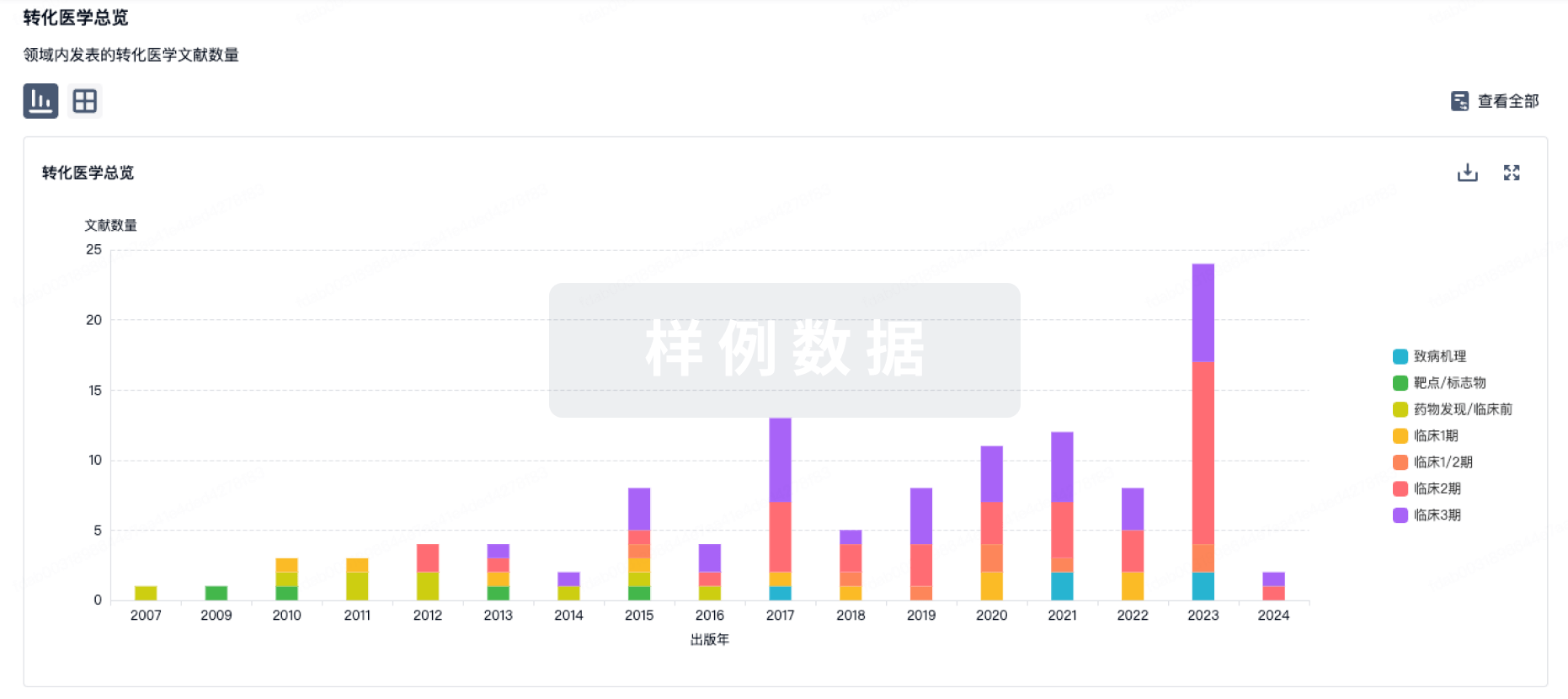
转化医学
使用我们的转化医学数据加速您的研究。
登录
或
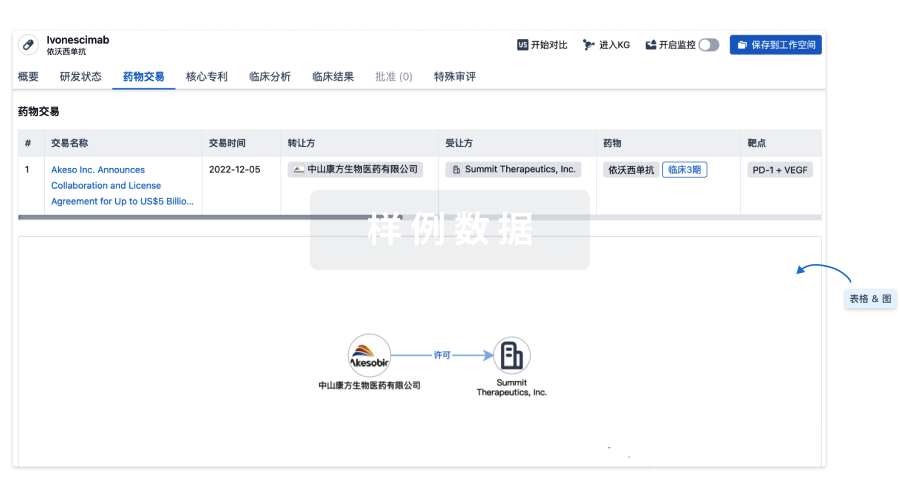
药物交易
使用我们的药物交易数据加速您的研究。
登录
或
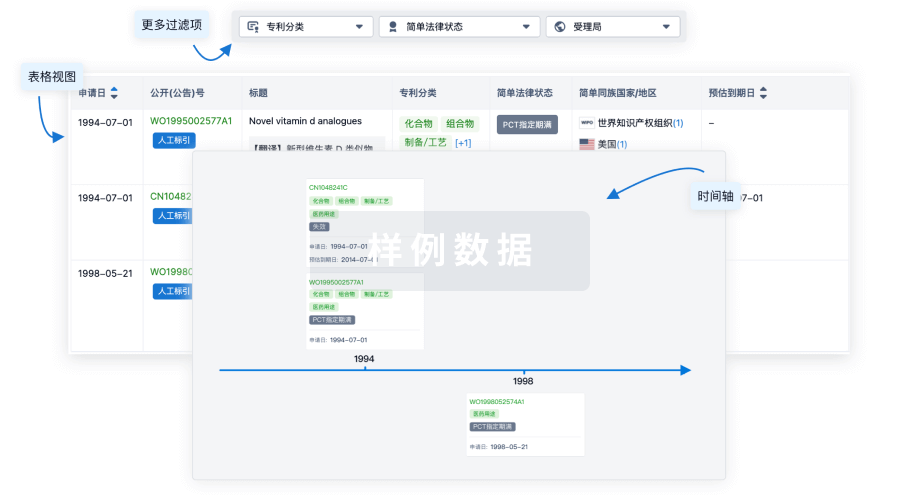
核心专利
使用我们的核心专利数据促进您的研究。
登录
或
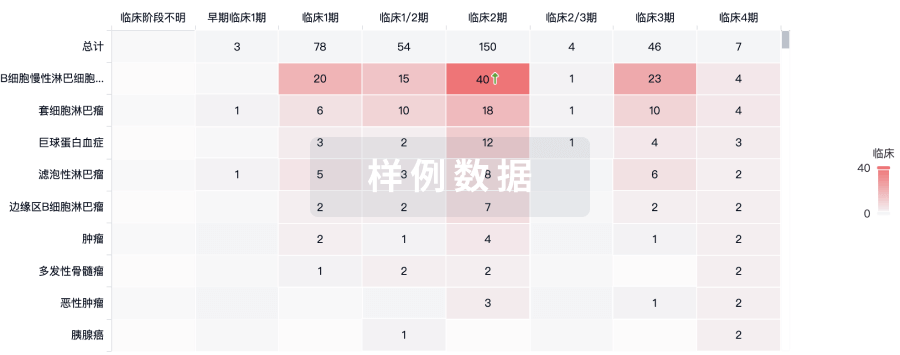
临床分析
紧跟全球注册中心的最新临床试验。
登录
或
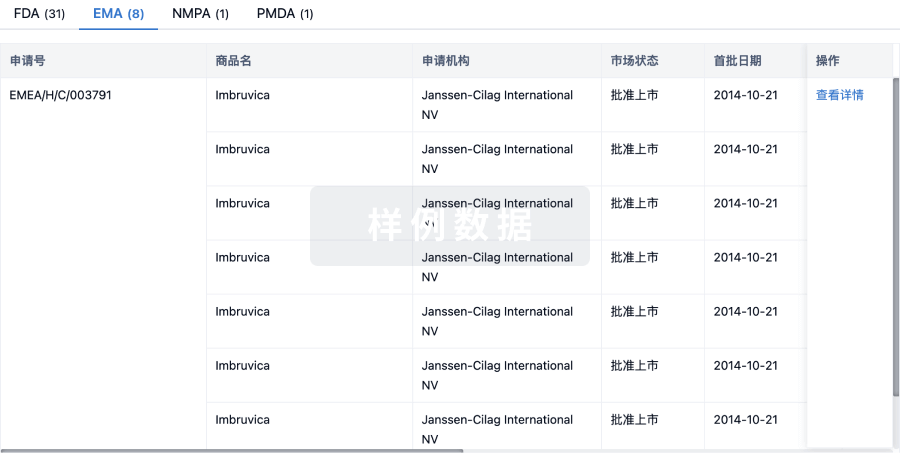
批准
利用最新的监管批准信息加速您的研究。
登录
或
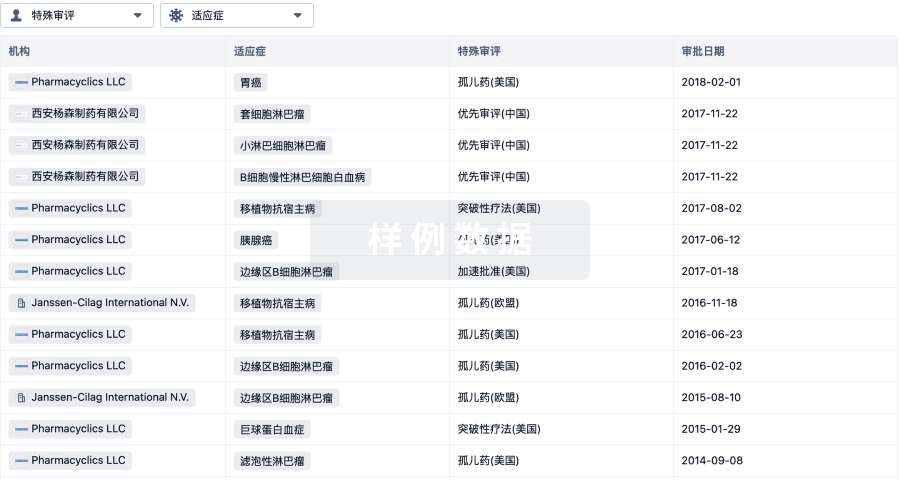
特殊审评
只需点击几下即可了解关键药物信息。
登录
或
生物医药百科问答
全新生物医药AI Agent 覆盖科研全链路,让突破性发现快人一步
立即开始免费试用!
智慧芽新药情报库是智慧芽专为生命科学人士构建的基于AI的创新药情报平台,助您全方位提升您的研发与决策效率。
立即开始数据试用!
智慧芽新药库数据也通过智慧芽数据服务平台,以API或者数据包形式对外开放,助您更加充分利用智慧芽新药情报信息。
生物序列数据库
生物药研发创新
免费使用
化学结构数据库
小分子化药研发创新
免费使用