预约演示
更新于:2026-09-05
Adamplatin-IV
更新于:2026-09-05
概要
基本信息
在研机构- |
非在研机构 |
权益机构- |
最高研发阶段终止临床1期 |
首次获批日期- |
最高研发阶段(中国)- |
特殊审评- |
登录后查看时间轴
关联
100 项与 Adamplatin-IV 相关的临床结果
登录后查看更多信息
100 项与 Adamplatin-IV 相关的转化医学
登录后查看更多信息
100 项与 Adamplatin-IV 相关的专利(医药)
登录后查看更多信息
26
项与 Adamplatin-IV 相关的文献(医药)2025-11-12·JOURNAL OF AGRICULTURAL AND FOOD CHEMISTRY
Negative Cross-Resistance of Pyrethroid-Resistant
Aedes aegypti
Strains to the Benzimidazolium Derivatives: Virtual Screening, Synthesis, and Bioassay of the Potential Voltage-Gated Sodium Channel Blockers/Modulators
Article
Negative cross-resistance (NCR) is an effective strategy for managing insecticide resistance. Haedoxan A (HA), a natural insecticide derived from Phryma leptostachya, exhibits NCR with permethrin by targeting voltage-gated sodium channels (VGSCs). In this study, structure-based virtual screening, derivative synthesis, and biological evaluation revealed that compounds with a benzimidazolium skeleton show strong potential as sodium channel blockers/modulators. Among them, compounds 6i, LA-12, LA-26, LA-35, and LA-51 displayed an NCR profile similar to HA and potent mosquitocidal activities. Notably, LA-49 boosted the highest larval toxicity against both pyrethroid-susceptible and resistant strains of Aedes aegypti, with LC50 values of 0.403 and 0.940 μg/mL respectively, representing a 112.7- and 16.9-fold increase in potency compared to the lead compound 6i. Its efficacy was comparable to HA (LC50 = 0.338 and 0.301 μg/mL, respectively) and exceeded that of permethrin (LC50 = 1.474 μg/mL) against the pyrethroid-resistant strain. The findings suggest that the benzimidazolium-based derivatives, characterized by simple chemical structure, synthetic tractability, potent activity, and NCR properties, represent promising candidates for further development in insecticide resistance management targeting VGSCs.
2024-06-25·Biological chemistry
Inhibition of Chk1 stimulates cytotoxic action of platinum-based drugs and TRAIL combination in human prostate cancer cells
Article
作者: Petra Ovesná ; Gerardo Vázquez-Gómez ; Petr Sova ; Tereza Šošolíková ; Martin Krkoška ; Jarmila Herůdková ; Alena Hyršlová Vaculová ; Jan Novotný ; Kamil Paruch
Abstract:
Checkpoint kinase 1 (Chk1) plays an important role in regulation of the cell cycle, DNA damage response and cell death, and represents an attractive target in anticancer therapy. Small-molecule inhibitors of Chk1 have been intensively investigated either as single agents or in combination with various chemotherapeutic drugs and they can enhance the chemosensitivity of numerous tumor types. Here we newly demonstrate that pharmacological inhibition of Chk1 using potent and selective inhibitor SCH900776, currently profiled in phase II clinical trials, significantly enhances cytotoxic effects of the combination of platinum-based drugs (cisplatin or LA-12) and TRAIL (tumor necrosis factor-related apoptosis inducing ligand) in human prostate cancer cells. The specific role of Chk1 in the drug combination-induced cytotoxicity was confirmed by siRNA-mediated silencing of this kinase. Using RNAi-based methods we also showed the importance of Bak-dependent mitochondrial apoptotic pathway in the combined anticancer action of SCH900776, cisplatin and TRAIL. The triple drug combination-induced cytotoxicity was partially enhanced by siRNA-mediated Mcl-1 silencing. Our findings suggest that targeting Chk1 may be used as an efficient strategy for sensitization of prostate cancer cells to killing action of platinum-based chemotherapeutic drugs and TRAIL.
2018-02-08·Genome announcements
Draft Whole-Genome Sequences of
Zhihengliuella halotolerans
La12 and
Microbacterium kitamiense
Sa12, Strains with Cellulase Activity, Isolated from the Qinghai-Tibetan Plateau
Article
作者: Lin, Ling ; Li, Qianhui ; Pei, Wenqin ; Yang, Qing ; Chen, Mingming ; Xiang, Yingying ; Chen, Yao ; Qin, Na ; Huang, Duntao
ABSTRACT:
We report the complete genome sequences of cellulolytic strains
Zhihengliuella halotolerans
La12 and
Microbacterium kitamiense
Sa12, which were isolated from soil samples collected from the Qinghai-Tibetan Plateau in Western China. The final assemblies of La12 and Sa12 comprise 3,712,694 bp, with over 111 contigs, and 3,830,439 bp, with over 39 contigs, respectively.
1
项与 Adamplatin-IV 相关的新闻(医药)2022-02-09
Centrul Medical Unirea SRL, cea mai mare dintre firmele prin care operează reţeaua privată de sănătate Regina Maria, a preluat integral Centrul Medical Bucovina din Suceava, la 12 ianuarie 2022, potrivit unei decizii a asociaţilor firmei, obţinută de Economica.net. Centrul Medical Bucovina SRL a fost deţinut până la 12 ianuarie de către Cristian-Mihai Adomniţei, Dan-Gabriel Iacob şi Adrian Tătăranu.
Cei trei asociaţi ai Centrului Medical Bucovina au decis transferul dreptului de proprietate asupra tuturor părţilor sociale, emise de societate, către Centrul Medical Unirea SRL, potrivit deciziei adunării generale a asociaţilor Centrului Medical Bucovina, din 12 ianuarie 2022, obţinută de Economica.net. Ca urmare a transferului de părţi sociale, Centrul Medical Unirea devine singurul asociat al Centrului Medical Bucovina, reiese din decizia antemenţionată, consultată de Economica.net.
Preluarea Centrului Medical Bucovina de către Centrul Medical Unirea a avut loc la 12 ianuarie 2022.
Centrul Medical Bucovina a avut în anul 2020 profit net de circa 29 de ori mai mic decât în anul 2019.
Centrul Medical Bucovina SRL a încheiat primul an al crizei sociale şi sanitare provocate de Covid-19 cu afaceri nete de 3,54 de milioane de lei, cu peste 20% mai mici decât cele realizate în anul 2019, arată bilanţurile societăţii, comparate de Economica.net.
Reţeaua de sănătate Regina Maria va investi cel puțin 1,5 milioane de euro pentru modernizarea diviziei de imagistică a Centrului Medical Bucovina, precum și pentru deschiderea unui laborator de analize medicale de ultimă generaţie, spun oficialii companiei într-un comunicat remis Economica.net.
"În pofida contextului actual, avem un buget de investiții similar anilor trecuți, de peste 20 de milioane de euro și continuăm accelerat strategia noastră de dezvoltare, cu scopul de a deservi cât mai mulți pacienți, din toate colțurile țării. Astfel, 2022 va fi un nou an al investițiilor, prioritățile fiind extinderea rețelei și dezvoltarea continuă a infrastructurii medicale din România, precum și a instrumentelor digitale – telemedicina și teleradiologia, care au rolul de a oferi acces la medicină de calitate, chiar și pacienților din zone cu deficit de medici. Achiziția Centrului Medical Bucovina aduce în rețea o echipă de experți cu o structură bine închegată, cu rezultate remarcabile și un potențial mare de creștere. Prin standardele comune de calitate ne propunem să oferim acces la cele mai bune servicii medicale integrate și interdisciplinare, iar pacienții și abonații noștri din zona de nord-est a țării vor avea acum parte de serviciile complexe ale Rețelei, în proximitate”, a declarat Fady Chreih, CEO al rețelei de sănătate Regina Maria.
100 项与 Adamplatin-IV 相关的药物交易
登录后查看更多信息
研发状态
10 条进展最快的记录, 后查看更多信息
登录
| 适应症 | 最高研发状态 | 国家/地区 | 公司 | 日期 |
|---|---|---|---|---|
| 肿瘤 | 临床1期 | - | - | |
| 实体瘤 | 临床1期 | 捷克 | - | - |
登录后查看更多信息
临床结果
临床结果
适应症
分期
评价
查看全部结果
| 研究 | 分期 | 人群特征 | 评价人数 | 分组 | 结果 | 评价 | 发布日期 |
|---|
No Data | |||||||
登录后查看更多信息
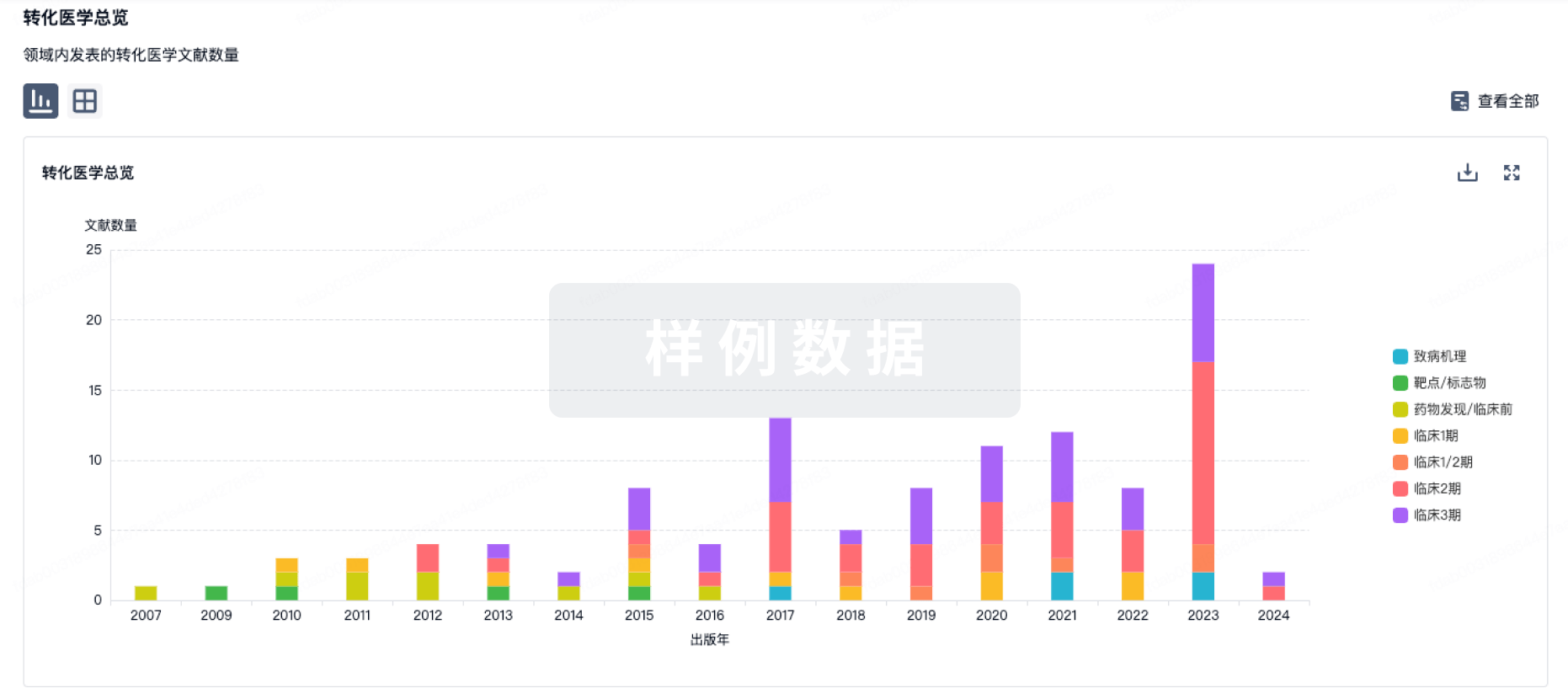
转化医学
使用我们的转化医学数据加速您的研究。
登录
或
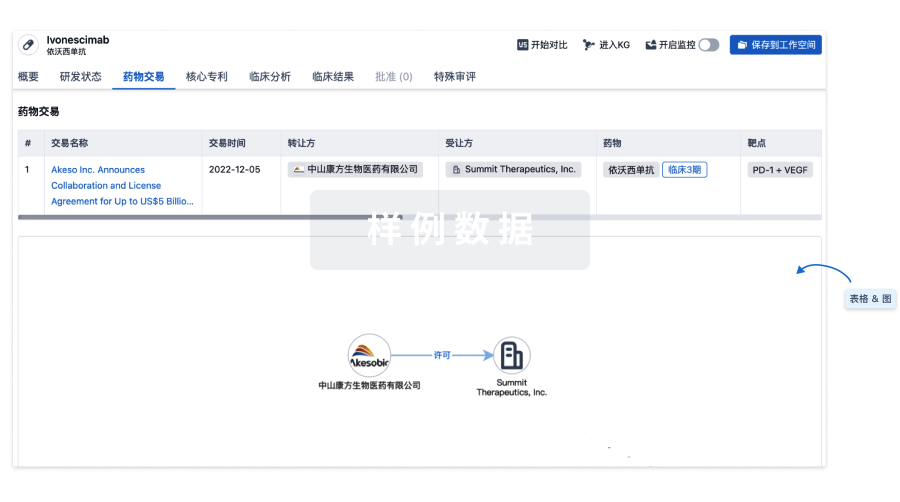
药物交易
使用我们的药物交易数据加速您的研究。
登录
或
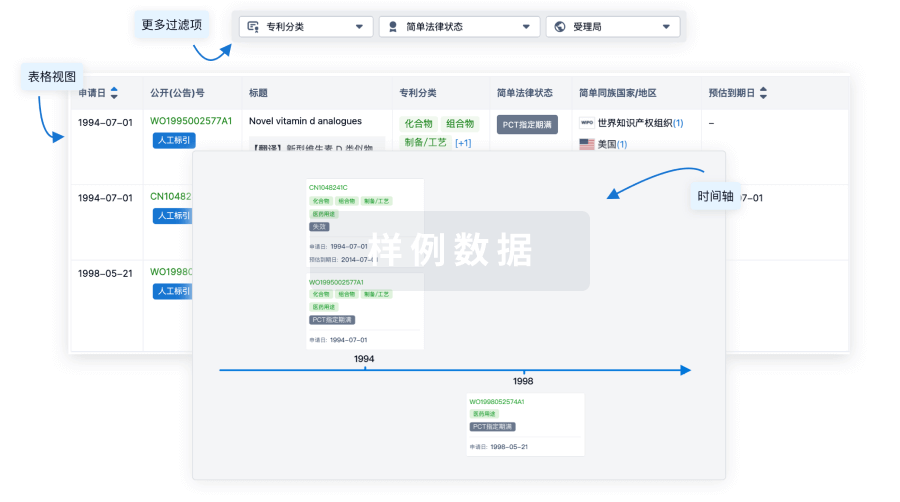
核心专利
使用我们的核心专利数据促进您的研究。
登录
或
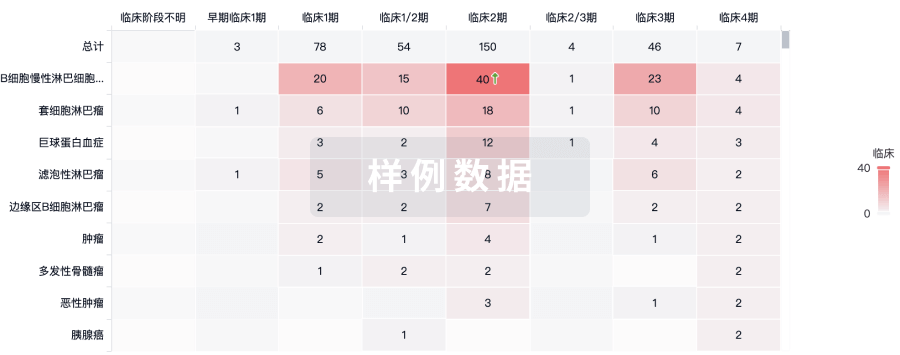
临床分析
紧跟全球注册中心的最新临床试验。
登录
或
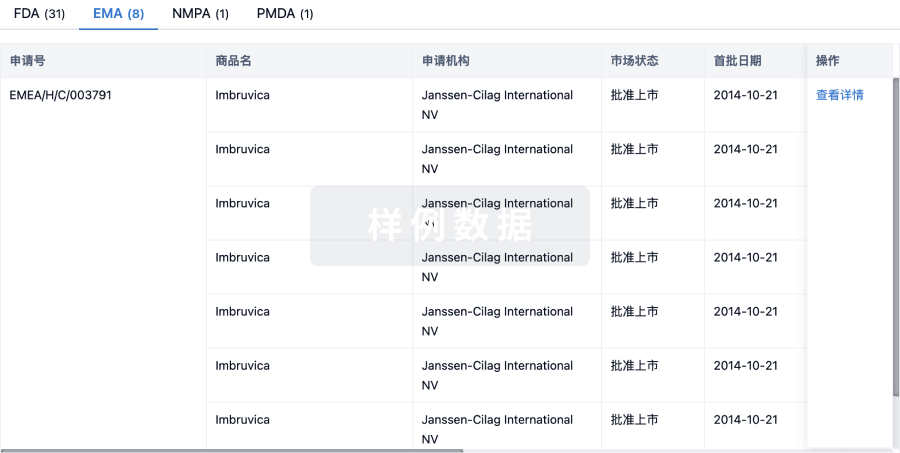
批准
利用最新的监管批准信息加速您的研究。
登录
或
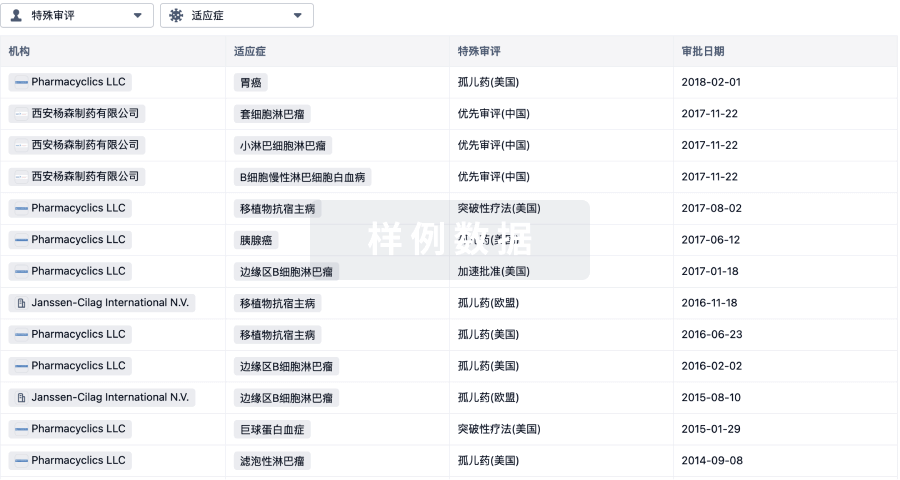
特殊审评
只需点击几下即可了解关键药物信息。
登录
或
提出任何生物医药研究问题
让每一步生物医药决策都精准制胜
基于十亿级生物数据与全球情报的精准 AI,赋能早期药物发现
立即开始免费试用!
智慧芽新药情报库是智慧芽专为生命科学人士构建的基于AI的创新药情报平台,助您全方位提升您的研发与决策效率。
立即接入生物医药数据包
智慧芽新药库数据也通过智慧芽开放平台,以MCP或API服务形式对外开放。立即使用我们的MCP服务定制您的LLM智能体。
生物序列数据库
生物药研发创新
免费使用
化学结构数据库
小分子化药研发创新
免费使用