预约演示
更新于:2026-03-14
Compound C21(Instituto Politécnico Nacional)
更新于:2026-03-14
概要
基本信息
非在研机构- |
权益机构- |
最高研发阶段临床前 |
首次获批日期- |
最高研发阶段(中国)- |
特殊审评- |

关联
100 项与 Compound C21(Instituto Politécnico Nacional) 相关的临床结果
登录后查看更多信息
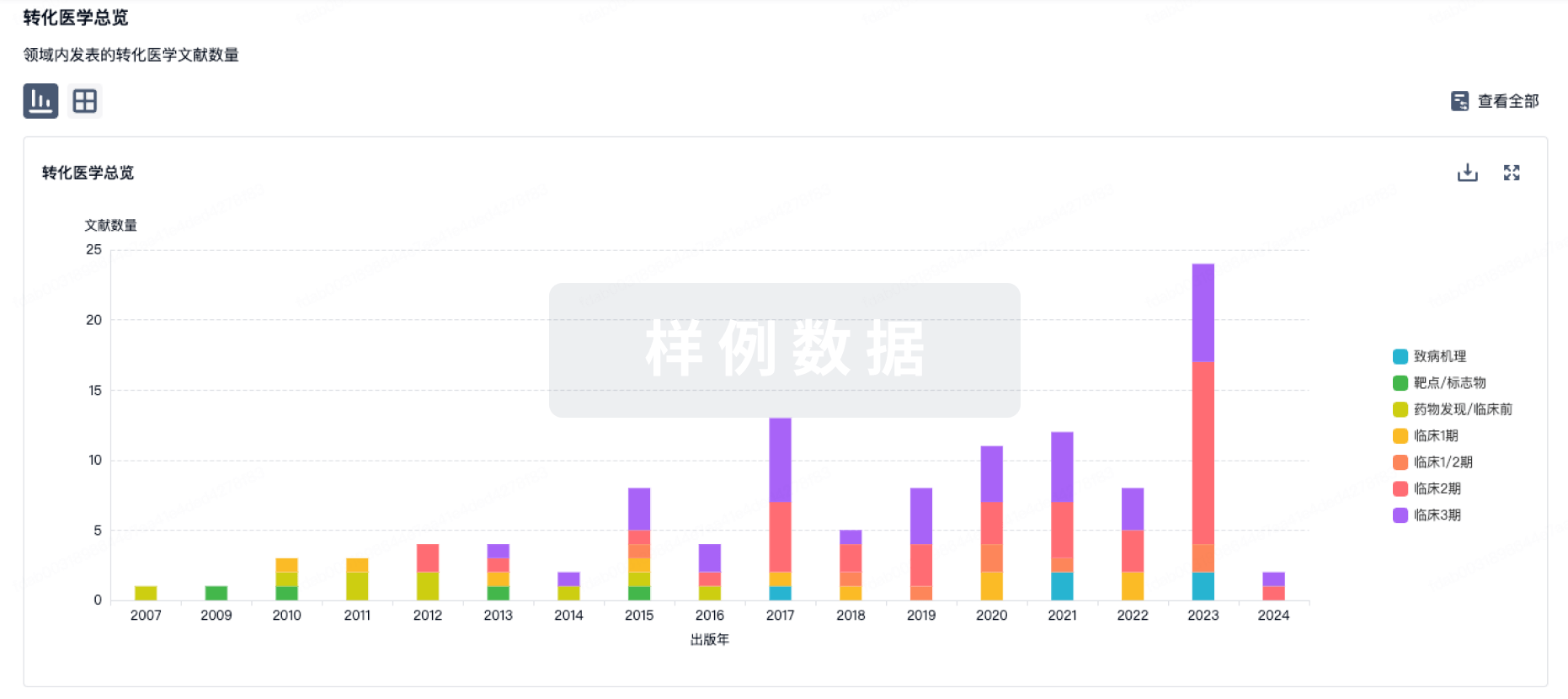
100 项与 Compound C21(Instituto Politécnico Nacional) 相关的转化医学
登录后查看更多信息
100 项与 Compound C21(Instituto Politécnico Nacional) 相关的专利(医药)
登录后查看更多信息
47
项与 Compound C21(Instituto Politécnico Nacional) 相关的文献(医药)2025-10-01·ENVIRONMENTAL TOXICOLOGY AND PHARMACOLOGY
Angiotensin II type 2 receptor activation alleviates inflammation and oxidative stress caused by chronic exposure to air pollution
Article
作者: Freire, Agustina ; Dominici, Fernando P ; Steckelings, Ulrike M ; Narvaez Pardo, Jorge A ; Evelson, Pablo A ; Tomat, Analía L ; Muñoz, Marina C ; Buchholz, Bruno ; Gironacci, Mariela M ; Magnani, Natalia D
The impact of chronic exposure to urban air (UA) on renin-angiotensin system (RAS) components and the therapeutic potential of the angiotensin type 2 receptor (AT2R) agonist, Compound 21 (C21), in mitigating pollution-induced inflammation and oxidative stress was evaluated in a mouse model exposed to UA for 14 weeks. Air pollution exposure increased pro-inflammatory cytokines and oxidative damage markers in the lungs and kidneys and upregulated angiotensin converting enzyme; ACE, and angiotensin type 1 receptor; AT1R in the lungs; while it induced a compensatory increase in Mas receptor; MasR and AT2R in the heart and kidneys. C21 treatment reduced IL-1β and TNF-α expression in the lungs and 3-nitrotyrosine levels in the lungs and kidneys, downregulated both ACE and AT1R expression in the lungs and increased renal MasR expression. Current results underscore the relevance of RAS dysregulation in pollution-induced tissue damage and positions AT2R agonism as a possibility for mitigating the health impacts of air pollution.
2025-01-01·Medicinal Chemistry
A Computational Approach Using α-Carbonic Anhydrase to Find Anti-Trypanosoma cruzi Agents
Article
作者: Juarez-Saldivar, Alfredo ; Nogueda-Torres, Benjamin ; Rivera, Gildardo ; Moreno-Rodríguez, Adriana ; de Alba Alvarado, Mariana ; Martinez-Vazquez, Ana Veronica ; Lara-Ramírez, Edgar E. ; Vazquez, Karina ; Ortiz-Perez, Eyra ; Gonzalez-Gonzalez, Alonzo ; Paz-Gonzalez, Alma D. ; Mendez-Alvarez, Domingo
Background::
Chagas disease has an ineffective drug treatment despite efforts made
over the last four decades. The carbonic anhydrase of Trypanosoma cruzi (α-TcCA) has emerged
as an interesting target for the design of new antiparasitic compounds due to its crucial role in parasite
processes.
Objective::
The aim in this study was identify potential α-TcCA inhibitors with trypanocidal activity.
Methods::
A maximum common substructure (MCS) and molecular docking were used to carried
out a ligand- and structure-based virtual screening of ZINC20 and MolPort databases. The compounds
selected were evaluated in an in vitro model against the NINOA strain of Trypanosoma
cruzi, and cytotoxicity was determined in a murine model of macrophage cells J774.2.
Results::
Five sulfonamide derivatives (C7, C9, C14, C19, and C21) had the highest docking scores
(-6.94 to -8.31 kcal/mol). They showed key residue interactions on the active site of the α-TcCA
and good biopharmaceutical and pharmacokinetic properties. C7, C9, and C21 had half-maximal
inhibitory concentration (IC50) values of 26, 61.6, and 49 μM, respectively, against NINOA strain
epimastigotes of Trypanosoma cruzi.
Conclusion::
Compounds C7, C9, and C21 showed trypanocidal activity; therefore, these results
encourage the development of new trypanocidal agents based in their scaffold.
2025-01-01·Theranostics
Enhancing glymphatic transport through angiotensin II type 2 receptor activation promotes neurological recovery after traumatic brain injury.
Article
作者: Liu, Tianyi ; Li, Wenchen ; Sun, Bin ; Zhu, Shoujun ; Li, Wenzhong ; Liu, Qin ; He, Chuan ; Chen, Bo ; Wang, Haifeng ; Zhang, Xiaoyu
Background: Traumatic brain injury (TBI) may impair the function of the glymphatic system, leading to diminished metabolic waste clearance and aggravated neurological deficits. While angiotensin II type 2 receptor (AT2R) activation has demonstrated neuroprotective effects, its specific impact on the glymphatic system following TBI remains uncharacterized. Methods: We utilized near-infrared II (NIR-II) probes with distinct protein-binding capacities to visualize glymphatic transport in TBI mice and investigate how compound 21 (C21)-mediated AT2R activation modulates post-traumatic glymphatic function. Perivascular aquaporin-4 (AQP4) polarization was analyzed by immunofluorescence. RNA sequencing was performed to explore the C21-induced dynamic immune modulation. β-amyloid clearance efficiency and phosphorylated tau accumulation were quantified in mouse brain tissue. Motor and cognitive functions were comprehensively evaluated through standardized behavioral tests. Results: Our results demonstrate that C21-mediated AT2R activation enhanced glymphatic influx and promoted glymphatic clearance after TBI. Mechanistically, AT2R activation restored perivascular aquaporin-4 (AQP4) polarization and cerebral blood flow, suppressed astrogliosis and microglial activation, and attenuated neuroinflammatory responses. Furthermore, AT2R activation enhanced β-amyloid clearance efficiency and reduced phosphorylated tau accumulation, thereby promoting motor and cognitive functional recovery. Conclusion: By employing non-invasive or minimally invasive NIR-II imaging, our study highlights the protective effects of AT2R activation on the glymphatic system following TBI, revealing its potential as a promising therapeutic strategy for mitigating TBI-induced damage and improving neurological outcomes.
100 项与 Compound C21(Instituto Politécnico Nacional) 相关的药物交易
登录后查看更多信息
研发状态
10 条进展最快的记录, 后查看更多信息
登录
| 适应症 | 最高研发状态 | 国家/地区 | 公司 | 日期 |
|---|---|---|---|---|
| Chagas病 | 临床前 | 墨西哥 | 2025-01-01 |
登录后查看更多信息
临床结果
临床结果
适应症
分期
评价
查看全部结果
| 研究 | 分期 | 人群特征 | 评价人数 | 分组 | 结果 | 评价 | 发布日期 |
|---|
No Data | |||||||
登录后查看更多信息
转化医学
使用我们的转化医学数据加速您的研究。
登录
或
药物交易
使用我们的药物交易数据加速您的研究。
登录
或
核心专利
使用我们的核心专利数据促进您的研究。
登录
或
临床分析
紧跟全球注册中心的最新临床试验。
登录
或
批准
利用最新的监管批准信息加速您的研究。
登录
或
特殊审评
只需点击几下即可了解关键药物信息。
登录
或
生物医药百科问答
全新生物医药AI Agent 覆盖科研全链路,让突破性发现快人一步
立即开始免费试用!
智慧芽新药情报库是智慧芽专为生命科学人士构建的基于AI的创新药情报平台,助您全方位提升您的研发与决策效率。
立即开始数据试用!
智慧芽新药库数据也通过智慧芽数据服务平台,以API或者数据包形式对外开放,助您更加充分利用智慧芽新药情报信息。
生物序列数据库
生物药研发创新
免费使用
化学结构数据库
小分子化药研发创新
免费使用