预约演示
更新于:2025-12-20
Siglec-9 antibodies(Palleon Pharma)
更新于:2025-12-20
概要
基本信息
非在研机构- |
权益机构- |
最高研发阶段临床前 |
首次获批日期- |
最高研发阶段(中国)- |
特殊审评- |

关联
100 项与 Siglec-9 antibodies(Palleon Pharma) 相关的临床结果
登录后查看更多信息
100 项与 Siglec-9 antibodies(Palleon Pharma) 相关的转化医学
登录后查看更多信息
100 项与 Siglec-9 antibodies(Palleon Pharma) 相关的专利(医药)
登录后查看更多信息
4
项与 Siglec-9 antibodies(Palleon Pharma) 相关的文献(医药)2020-09-01·International immunopharmacology2区 · 医学
Soluble Siglec-9 alleviates intestinal inflammation through inhibition of the NF-κB pathway
2区 · 医学
Article
作者: Soh, Hosim ; Kang, Eun Ae ; Lee, Hyun Jung ; Kim, Joo Sung ; Park, Seona ; Im, Jong Pil
BACKGROUND:
Sialic acid-binding immunoglobulin-like lectins (Siglecs) are a superfamily of immunoreceptors recognizing sialic acid. Siglec-9 has been shown to mediate inhibitory immune responses. The aim of this study was to evaluate the effect of a soluble form of Siglec-9 (sSiglec-9) on inflamed intestinal epithelial cells (IECs), murine macrophages, and experimental murine colitis models.
METHODS:
COLO 205 human IECs and RAW 264.7 murine macrophages were pretreated with sSiglec-9 and then stimulated with TNF-α or lipopolysaccharides, respectively. The expression of proinflammatory cytokines such as IL-8 and TNF-α was measured using real-time RT-PCR and ELISA. To demonstrate the inhibitory effects of sSiglec-9 on the NF-κB pathway, IκBα phosphorylation/degradation was determined using western blotting and the DNA binding activity of NF-κB was evaluated using an electrophoretic mobility shift assay. Further, mouse models with dextran sulfate sodium-induced acute colitis and piroxicam-induced IL-10-/- chronic colitis were generated. Intraperitoneal injections of sSiglec-9 were performed, and body weight, colon length, and histopathologic findings were examined.
RESULTS:
sSiglec-9 suppressed IL-8 and TNF-α gene expression in stimulated COLO 205 and RAW 264.7 cells. sSiglec-9 inhibited IκBα phosphorylation/degradation and the DNA binding activity of NF-κB. sSiglec-9 injections significantly ameliorated weight loss, colon shortening, and the severity of intestinal inflammation in acute and chronic colitis mouse models.
CONCLUSION:
sSiglec-9 may inhibit NF-κB activation in IECs and macrophages and alleviate experimental colitis in mice, suggesting that sSiglec-9 is a potential therapeutic agent for the treatment of inflammatory bowel disease.
2017-06-01·Scandinavian journal of immunology4区 · 医学
Siglec‐9 is upregulated in rheumatoid arthritis and suppresses collagen‐induced arthritis through reciprocal regulation of Th17‐/Treg‐cell differentiation
4区 · 医学
Article
作者: Chen, Q. ; Wang, X. ; Liu, D. ; Xiong, Y. ; Ning, Y. ; Tu, R. ; Shen, H. ; Liu, J.
Abstract:
Sialic acid‐binding Ig‐like lectin‐9 (Siglec‐9) is a novel sialic acid‐binding member of the immunoglobulin superfamily and is broadly expressed on immune cells, which can inhibit both innate and adaptive immune responses through immunoreceptor tyrosine‐based inhibitory motifs. However, the exact role of Siglec‐9 in the pathogenesis of rheumatoid arthritis (RA) remains unknown. In this study, we determined soluble Siglec‐9 (sSiglec‐9) levels in the serum and synovial fluid of patients with RA and evaluated the relation between sSiglec‐9 levels and clinical factors. In addition, we investigated whether Siglec‐9 could alleviate collagen‐induced arthritis (CIA) development in mice and explored the molecular mechanisms involved. The results showed that, in the serum and synovial fluid of patients with RA, sSiglec‐9 levels were elevated. Thus, high sSiglec‐9 serum levels associated with disease severity in patients with RA. Furthermore, administration of recombinant human Siglec‐9 Fc chimera protein significantly attenuated collagen‐induced arthritis development in vivo and in vitro by reciprocal regulation of the differentiation of Th17 and Treg cells. Our findings collectively indicate that Siglec‐9 plays a potent immunosuppressive role in the pathogenesis of RA by reciprocal regulation of Th17‐/Treg‐cell differentiation. In conclusion, Siglec‐9 may serve as a potential diagnostic and therapeutic target for RA.
Scientific reports3区 · 综合性期刊
Mapping the interaction site and effect of the Siglec-9 inflammatory biomarker on human primary amine oxidase
3区 · 综合性期刊
ArticleOA
作者: Salminen, Tiina A ; Lopes de Carvalho, Leonor ; Elovaara, Heli ; Vergoten, Gerard ; de Ruyck, Jerôme ; Guédez, Gabriela ; Jalkanen, Sirpa
Abstract:
Human primary amine oxidase (hAOC3), also known as vascular adhesion protein 1, mediates leukocyte rolling and trafficking to sites of inflammation by a multistep adhesion cascade. hAOC3 is absent on the endothelium of normal tissues and is kept upregulated during inflammatory conditions, which is an applicable advantage for imaging inflammatory diseases. Sialic acid binding immunoglobulin like-lectin 9 (Siglec-9) is a leukocyte ligand for hAOC3. The peptide (CARLSLSWRGLTLCPSK) based on the region of Siglec-9 that interacts with hAOC3, can be used as a specific tracer for hAOC3-targeted imaging of inflammation using Positron Emission Tomography (PET). In the present study, we show that the Siglec-9 peptide binds to hAOC3 and triggers its amine oxidase activity towards benzylamine. Furthermore, the hAOC3 inhibitors semicarbazide and imidazole reduce the binding of wild type and Arg/Ala mutated Siglec-9 peptides to hAOC3. Molecular docking of the Siglec-9 peptide is in accordance with the experimental results and predicts that the R3 residue in the peptide interacts in the catalytic site of hAOC3 when the topaquinone cofactor is in the non-catalytic on-copper conformation. The predicted binding mode of Siglec-9 peptide to hAOC3 is supported by the PET studies using rodent, rabbit and pig AOC3 proteins.
100 项与 Siglec-9 antibodies(Palleon Pharma) 相关的药物交易
登录后查看更多信息
研发状态
10 条进展最快的记录, 后查看更多信息
登录
| 适应症 | 最高研发状态 | 国家/地区 | 公司 | 日期 |
|---|---|---|---|---|
| 肿瘤 | 临床前 | 美国 | 2025-09-18 |
登录后查看更多信息
临床结果
临床结果
适应症
分期
评价
查看全部结果
| 研究 | 分期 | 人群特征 | 评价人数 | 分组 | 结果 | 评价 | 发布日期 |
|---|
No Data | |||||||
登录后查看更多信息
转化医学
使用我们的转化医学数据加速您的研究。
登录
或

药物交易
使用我们的药物交易数据加速您的研究。
登录
或

核心专利
使用我们的核心专利数据促进您的研究。
登录
或

临床分析
紧跟全球注册中心的最新临床试验。
登录
或

批准
利用最新的监管批准信息加速您的研究。
登录
或

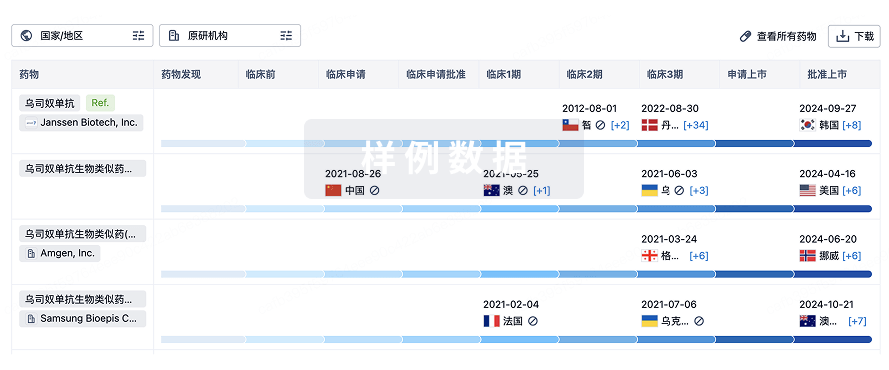
生物类似药
生物类似药在不同国家/地区的竞争态势。请注意临床1/2期并入临床2期,临床2/3期并入临床3期
登录
或
特殊审评
只需点击几下即可了解关键药物信息。
登录
或

提出任何生物医药研究问题
让每一步生物医药决策都精准制胜
基于十亿级生物数据与全球情报的精准 AI,赋能早期药物发现
立即开始免费试用!
智慧芽新药情报库是智慧芽专为生命科学人士构建的基于AI的创新药情报平台,助您全方位提升您的研发与决策效率。
立即接入生物医药数据包
智慧芽新药库数据也通过智慧芽开放平台,以MCP或API服务形式对外开放。立即使用我们的MCP服务定制您的LLM智能体。
生物序列数据库
生物药研发创新
免费使用
化学结构数据库
小分子化药研发创新
免费使用