预约演示
更新于:2026-10-03
CAIX Inhibitors(NRC)
CA9抑制剂(NRC)
更新于:2026-10-03
概要
基本信息
在研机构- |
权益机构- |
最高研发阶段无进展临床前 |
首次获批日期- |
最高研发阶段(中国)- |
特殊审评- |

关联
100 项与 CA9抑制剂(NRC) 相关的临床结果
登录后查看更多信息
100 项与 CA9抑制剂(NRC) 相关的转化医学
登录后查看更多信息
100 项与 CA9抑制剂(NRC) 相关的专利(医药)
登录后查看更多信息
29
项与 CA9抑制剂(NRC) 相关的文献(医药)2026-07-01·NUCLEAR MEDICINE AND BIOLOGY
Carbonic anhydrase IX-targeted small molecule radiopharmaceuticals: A review of their role in clear cell renal cell carcinoma theranostics
Review
作者: Ge, Xinyue ; Zhang, Mengyi ; Meng, Xiangjun ; Liu, Yuying
BACKGROUND:
Clear cell renal cell carcinoma (ccRCC) is the most common renal cancer subtype, representing 70-80% of cases. Its unique molecular profile and therapeutic resistance make it a key focus in oncology. Recent advances in targeting the ccRCC-specific biomarker carbonic anhydrase IX (CAIX), especially through radiolabeled small-molecule inhibitors, are revolutionizing its management.
METHODS:
We conducted a systematic literature search using PubMed, Web of Science, ACS, and CAS databases to identify promising small-molecule CAIX-targeted radiopharmaceuticals for ccRCC published between 2011 and early 2026.
RESULTS:
This review systematically outlines the biology and pathological role of CAIX in ccRCC, and surveys the landscape of CAIX-targeted radioligands under investigation-from acetazolamide and benzenesulfonamide to cyclic peptide-based probes. It also presents single-photon emission computed tomography (SPECT) and positron emission tomography (PET) imaging results for selected promising candidates. We critically assess the current state and promise of theranostics, highlighting future directions and challenges. By summarizing key clinical findings, this work aims to inform the development of CAIX-targeted radiopharmaceuticals and to promote precision medicine in ccRCC.
CONCLUSIONS:
[68Ga]Ga-NY104, [99mTc]Tc-PHC-102, [68Ga]Ga-DPI-4452, [18F]F-VM4-037 and [18F]F-U-104 exhibit promising CAIX targeting. Structural optimization of these compounds holds promise for developing CAIX inhibitors with enhanced selectivity and lower toxicity for ccRCC therapy. At the clinical translation level, a series of novel probes represented by [68Ga]Ga-NY104 and [64Cu]Cu-PD-32766 have entered clinical investigation, enabling high-sensitivity and high-specificity detection of both primary and metastatic ccRCC lesions via PET/CT imaging. Moreover, theranostic platforms based on identical molecular scaffolds (e.g., US2 platform, DPI-4452) have laid the foundation for a "see-and-treat" precision medicine paradigm.
2025-12-12·JOURNAL OF BIOMOLECULAR STRUCTURE & DYNAMICS
Computational discovery of potential human carbonic anhydrase IX inhibitors
Article
作者: Khandagale, Ajay Sathyanarayanrao ; Poyya, Jagadeesha ; Kurdekar, Namrata Manjunath ; Patel, Jainabbi Irshad Ahmed ; Padakannaya, Apeksha
This study explores the potential of nitro compounds as inhibitors of Carbonic Anhydrase IX (CAIX) for cancer therapy. Molecular docking and virtual screening were employed to identify lead molecules, focusing on their binding affinities and interactions with CAIX. Six compounds, namely D1 (-8.295 kcal/mol), D2 (-10.980 kcal/mol), D3 (-10.963 kcal/mol), D4 (-7.170 kcal/mol), D5 (-7.368 kcal/mol), and D6 (-8.705 kcal/mol), were selected based on their promising docking scores and Molecular Mechanics-Generalized Born Surface Area (MMGBSA) results. Molecular dynamics simulations further confirmed the stability of the CAIX-lead compound complexes, with low root-mean-square deviation (RMSD) values and minimal fluctuations in protein and ligand structures. The analysis of root-mean-square fluctuations (RMSF) highlighted the overall stability of these complexes, with localized fluctuations. Detailed investigation of protein-ligand contact dynamics unveiled strong and consistent interactions, including hydrogen bonds, ionic interactions, water bridges, and salt bridges. These novel interactions shed light on the dynamic behavior of the CAIX-lead compound complexes. Briefly, this study establishes a robust framework for advancing D1, D2, and D3 as promising CAIX inhibitors in cancer treatment. The meticulous analysis and comprehensive approach applied to these primary compounds yield substantial insights into their potential as therapeutic agents, setting the stage for forthcoming experimental validation and clinical utilization.
2025-12-01·JOURNAL OF CONTROLLED RELEASE
Tailored mechano-responsive micelles mimic the iron starvation response and impair pH homeostasis for triggered cancer therapy
Article
作者: Leng, Hongyu ; Li, Xin ; Du, Panyu ; Wang, Han ; Li, Yao ; Zhao, Ning ; Zhao, Yanjun ; Wang, Zheng ; Li, Huikai
Carbonic anhydrase IX (CAIX) and cysteine desulfurase (NFS1) are a synthetic lethal pair for cancer treatment. The suppression of NFS1 upregulates the iron starvation response and enriches intracellular Fe2+, leading to increased lipid peroxidation. However, the potency of the NFS1 inhibitor is compromised by the hypoxic microenvironment. To address this issue, we report a mechano-responsive ferrocene-bearing micelle that mimics the CAIX/NFS1 axis via ultrasound-activated iron release and the co-delivery of SLC-0111, a CAIX inhibitor. Upon ultrasound stimulation, the micelles disassemble in acidic lysosomes, releasing ferrous ions and SLC-0111, triggering intracellular acidification, reactive oxygen species accumulation, and lipid peroxidation. Moreover, the liberation of Fe2+ is facilitated by the presence of hydrogen peroxide and further enhanced by mechanical force. SLC-0111 leads to intracellular acidification and synergizes with Fe2+ to boost the Fenton reaction. This cascade disrupted redox homeostasis and induced multiple cell death pathways, including ferroptosis, apoptosis, pyroptosis, and necroptosis, in a tumor-selective manner. The in vivo efficacy studies in a 4T1 breast cancer model confirmed potent tumor suppression with minimal systemic toxicity. This work introduces a mechanical force-controlled strategy as a substitute for CAIX/NFS1 synthetic lethality therapy without the interference of oxygen level, holding promise for advancing tumor-specific therapy.
100 项与 CA9抑制剂(NRC) 相关的药物交易
登录后查看更多信息
研发状态
10 条进展最快的记录, 后查看更多信息
登录
| 适应症 | 最高研发状态 | 国家/地区 | 公司 | 日期 |
|---|---|---|---|---|
| 肿瘤 | 临床前 | 加拿大 | 2021-01-25 |
登录后查看更多信息
临床结果
临床结果
适应症
分期
评价
查看全部结果
| 研究 | 分期 | 人群特征 | 评价人数 | 分组 | 结果 | 评价 | 发布日期 |
|---|
No Data | |||||||
登录后查看更多信息
转化医学
使用我们的转化医学数据加速您的研究。
登录
或

药物交易
使用我们的药物交易数据加速您的研究。
登录
或

核心专利
使用我们的核心专利数据促进您的研究。
登录
或

临床分析
紧跟全球注册中心的最新临床试验。
登录
或

批准
利用最新的监管批准信息加速您的研究。
登录
或

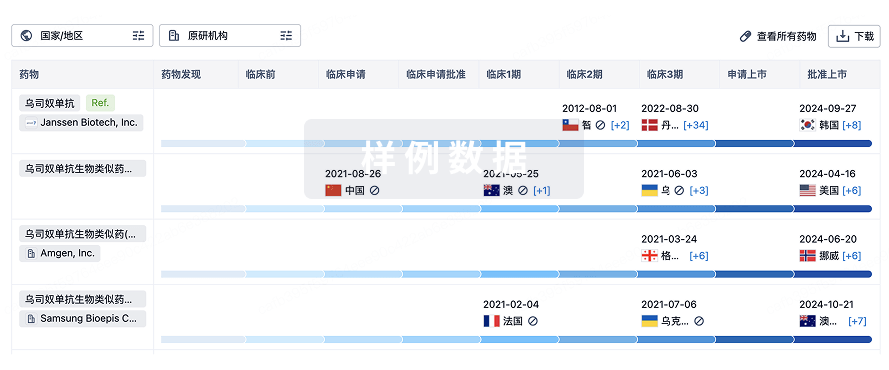
生物类似药
生物类似药在不同国家/地区的竞争态势。请注意临床1/2期并入临床2期,临床2/3期并入临床3期
登录
或
特殊审评
只需点击几下即可了解关键药物信息。
登录
或

提出任何生物医药研究问题
让每一步生物医药决策都精准制胜
基于十亿级生物数据与全球情报的精准 AI,赋能早期药物发现
立即开始免费试用!
智慧芽新药情报库是智慧芽专为生命科学人士构建的基于AI的创新药情报平台,助您全方位提升您的研发与决策效率。
立即接入生物医药数据包
智慧芽新药库数据也通过智慧芽开放平台,以MCP或API服务形式对外开放。立即使用我们的MCP服务定制您的LLM智能体。
生物序列数据库
生物药研发创新
免费使用
化学结构数据库
小分子化药研发创新
免费使用