预约演示
更新于:2026-04-04
APC247
更新于:2026-04-04
概要
基本信息
药物类型 小分子化药 |
别名 APC247 |
作用方式 抑制剂 |
作用机制 β-lactamase抑制剂(β-内酰胺酶抑制剂) |
治疗领域 |
在研适应症 |
非在研适应症- |
非在研机构- |
权益机构- |
最高研发阶段临床前 |
首次获批日期- |
最高研发阶段(中国)- |
特殊审评- |

关联
100 项与 APC247 相关的临床结果
登录后查看更多信息
100 项与 APC247 相关的转化医学
登录后查看更多信息
100 项与 APC247 相关的专利(医药)
登录后查看更多信息
1
项与 APC247 相关的文献(医药)2025-12-23·mSphere
APC24-7, a covalent combination of boronic acid and chelator moieties, restores β-lactam efficiency against metallo-β-lactamase-producers
Article
作者: Kaupang, Åsmund ; Hovd, Rebekka Rolfsnes ; Kildahl-Andersen, Geir ; Økstad, Ole Andreas Løchen ; Frøhlich, Christopher ; Hylland, Knut Tormodssønn ; Winther-Larsen, Hanne Cecilie ; Hovland, Ragnar ; Rongved, Pål
ABSTRACT:
β-Lactam/β-lactamase inhibitor combinations have significantly improved treatment outcomes for infections caused by serine β-lactamase (SBL)-producing pathogens. However, the continued emergence and spread of metallo-β-lactamases (MBLs), for which no clinically approved inhibitors currently exist, poses a serious threat to the long-term effectiveness of β-lactam-based therapies. To bridge this therapeutic gap, the boronic acid transition state analog, taniborbactam (Venatorx Pharmaceuticals), was developed, targeting SBLs and widespread MBLs such as NDM-1 and VIM-2. However, taniborbactam-escape variants have been detected among various MBL enzymes, including members of the NDM and IMP families. Here, we explored whether covalently combining two complementary inhibitor structures, a boronic acid transition state analog and a dipicolyl ethylenediamine-based metal chelator, can restore β-lactam susceptibility in MBL-producing bacterial strains, including taniborbactam-escape variants. APC24-7 successfully sensitized clinical isolates of SBL- and MBL-producing
Klebsiella pneumoniae
and
Escherichia coli
to meropenem. While APC24-7 demonstrated similarities in resensitization behavior to taniborbactam against a wide range of isogenic
E. coli
expressing single SBLs, APC24-7 reversed NDM-9- or IMP-26-mediated meropenem resistance more efficiently. To investigate the potential role of the chelator motif in the MBL inhibition of APC24-7, susceptibility tests were conducted with an excess of exogenous Zn²
+
. APC24-7-mediated resensitization remained unaffected in the presence of Zn²
+
for strains producing NDM-1 and VIM-2. However, its ability to reverse NDM-9- and IMP-26-mediated meropenem resistance was attenuated upon Zn²
+
supplementation. These findings demonstrate that combining functionally complementary chemical structures, such as chelators and boronic acids, can aid in expanding the resensitization ability of existing β-lactamase inhibitors.
IMPORTANCE:
The ability of bacteria such as
Klebsiella pneumoniae
and
Escherichia coli
to circumvent antimicrobial chemotherapy has become a global public health crisis. The high prevalence of β-lactamase enzymes capable of rendering our most prescribed antibiotics, the β-lactams (BLs) inactive, has left us with few available treatment options against infections caused by these bacteria. The use of small molecules that inhibit especially serine β-lactamases has substantially prolonged the lifetime of BL antibiotics. Yet, most clinically available inhibitors either do not possess or have limited ability to reverse resistance conferred by metallo-β-lactamase (MBL) enzymes. Combining chelator and transition state analog technology, our hybrid compound restores the effectiveness of BL antibiotics in cases of resistance conferred by both serine β-lactamases (SBLs) and MBLs. Our approach of covalently combining a chelator with an existing SBL inhibitor scaffold offers a promising solution for managing life-threatening infections and prolonging the use of clinically available BLs.
2
项与 APC247 相关的新闻(医药)2023-06-13
Oslo, Norway, 13 June 2023 – AdjuTec Pharma AS is a privately held company developing antibiotic resistance breakers. The company was recently allowed to reallocate €1mill of a pipeline research grant from Eurostars to support clinical R&D activities of our lead product APC148. Adjutec is raising private capital to start a phase 1 program with our lead product APC148 first quarter 2024. The company is working to secure resources to the further clinical development of APC148. Adjutec is supported by several research grants to develop products that protect broad-spectrum antibiotics from resistance. The company received a Eurostars grant in 2022 to support preclinical- and clinical activities of our pipeline product APC247, a new broad-spectrum beta-lactamase inhibitor. In April 2023 the company applied Eurostars for reallocation of funding to our phase 1a clinical study of APC148, which was accepted. Adjutec has recently submitted two applications for public funding of €4mill to further support the phase 1 program of APC148.“Securing funding of our phase 1 program of APC148 has priority. With a difficult capital market, soft funding is important to secure R&D activities and attract investors. The additional funding of €1mill to the APC148 clinical phase 1a study is significant. The Eurostars decision supports the European Parliament latest request to member states of adding more resources into the fight of AMR” comments CEO Bjørn Klem Antimicrobial Resistance at the Heart of EU’s Global Health StrategyAbout antimicrobial resistance (AMR) – https://www.who.int/news-room/fact-sheets/detail/antimicrobial-resistance AMR is a global health threat with an estimated 5mill associated deaths, including 1.27mill deaths attributable to bacterial AMR in 2019. WHO has declared that AMR is one of the top 10 global public health threats facing humanity. Misuse of antimicrobials is the main driver in the development of drug-resistant pathogens. AMR results in prolonged hospital stays at intensive care units with increased costs to the healthcare system. Without effective antimicrobials, the success of modern medicine in treating and preventing infections during major surgery and cancer chemotherapy, can be jeopardized. About AdjuTec Pharma AdjuTec Pharma is a company that is dedicated to developing and providing novel antibiotic resistance breakers to the global market. The company technology offers a unique mechanism of action that inactivates bacterial defence enzymes and restores bacterial sensitivity to antibiotics. The company’s lead product is APC148, a selective zinc chelator targeting bacterial metallo-ß-lactamase (MBL) enzymes. The technology was invented by Professor Pål Rongved and his group at the Department of Pharmacy, University of Oslo. The Company is located at St. Olavs gate 5, 0165 - downtown Oslo. For more information, please visit www.adjutecpharma.com Please contact: info@adjutecpharma.com Follow us on LinkedIn and Twitter
临床1期
2022-06-20
Oslo, Norway, June 20th, 2022 – AdjuTec Pharma AS, a privately held company developing antibiotic resistance breakers, is happy to announce that it has secured NOK 12mill. The capital raise together with Eurostars funding will enable Adjutec to start the non-clinical program of APC247, its new broad-spectrum β-lactamase inhibitor. The early start of the non-clinical program is an exciting milestone for the company that will secure a maximum period of market protection. The company filed a patent in 2021. The funding will also give Adjutec financial flexibility in planning of the next capital raise early 2023 to fund the clinical phase 1 program. Adjutec preclinical R&D is partly financed by three grants through the Norwegian Research Council (NRC). This important non-dilutive funding is unaffected by proposed cut-backs in future budgets of NRC. Adjutec also looks for international funding opportunities and has expectations to upcoming calls from the CARB-X program that recently raised US$370mill to stimulate development of new products to fight antimicrobial resistance (AMR). The program is supported by The Biomedical Advanced Research and Development Authority (BARDA) and U.S. National Institute of Allergy and Infectious Diseases (NIAID), both within the US Human Health Services, and Wellcome. The CARB-X program emphasizes the US governmental commitment to support development of new AMR products to benefit the US population. U.S. government and Wellcome commit up to an additional US$370 million to CARB-X - Carb-X “The recent capital raise among existing investors reflects the good progress of our non-clinical activities in Adjutec over the last months. Despite recent global turmoils affecting both deliveries of materials and availability of private capital, we were able to complete the capital raise as planned. Recent grants from Eurostars and the Norwegian Research Council put Adjutec is an excellent position to continue non-clinical activities and prepare for clinical trials in 2023” comments Chair of Board, Nicolaj Weiergang. About antimicrobial resistance (AMR) – https://www.who.int/news-room/fact-sheets/detail/antimicrobial-resistance AMR is a global health and development threat. It requires urgent multi-sectoral action in order to achieve the Sustainable Development Goals (SDGs). WHO has declared that AMR is one of the top 10 global public health threats facing humanity. Misuse of antimicrobials are the main drivers in the development of drug-resistant pathogens. Lack of clean water and sanitation and inadequate infection prevention and control promotes the spread of microbes, some of which can be resistant to antimicrobial treatment. The cost of AMR to the economy is significant. In addition to death and disability, prolonged illness results in longer hospital stays at intensive care units and isolate wards. In addition, there is a need for more expensive medicines and financial challenges for those impacted. Without effective antimicrobials, the success of modern medicine in treating and preventing infections during major surgery and cancer chemotherapy, can be jeopardized. About AdjuTec Pharma AdjuTec Pharma is a Company that is dedicated to developing and providing novel antibiotic resistance breakers to the global market. The Company technology offers a unique mechanism of action that inactivates bacterial defense enzymes and restores bacterial sensitivity to antibiotics. The Company lead product is APC148, a selective zinc chelator targeting bacteria metallo-ß-lactamase (MBL) enzymes. The technology is developed by Professor Pål Rongved and his group at Department of Pharmacy, University of Oslo. The Company is located at Oslo Cancer Cluster Innovation Park next to the Radium Hospital, Oslo. For more information, please visit www.adjutecpharma.com Please contact: info@adjutecpharma.com
100 项与 APC247 相关的药物交易
登录后查看更多信息
研发状态
10 条进展最快的记录, 后查看更多信息
登录
| 适应症 | 最高研发状态 | 国家/地区 | 公司 | 日期 |
|---|---|---|---|---|
| 革兰氏阴性菌感染 | 临床前 | 挪威 | 2022-11-30 |
登录后查看更多信息
临床结果
临床结果
适应症
分期
评价
查看全部结果
| 研究 | 分期 | 人群特征 | 评价人数 | 分组 | 结果 | 评价 | 发布日期 |
|---|
No Data | |||||||
登录后查看更多信息
转化医学
使用我们的转化医学数据加速您的研究。
登录
或
药物交易
使用我们的药物交易数据加速您的研究。
登录
或
核心专利
使用我们的核心专利数据促进您的研究。
登录
或
临床分析
紧跟全球注册中心的最新临床试验。
登录
或
批准
利用最新的监管批准信息加速您的研究。
登录
或
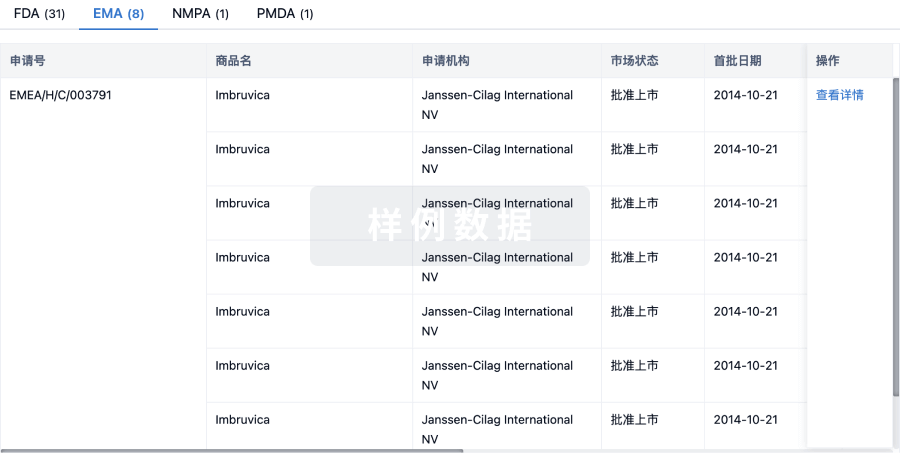
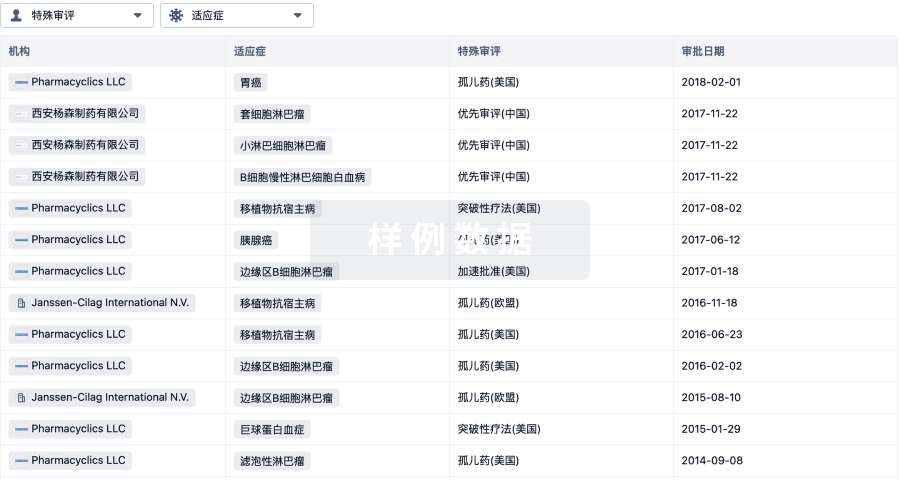
特殊审评
只需点击几下即可了解关键药物信息。
登录
或
生物医药百科问答
全新生物医药AI Agent 覆盖科研全链路,让突破性发现快人一步
立即开始免费试用!
智慧芽新药情报库是智慧芽专为生命科学人士构建的基于AI的创新药情报平台,助您全方位提升您的研发与决策效率。
立即开始数据试用!
智慧芽新药库数据也通过智慧芽数据服务平台,以API或者数据包形式对外开放,助您更加充分利用智慧芽新药情报信息。
生物序列数据库
生物药研发创新
免费使用
化学结构数据库
小分子化药研发创新
免费使用