预约演示
更新于:2026-07-25
KPV
更新于:2026-07-25
概要
基本信息
非在研机构- |
权益机构- |
最高研发阶段临床前 |
首次获批日期- |
最高研发阶段(中国)- |
特殊审评- |

关联
100 项与 KPV 相关的临床结果
登录后查看更多信息
100 项与 KPV 相关的转化医学
登录后查看更多信息
100 项与 KPV 相关的专利(医药)
登录后查看更多信息
39
项与 KPV 相关的文献(医药)2026-06-01·CYTOTECHNOLOGY
Lysine-proline-valine peptide attenuates hepatic lipid accumulation through ROS-dependent regulation of the PPARγ pathway in HepG2 cells
Article
作者: Jung, Won-Kyo ; Lee, Ju-Yeon ; Lee, Jin ; Je, Jae-Young ; Lee, Sei-Jung
Supplementary Information:
The online version contains supplementary material available at 10.1007/s10616-026-00967-z.
2026-06-01·JOURNAL OF SPORTS MEDICINE AND PHYSICAL FITNESS
A new era of doping? Use of peptide and peptide-analog drugs in recreational and professional sport and bodybuilding: a critical review
Review
作者: Camilo, Rafael P ; DE Oliveira Neves, Lucas F ; Coutinho, Luis F D
The pursuit of pharmacological enhancement in sport has evolved from the widespread use of anabolic-androgenic steroids (AAS) to novel agents such as peptides and peptide analogues. Marketed as more selective and ostensibly safer alternatives, peptides-including growth hormone secretagogues (e.g., Ipamorelin), growth hormone-releasing hormone analogues (e.g., CJC-1295, Sermorelin), and synthetic fragments (e.g., Frag 176-191, KPV)-are promoted for muscle growth, fat metabolism, recovery, and anti-inflammatory effects. Their pharmacological profiles, including enhanced stability and receptor selectivity, have made them attractive in both medical research and bodybuilding communities. Despite their growing popularity, the clinical evidence supporting peptide use in sport is limited. Most published studies examine therapeutic applications under controlled dosing regimens, not the supraphysiological or combined protocols common in bodybuilding. Emerging data highlight potential risks: cardiovascular strain, insulin resistance, dyslipidemia, and psychiatric instability. The largely unregulated supply chain exacerbates these dangers, as products are often mislabeled or contaminated. Regulatory bodies such as the World Anti-Doping Agency (WADA) have responded by expanding detection technologies, yet analytical challenges remain due to peptides' structural similarity to endogenous hormones and short half-lives. Beyond elite sport, the extent of peptide use in the general population is unknown. Anecdotal reports and widespread promotion on social media suggest growing uptake among recreational gym-goers, including younger individuals, but prevalence studies are lacking. This represents a critical gap in current knowledge. In conclusion, peptides represent a new phase in performance enhancement but remain experimental substances with poorly defined long-term risks. Until longitudinal data clarify their safety and prevalence, peptide use in both competitive and recreational settings should be considered high-risk and ethically problematic.
2026-01-16·Science Advances
Inflammation-triggered self-immolative conjugates enable oral peptide delivery by overcoming gastrointestinal barriers
Article
作者: Sun, Menglong ; Han, Ying ; Cheng, Juan ; Zhang, Jianxiang ; Dou, Yin ; Wu, Peng ; Chen, Sheng ; Li, Chenwen
Oral delivery of peptide therapeutics remains challenging due to gastrointestinal (GI) degradation and poor intestinal absorption. Here, we propose a self-immolative peptide prodrug conjugate (SIPPC) platform for inflammation-targeted oral delivery, integrating a hydrophilic polyethylene glycol segment, a reactive oxygen species (ROS)–responsive hydrophobic self-immolative module, and a hydrolyzable scaffold, which collectively enable spontaneous assembly into micelle-like nanoparticles. Using three anti-inflammatory peptides (KPV, Ac-QAW, and IRW), we demonstrated that the engineered conjugates exhibit remarkable GI stability, efficient mucus penetration, and ROS-responsive release at inflamed sites. In colitis mice, the KPV-based conjugate (proKPV) achieved a 3.8-fold greater colonic accumulation than free KPV, with enhanced efficacy even at a 20-fold lower dose. Beyond therapeutic effects in the colitis model, oral proKPV substantially accumulated in inflamed lungs and exhibited potent anti-inflammatory efficacy in mice with acute lung injury. Ac-QAW and IRW-based conjugates exhibited comparable benefits, underscoring SIPPC as a transformative paradigm for oral peptide therapeutics, offering substantial promise for clinical translation in inflammatory disorders.
24
项与 KPV 相关的新闻(医药)2026-07-24
·生物探索
LIFE SCIENCES INDUSTRY WATCH · 2026.07.2524小时产业动态
NO.1|监管政策FDA顾问委员会为4种热门多肽“开了一道门”,但这绝不是正式批准
近日,FDA药房复配顾问委员会就BPC-157、KPV、TB-500和MOTS-c进行表决。BPC-157、KPV和TB-500均以8票赞成、6票反对、1票弃权获得推荐;MOTS-c则以7票赞成、5票反对、2票弃权获得推荐。若FDA最终采纳,这些物质可能被纳入503A原料药清单,允许部分复配药房在个体化处方场景中使用。
顾问委员会投票不是FDA批准,也不代表这些多肽已经被证明安全、有效。FDA工作人员此前仍对人体验证、质量控制和免疫原性风险提出明显质疑。
产业层面的真正变量,是复配药房、远程医疗和健康管理平台是否会由灰色需求转向合规供给。对企业而言,机会与风险同时放大:市场可能扩容,但医学证据、产品纯度、适应症宣传和州级监管将成为新的合规高压区。
参考信息:FDA会议资料;Associated Press投票报道
NO.2|管线决策做到Ⅲ期仍被放弃:Sanofi终止amlitelimab特应性皮炎开发
Sanofi宣布停止OX40L单抗amlitelimab在中重度特应性皮炎中的临床开发,并不再提交全球监管申请。公司给出的核心理由并非“完全无效”,而是综合现有疗效与安全性证据后,该药不足以对现有标准治疗形成有临床意义的改善。长期延伸研究虽显示部分患者可维持临床反应,但仍未改变最终决策。
在特应性皮炎等高度拥挤的免疫赛道,“达到统计学显著”已远远不够。企业必须证明更快起效、更强维持、更低给药频率,或在安全性和患者分层上形成明显差异。
值得注意的是,Sanofi表示该决定不会改变2026年全年财务指引。这反映大型药企在管线组合管理中越来越强调资本效率:即使已投入后期临床,只要商业差异化不足,也可能快速止损,把资源转向更具竞争力的资产。
参考信息:Sanofi官方公告
NO.3|资本市场基因编辑IPO窗口重启?Scribe募资1.287亿美元登陆纳斯达克
体内CRISPR公司Scribe Therapeutics将IPO规模扩大至858万股,发行价定在区间高端的每股15美元,预计募资总额约1.287亿美元,股票代码为SCTX。简单复算:858万股×15美元,正好对应1.287亿美元的募资总额。
这笔交易受到关注,不只是因为“又一家基因编辑公司上市”,更因为Scribe试图把体内编辑从罕见病拓展至心血管代谢等更大市场。大适应症意味着更高的潜在收入上限,也意味着安全性容忍度更低、受试者规模更大、制造与给药体系更复杂。
一次成功定价尚不能证明生物科技IPO全面回暖。更重要的是上市后30天表现、后续基因编辑企业能否跟进,以及投资者是否愿意长期承担体内编辑的安全性与临床转化风险。
参考信息:Scribe IPO定价公告;SEC注册文件
NO.4|并购整合117.5亿美元交易跨过股东关:Sun Pharma收购Organon再进一步
Organon股东批准了Sun Pharma的收购方案。按照此前协议,Sun Pharma将以每股14美元现金收购Organon全部流通股,对应企业价值约117.5亿美元。Organon 2025年收入为62亿美元、调整后EBITDA为19亿美元,但同时背负约86亿美元债务。
这不是一笔单纯追求规模的并购。Organon在女性健康、成熟药物和生物类似药领域拥有全球商业网络;对Sun Pharma而言,交易可快速补足美国与其他成熟市场的准入和销售能力,并把其推向全球女性健康头部阵营。
最大风险:高负债整合、成熟产品增长放缓,以及跨区域组织协同。股东批准只是重要节点,监管审批、融资成本和收购后的去杠杆能力仍决定最终价值。
参考信息:Organon股东投票结果;交易官方公告
NO.5|全球准入药还没获批,仿制生产先启动:Merck提前布局每月一次HIV预防药
Merck为在研每月一次口服HIV暴露前预防药alimatravir签署了7项自愿许可协议,覆盖129个中低收入国家。合作方包括3家撒哈拉以南非洲制造商和4家印度企业,协议为免许可费安排,并允许仿制产品面向公共和私营采购方销售。
最不寻常之处在于:alimatravir仍处于后期临床阶段,Merck却已让本地企业提前准备产能、注册和供应链。传统模式通常是药物获批后再谈可及性,而此次安排把全球准入设计前移到了研发阶段。
关键前提:该药尚未获批,Ⅲ期结果、耐药风险和长期安全性仍可能改变商业前景。当前最值得关注的是“准入机制创新”,而不是提前认定产品一定成功。
参考信息:STAT报道;Reuters转载信息
NO.6|医疗器械单季收入17.4亿美元:Edwards证明结构性心脏病仍是高增长赛道
Edwards Lifesciences第二季度收入达到17.4亿美元,同比增长14%,调整后每股收益为0.78美元,高于市场预期的0.74美元。核心TAVR业务收入约12.6亿美元,同比增长11%;经导管二尖瓣和三尖瓣治疗业务收入约1.959亿美元,同比增长超过47%。
真正值得关注的不是TAVR继续增长,而是第二增长曲线正在成形:二尖瓣与三尖瓣介入产品的增速明显高于成熟的主动脉瓣业务。公司同时将全年收入区间调整至66亿—69亿美元,并维持调整后每股收益2.95—3.05美元的指引。
行业判断:结构性心脏介入仍兼具临床需求、技术壁垒和支付基础,但未来增长将越来越依赖新适应证、医院术者培训和医保覆盖,而不是单纯依靠器械迭代。
参考信息:Investor's Business Daily;The Wall Street Journal
NO.7|上市后监管一款已上市药物如何自证?Amgen提交新证据力保Tavneos
Amgen向FDA提交证据包,希望获得听证机会并保留Tavneos在美国的上市资格。材料包括对关键试验的第三方重新分析、真实世界证据,以及患者和医务人员陈述。Tavneos是Amgen在2022年以37亿美元收购ChemoCentryx时获得的核心资产。
FDA的质疑同时涉及疗效证据完整性与安全性。监管机构此前从全球数据中识别出76例具有合理因果关联的药物性肝损伤,其中54例住院、8例死亡;7例为活检确认的胆管消失综合征,3例死亡。FDA已启动撤销批准程序,但在最终决定作出前,药物仍可留在市场。
产业意义:这可能成为真实世界证据能否“挽救”既有批准的重要案例。但真实世界疗效信号无法自动修复关键试验的数据完整性问题,安全性风险也必须独立评估。
参考信息:Fierce Pharma;FDA撤市程序说明;FDA肝损伤安全通报
NO.8|罕见病开发改善生化指标,不等于改变器官结局:Ipsen胆道闭锁Ⅲ期试验失败
Ipsen宣布,Bylvay(odevixibat)用于胆道闭锁的BOLDⅢ期试验未达到主要终点:与安慰剂相比,治疗未能显著改善接受Kasai手术患儿的自体肝生存率。公司表示,当前顶线数据与该药在已批准适应证中的既有安全性特征基本一致。
胆道闭锁是儿童肝移植的主要原因之一,目前除Kasai手术和肝移植外,缺少获批药物。正因为未满足需求巨大,失败结果更具警示意义:罕见病项目中,瘙痒、胆汁酸或其他替代指标的改善,并不必然转化为延缓移植或保留器官的真实获益。
后续关注:Ipsen是否停止该适应证、是否产生资产减值,以及完整数据能否识别特定获益亚组。现阶段只能确认主要终点失败,不能据此否定该药在其他已批准胆汁淤积性疾病中的价值。
参考信息:Ipsen官方公告
NO.9|代谢药物最高减重22.6%:Lilly“三靶点”retatrutide准备在2027年申报
Lilly公布retatrutide两项关键Ⅲ期试验顶线结果。在伴2型糖尿病的超重或肥胖成人中,80周平均减重最高达到49.6磅、约20.8%;在重度肥胖且已确诊心血管疾病的人群中,平均减重最高达到55.8磅、约22.6%。公司计划在2027年第一季度向FDA提交生物制品许可申请。
Retatrutide同时激活GIP、GLP-1和胰高血糖素受体。其战略意义不仅是继续提高减重幅度,更在于争夺心血管疾病、睡眠呼吸暂停和骨关节炎等“肥胖相关并发症”市场。
仍需谨慎:目前是公司披露的顶线结果,不能直接与其他试验进行简单横向比较。最终竞争力还取决于完整不良事件、停药率、肌肉保留、长期维持效果和产能供应。
参考信息:Eli Lilly官方公告
NO.10|数字医疗Dexcom成为FDA TEMPO首个参与者:数字医疗审批可能进入“边使用、边验证”时代
FDA选择Dexcom作为TEMPO数字健康设备试点的首个参与企业。Dexcom Glucose Health Program将整合G7、Stelo葡萄糖数据,以及营养、运动、睡眠和压力等信息,提供个体化建议和AI洞察,拟用于糖尿病前期和2型糖尿病筛查,并探索改善糖尿病前期人群HbA1c。
TEMPO最值得关注的制度设计是:在与CMS ACCESS支付模式对接的特定场景中,FDA可对部分上市前授权和临床研究要求采取执法酌情处理,同时要求企业持续收集、监测和报告真实世界数据。也就是说,产品可能在受控支付场景中更早进入使用,再用真实世界结果完成验证。
FDA明确表示,该项目在试点用途下的有效性尚未完成评估。它不是降低证据标准,而是把部分证据生成过程从上市前迁移到可监测的真实世界环境。
参考信息:FDA官方公告;Dexcom官方公告
行业正在发生的变化
第一,监管正在从“一次性审批”转向全生命周期治理。复配多肽、Tavneos和TEMPO分别代表准入放宽、上市后撤回和真实世界验证三种不同方向。
第二,产品成功标准从“有效”升级为“有可感知的增量价值”。Sanofi放弃后期资产、Ipsen主要终点失败,都说明临床和商业差异化必须同时成立。
第三,资本与准入开始前置。Scribe通过IPO为体内编辑融资,Merck则在药物获批前安排全球许可与产能。未来的竞争,不再只是研发速度,而是研发、注册、支付、制造和全球供应的同步设计能力。
责编|探索君
排版|探索君
转载请注明来源于【生物探索】
声明:本文用于产业信息交流,不构成投资、临床诊疗或监管合规建议。临床试验结果以完整数据和监管审评结论为准。本文仅用于分享,不代表平台立场,如涉及版权等问题,请尽快联系我们,我们第一时间更正,谢谢!
End
2026-07-24
As outside experts gathered for a second day to discuss adding certain popular-yet-unapproved peptides to the U.S.’ bulk compounding list, the first to go up against a vote did not fare as well as those assessed Thursday.
On two votes concerning whether to recommend emideltide free base and emideltide acetate for the 503A Bulk Drug Substances list, the panelists on the FDA’s Pharmacy Compounding Advisory Committee (PCAC) voted the same way: Seven of the experts cast their lots behind ‘no,’ versus six ‘yes’ votes and one abstention.
In briefing documents released (PDF) ahead of the meeting, the FDA explained that it included both forms of the compound—and, in turn, two separate questions—because it wasn’t sure which version was intended in the nomination for inclusion on the list. The FDA also clarified that the “nominations were withdrawn” and that it is evaluating the substances “at its discretion”—a point that seemed to cause consternation among some PCAC members on Friday.
The recommendation against emideltide comes in contrast to the votes cast on the first day of the meeting, during which panelists ultimately backed the inclusion of all four other peptides considered so far for the compounding roster.
On Thursday, the PCAC members voted in favor of adding BPC-157, TB-500, KPV and MOTs-C to the positive list, in a move that would reverse restrictions placed on the unapproved compounds back in 2023. The FDA at the time cited safety concerns and a lack of evidence to support the use of a dozen peptides, which have nevertheless thrived on a gray market thanks to their popularity among fitness and wellness influencers, not to mention health secretary Robert F. Kennedy Jr.
The members did, however, come around by the second vote of Day 2, focused on the potential inclusion of epitalon free base and epitalon acetate to the 503A catalog.
Reviewing that compound, used primarily for insomnia, the panelists tendered seven 'yes' votes to four 'no' votes, alongside one abstention, with the PCAC members sticking to their positions across both the free base and acetate form.
The final peptide up for deliberation, semax—popular for its ostensible cognitive benefits and evaluated by the FDA in cerebral ischemia, migraine and trigeminal neuralgia—also passed muster with the panelists.
In the concluding votes of the day, eight members of PCAC voted in favor of adding the compound to the bulk compounding list, overcoming five ‘no’ votes and one abstention.
The FDA isn’t beholden to the votes of its advisory committees. Conflict-of-interest concerns have been raised about the makeup of the panel given some members’ ties to clinics and other businesses that supply peptides. The FDA attempted to deflect some of that criticism earlier this week by adding eight new temporary voting members.
In the case of emideltide, the compound is a reported nonapeptide that the FDA says has been evaluated for the treatment of opioid withdrawal, chronic insomnia and narcolepsy. The FDA itself continues to weigh against the inclusion of emideltide on the bulk compounding list, noting that, among other concerns, inconsistent naming standards pose patient safety risks, and that the peptide is not well characterized, and its purity profile cannot be easily confirmed.
On another point, the FDA noted that “[n]o outsourcing facilities have reported compounding drug products containing emideltide related [bulk drug substance] to the agency.” The websites of integrative neurology clinics, medical concierge services, med spas, wellness clinics and other online retailers marketing emideltide injections and nasal sprays in the U.S. often fail to describe or clearly state whether their products are compounded, the FDA added.
Regarding the panelists’ reasoning, Kevin Zacharoff, M.D., a clinical assistant professor and course director of pain and addiction from the Renaissance School of Medicine at Stony Brook University, explained that he cast his ‘no’ vote because, “as a clinician, as a member of another advisory committee, it’s impossible for me to not take the FDA’s recommendations at heart with respect to safety and efficacy.”
He also suggested that arguments in favor of the drug’s inclusion to help curb unregulated sales didn’t fully convince him “that there would be a diminishment of availability on the gray market.”
“I think it would end up being an economic situation,” he explained, “and if it was more expensive to be obtained on a compound pharmacy site, then people might still continue to purchase in a gray market situation.”
Todd Durham, Ph.D., SVP of clinical & outcomes research at the Foundation Fighting Blindness—who also voted ‘no’—said he cast his vote “primarily for low-quality evidence around efficacy, the poor characterization of the bulk drug substance and the fact that there are approved medical therapies for all proposed uses.”
That said, some who voted to include emideltide on the list suggested in their explanations that other panelists may have been straying from the purpose of the adcomm.
Tennessee state Senator Bobby Harshbarger, who voted ‘yes,’ suggested that he made his call “because our duty is to apply the 503A standards, not the Investigational New Drug Application standard.”
As for epitalon, the PCAC members seemed more assured of the compound's efficacy and safety on the whole, with many arguing that ultimate determinations about safety should come down to a discussion between doctor and patient.
One panelist who voted ‘yes,’ Gabriel Alizaidy, M.D., of Maximus Health, argued that there was a “mismatch in real-world data” on the peptide’s use versus what the FDA had presented, calling the disparity “immense.”
But on the other end of the spectrum, William Zamboni, Ph.D., a director and facility co-leader from the Immunotherapy and Drug Development Center of the University of Pittsburgh Medical Center Hillman Cancer Center, said he felt compelled to vote ‘no’ given “a significant lack of information and data to evaluate the product, and also how to prescribe it,” admitting he had more research to do on his own.
Meanwhile, as with most of the other votes issued in the past two days, the favorable semax verdict reflected a seeming disconnect between FDA career scientists and many of those on the committee, with that tension at times coming out during panelists' explanations of their votes.
During the clarifying question section of the meeting focused on semax, one of the panelists asked just what the intended indication in ischemic stroke would be, to which an FDA staffer admitted that the agency itself is unclear from the materials it’s reviewed.
“We watched the FDA’s own review board lean on surface-level searches while hundreds of pages of research submitted on time for these meetings went unaddressed,” Haleem Mohammed, M.D., global chief medical officer at men’s health clinic network Gameday Health, argued when presenting the rationale behind his vote for ‘yes’ on adding semax to the bulk compounding roster.
In framing the outcome of the vote, which still needs to be affirmed by the FDA, Mohammed suggested that the panelists were taking “a decision that patients are already making, and we try to keep it inside a system that has rules and regulations.”
But FDA staffers also defended their efforts, suggesting that the nominators of the peptides up for review led them through an opaque process in which attempts to glean more information were frequently unsuccessful.
Friedhelm Sandbrink, M.D., national program director for pain management specialty care services in the Veteran’s Health Administration—who voted ‘no’ on semax—said that while he understood the desire to provide medical care and access to treatments for patients, “I don’t think we can skip the rigorous scientific studies that are needed when we endorse any kind of product and make it available.”
Editor's note: This story has been updated with additional details on the final vote of the PCAC's Friday meeting.
2026-07-24
·药光生物
产业合作三星生物拟18亿美元收购PolyPeptide
7月20日,韩国生物医药企业三星生物(Samsung Biologics)宣布,计划以约18亿美元(约14.6亿瑞士法郎)现金收购瑞士多肽CDMO企业PolyPeptide Group。
交易预计将在完成监管审批及相关交割条件后推进,PolyPeptide董事会已一致建议股东接受该收购方案。
此次收购的背景,是全球多肽药物市场正在快速扩张。
近年来,以司美格鲁肽(Semaglutide)、替尔泊肽(Tirzepatide)为代表的GLP-1及相关代谢多肽药物需求持续增长,使多肽原料药的生产能力成为全球药企和CDMO企业竞争的重要资源。
与此同时,多肽药物相比传统小分子药物,在合成、纯化、质量控制以及规模化生产方面具有更高技术门槛,具备成熟多肽制造能力的CDMO企业逐渐成为产业链中的关键环节。
PolyPeptide Group是全球领先的治疗性多肽CDMO企业之一,主要为创新药企提供多肽活性药物成分(API)的研发和商业化生产服务,业务覆盖欧洲、美国和印度等多个生产基地。
该公司长期参与包括代谢疾病、糖尿病、肥胖症以及其他治疗领域多肽药物的供应链建设,在复杂多肽合成、工艺开发和规模化生产方面具有较强积累。
这次收购意味着三星生物将从传统抗体CDMO业务进一步拓展至多肽药物制造领域。
此前,三星生物的核心优势主要集中在单克隆抗体等生物制剂生产,而收购PolyPeptide后,公司将获得成熟的多肽原料药生产平台,进一步完善其“多模态CDMO”战略布局。
监管动态FDA召开多肽监管会议,BPC-157等多种热门多肽获得委员会支持,多肽市场迈向规范化发展
7月23~24日,美国FDA药房复方咨询委员会(PCAC)召开会议,审议BPC-157、TB-500、KPV、MOTS-c等7种多肽是否适合纳入美国503A散装药物原料名单(503A Bulks List)。
其中:
7月23日审议的BPC-157、KPV、TB-500和MOTS-c已获得委员会支持纳入名单的建议;
另外3种多肽Emideltide、Semax和Epitalon的审议结果需等待进一步确认。
这次会议背景是近年来美国复方多肽市场快速增长,但相关产品长期缺乏明确监管定位,FDA希望通过专家评估,判断这些多肽是否具备进入规范化复方体系的条件。
503A名单是美国FDA针对传统复方药房建立的监管机制。进入该名单后,符合条件的持牌复方药房可以在医生处方基础上使用相关原料,为患者制备个体化复方药物。
如果相关多肽最终被纳入503A名单,将意味着美国多肽复方市场获得更加明确的监管路径,有助于推动生产质量和使用规范提升。
不过需要注意的是,委员会建议并不等同于FDA最终批准,后续仍需由FDA根据科学证据和监管评估作出正式决定。
技术突破Rani Therapeutics公布RT-114Ⅰ期数据,口服多肽递送技术迎来关键进展
7月15日,美国生物技术公司Rani Therapeutics公布其口服多肽候选药物RT-114的Ⅰ期临床初步数据。
RT-114采用Rani自主研发的RaniPill口服递送平台,将ProGen公司的PG-102(GLP-1/GLP-2双重受体激动剂)通过胶囊形式递送至体内,用于肥胖治疗。
此次数据公布显示,RT-114在人体研究中表现出较高的口服生物利用度,并展现出替代传统注射给药方式的潜力。
多肽药物由于分子量较大、容易被胃肠道降解以及难以穿过肠壁吸收,口服化一直是行业面临的重要挑战。如何实现稳定吸收和足够药物暴露一直是研发难点。
Rani Therapeutics希望通过RaniPill技术解决这一问题,使复杂生物大分子药物能够像普通药片一样通过口服方式给药。
根据Rani公布的Ⅰ期研究结果,RT-114在人体内表现出了较好的药物暴露水平,其口服递送效果甚至超过了对应皮下注射方案。
数据显示,与12mg皮下注射PG-102相比,口服RT-114实现了超过150%的生物利用度,说明RaniPill平台具备将多肽药物有效递送至体内的潜力。
在安全性方面,研究期间未发现与胶囊递送系统相关的严重安全问题,受试者出现的不良反应主要与GLP-1/GLP-2类药物常见反应一致,包括恶心、呕吐和腹泻等。
基于初步结果,Rani计划进一步扩大临床研究规模,并开展重复给药试验,以评估RT-114在肥胖患者中的长期疗效和安全性。
研发进展歌礼制药推进两款基于Amylin(胰淀素)的多肽药物:ASC36和ASC36_35
近日,中国创新药企业歌礼制药(Ascletis Pharma)公布其肥胖治疗领域多肽药物研发进展,正在推进两款新型多肽候选药物ASC36和ASC36_35的开发。
其中,ASC36是一款长效Amylin(胰淀素)受体激动剂,ASC36_35则是在此基础上开发的复方多靶点多肽疗法,旨在同时激活Amylin、GLP-1以及GIP相关代谢通路,用于肥胖及相关代谢疾病治疗。
Amylin作为一种参与调节食欲、胃排空和能量代谢的重要激素,近年来受到越来越多关注,被认为可能成为继GLP-1之后肥胖治疗领域的重要靶点。
歌礼制药表示,已向美国FDA提交ASC36和ASC36_35两项临床试验申请(IND),其中ASC36采用长效注射设计,目标实现更低给药频率;ASC36_35则通过多靶点联合机制,希望进一步增强减重效果。
根据该公司公布的临床前研究数据,ASC36_35在动物模型中表现出较好的体重下降效果和代谢改善潜力。
目前,诺和诺德、礼来、阿斯利康等国际药企也正在积极布局Amylin及多靶点肥胖药物研发。与目前市场主流GLP-1药物相比,Amylin相关疗法被认为可能在体重控制和代谢改善方面形成差异化优势。
END
100 项与 KPV 相关的药物交易
登录后查看更多信息
研发状态
10 条进展最快的记录, 后查看更多信息
登录
| 适应症 | 最高研发状态 | 国家/地区 | 公司 | 日期 |
|---|---|---|---|---|
| 炎症性肠病 | 临床前 | 美国 | 2007-10-19 |
登录后查看更多信息
临床结果
临床结果
适应症
分期
评价
查看全部结果
| 研究 | 分期 | 人群特征 | 评价人数 | 分组 | 结果 | 评价 | 发布日期 |
|---|
No Data | |||||||
登录后查看更多信息
转化医学
使用我们的转化医学数据加速您的研究。
登录
或

药物交易
使用我们的药物交易数据加速您的研究。
登录
或

核心专利
使用我们的核心专利数据促进您的研究。
登录
或

临床分析
紧跟全球注册中心的最新临床试验。
登录
或

批准
利用最新的监管批准信息加速您的研究。
登录
或

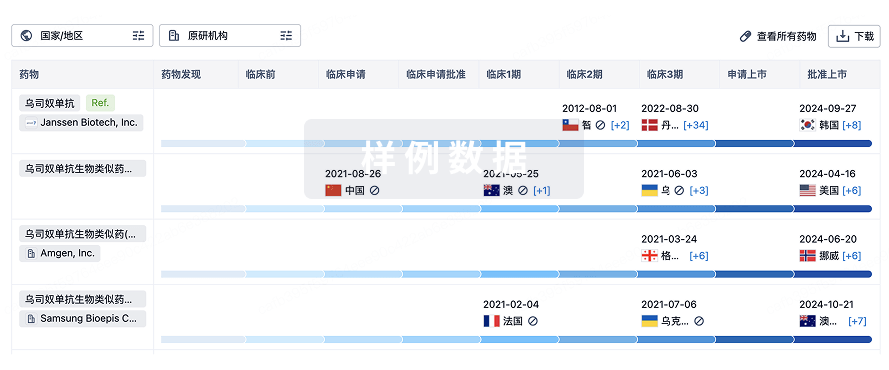
生物类似药
生物类似药在不同国家/地区的竞争态势。请注意临床1/2期并入临床2期,临床2/3期并入临床3期
登录
或
特殊审评
只需点击几下即可了解关键药物信息。
登录
或

提出任何生物医药研究问题
让每一步生物医药决策都精准制胜
基于十亿级生物数据与全球情报的精准 AI,赋能早期药物发现
立即开始免费试用!
智慧芽新药情报库是智慧芽专为生命科学人士构建的基于AI的创新药情报平台,助您全方位提升您的研发与决策效率。
立即接入生物医药数据包
智慧芽新药库数据也通过智慧芽开放平台,以MCP或API服务形式对外开放。立即使用我们的MCP服务定制您的LLM智能体。
生物序列数据库
生物药研发创新
免费使用
化学结构数据库
小分子化药研发创新
免费使用