预约演示
更新于:2026-08-08
iDD-003
更新于:2026-08-08
概要
基本信息
原研机构 |
在研机构- |
非在研机构 |
权益机构- |
最高研发阶段无进展药物发现 |
首次获批日期- |
最高研发阶段(中国)- |
特殊审评- |
关联
100 项与 iDD-003 相关的临床结果
登录后查看更多信息
100 项与 iDD-003 相关的转化医学
登录后查看更多信息
100 项与 iDD-003 相关的专利(医药)
登录后查看更多信息
16
项与 iDD-003 相关的文献(医药)2020-07-01·Fish & shellfish immunology2区 · 农林科学
Administration of commensal Shewanella sp. MR-7 ameliorates lipopolysaccharide-induced intestine dysfunction in turbot (Scophthalmus maximus L.)
2区 · 农林科学
Article
作者: Zhou, Huihui ; Zhang, Beili ; Li, Chaoqun ; He, Gen ; Wang, Xuan ; Mai, Kangsen ; Liu, Chengdong
This study was designed to evaluate whether the administration of commensal Shewanella sp. MR-7 (MR-7) could ameliorate lipopolysaccharide (LPS)-induced intestine dysfunction in turbot. Fish (body weight: 70.00 ± 2.00 g) were randomly divided into three groups including the control group treated with dough, the LPS group treated with dough plus LPS, and the LPS+MR-7 (LMR) group treated with dough plus LPS and MR-7. These three groups with 24 fish each were force-fed with 1 g dough daily for 7 continuous days. The results revealed that MR-7 administration ameliorated LPS-induced intestinal injury, showing higher intestinal villus and microvillus height. Further results showed that MR-7 could inhibit LPS-induced activation of TLR-NF-κB signaling thus maintaining the normal expression levels of cytokines and finally ameliorate the intestinal inflammatory response in turbot. Compared with the LPS group, LMR group had less goblet cells and lower mucin-2 expression level. Moreover, MR-7 restored LPS-induced down-regulation of tight junction protein-related gene expression (zonula occluden-1, occludin, tricellulin and claudin-3). Further investigations indicated that MR-7 partially counteracted LPS-induced changes in gut microbiota composition, enhanced the beneficial bacteria Lactobacillus and reduced the Pseudomonas, thus maintaining the overall microbiota balance. Taken together, the administration of MR-7 could effectively restore LPS-induced intestine function disorder in turbot by ameliorating inflammatory response, mucosal barrier dysfunction and microbiota dysbiosis.
2003-07-01·Journal of agricultural and food chemistry1区 · 农林科学
Ovipositional Responses of Chilo partellus (Swinhoe) (Lepidoptera: Pyralidae) to Natural Products from Leaves of Two Maize (Zea mays L.) Cultivars
1区 · 农林科学
Article
作者: Agarwal, Hari C. ; Jain, Subhash C. ; Singh, Ashok K. ; Babu, B. Ravindra ; Varshney, Anupam K.
Ovipositional responses of Chilo partellus (Swinhoe) (Lepidoptera: Pyralidae) to hexane extracts of leaves of two maize (Zea mays L.) cultivars, one resistant (Kisan) and one susceptible (Basilocal), were studied in two-choice bioassays. Gravid females laid a significantly higher percentage of eggs on substrates smeared with extract of Basilocal leaves (HEBL) (69%) than on those smeared with extracts of Kisan leaves (HEKL) (31%). Several chemicals were isolated from HEKL, three of which were characterized as dotriacontanol, heptadecanol, and nonadecanol. These chemicals were either absent or were present in very small amounts in HEBL, but in HEKL they were detected in much larger amounts. Each isolated chemical was tested for its effect on C. partellus oviposition in two-choice bioassays. Maximum ovipositional deterrence (90%) was observed for the compound MR-22a, followed in decreasing order by nonadecanol, MR-7, and heptadecanol. The identity of the remaining compounds is being investigated. The results indicate that the relative resistance of Kisan maize compared to Basilocal is partly due to the presence of certain ovipositional deterrents in its leaves.
2001-10-01·JOURNAL OF NUCLEAR MEDICINE
Comparative cellular catabolism and retention of astatine-, bismuth-, and lead-radiolabeled internalizing monoclonal antibody.
Article
作者: Waldmann, T A ; Carrasquillo, J A ; Yao, Z ; Eckelman, W C ; Garmestani, K ; Paik, C H ; Dadachova, E ; Wong, K J ; Yordanov, A ; Park, L S
METHODS:
In this study, we attached various radionuclides that result in alpha-emissions to T101, a rapidly internalizing anti-CD5 mAb. We then evaluated the catabolism and cellular retention and compared them with those of (125)I- and (111)In-labeled T101. T101 was labeled with (211)At, (125)I, (205,6)Bi, (111)In, and (203)Pb. CD5 antigen-positive cells, peripheral blood mononuclear cells (PBMNC), and MOLT-4 leukemia cells were used. The labeled T101 was incubated with the cells for 1 h at 4 degrees C for surface labeling. Unbound activity was removed and 1 mL medium added. The cells were then incubated at 37 degrees C for 0, 1, 2, 4, 8, and 24 h. The activity on the cell surface that internalized and the activity on the cell surface remaining in the supernatant were determined. The protein in the supernatant was further precipitated by methanol for determining protein-bound and non-protein-bound radioactivity. Sites of internal cellular localization of radioactivity were determined by Percoll gradient centrifugation.
RESULTS:
All radiolabeled antibodies bound to the cells were internalized rapidly. After internalization, (205,6)Bi, (203)Pb, and (111)In radiolabels were retained in the cell, with little decrease of cell-associated radioactivity. However, (211)At and (125)I were released from cells rapidly ((211)At < (125)I) and most of the radioactivity in the supernatant was in a non-protein-bound form. Intracellular distribution of radioactivity revealed a transit of the radiolabel from the cell surface to the lysosome. The catabolism patterns of MOLT-4 cells and PBMNC were similar.
CONCLUSION:
(211)At catabolism and release from cells were somewhat similar to that of (125)I, whereas (205,6)Bi and (203)Pb showed prolonged cell retention similar to that of (111)In. These catabolism differences may be important in the selection of alpha-radionuclides for radioimmunotherapy.
1
项与 iDD-003 相关的新闻(医药)2025-12-16
COMPANY ANNOUNCEMENT
When a company announces a recall, market withdrawal, or safety alert, the FDA posts the company's announcement as a public service. FDA does not endorse either the product or the company.
Read Announcement
View Product Photos
Summary
Company Announcement Date:
December 15, 2025
FDA Publish Date:
December 16, 2025
Product Type:
Dietary Supplements
Drugs
Reason for Announcement:
Recall Reason Description
Undeclared Sildenafil and Tadalafil
Company Name:
StuffbyNainax LLC
Brand Name:
Brand Name(s)
Product Description:
Product Description
Dietary supplement for male enhancement
Company Announcement
Huntsville, Texas — StuffbyNainax LLC is voluntarily recalling all lots of MR.7 SUPER 700000 capsules to the consumer level. FDA analysis has found the product to be tainted with sildenafil and tadalafil, which are active ingredients in FDA-approved prescription drugs used to treat male erectile dysfunction and belong to a class of drugs known as phosphodiesterase type‑5 (PDE‑5) inhibitors. Products containing sildenafil or tadalafil cannot be marketed as dietary supplements.
MR.7 SUPER 700000 capsules are considered an unapproved new drug for which safety and efficacy have not been established and are therefore subject to recall.
Risk Statement:
Consumption of products containing undeclared sildenafil or tadalafil may cause serious health risks. These ingredients may interact with nitrates found in certain prescription medications (such as nitroglycerin) and may result in a dangerous drop in blood pressure, which can be life‑threatening. Individuals with diabetes, high blood pressure, high cholesterol, or heart disease frequently take nitrates. Adult males who use nitrates for cardiac conditions are at the greatest risk.
Product Description:
The tainted MR.7 SUPER 700000 capsules are marketed as a dietary supplement for male enhancement. The affected product does not have lot numbers or expiration dates. The product was distributed nationwide in the United States to a limited number of online customers between August 2025 and November 2025.
Affected Product:
Product Name: MR.7 SUPER 700000
Brand: MR.7
Form: Capsules
Lot Number: Not available / unlisted
Distribution Period: August 2025 – November 2025
Distribution: Sold online in the United States
This recall is being conducted with the knowledge of the U.S. Food and Drug Administration.
Legal Disclaimer:
EIN Presswire provides this news content "as is" without warranty of any kind. We do not accept any responsibility or liability
for the accuracy, content, images, videos, licenses, completeness, legality, or reliability of the information contained in this
article. If you have any complaints or copyright issues related to this article, kindly contact the author above.
100 项与 iDD-003 相关的药物交易
登录后查看更多信息
研发状态
10 条进展最快的记录, 后查看更多信息
登录
| 适应症 | 最高研发状态 | 国家/地区 | 公司 | 日期 |
|---|---|---|---|---|
| 自身免疫性疾病 | 药物发现 | 法国 | - | |
| 肿瘤 | 药物发现 | 法国 | - |
登录后查看更多信息
临床结果
临床结果
适应症
分期
评价
查看全部结果
| 研究 | 分期 | 人群特征 | 评价人数 | 分组 | 结果 | 评价 | 发布日期 |
|---|
No Data | |||||||
登录后查看更多信息
转化医学
使用我们的转化医学数据加速您的研究。
登录
或

药物交易
使用我们的药物交易数据加速您的研究。
登录
或

核心专利
使用我们的核心专利数据促进您的研究。
登录
或

临床分析
紧跟全球注册中心的最新临床试验。
登录
或

批准
利用最新的监管批准信息加速您的研究。
登录
或

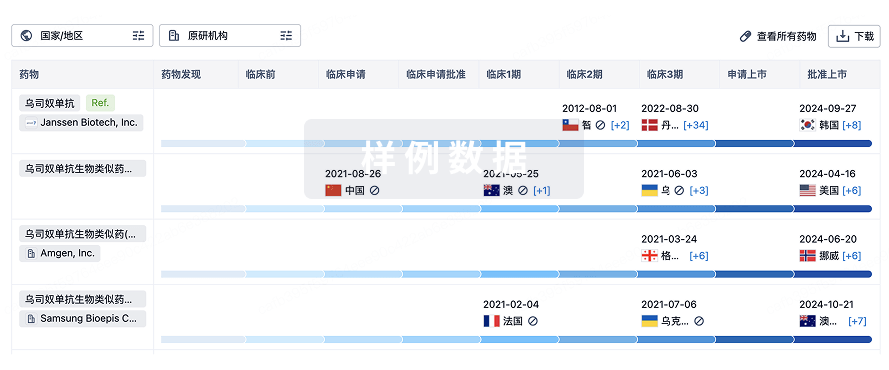
生物类似药
生物类似药在不同国家/地区的竞争态势。请注意临床1/2期并入临床2期,临床2/3期并入临床3期
登录
或
特殊审评
只需点击几下即可了解关键药物信息。
登录
或

提出任何生物医药研究问题
让每一步生物医药决策都精准制胜
基于十亿级生物数据与全球情报的精准 AI,赋能早期药物发现
立即开始免费试用!
智慧芽新药情报库是智慧芽专为生命科学人士构建的基于AI的创新药情报平台,助您全方位提升您的研发与决策效率。
立即接入生物医药数据包
智慧芽新药库数据也通过智慧芽开放平台,以MCP或API服务形式对外开放。立即使用我们的MCP服务定制您的LLM智能体。
生物序列数据库
生物药研发创新
免费使用
化学结构数据库
小分子化药研发创新
免费使用