预约演示
更新于:2026-08-01
AB-12
更新于:2026-08-01
概要
基本信息
非在研机构- |
权益机构- |
最高研发阶段临床前 |
首次获批日期- |
最高研发阶段(中国)- |
特殊审评- |

结构/序列
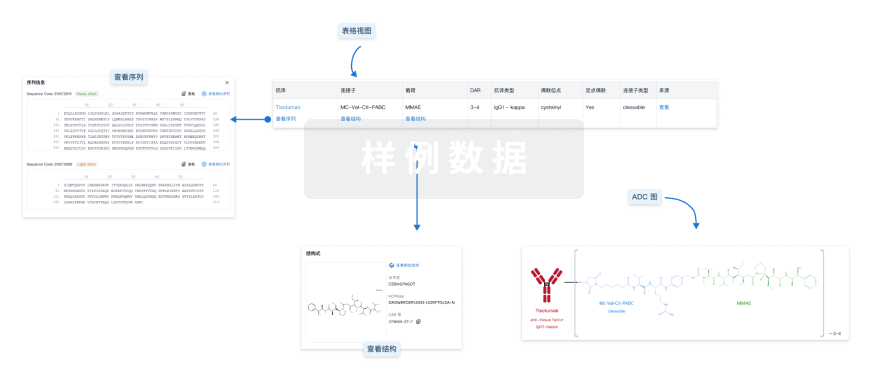
使用我们的ADC技术数据为新药研发加速。
登录
或
关联
100 项与 AB-12 相关的临床结果
登录后查看更多信息
100 项与 AB-12 相关的转化医学
登录后查看更多信息
100 项与 AB-12 相关的专利(医药)
登录后查看更多信息
17
项与 AB-12 相关的文献(医药)2026-07-01·REVISTA ARGENTINA DE MICROBIOLOGIA
Effects of plant growth-promoting rhizobacteria on the productivity and nutrition of sugarcane under reduced urea fertilization
Article
作者: Mateus-Rodríguez, Julián Fernando ; Mejía-Flórez, Yohan Sebastián ; Másmela-Mendoza, Julián Esteban
The practice of biofertilization enhances the sustainability of sugarcane cultivation. This study evaluated the ability of several bacterial strains to improve sugarcane growth and reduce its dependence on urea. Strains belonging to the genera Gluconacetobacter, Azotobacter, Rhizobium, and Azospirillum were efficient in biological nitrogen fixation, indole-3-acetic acid production, and inorganic phosphorus solubilization. Azotobacter and Gluconacetobacter efficiently solubilized rock phosphate, while Azospirillum was more effective with tricalcium phosphate. Azospirillum brasilense Ab12 showed viability in diluted vinasse, utilizing organic acids. Inoculation with A. brasilense strains Ab12 and Ab16 at 4×10⁸CFU/ml in pre-sprouted cuttings increased productivity in field-transplanted plants without chemical fertilization. The application of Azospirillum improved stem number, stem weight and length, cane yield per hectare, and sucrose content. In addition, it promoted greater tillering and enhanced the uptake of P, S, Fe, and Zn. Bacterial inoculants reduced the need for urea fertilization, showing a complementary effect on plant growth even with the full recommended urea dose. Azospirillum-based biofertilizers allowed the reduction of urea rates, with similar growth observed when using 25-50% of the standard dose. These results demonstrate the potential of A. brasilense as a biofertilizer to reduce dependence on synthetic inputs and improve the nutritional efficiency of sugarcane cultivation.
2018-06-01·Experimental and clinical endocrinology & diabetes : official journal, German Society of Endocrinology [and] German Diabetes Association4区 · 医学
Impact of type 2 Diabetes and Metformin use on Vitamin B12 Associated Biomarkers - an Observational Study
4区 · 医学
Article
作者: Hersberger, Kurt ; Walter, Philipp ; Metaxas, Corina ; Zurwerra, Chantal ; Rudofsky, Gottfried
Abstract:
Aims Assessment of the impact of type 2 diabetes (T2DM) and metformin use on vitamin B12 (VB12) associated biomarkers and their suitability to represent VB12 supply.
Methods Differences of VB12, holotranscobalamine (HoloTc), the biologically active fraction (%AB12)=HoloTc/VB12*100 and homocystein (Hcy) were analysed i) among diabetic outpatients with (DMMet+ ) and without metformin use (DMMet-) and ii) in comparison to an external non-diabetic reference group with low VB12 (<200 pmol/L).
Results VB12 associated biomarkers were distributed equally between DMMet+ (n=29, 58%) and DMMet- (n=21, 42%). Significant differences in %AB12 in diabetic patients with low VB12 (n=19) compared to the non-diabetic reference group (n=31) were found. Higher %AB12 was associated with diabetes. Hcy levels were significantly associated with age, folic acid level, renal function and HoloTc but not with VB12.
Conclusions In T2DM patients with low VB12, %AB12 was confirmed as being higher in comparison to nondiabetic patients. The effect was not clearly attributable to metformin use. HoloTc was unaffected by the lowering of VB12 and significantly associated with the functional marker Hcy. Both findings support the use of HoloTc for the assessment of VB12 supply in diabetic patients.
2014-04-15·Investigative ophthalmology & visual science2区 · 医学
Pathogenicity of Ocular Isolates ofAcinetobacter baumanniiin a Mouse Model of Bacterial Endophthalmitis
2区 · 医学
ArticleOA
作者: Ashok Kumar ; Deepa Talreja ; Fu-shin Yu ; Satish K. Walia ; Keith S. Kaye
PURPOSE:
To determine the virulence properties of ocular isolates of Acinetobacter baumannii in causing endophthalmitis in a mouse model.
METHODS:
Endophthalmitis was induced by intravitreal injections of the bacteria into C57BL/6 (B6) mouse eyes. The disease progression was monitored by ophthalmoscopic, electroretinography (ERG), histologic, cell death (TUNEL labeling), and microbiological parameters. The expression of cytokines/chemokines was checked by quantitative RT-PCR (qRT-PCR) and ELISA. Flow cytometry was used to determine cellular infiltration. The role of neutrophils was determined using neutropenic mice. The virulence traits (biofilm formation, adherence, and cytotoxicity) of the ocular isolates were tested using corneal epithelial cells.
RESULTS:
Among the three clinical isolates and a standard ATCC 19606 strain tested, a biofilm producing multidrug resistant (MDR) strain of A. baumannii AB12 caused severe endophthalmitis (100% destruction of the eyes) leading to the loss of retinal function as assessed by ERG analysis. Elevated levels of inflammatory mediators (TNF-α, IL-1β, CXCL2, and IL-6) were detected in AB12-infected eyes. Histologic and TUNEL staining revealed increased retinal cell death and the flow cytometry data showed the presence of inflammatory cells, primarily neutrophils (CD45(+)/Ly6G(+)). Neutropenic mice showed an increased bacterial burden, reduced inflammatory response, and severe tissue destruction.
CONCLUSIONS:
These results indicate that A. baumannii causes severe intraocular inflammation and retinal damage. Furthermore, neutrophils play an important role in the pathogenesis of A. baumannii endophthalmitis.
100 项与 AB-12 相关的药物交易
登录后查看更多信息
研发状态
10 条进展最快的记录, 后查看更多信息
登录
| 适应症 | 最高研发状态 | 国家/地区 | 公司 | 日期 |
|---|---|---|---|---|
| 阿尔茨海默症 | 临床前 | 韩国 | 2024-01-23 |
登录后查看更多信息
临床结果
临床结果
适应症
分期
评价
查看全部结果
| 研究 | 分期 | 人群特征 | 评价人数 | 分组 | 结果 | 评价 | 发布日期 |
|---|
No Data | |||||||
登录后查看更多信息
转化医学
使用我们的转化医学数据加速您的研究。
登录
或

药物交易
使用我们的药物交易数据加速您的研究。
登录
或

核心专利
使用我们的核心专利数据促进您的研究。
登录
或

临床分析
紧跟全球注册中心的最新临床试验。
登录
或

批准
利用最新的监管批准信息加速您的研究。
登录
或

特殊审评
只需点击几下即可了解关键药物信息。
登录
或

提出任何生物医药研究问题
让每一步生物医药决策都精准制胜
基于十亿级生物数据与全球情报的精准 AI,赋能早期药物发现
立即开始免费试用!
智慧芽新药情报库是智慧芽专为生命科学人士构建的基于AI的创新药情报平台,助您全方位提升您的研发与决策效率。
立即接入生物医药数据包
智慧芽新药库数据也通过智慧芽开放平台,以MCP或API服务形式对外开放。立即使用我们的MCP服务定制您的LLM智能体。
生物序列数据库
生物药研发创新
免费使用
化学结构数据库
小分子化药研发创新
免费使用