预约演示
更新于:2026-09-26
Anti-CD47 antibody (Legend Biotech)
抗CD47抗体(传奇生物)
更新于:2026-09-26
概要
基本信息
原研机构 |
在研机构 |
非在研机构- |
权益机构- |
最高研发阶段临床前 |
首次获批日期- |
最高研发阶段(中国)临床前 |
特殊审评- |

关联
100 项与 抗CD47抗体(传奇生物) 相关的临床结果
登录后查看更多信息
100 项与 抗CD47抗体(传奇生物) 相关的转化医学
登录后查看更多信息
100 项与 抗CD47抗体(传奇生物) 相关的专利(医药)
登录后查看更多信息
89
项与 抗CD47抗体(传奇生物) 相关的文献(医药)2026-08-01·Advanced Science
Lighting up Macrophage Reprogramming Assists Immunosuppressive Niche Modulation in Primary Tumors and Tumor‐Draining Lymph Nodes of Breast Cancer
Article
作者: Xu, Zuoyu ; Chen, Min ; Ju, Shenghong ; Yuan, Jiaxin ; Chang, Di ; Li, Yingbo ; Xu, Xiaoxuan ; Bai, Ying ; Zhang, Zhiqi ; Li, Daoshuang ; Yang, Jie ; Li, Yize ; Xiao, Zebin ; Chen, Zixin ; Xie, Jinbing
ABSTRACT:
The recurrence and metastasis of breast cancer are driven by immunosuppressive myeloid cells in tumors and lymph nodes. The inherent heterogeneity of myeloid cells poses a significant challenge for real‐time imaging and precise treatment. In this study, we developed microenvironment‐responsive second near‐infrared (NIR‐II) biomimetic nanoparticles (PA NPs) to spatiotemporally modulate macrophage‐mediated immunotherapies. These NIR‐II activatable “off–on” PA NPs accumulate in tumors and lymph nodes, enabling controlled immune activation. By incorporating colony‐stimulating factor 1 receptor inhibitors, PA NPs repolarized M2‐like macrophages toward the pro‐inflammatory M1‐like phenotype. The subsequent production of nitric oxide (NO) specifically illuminated the NIR‐II fluorescence of PA NPs, thereby providing dynamic visualization of macrophage migration and polarization in vivo. Moreover, PA NPs functionalized with anti‐CD47 antibodies selectively bound to tumor cells, blocked the CD47‐SIRPα “don't eat me” signal, and actively reprogrammed macrophages to enhance phagocytic clearance of tumor cells. In multiple breast cancer models, these nanoparticles effectively remodeled immunosuppressive niches and induced durable anti‐tumor immunity, which was further validated using patient‐derived tumor and lymph node fragments. Collectively, this strategy integrates NIR‑II–guided diagnosis and macrophage reprogramming therapy to remodel the immunosuppressive microenvironment across primary and metastatic niches, offering a potent immunotherapeutic approach against breast cancer.
2026-06-01·COLLOIDS AND SURFACES B-BIOINTERFACES
“Self” signal-suppressed metal-organic framework (MOF) nanodrug for enhanced immunotherapy of melanoma via CD47 blockade
Article
作者: Li, Li ; Zhu, Zhanpeng ; Cui, Yu ; Gong, Meiheng
Melanoma is a highly aggressive form of skin cancer with poor prognosis. CD47, a well-known "don't eat me" signal, plays an important role in tumor immune evasion. In addition to immune checkpoint blockade, the STING-related pathway has emerged as a critical mechanism in activating innate immunity against tumors. Importantly, the antitumor effects of CD47 blockade require STING. To address this, we developed a novel "self" signal-suppressed Metal-Organic Framework (MOF) nanodrug, functionalized with anti-CD47 antibodies and loaded with the STING agonist diABZI (di@MOF@A). The "self" signal-suppressed MOF nanodrug effectively inhibits melanoma cell proliferation and induces significant ROS generation. The di@MOF@A achieves tumor targeting, and successfully blocks the CD47-SIRPα interaction, therefore reducing "Don`t eat me" signals. The nanodrug was designed to enhance chemodynamic therapy and immunotherapy effectiveness through a dual strategy of CD47 blockade and STING activation. The tumor mouse models displayed superior tumor-targeting ability of di@MOF@A, leading to substantial tumor growth inhibition (P < 0.01) and prolonged survival (P = 0.0003), without inducing significant systemic toxicity. These findings suggest that the MOF-based nanodrug represents a promising strategy for melanoma treatment with immune modulation to enhance therapeutic efficacy. Importantly, the successful integration of CD47 blockade and STING activation within a single nanoplatform offers significant potential for clinical translation, paving the way for developing MOF-based nanomedicines with CD47 blockade for enhanced immunotherapy.
2026-03-01·CURRENT OPINION IN HEMATOLOGY
Navigating prognostic stratification and approach to TP53-mutated myeloid neoplasms
Review
作者: Tefferi, Ayalew ; Badar, Talha ; Gangat, Naseema
Purpose of review:
TP53-
mutated (
TP53
-MT) myeloid neoplasms (MN) represent one of the most challenging disease subsets due to their distinct pathobiology, frequent association with therapy-related disease, chemo-resistant phenotype, and dismal outcomes. The prognostic impact of
TP53
-MT is not uniform and is influenced by disease state, allelic burden, and co-occurring cytogenetic and molecular aberrations that shape disease trajectory. While current prognostic models incorporate
TP53
status, they incompletely capture the heterogeneity within
TP53
-MT MN. Therapeutic options remain limited, with allogeneic stem cell transplantation being the only intervention offering long-term survival in selected patients.
Recent findings:
Novel approaches, including p53 reactivators and anti-CD47 antibodies in combination with standard-of-care therapies, have been explored; however, none has yet transformed the natural history of
TP53
-MT MN.
Summary:
This review highlights the current understanding of
TP53
-MT MN, evolving strategies of prognostic stratification and propose a practical framework for clinical management. We further discuss the critical unmet need for collaborative, biologically informed clinical trials to improve outcomes of this challenging disease entity.
12
项与 抗CD47抗体(传奇生物) 相关的新闻(医药)2026-07-11
【声明】本文仅用于个人自学,不做建议,谨慎参考。
在新药研发的生命周期中,生物药与化学药面临的“不可成药”风险截然不同。化学药的风险多集中在靶点结构(如无口袋),而生物药的风险则贯穿于发现、开发到生产的全过程,且更多地体现在免疫原性、复杂的生物学机制和制造工艺上。
在生物药研发各阶段需要警惕的高风险“红线”:🔬 发现阶段:靶点与机制风险
这一阶段的风险是根本性的,一旦失误,后续工作将难以展开。
信号网络冗余与代偿:这是最大的机制风险之一。如果靶点所在的信号通路存在高度冗余,单靠阻断一个靶点,细胞会迅速通过旁路代偿,导致疗效微弱甚至无效。评估时必须重点考察靶点是否是通路的“关键节点”。
靶点相关毒性:若靶点抗原在正常人体组织(尤其是重要脏器,如心脏、大脑)中也有显著表达,则存在靶向性脱靶风险。药物在攻击肿瘤细胞的同时,也可能攻击正常细胞,导致狭窄的治疗窗口。这要求在立项阶段就严格审查靶点的组织表达谱。
“不可成药”的靶点模式:这里指的主要是蛋白-蛋白相互作用(PPI)。许多重要的生物药靶点(如PD-1/PD-L1)虽然本身是PPI,但因其结合面相对清晰,大分子抗体可以有效结合并阻断。真正的“红线”是那些结合面平坦、疏水、柔性大的PPI界面,其表位复杂,抗体难以高特异性结合,有效激动/阻断非常困难。🧪 开发阶段:分子与免疫风险
这个阶段的风险主要集中在分子本身的“可开发性”上。
免疫原性风险:这是生物药最核心的“红线”。特别是对于抗体类药物,其序列中的T细胞表位(尤其是CD4+ T细胞表位)是引发抗药抗体(ADA)的关键。一旦产生ADA,不仅可能导致药物失活,还可能引发严重过敏反应。所有非人源化或人源化不完全的抗体,以及含非天然氨基酸的融合蛋白,都需在此阶段重点评估和工程化改造。
复杂的翻译后修饰(PTM):生物药在生产过程中可能发生氧化、脱酰胺、糖基化等修饰。这些修饰可能导致蛋白的电荷或结构发生改变,进而影响其与靶点的结合力、体内半衰期以及免疫原性。评估时应关注候选分子是否存在已知的、会引发高风险的PTM热点。🏭 生产与CMC阶段:工艺与供应链风险
生物药是“工艺决定产品”,CMC(化学、制造和控制)中的风险往往是决定项目能否成功的最后一道门槛。
产量瓶颈与高成本:表达量低(如<1 g/L)或纯化收率极低,会直接导致生产成本过高,使药物在商业上失去竞争力。这在双抗或特殊融合蛋白等复杂结构上尤其需要警惕。
聚集与降解倾向:生物药在浓缩或储存中容易发生聚集或断裂,这不仅会缩短药物的有效期,更关键的是,蛋白聚集物具有很高的免疫原性风险。
供应链风险:涉及核心原材料(如特定的细胞因子、生长因子或特殊的细胞培养基组分)的供应是否稳定、是否存在单一来源依赖,这类风险通常在研发后期才暴露,但对商业化生产和供应安全影响巨大。
细胞治疗和抗体药物是生物药的两大支柱,但它们遭遇的“不可成药”风险有着本质区别。如果把抗体药比作精准制导的“巡航导弹”,那细胞治疗就是能自我增殖、反应,但行为也更复杂的“活体士兵”。
这两种路线在各自的研发生命周期中,都有其特有的、容易导致项目失败的高风险环节。我们分开详细来看。💉 抗体药物路线:从靶点到生产的关键挑战
抗体药物的核心风险围绕靶点的生物学特性和分子自身的可开发性展开。
靶点发现与验证阶段:生物学风险
无足够表位可及性:这是决定性的前提。如果靶抗原(尤其是多次跨膜蛋白,如某些GPCR)的胞外区(ECD)结构紧凑或被密集的糖基化修饰所掩盖,抗体可能无处结合,或结合后无法发挥效应功能。这是立项阶段就需要通过结构生物学或实验验证来排除的“红线”。
“陷阱”靶点与代偿机制:靶点可及,但阻断它没有效果。例如,某些可溶性配体(如VEGF)浓度极高,或在体内存在多种功能冗余的亚型,单一抗体即使亲和力再高也可能被“稀释”而无效。此外,肿瘤细胞可能通过上调其他信号通路(如c-MET)来逃避HER2抗体的抑制,这是研发后期常见的耐药机制。
靶向性脱靶毒性:靶点抗原在正常组织中的低水平表达也并非绝对安全。最经典的例子是CD47,它在肿瘤细胞高表达以实现“别吃我”信号,但它同时也广泛表达于红细胞、血小板等正常细胞。系统性给予抗CD47抗体,会导致严重的贫血和血小板减少,极大地限制了治疗窗口。评估时需要严格审查靶点的组织表达谱。
分子发现与工程化阶段:可开发性风险
免疫原性风险:这是抗体类药物的“达摩克利斯之剑”。候选抗体序列中的T细胞表位(尤其是CD4+ T细胞表位)是引发抗药抗体(ADA)的关键。一旦产生ADA,不仅可能中和药物活性,严重时还会引发过敏反应。对于所有非人源、人源化不完全的抗体,都需要在此阶段重点进行去免疫化工程改造。
复杂的翻译后修饰(PTM)热点:生产过程中可能发生氧化、脱酰胺、异构化等修饰,这些修饰可能导致抗体电荷或结构异质性增加,进而影响其与靶点的结合力、体内半衰期乃至免疫原性。应在早期筛选中剔除那些含有已知高风险PTM基序(如NG、DG序列)的候选分子。
理化性质缺陷:高疏水性、高聚集倾向的分子不仅难以纯化和浓缩,而且蛋白聚集物本身就是极强的免疫原性风险因素,可能导致ADA的产生。候选分子需要具备良好的溶解度和低聚集倾向。
工艺开发与生产阶段:CMC风险
产量与成本:如果细胞株表达量低(如< 1 g/L),或纯化工艺复杂导致总收率极低,将直接导致高昂的生产成本。对于需要大剂量给药的抗体(如用于眼科或某些感染性疾病),这可能会成为商业化的决定性障碍。
供应链风险:依赖单一来源的特定细胞培养基组分、生长因子或昂贵的层析介质,在商业化阶段可能面临供应中断或成本急剧上升的风险。🔬 细胞治疗路线:三大关键挑战
细胞治疗是“活的药物”,其风险已超越传统的成药性概念,主要集中在产品可制造性、体内行为可预测性和商业化模式上。
靶点与安全性风险:毒性是最大的“红线”
严重靶向性脱靶毒性(On-target off-tumor):这是细胞治疗最大的失败原因。与抗体不同,CAR-T细胞具有“在体内增殖和持续攻击”的能力,因此即使是靶向一个在正常组织低水平表达的抗原,也可能导致灾难性的、不可逆的毒性。典型案例是靶向HER2的CAR-T在实体瘤临床试验中,因正常肺组织低表达HER2而引发致命的细胞因子风暴和肺损伤。同样,CD47在红细胞上的表达,也使得CAR-T或抗体的应用挑战重重。
结构相关的“自杀”风险:CAR分子的设计至关重要。例如,某些共刺激域(如CD28)的过度激活可能导致T细胞耗竭或爆发式扩增,而缺乏有效的“开关”或“自杀开关”机制,则意味着一旦发生严重毒性,将无法及时清除体内的CAR-T细胞。
移植物抗宿主病(GvHD)风险:对于使用通用型/异体CAR-T(来自健康供者),其T细胞受体(TCR)可能识别受者体内的正常组织抗原,引发严重的GvHD。通过基因编辑技术(如敲除TCR)是解决此问题的关键,但会显著增加工艺复杂性和监管风险。
制造与工艺风险:可放大性与一致性的鸿沟
自体CAR-T的“一对一”生产瓶颈:高昂的成本和长达数周的生产周期是其商业化的最大障碍。整个流程从患者白细胞分离术开始,需经过活化、病毒转导、扩增、配方和质控,每一步都充满变数,且高度依赖人员操作,难以标准化。
病毒载体的供应与成本:慢病毒或逆转录病毒载体是制备CAR-T的核心原材料,其生产本身就非常复杂、昂贵,且受严格监管。病毒载体的供应短缺和质量波动是困扰整个行业的痛点。
终产品的质量与异质性:患者自身T细胞的质量(如初始T细胞与效应T细胞的比例)直接影响最终CAR-T产品的扩增能力和抗肿瘤活性,导致不同患者甚至不同批次的终产品存在显著差异。如何确保每一份“定制产品”都符合严格、一致的质量标准,是巨大的技术挑战。
临床与商业化风险:疗效持久性与可及性
持久性不足:CAR-T细胞在体内缺乏长期存活所需的稳态细胞因子(如IL-7、IL-15),尤其是在没有肿瘤抗原持续刺激的实体瘤中,CAR-T细胞可能很快耗竭或失活,导致疾病复发。如何在体内维持CAR-T细胞的长期存续,是当前的研究难点。
微环境抑制:在实体瘤中,肿瘤微环境(TME)富含TGF-β、IL-10等抑制性细胞因子,并存在大量的免疫抑制细胞(如Treg、MDSC),会强力抑制CAR-T的浸润和功能。这是CAR-T在实体瘤中疗效不佳的根本原因之一。
总的来说,在生物药领域,“不可成药”更像是一道需要时刻警惕的“关卡”,从靶点选择、分子设计到生产工艺,每一步都可能遇到自己的“红线”。因此,在项目早期进行全面的可开发性评估至关重要,这能帮助团队提前识别并规避这些高风险点,节省大量后期的时间和资金成本。
抗体药物的成败,更侧重于靶点的生物学特征(可及性、通路依赖性)和分子的理化与免疫学性质;
而细胞治疗,则要求靶点具有极高的安全性,同时对制造工艺的稳健性、成本控制以及克服实体瘤微环境的能力,提出了更为严峻的考验。
2026-04-17
Lunit's AACR 2026 presentations showed how AI-driven biomarkers can improve the efficiency of clinical workflows, uncover spatial features of the tumor microenvironment not captured by conventional methods, and enable integrated analysis to better support treatment decision-making.
SEOUL, South Korea, April 17, 2026 /PRNewswire/ -- Lunit (KRX:328130), a leading provider of AI for cancer diagnostics and precision oncology, presented six studies at the American Association for Cancer Research (AACR) Annual Meeting 2026, taking place from April 17 to 22 in San Diego, California.
The presentations highlighted Lunit's continued advancements in AI-driven biomarker development, tumor microenvironment (TME) analysis, and real-world clinical applicability. Several studies were conducted in collaboration with global partners, including Agilent Technologies.
Continue Reading
Lunit at AACR 2026
In a study conducted with Agilent Technologies and Ajou University Medical Center, researchers used Lunit SCOPE IO and uIHC to analyze over 25,000 non-small cell lung cancer (NSCLC) samples. The results showed that tumors with high c-MET expression exhibited a significant reduction in immune cell density within 30 μm of tumor cells (p<0.001), revealing a spatial immune exclusion pattern not captured by conventional analysis. These findings suggest a potential link between c-MET overexpression and immune evasion, supporting combination strategies involving MET-targeted therapy and immunotherapy.
Researchers also present findings from an exploratory analysis of the phase II MOUNTAINEER trial, demonstrating that AI- quantified HER2 expression is strongly associated with treatment response in patients with HER2-positive metastatic colorectal cancer treated with tucatinib plus trastuzumab. The overall objective response rate (ORR) was 43.4%, increasing to as high as 80% in patients with higher HER2 expression, indicating a clearer dose-dependent relationship. Tumor-Infiltrating Lymphocyte (TIL) density independently predicted progression-free survival. Notably, patients with low stromal TIL levels showed no response (ORR 0%) and a significantly higher risk of disease progression.
These findings highlight the increasing complexity of biomarker assessment, where both tumor characteristics and immune context need to be considered, underscoring the potential role of AI in supporting treatment decision-making.
In addition to these representative studies, Lunit presented additional research abstracts at AACR 2026, further demonstrating the breadth of its AI-powered oncology research. These include studies on
AI-based analysis of tumor-infiltrating lymphocyte in NSCLC in collaboration with Dr. David Rimm's lab at Yale University School of Medicine
AI-based target discovery for bi-specific antibodies
Biomarker research in CD47-targeted therapies
"Our AACR presentations reflect how AI is increasingly translating into real-world clinical impact" said Brandon Suh, CEO of Lunit. "Across these studies, we demonstrate how AI-driven biomarkers can enhance precision, deepen our understanding of tumor biology and increasingly support treatment decision-making in clinical practice."
Visit Lunit at Booth #2248 during AACR 2026 to learn more about its latest research and AI-powered solutions in cancer diagnostics and therapeutics.
Lunit's featured presentations at AACR 2026 include:
[Poster #0011/11] Artificial intelligence-based spatial analysis of the local tumor microenvironment in relation to c-MET expression in non-small cell lung cancer
April 19, 2:00 PM - 5:00 PM, Section 1
[Poster #7735/26] HER2 expression and tumor-infiltrating lymphocytes predict response to tucatinib plus trastuzumab in HER2-positive metastatic colorectal cancer (MOUNTAINEER): Exploratory analysis of a multicenter, Phase II trial
April 22, 9:00 AM - 12:00 PM, Section 41
[Poster #4415/23] AI-powered analysis of millions of IHC images identifies 19 spatially highly co-expressed protein pairs to enable bispecific antibody development
April 21, 9:00 AM - 12:00 PM, Section 11
[Poster #0080/11] Quantitative assessment of tumor-infiltrating lymphocytes using AI in non-small cell lung cancer and association with immunotherapy response
April 19, 2:00 PM - 5:00 PM, Section 4
[Poster #4355/26] Cryo EM-based structural characterization of IMC-002, a next-generation anti-CD47 antibody with a unique binding site and biomarker candidates, supporting evidence of enhanced safety and efficacy
April 21, 9:00 AM - 12:00 PM, Section 9
About Lunit
Founded in 2013, Lunit (KRX: 328130) is a global leader on a mission to conquer cancer through AI. Our clinically validated solutions span medical imaging, breast health, and biomarker analysis—empowering earlier detection, smarter treatment decisions, and more precise outcomes across the cancer care continuum.
Lunit offers a comprehensive suite spanning risk prediction and early detection to precision oncology. Our FDA-cleared Lunit INSIGHT Breast Suite and breast health solutions support cancer screening in thousands of medical institutions worldwide, while the Lunit SCOPE platform is used in research partnership with global pharma and laboratory leaders for biomarker research, and companion diagnostic development.
Trusted by over 10,000 sites in more than 65 countries, Lunit combines deep medical expertise with continuously evolving datasets to deliver measurable impact—for patients, clinicians, and researchers alike. Headquartered in Seoul with global offices, Lunit is driving the worldwide fight against cancer. Learn more at lunit.io.
About Lunit SCOPE
Lunit SCOPE is a suite of AI-powered software that analyzes tissue slide images for digital pathology and AI biomarker development, aiming to optimize workflow and facilitate more accurate and predictive clinical data for clinicians and researchers. Lunit SCOPE platform offers multiple AI-powered tissue analysis products and assays that can streamline digital pathology workflow and diagnostics and enhance the drug development process. Lunit SCOPE IO analyzes the tumor microenvironment (TME) based on H&E analysis and provides AI-based predictive clinical outcome information. In addition, AI-driven Immunohistochemistry (IHC) slide analysis services are offered through products such as Lunit SCOPE PD-L1, Lunit SCOPE HER2, Lunit SCOPE ER/PR, and others.
SOURCE Lunit
21%
more press release views with
Request a Demo
临床结果临床2期免疫疗法AACR会议
2026-04-13
·生物探索
引言
免疫系统中的巨噬细胞(Macrophages)是我们体内尽职尽责的“清道夫”,它们通过吞噬作用清除病原体和受损细胞。然而,狡猾的肿瘤细胞会在表面伪装各种“别吃我”(Don't eat me)信号,成功逃避巨噬细胞的捕食。基于这一机制,靶向经典“别吃我”信号CD47的免疫疗法曾被寄予厚望。但在近期针对急性髓系白血病(Acute myeloid leukemia, AML)等疾病的临床试验中,CD47抑制剂却遭遇了令人遗憾的滑铁卢,未能显著改善患者的生存结局。
这不禁让人深思:在肿瘤微环境中,是否还存在其他更强大、未被发现的免疫抑制机制?
4月9日,《Science》的研究报道“Sialylated CD43 forms a glyco-immune barrier that restrains antileukemic immunity”,为我们解开了这一谜团。研究人员通过构建极其严谨的体外与体内实验体系,揭示了一个全新的“糖免疫屏障”。他们发现,肿瘤细胞表面高度唾液酸化的CD43蛋白,宛如一道物理“护城河”,直接阻断了巨噬细胞、NK细胞甚至T细胞的攻击。这一发现不仅颠覆了我们对肿瘤免疫逃逸的传统认知,更为未来的抗癌药物研发指明了全新的方向。
明星靶点的暗礁:种属差异背后的免疫错觉
在探讨巨噬细胞吞噬肿瘤细胞的机制时,通常可以分为两类:抗体依赖性细胞吞噬(Antibody-dependent cellular phagocytosis, ADCP)和非抗体依赖性细胞吞噬(Antibody-independent cellular phagocytosis, AICP)。过去的大量动物实验表明,CD47是抑制这两种吞噬作用的核心分子。
为了系统性地寻找人类巨噬细胞吞噬功能的调节因子,研究人员在人类AML细胞系(MV411和MOLM13)中进行了全基因组CRISPR敲除筛选,并将其与人类单核细胞来源的巨噬细胞共培养。这种“全人类”细胞的实验体系,最大程度地排除了跨物种带来的数据偏差。
筛选的结果令人大跌眼镜:在人类AICP筛选中,被广泛认为是关键“别吃我”信号的CD47,其基因敲除后,并未能使白血病细胞在巨噬细胞面前显得更“美味”。为了确认这不是假阴性结果,研究团队设计了竞争性共培养实验:将携带红色荧光蛋白的CD47敲除细胞与携带蓝色荧光蛋白的对照组细胞以1:1的比例混合,一同喂食给人类巨噬细胞。流式细胞术的数据显示,人类巨噬细胞对CD47敲除细胞毫无偏好,两者被吞噬的比例几乎完全一致(对数差异接近于0)。
然而,当研究人员将同样的肿瘤细胞喂给小鼠骨髓来源的巨噬细胞(BMDMs)时,情况发生了戏剧性的反转:小鼠巨噬细胞表现出对CD47敲除细胞的强烈偏好,吞噬量出现倍数级的显著增长。
这一强烈的反差表明,CD47在小鼠模型中确实是一个强效的抑制信号,但在人类系统中,它对巨噬细胞的直接抑制作用微乎其微。
那么,为何抗CD47抗体在某些实验中依然能促进人类巨噬细胞的吞噬呢?研究人员发现,如果在实验前使用阻断抗体封闭人类巨噬细胞表面的Fc受体(负责识别抗体尾部的受体),抗CD47抗体促进吞噬的效果就会大幅下降。这意味着,临床上使用的抗CD47抗体,更多是作为一种“标签”发挥了ADCP的桥梁作用,而非仅仅解除了CD47本身的“刹车”功能。意料之外的发现:MHC-I与抗体依赖性细胞吞噬的博弈
既然排除了CD47在非抗体依赖途径中的核心地位,研究人员随即将目光转向了抗体依赖性细胞吞噬(ADCP)的调控网络。在引入了具有强Fc受体结合能力的抗CD47抗体作为促吞噬剂后,他们开展了第二轮全基因组CRISPR筛选。
这一次,一组出人意料的基因浮出水面。数据显示,主要组织相容性复合体I类(MHC class I)通路的多个关键基因——包括NLRC5、TAP1、TAP2、TAPBP和B2M——成为了ADCP最强效的负性调节因子。
在传统的免疫学认知中,MHC-I分子的主要职责是将细胞内的抗原肽呈递给CD8+ T细胞,从而引发适应性免疫攻击。但在巨噬细胞介导的ADCP过程中,它却扮演了“保护伞”的角色。竞争性吞噬实验进一步证实,在白血病细胞中敲除TAP1或NLRC5,能显著增强人类巨噬细胞在抗体存在下的吞噬效率;但在没有抗体参与的AICP实验中,这种增强效果则消失了。
深入的机制探讨表明,MHC-I分子通过与人类巨噬细胞表面的抑制性受体LILRB1和LILRB2结合,传递了抑制性信号。有趣的是,小鼠巨噬细胞并不表达LILRB家族基因,而是表达其同源物Pirb,这再次解释了为何以往基于小鼠的跨物种筛选未能发现这一关键机制。人类系统中特有的MHC-I与LILRB轴的博弈,为ADCP的调节提供了新的干预节点。揭开伪装的面纱:O-连接糖基化与唾液酸的双重封锁
为了寻找那些能够同时抑制AICP和ADCP的“终极防线”,研究团队将两次筛选的数据进行了交叉比对和综合评分。在这份合并榜单中,除了已知的调节因子(如APMAP)外,O-连接糖基化(O-linked glycosylation)通路的多个基因脱颖而出,包括C1GALT1、C1GALT1C1、SLC39A9和SLC35A2。
O-连接糖基化是一种发生在内质网和高尔基体中的蛋白质翻译后修饰过程。细胞会像组装乐高积木一样,将糖分子逐个连接到蛋白质表面的丝氨酸或苏氨酸残基上,最终往往会以一种带有负电荷的单糖——唾液酸(Sialic acid)作为封顶。
敲除核心酶C1GALT1或其分子伴侣C1GALT1C1,会导致白血病细胞表面丢失复杂的O-聚糖结构,仅保留截短的Tn抗原,并伴随唾液酸的显著减少。实验表明,这类细胞不论在AICP还是ADCP体系中,都变得极易被巨噬细胞吞噬。
为了在活体动物中验证这一发现,研究人员设计了一个巧妙的体内ADCP模型:他们在白血病细胞上过度表达了小鼠的CD8α分子作为“人工靶标”,随后将等比例混合的C1GALT1敲除细胞(表达红色荧光)和对照组细胞(表达蓝色荧光)共同注射到小鼠体内,并给予抗CD8α抗体治疗。数据显示,宿主小鼠的巨噬细胞吞噬红色荧光细胞(C1GALT1敲除)的数量,是蓝色荧光细胞的约4倍。在小鼠生存期实验中,接种了C1GALT1敲除白血病细胞的小鼠,在接受抗体治疗后,其存活时间也得到了显著延长。
这究竟是整个糖链的功劳,还是末端唾液酸的“特权”?研究人员使用了霍乱弧菌唾液酸酶(Vibrio cholerae sialidase)对正常的白血病细胞进行预处理,这种酶能像剪刀一样精准切除细胞表面的所有末端唾液酸。结果,被剪去唾液酸的正常细胞,变得和C1GALT1敲除细胞一样容易被吞噬。更为严谨的是,当研究人员在白血病细胞中敲除负责将唾液酸转运入高尔基体的转运蛋白SLC35A1或相关合成酶CMAS时,吞噬效率同样大幅提升。
这些坚实的数据指向了一个明确的结论:O-连接糖基化对巨噬细胞的抑制作用,其核心命门正是末端的唾液酸修饰。追踪罪魁祸首:CD43构建的物理“护城河”
明确了O-连接糖基化和唾液酸的作用后,下一个问题是:这些发挥免疫抑制作用的糖分子,究竟搭载在肿瘤表面的哪辆“战车”上?
研究团队通过对所有已知细胞表面蛋白和分泌蛋白的mRNA表达量进行排序,并计算其包含丝氨酸和苏氨酸残基的比例(代表O-糖基化的潜力),最终锁定了一个得分最高的嫌疑人:黏蛋白样糖蛋白CD43(由SPN基因编码)。CD43的胞外段富含极高比例的丝氨酸和苏氨酸残基(超过30%),是一个被高度修饰的巨型糖蛋白。
针对CD43的敲除实验给出了干脆的答案。在短期4小时的共培养实验中,巨噬细胞对带有蓝色荧光的CD43敲除细胞的直接吞噬量,比对照组激增了大约4倍(而同样的实验中CD47敲除几乎没有影响)。在体内的存活模型中,携带CD43敲除白血病细胞的小鼠在接受抗体治疗后,生存期显著延长。
进一步的上位效应(Epistasis)实验展示了两者之间的层级关系:如果在已经敲除C1GALT1的细胞背景下再敲除CD43,并不会带来额外的吞噬增强效果。这意味着,CD43就是C1GALT1通路抑制巨噬细胞吞噬的绝对主要下游效应分子。更关键的是,研究人员发现,如果在一株已经丧失糖基化能力的C1GALT1敲除细胞中,人工强行过表达大量的CD43蛋白,完全无法挽救其被吞噬的命运。这证明,没有了末端的糖基化修饰,只剩下一副蛋白质骨架的CD43是一只“纸老虎”。摒弃经典认知:跨越特异性受体的“空间屏蔽”机制
按照经典的免疫学框架,细胞表面的唾液酸通常会作为配体,与免疫细胞表面的SIGLEC(唾液酸结合性免疫球蛋白样凝集素)家族受体结合,从而传递抑制信号。人类巨噬细胞表面高表达SIGLEC-1、SIGLEC-7和SIGLEC-9。
顺理成章的推测是,肿瘤表面的唾液酸化CD43一定是通过结合巨噬细胞的某个SIGLEC受体来发挥作用的。然而,研究人员的实验结果却打破了这一常规预期:无论是在巨噬细胞中通过CRISPR技术敲除SIGLEC-1,还是同时敲除SIGLEC-7和SIGLEC-9,甚至使用阻断抗体直接封闭这些受体,都丝毫未能改变CD43敲除白血病细胞更容易被吞噬的事实。使用重组的SIGLEC蛋白对白血病细胞进行流式染色也发现,敲除CD43并不会影响这些SIGLEC受体与白血病细胞的结合。这表明,CD43并非通过这几个经典的SIGLEC受体传递“别吃我”信号。
如果不是特定的受体配体结合,那会是什么机制?
CD43分子的形态为我们提供了线索。它具有一个如同棍棒般伸直、被重度糖基化修饰的胞外段,从细胞膜向外延伸约45纳米。研究人员提出了一个大胆的“物理屏障”假说:CD43的巨大结构和密集负电荷,可能直接在肿瘤细胞表面形成了一道物理屏障(空间位阻),阻碍了巨噬细胞与肿瘤细胞表面的紧密接触。
为了验证这一点,研究人员构建了多种CD43突变体。当CD43的胞外段被大幅截短时,其抑制巨噬细胞吞噬的能力与长度的缩减呈现出明确的线性正相关——长度越短,抑制能力越弱。相反,如果保持整体长度不变,仅仅在不同位置进行每次30个氨基酸的小片段“平铺式”缺失,这些突变体依然能够发挥和全长CD43几乎同等的抑制作用。这有力地证明了,发挥抑制功能的并非特定的氨基酸序列密码,而是其向外延伸的空间物理尺度。
为了寻找旁证,研究人员将另一种高度糖基化的黏蛋白MUC1引入了缺乏CD43的细胞中。MUC1含有可重复的串联重复序列(VNTR)。数据清晰地显示,表达具有24个重复序列的长MUC1(MUC1-VNTR24)能比具有5个重复序列的短MUC1(MUC1-VNTR5)更强效地恢复对巨噬细胞的排斥力。利用先进的单细胞亲和力分析仪(Lumicks z-Movi),研究人员直接测量了细胞间的结合力:缺失了CD43的白血病细胞,需要施加更大的流体物理学拉力才能从巨噬细胞表面被剥离。
这一切的证据都共同指向一个结论:唾液酸化的CD43构建了一层厚厚的“糖萼”(Glycocalyx)屏障,单纯在物理空间上拉开了免疫细胞与肿瘤细胞的距离。全面反击:不仅是巨噬细胞,T细胞和NK细胞同样被“蒙蔽”
如果CD43的作用机制是基于非特异性的物理空间屏障,那么一个合乎逻辑的推论是:它的抑制对象绝不会仅仅局限于巨噬细胞,其他依赖细胞间密切接触来发挥杀伤作用的免疫效应当细胞,也理应受到这道“护城河”的阻挡。
事实正是如此。研究人员提取了新鲜的人类自然杀伤细胞(NK cells),在不同效靶比(E:T ratios)的共培养实验中,CD43敲除的白血病细胞显著更容易死于NK细胞的毒性攻击。
在针对T细胞的实验中,研究团队巧妙地在白血病细胞表面表达了能同时激活T细胞CD3受体和提供CD80共刺激信号的分子(anti-CD3/80),从而确保T细胞能够特异性地识别并攻击这些肿瘤。在体外杀伤实验中,敲除了CD43的白血病细胞对T细胞的杀伤极为敏感。在随后的体内过继性T细胞治疗小鼠模型中,被接种了对照组白血病细胞并接受T细胞输注的小鼠,在75天内全部因白血病进展而死亡;然而,那些接种了CD43敲除白血病细胞并接受同样T细胞治疗的小鼠,超过50%的个体实现了肿瘤的完全清除,获得了长期的生存。
这一系列数据震撼地揭示了CD43的全方位抑制能力:它不仅是先天免疫(巨噬细胞、NK细胞)的拦路虎,同样是适应性免疫(T细胞)的绊脚石。走向临床:靶向唾液酸化CD43的治疗潜力
CD43是否具备成为优秀药物靶点的潜质?
研究人员重新分析了来自健康志愿者和AML患者骨髓样本的单细胞RNA测序(scRNA-seq)数据。他们惊喜地发现,SPN(CD43)基因在恶性的造血干细胞样和祖细胞样群体中表达量极高,而在正常的造血干细胞和祖细胞中表达则处于低迷状态。通过流式细胞术对大量原发性AML患者的骨髓母细胞(Blasts)进行直接检测,进一步确认了唾液酸化CD43在患者肿瘤细胞表面的高丰度异常表达。
有了这一极具肿瘤相对特异性的靶点,研究人员测试了特异性识别唾液酸化CD43的抗体(如克隆号MEM59和10G7)。在针对MV411、MOLM13、HEL等多种白血病细胞系的实验中,加入抗CD43抗体均以剂量依赖的方式,显著提升了巨噬细胞的吞噬率。更令人振奋的是,当研究人员将这些抗体应用于刚从AML患者体内分离出的原代白血病细胞时,同样观察到了强劲的吞噬增强效果。
更有趣的是抗体的作用机制。与抗CD47抗体高度依赖Fc受体介导的ADCP不同,抗CD43抗体即使被改造成无法结合Fc受体的“死Fc”抗体(D265A突变),或者在提前封闭了巨噬细胞表面所有Fc受体的情况下,依然能够有效促进吞噬。这不仅确证了CD43抗体能够在不依赖ADCP的情况下,直接通过结合和扰乱肿瘤表面的这层糖免疫屏障来发挥作用,也暗示了其在未来临床应用中可能具备更广泛的适用场景和更低的脱靶毒性风险。结语
长久以来,我们在对抗肿瘤免疫逃逸的征途中,往往习惯于寻找一把特定的“钥匙”去解开细胞表面某把具体的“锁”(如受体与配体的特异性结合)。然而,这项发表在《科学》杂志上的研究,迫使我们转变视角,去关注肿瘤细胞在生物物理学层面的防御策略。
高度唾液酸化的CD43,并非通过复杂的信号传导密码来欺骗免疫细胞,而是以一种简单粗暴的“空间隔离”方式,在其表面建立了一片充满负电荷和空间位阻的带电丛林。它警示我们,除了破解生化信号的密码外,摧毁肿瘤细胞的物理防御装甲,同样是激活免疫系统摧枯拉朽之力的关键。针对唾液酸和黏蛋白层面的靶向干预,或许将成为未来破解血液肿瘤乃至更广泛实体瘤“糖衣伪装”的利器。
参考文献
Chung J, Vallurupalli M, Noel S, Schor G, Mrowka S, Scapozza I, Demere Z, Kammula SV, Hu M, Kim SY, Liu Y, Nobrega C, Perera JJ, Wrona E, Cheruiyot CK, Lin Y, Wu DW, Saberi M, Cruickshank A, Woods EC, Chuong CL, Birocchi F, Kammula AV, Avila OI, Knudsen N, Kocak M, Doench JG, Procter D, Thornton L, Brunner AM, Winer E, DeAngelo DJ, Garcia JS, Stone RM, Jenkins RW, Maus MV, Graubert TA, Yates KB, Golub TR, Manguso RT. Sialylated CD43 forms a glyco-immune barrier that restrains antileukemic immunity. Science. 2026 Apr 9;392(6794):eady5196. doi: 10.1126/science.ady5196. Epub 2026 Apr 9. PMID: 41955354.
声明:本文仅用于分享,不代表平台立场,如涉及版权等问题,请尽快联系我们,我们第一时间更正,谢谢!
往期热文:
Science | 营养让步与代谢重塑:最新单细胞全景图解密妊娠期母胎间的微观协同
Nature | 感染寄生虫后为何“废寝忘食”?研究揭示劫持肠脑轴的微观防御机制
Cell | 同病不同命?大规模蛋白质组学揭开阿尔茨海默病与路易体痴呆的“隐秘分子亚型”
Nature | 越痛苦越渴望高碳水?研究发现这是大脑为固化创伤记忆启动的生存程序
Science | 跨越物种的审美共鸣:我们为何与野生动物共享听觉偏好?
Science | 暗夜里的痛觉开关:大脑生物钟如何操纵我们的痛觉节律?
Nature Biotechnology | 终结食管重建的“移花接木”?全新组织工程移植物摆脱支架依赖,实现神经肌肉完美原位重构
Science | 神经免疫的致命交汇:揭秘心理压力恶化皮肤炎症的底层逻辑
Nature Biotechnology | 蛋白质测序的“降维解法”:把多肽信息转化为DNA信息,突破单分子解析极限
Cell | 皮肤再生的沉寂与唤醒:揭开哺乳动物器官级再生的封印
免疫疗法
100 项与 抗CD47抗体(传奇生物) 相关的药物交易
登录后查看更多信息
研发状态
10 条进展最快的记录, 后查看更多信息
登录
| 适应症 | 最高研发状态 | 国家/地区 | 公司 | 日期 |
|---|---|---|---|---|
| 肿瘤 | 临床前 | 中国 | 2020-09-03 |
登录后查看更多信息
临床结果
临床结果
适应症
分期
评价
查看全部结果
| 研究 | 分期 | 人群特征 | 评价人数 | 分组 | 结果 | 评价 | 发布日期 |
|---|
No Data | |||||||
登录后查看更多信息
转化医学
使用我们的转化医学数据加速您的研究。
登录
或

药物交易
使用我们的药物交易数据加速您的研究。
登录
或

核心专利
使用我们的核心专利数据促进您的研究。
登录
或

临床分析
紧跟全球注册中心的最新临床试验。
登录
或

批准
利用最新的监管批准信息加速您的研究。
登录
或

生物类似药
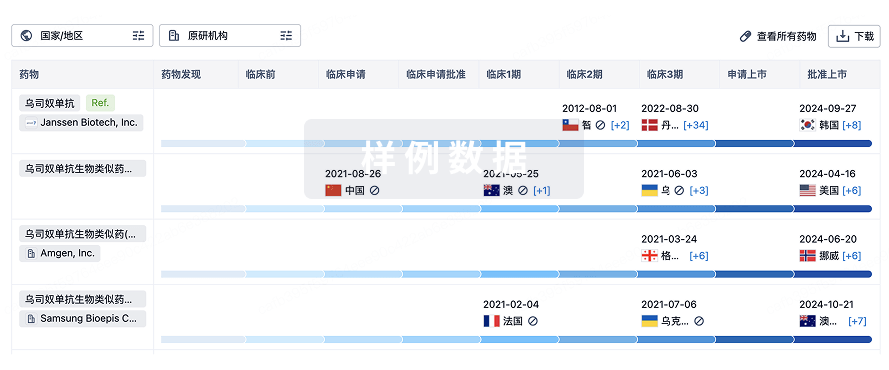
生物类似药在不同国家/地区的竞争态势。请注意临床1/2期并入临床2期,临床2/3期并入临床3期
登录
或
特殊审评
只需点击几下即可了解关键药物信息。
登录
或

提出任何生物医药研究问题
让每一步生物医药决策都精准制胜
基于十亿级生物数据与全球情报的精准 AI,赋能早期药物发现
立即开始免费试用!
智慧芽新药情报库是智慧芽专为生命科学人士构建的基于AI的创新药情报平台,助您全方位提升您的研发与决策效率。
立即接入生物医药数据包
智慧芽新药库数据也通过智慧芽开放平台,以MCP或API服务形式对外开放。立即使用我们的MCP服务定制您的LLM智能体。
生物序列数据库
生物药研发创新
免费使用
化学结构数据库
小分子化药研发创新
免费使用