预约演示
更新于:2026-05-09
AF3442
更新于:2026-05-09
概要
基本信息
在研机构- |
非在研机构 |
权益机构- |
最高研发阶段无进展临床前 |
首次获批日期- |
最高研发阶段(中国)- |
特殊审评- |

结构/序列
分子式C22H17F3N2O |
InChIKeyGHLDHBQXNPNZEI-UHFFFAOYSA-N |
CAS号924636-93-1 |
关联
100 项与 AF3442 相关的临床结果
登录后查看更多信息
100 项与 AF3442 相关的转化医学
登录后查看更多信息
100 项与 AF3442 相关的专利(医药)
登录后查看更多信息
3
项与 AF3442 相关的文献(医药)2012-06-01·Journal of biomolecular screening
Lead Discovery for Microsomal Prostaglandin E Synthase Using a Combination of High-Throughput Fluorescent-Based Assays and RapidFire Mass Spectrometry
Article
作者: Edge, Colin ; LaMarr, William ; Craggs, Peter ; Francis, Peter ; Bardera, Ana Isabel ; Chung, Chun-wa ; Hardwicke, Philip ; Elegbe, Oluseyi ; Sinha, Yugesh ; Alvarez-Ruiz, Emilio ; Billinton, Andrew ; Barroso-Poveda, Vanessa ; Baddeley, Stuart ; Shillings, Anthony ; Bellenie, Ben ; Hutchinson, Jonathan ; Fosberry, Andrew ; Tanner, Rob ; Martin-Plaza, Jose Julio ; Hibbs, Martin ; Leveridge, Melanie V. ; Christodoulou, Erica
Microsomal prostaglandin E synthase-1 (mPGES-1) represents an attractive target for the treatment of rheumatoid arthritis and pain, being upregulated in response to inflammatory stimuli. Biochemical assays for prostaglandin E synthase activity are complicated by the instability of the substrate (PGH(2)) and the challenge of detection of the product (PGE(2)). A coupled fluorescent assay is described for mPGES-1 where PGH(2) is generated in situ using the action of cyclooxygenase 2 (Cox-2) on arachidonic acid. PGE(2) is detected by coupling through 15-prostaglandin dehydrogenase (15-PGDH) and diaphorase. The overall coupled reaction was miniaturized to 1536-well plates and validated for high-throughput screening. For compound progression, a novel high-throughput mass spectrometry assay was developed using the RapidFire platform. The assay employs the same in situ substrate generation step as the fluorescent assay, after which both PGE(2) and a reduced form of the unreacted substrate were detected by mass spectrometry. Pharmacology and assay quality were comparable between both assays, but the mass spectrometry assay was shown to be less susceptible to interference and false positives. Exploiting the throughput of the fluorescent assay and the label-free, direct detection of the RapidFire has proved to be a powerful lead discovery strategy for this challenging target.
2011-11-15·The Biochemical journal3区 · 生物学
Microsomal prostaglandin E synthase-1 exhibits one-third-of-the-sites reactivity
3区 · 生物学
Article
作者: Yu, Daqi ; Lai, Luhua ; Wu, Yiran ; He, Shan
mPGES-1 (microsomal prostaglandin E synthase-1) is a newly recognized target for the treatment of inflammatory diseases. As the terminal enzyme of the prostaglandin production pathway, mPGES-1 inhibition may have a low risk of side effects. Inhibitors of mPGES-1 have attracted considerable attention as next-generation anti-inflammatory drugs. However, as mPGES-1 is a membrane protein, its enzymatic mechanism remains to be disclosed fully. We used MD (molecular dynamics) simulations, mutation analysis, hybrid experiments and co-IP (co-immunoprecipitation) to investigate the conformation transitions of mPGES-1 during catalysis. mPGES-1 forms a homotrimer with three substrate-binding sites (pockets). In the MD simulation, only one substrate molecule could bind to one of the pockets and form the active complex, suggesting that the mPGES-1 trimer has only one pocket active at any given time. This one-third-of-the-sites reactivity enzyme mechanism was verified further by hybridization experiments and MD simulations. The results of the present study revealed for the first time a novel one-third-of-the-sites reactivity enzyme mechanism for mPGES-1, and the unique substrate-binding pocket in our model constituted an active conformation that was suitable for further enzymatic mechanism study and structural-based drug design against mPGES-1.
2010-04-01·Biochemical pharmacology2区 · 医学
Effects of AF3442 [N-(9-ethyl-9H-carbazol-3-yl)-2-(trifluoromethyl)benzamide], a novel inhibitor of human microsomal prostaglandin E synthase-1, on prostanoid biosynthesis in human monocytes in vitro
2区 · 医学
Article
作者: Coletta, Isabella ; Di Francesco, Luigia ; Dovizio, Melania ; Capone, Marta L. ; Polenzani, Lorenzo ; Mangano, Giorgina ; Tacconelli, Stefania ; Anzellotti, Paola ; Alisi, Maria Alessandra ; Patrignani, Paola ; Ricciotti, Emanuela ; Bruno, Annalisa ; Milanese, Claudio ; Di Francesco, Andrea
Inhibitors of microsomal prostaglandin (PG) E synthase-1 (mPGES-1) are being developed for the relief of pain. Redirection of the PGH(2) substrate to other PG synthases, found both in vitro and in vivo, in mPGES-1 knockout mice, may influence their efficacy and safety. We characterized the contribution of mPGES-1 to PGH(2) metabolism in lipopolysaccharide (LPS)-stimulated isolated human monocytes and whole blood by studying the synthesis of prostanoids [PGE(2), thromboxane (TX)B(2), PGF(2alpha) and 6-keto-PGF(1alpha)] and expression of cyclooxygenase (COX)-isozymes and down-stream synthases in the presence of pharmacological inhibition by the novel mPGES-1 inhibitor AF3442 [N-(9-ethyl-9H-carbazol-3-yl)-2-(trifluoromethyl)benzamide]. AF3442 caused a concentration-dependent inhibition of PGE(2) in human recombinant mPGES-1 with an IC(50) of 0.06microM. In LPS-stimulated monocytes, AF3442 caused a concentration-dependent reduction of PGE(2) biosynthesis with an IC(50) of 0.41microM. At 1microM, AF3442 caused maximal selective inhibitory effect of PGE(2) biosynthesis by 61+/-3.3% (mean+/-SEM, P<0.01 versus DMSO vehicle) without significantly affecting other prostanoids (i.e. TXB(2), PGF(2alpha) and 6-keto-PGF(1alpha)). In LPS-stimulated whole blood, AF3442 inhibited in a concentration-dependent fashion inducible PGE(2) biosynthesis with an IC(50) of 29microM. A statistically significant inhibition of mPGES-1 activity was detected at 10 and 100microM (38+/-14%, P<0.05, and 69+/-5%, P<0.01, respectively). Up to 100microM, the other prostanoids were not significantly affected. In conclusion, AF3442 is a selective mPGES-1 inhibitor which reduced monocyte PGE(2) generation also in the presence of plasma proteins. Pharmacological inhibition of mPGES-1 did not translate into redirection of PGH(2) metabolism towards other terminal PG synthases in monocytes. The functional relevance of this observation deserves to be investigated in vivo.
100 项与 AF3442 相关的药物交易
登录后查看更多信息
研发状态
10 条进展最快的记录, 后查看更多信息
登录
| 适应症 | 最高研发状态 | 国家/地区 | 公司 | 日期 |
|---|---|---|---|---|
| 疼痛 | 临床前 | 意大利 | 2010-04-01 |
登录后查看更多信息
临床结果
临床结果
适应症
分期
评价
查看全部结果
| 研究 | 分期 | 人群特征 | 评价人数 | 分组 | 结果 | 评价 | 发布日期 |
|---|
No Data | |||||||
登录后查看更多信息
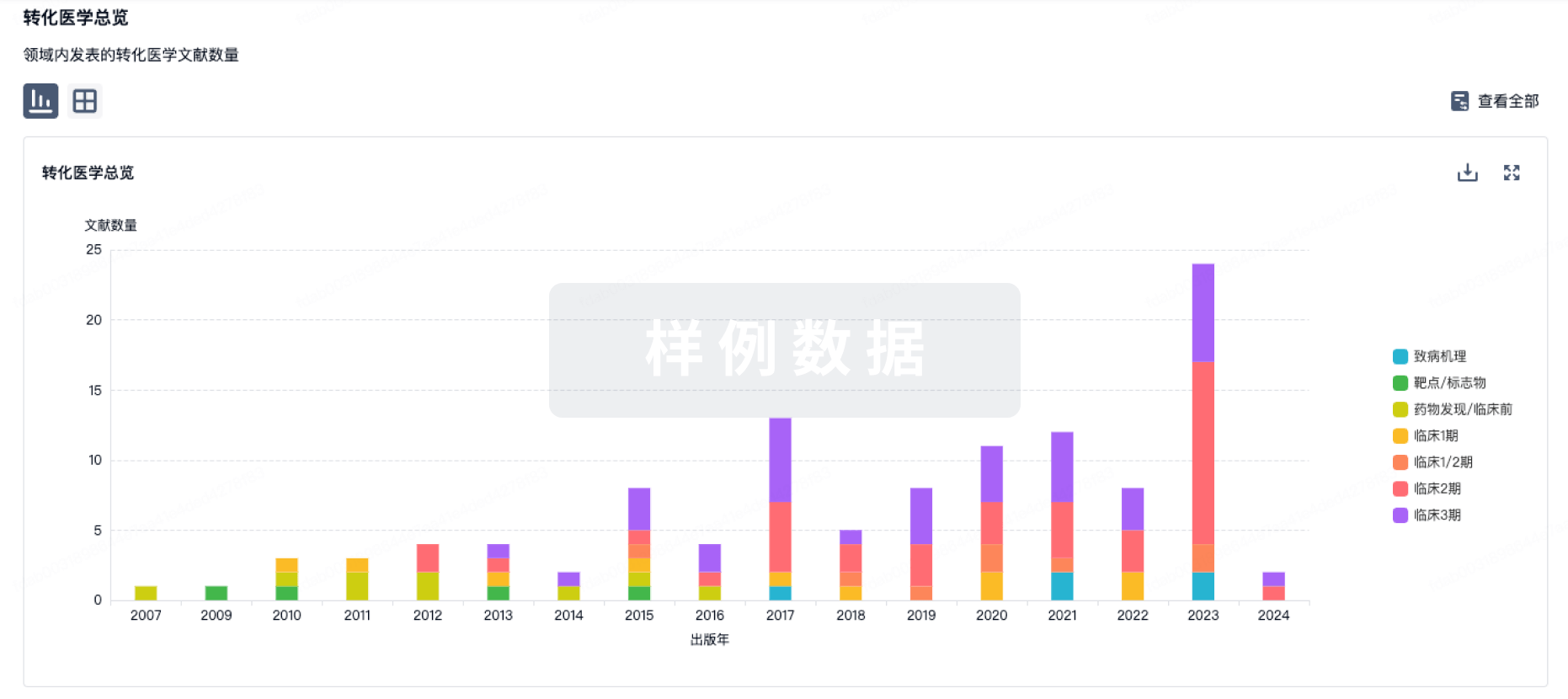
转化医学
使用我们的转化医学数据加速您的研究。
登录
或
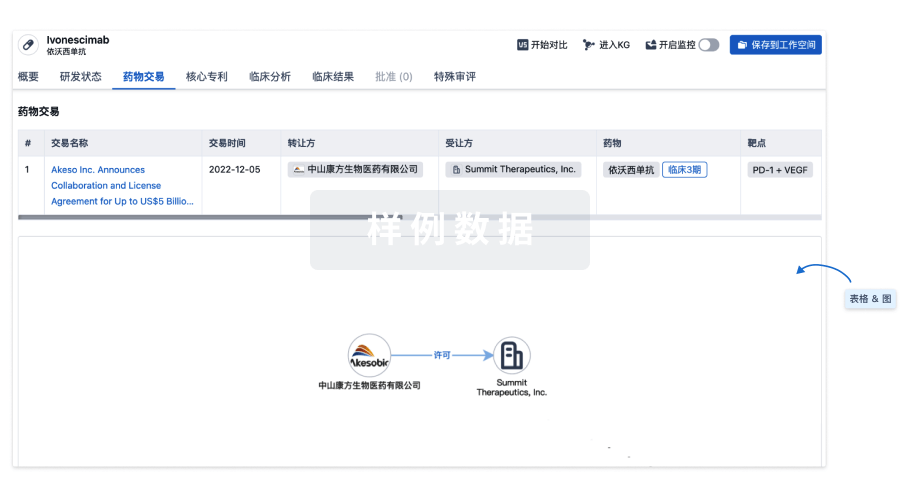
药物交易
使用我们的药物交易数据加速您的研究。
登录
或
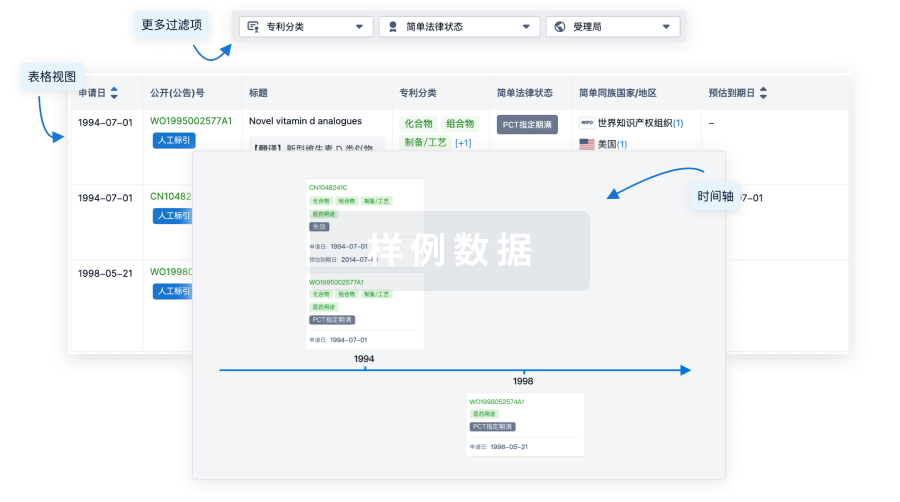
核心专利
使用我们的核心专利数据促进您的研究。
登录
或
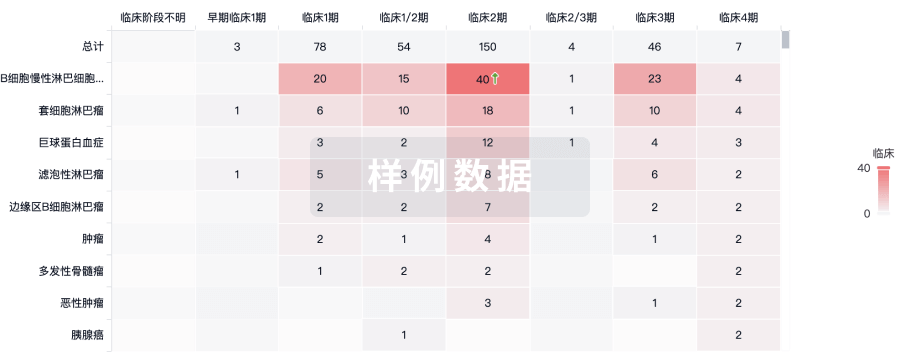
临床分析
紧跟全球注册中心的最新临床试验。
登录
或
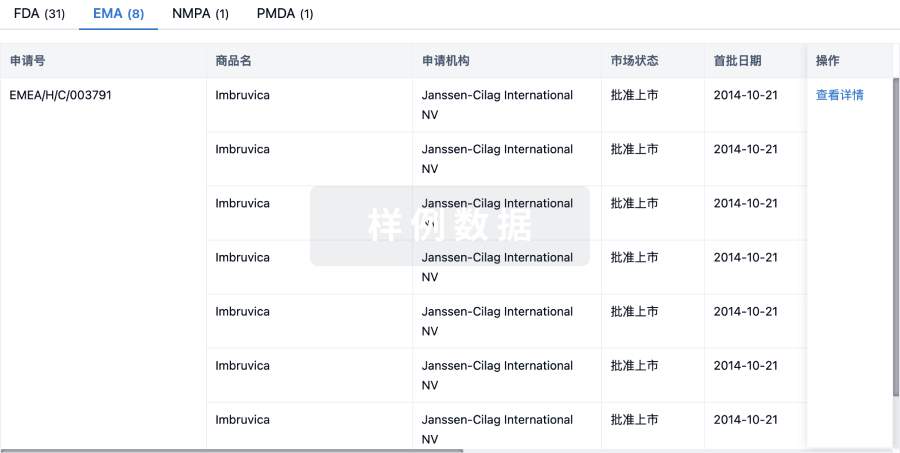
批准
利用最新的监管批准信息加速您的研究。
登录
或
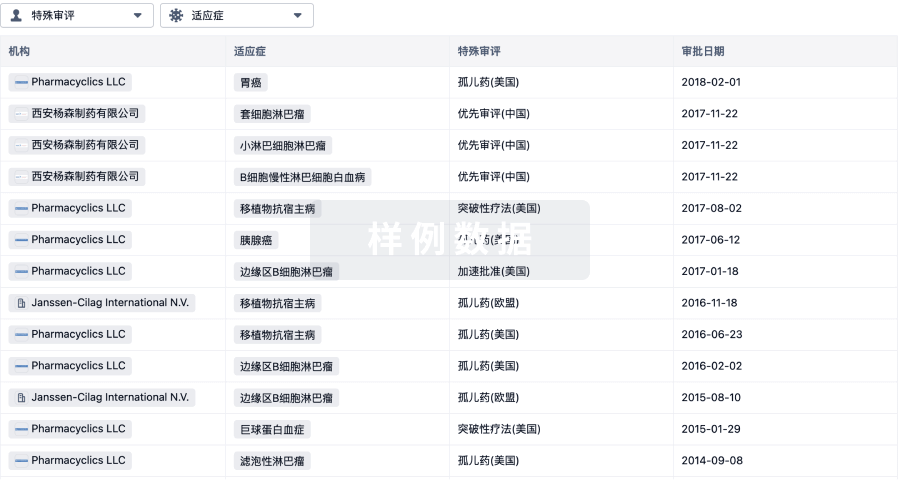
特殊审评
只需点击几下即可了解关键药物信息。
登录
或
提出任何生物医药研究问题
让每一步生物医药决策都精准制胜
基于十亿级生物数据与全球情报的精准 AI,赋能早期药物发现
立即开始免费试用!
智慧芽新药情报库是智慧芽专为生命科学人士构建的基于AI的创新药情报平台,助您全方位提升您的研发与决策效率。
立即接入生物医药数据包
智慧芽新药库数据也通过智慧芽开放平台,以MCP或API服务形式对外开放。立即使用我们的MCP服务定制您的LLM智能体。
生物序列数据库
生物药研发创新
免费使用
化学结构数据库
小分子化药研发创新
免费使用