预约演示
更新于:2026-10-03
PB1
更新于:2026-10-03
概要
基本信息
原研机构- |
非在研机构- |
权益机构- |
最高研发阶段临床前 |
首次获批日期- |
最高研发阶段(中国)- |
特殊审评- |

关联
100 项与 PB1 相关的临床结果
登录后查看更多信息
100 项与 PB1 相关的转化医学
登录后查看更多信息
100 项与 PB1 相关的专利(医药)
登录后查看更多信息
41
项与 PB1 相关的文献(医药)2026-07-01·CHEMICO-BIOLOGICAL INTERACTIONS
Procyanidin B1 enhances muscle anti-fatigue capacity through AMPK-mediated increase of slow-twitch fiber proportion in mice
Article
作者: Wang, Wenjing ; Diao, Hui ; Gu, Yiren ; Huang, Xiaoxin ; Chen, Benli ; Xu, Meng ; Zhang, Yong
The ability to resist fatigue constitutes a fundamental aspect of skeletal muscle function. Skeletal muscle fibers are divided into slow-twitch and fast-twitch muscle fibers according to contractile and metabolic traits, with slow-twitch fibers exhibiting aerobic metabolism and greater endurance. Procyanidin B1 (PB1) is a natural polyphenolic compound with multiple biological activities. However, the specific effects of PB1 on muscle anti-fatigue capacity and the molecular mechanisms involved remain to be elucidated. In this study, we found that dietary PB1 supplementation enhanced fatigue resistance and elevated slow-twitch fiber proportion in gastrocnemius muscle of mice. PB1 treatment up-regulated the slow myosin heavy chain (MyHC) and myoglobin protein levels in vitro and in vivo, with a concurrent shift in metabolic enzyme activities characterized by increased succinate dehydrogenase and malate dehydrogenase and decreased lactate dehydrogenase. The phosphorylation of AMP-activated protein kinase (p-AMPK), phospho-liver kinase B1, phospho-calcium/calmodulin-dependent protein kinase β, silent information regulator 1 and peroxisome proliferator-activated receptor gamma coactivator 1-alpha (PGC-1α) were also increased by PB1. Additionally, the activation of AMPK and the increases of PGC-1α and slow MyHC in C2C12 myotubes induced by PB1 could be eliminated by AMPK inhibitor Compound C or AMPKα2 siRNA. These findings elucidate a physiological role of PB1 and provide a molecular basis for its potential application in managing muscle dysfunction.
2026-05-27·ChemSusChem
Turning Waste into Value: Photocatalytic Conversion of Methane to Methanol Using NiO/TiO
2
Catalyst Derived from Spent Ni–Cd Batteries
Article
作者: Yaasir, Rayhan Kemal ; Sasongko, Dwiwahju ; Devianto, Hary ; Sun, Kaiwen ; Pardede, Risa Eridani Br ; Macmillan, Alexander ; Arutanti, Osi ; Luong, Quang Thien ; Arif, Aditya Farhan ; Hongo, Kenta ; Gunawan, Denny ; Saputro, Adhitya Gandaryus ; Wibowo, Singgih ; Mahyuddin, Muhammad Haris ; Saputera, Wibawa Hendra ; Satriyatama, Adhi
The selective conversion of methane to methanol under mild conditions remains a major challenge due to the high stability of the C–H bond and the propensity for overoxidation. Herein, NiO/TiO
2
photocatalysts were synthesized using both commercial nickel precursors and nickel recovered from spent Ni–Cd batteries, providing a sustainable pathway that integrates methane valorization with battery‐metal recycling. The battery‐derived catalysts PB1 and TB1 achieved methanol formation rates of 2.66 and 6.36 mmol g
−1
·h
−1
, respectively, comparable to those of the commercial counterparts PC1 (2.38 mmol g
−1
·h
−1
) and TC1 (7.31 mmol g
−1
·h
−1
), demonstrating that recycled nickel can effectively replace commercial nickel without performance loss. Synthesized TiO
2
‐based catalysts consistently outperformed P25‐based materials, and increasing Ni loading correlated positively with methanol formation rate, underscoring the importance of Ni‐induced defect engineering. Structural and spectroscopic analyses confirmed preservation of the anatase phase alongside the formation of Ti
3+
and oxygen vacancies, which suppressed electron–hole recombination. Density functional theory calculations revealed that methane activation proceeds via a low‐barrier homolytic C–H cleavage pathway on Ni–O sites in the presence of surface hydroxyl species, stabilizing methyl intermediates and favoring selective methanol formation. Ultimately, the combined experimental and theoretical results establish recycled Ni‐modified TiO
2
as a sustainable and mechanistically rational photocatalyst for selective methane‐to‐methanol conversion.
2025-10-28·ACS Omega
Fast-Track Crystallization of PB-1 with Sorbitol-Based Nucleating Agent
Article
作者: Gajzlerova, Lenka ; Navratilova, Jana ; Polaskova, Martina ; Cermak, Roman
The work is focused on crystallization and phase transition of polybut-1-ene (PB-1) homopolymer and random copolymer in the presence of commonly used nucleating agent (NA) 1,3:2,4-bis-(3,4-dimethylbenzylidene) sorbitol, primarily designed for polypropylene. The crystallization and subsequent phase transition from kinetically preferred tetragonal form II into thermodynamically stable trigonal form I in defined times of aging at room temperature is studied. It was found that NA accelerates phase transition, particularly in homopolymer. In the copolymer, moreover, the addition of NA dramatically increases the crystallization temperature and narrows the crystallization peak as well as the melting peak, which corresponds to the formation of a more uniform structure. At the same time, the addition of NA increases the haze significantly, confirming the formation of a two-form structure. However, NA was found to be soluble in a low concentration (0.2 wt %) in PB-1 melt at a sufficiently high temperature of melting. The solubility then affects the crystallization behavior. Finally, it can be confirmed that the addition of commercial sorbitol-based NA has a significant effect on the crystallization and phase transition of both the PB-1 homopolymer and the copolymer.
100 项与 PB1 相关的药物交易
登录后查看更多信息
研发状态
10 条进展最快的记录, 后查看更多信息
登录
| 适应症 | 最高研发状态 | 国家/地区 | 公司 | 日期 |
|---|---|---|---|---|
| 肿瘤 | 临床前 | 美国 | 2013-10-16 |
登录后查看更多信息
临床结果
临床结果
适应症
分期
评价
查看全部结果
| 研究 | 分期 | 人群特征 | 评价人数 | 分组 | 结果 | 评价 | 发布日期 |
|---|
No Data | |||||||
登录后查看更多信息
转化医学
使用我们的转化医学数据加速您的研究。
登录
或

药物交易
使用我们的药物交易数据加速您的研究。
登录
或

核心专利
使用我们的核心专利数据促进您的研究。
登录
或

临床分析
紧跟全球注册中心的最新临床试验。
登录
或

批准
利用最新的监管批准信息加速您的研究。
登录
或

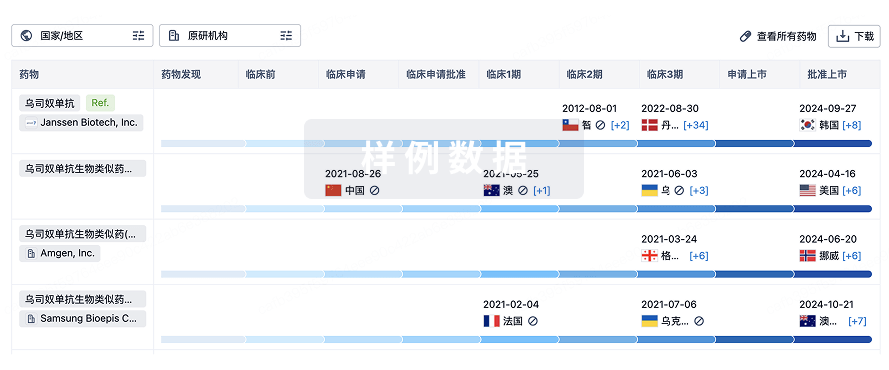
生物类似药
生物类似药在不同国家/地区的竞争态势。请注意临床1/2期并入临床2期,临床2/3期并入临床3期
登录
或
特殊审评
只需点击几下即可了解关键药物信息。
登录
或

提出任何生物医药研究问题
让每一步生物医药决策都精准制胜
基于十亿级生物数据与全球情报的精准 AI,赋能早期药物发现
立即开始免费试用!
智慧芽新药情报库是智慧芽专为生命科学人士构建的基于AI的创新药情报平台,助您全方位提升您的研发与决策效率。
立即接入生物医药数据包
智慧芽新药库数据也通过智慧芽开放平台,以MCP或API服务形式对外开放。立即使用我们的MCP服务定制您的LLM智能体。
生物序列数据库
生物药研发创新
免费使用
化学结构数据库
小分子化药研发创新
免费使用