预约演示
更新于:2026-09-26
Liraglutide (Hangzhou Heze)
利拉鲁肽(浙江和泽)
更新于:2026-09-26
概要
基本信息
原研机构 |
在研机构 |
非在研机构- |
权益机构- |
最高研发阶段临床3期 |
首次获批日期- |
最高研发阶段(中国)临床3期 |
特殊审评- |

登录后查看时间轴
关联
7
项与 利拉鲁肽(浙江和泽) 相关的临床试验CTR20251619
一项多中心、随机、双盲、安慰剂对照的Ⅲ期临床研究,以评价利拉鲁肽注射液在成年肥胖或超重患者中的有效性和安全性
CTR20251022
一项多中心、随机、开放、阳性药平行对照的Ⅲ期临床研究,评价利拉鲁肽注射液和诺和力在二甲双胍单药治疗控制不佳的2 型糖尿病患者中的有效性和安全性
CTR20250709
利拉鲁肽注射液在健康受试者中空腹状态下的单剂量、随机、开放、两周期、两序列、自身交叉设计的生物等效性试验
100 项与 利拉鲁肽(浙江和泽) 相关的临床结果
登录后查看更多信息
100 项与 利拉鲁肽(浙江和泽) 相关的转化医学
登录后查看更多信息
100 项与 利拉鲁肽(浙江和泽) 相关的专利(医药)
登录后查看更多信息
811
项与 利拉鲁肽(浙江和泽) 相关的文献(医药)2026-10-01FOOD RESEARCH INTERNATIONAL
Core-shell hydrogel beads co-encapsulating kunitz-type trypsin inhibitor: A synergistic strategy for enhanced stability of oral active peptides
Article
作者: Liu, Xinqi ; Li, Wanru ; Xu, Qiaolian ; Li, He ; Ying, Zhiwei ; Zhang, Mianyi ; Zhu, Lijie
This study repurposed Kunitz-type trypsin inhibitor (KTI) as a synergistic component for oral peptide co-delivery to overcome the burst release and enzymatic degradation of liraglutide. A pH-responsive chitosan (CS)‑sodium alginate (ALG) core-shell hydrogel co-delivery system co-encapsulating KTI and liraglutide, named ACKL (ALG-CS-KTI-liraglutide), was accordingly constructed. The optimized microspheres, with a 3% sodium tripolyphosphate (TPP)-crosslinked core and 0.8% ALG shell, exhibited uniform morphology, a distinct core-shell structure, and excellent mechanical properties. Molecular docking and Fourier transform infrared spectroscopy (FTIR) confirmed that KTI and liraglutide bind via hydrophobic interactions without compromising KTI's active center. Achieving high encapsulation efficiencies (liraglutide >95%, KTI > 75%), the beads exhibited a release rate below 8% in simulated gastric fluid (SGF) and sustained liraglutide release in simulated intestinal fluid (SIF). Therefore, this work provides a new strategy for oral delivery of bioactive peptides, opening a new avenue for the high-value utilization of soybean by-products in functional food and nutraceutical applications.
2026-09-01Multiple Sclerosis and Related Disorders
GLP-1 receptor agonists in multiple sclerosis: a systematic review of preclinical and clinical evidence
Review
作者: Sajjad, Mobeen ; Sajjad, Ahsan ; Mirza, Sammeullah Baig ; Amer, Rida
BACKGROUND:
Multiple sclerosis (MS) is a chronic immune-mediated demyelinating disease. Glucagon-like peptide-1 receptor agonists (GLP-1RAs) demonstrate anti-inflammatory and neuroprotective properties in preclinical models. No formal synthesis of this evidence existed prior to this review.
METHODS:
We conducted a PROSPERO-registered systematic review (CRD420261385854) following PRISMA 2020 guidelines. PubMed/MEDLINE and Scopus were systematically searched to June 12, 2026. Google Scholar was used as a supplementary source for grey literature. Studies examining GLP-1RAs in confirmed MS patients, EAE animal models, or case reports were eligible. Risk of bias was assessed using SYRCLE (preclinical) and Newcastle-Ottawa Scale (human studies). Narrative synthesis followed SWiM guidelines.
RESULTS:
Fifteen studies met inclusion criteria: eight preclinical animal studies (six EAE, two cuprizone models), four human observational studies, and three narrative-context studies. GLP-1RAs consistently reduced clinical severity in EAE models through multiple mechanisms (AMPK/SIRT1 activation, NLRP3 suppression, Th1/Th17 modulation, microglial deactivation). In humans, GLP-1RA use was associated with BMI reduction and vitamin D augmentation without change in EDSS or relapse rate (two cohorts; n = 109). A NARCOMS survey (n = 4181) documented 7.4% ever-use. Pharmacovigilance showed inverse reporting odds ratios with semaglutide (ROR 0.238), dulaglutide (ROR 0.165), and liraglutide (ROR 0.161). Mendelian randomization found no causal association between GLP-1R activation and MS susceptibility. Most preclinical studies were high risk of bias; human studies moderate to high.
CONCLUSION:
GLP-1RAs demonstrate consistent preclinical efficacy through diverse neuroprotective mechanisms. Human evidence shows metabolic benefit without neurological harm. Randomized controlled trials are urgently needed. This is the first registered, PRISMA-compliant synthesis of GLP-1RA evidence in MS.
2026-09-01INTERNATIONAL JOURNAL OF NEUROPSYCHOPHARMACOLOGY
Chronic social defeat stress induces a hypoglycemic shift and depression-related behaviors, both prevented by antidiabetic drugs
Article
作者: Nagai, Midori ; Furuyashiki, Tomoyuki ; Qiu, Wenran ; Ota, Kohei ; Nagai, Hirotaka
Abstract:
Objective:
Stress-related mental illnesses, including depression, are associated with altered glucose metabolism. However, it is unclear how chronic stress alters glucose metabolism along with depression-related behaviors, and how antidiabetic drugs normalize these alterations.
Methods:
Using a mouse model of social defeat stress, we compared stress-induced glycemic responses among strains that differ in stress susceptibility (C57BL/6N, C57BL/6J, and BALB/c). Blood glucose was measured before stress and after the last stress exposure of acute and chronic stress. Circulating metabolic hormones and inflammatory cytokines were quantified, and depression-related behaviors (social avoidance, anhedonia-like behavior and cognitive deficits) were assessed. In C57BL/6N mice, the antidiabetic drug glyburide or liraglutide was administered 30 min before each of the 10 stress exposures, and their effects on glycemic responses and behavioral outcomes were evaluated.
Results:
Acute stress elevates blood glucose in the relatively stress-resilient C57BL/6N and C57BL/6J strains, but not in the more stress-susceptible BALB/c strain. After chronic stress, this stress-induced hyperglycemic response was abolished in C57BL/6N and C57BL/6J mice, whereas BALB/c mice showed stress-induced hypoglycemia. Chronic stress also produced largely coordinated changes in circulating metabolic hormones and inflammatory cytokines, with strain-dependent differences in a subset of these molecules. In C57BL/6N mice, treatment with glyburide or liraglutide, antidiabetic drugs with distinct primary mechanisms of action, before each stress exposure reduced the development of anhedonia-like behavior and cognitive deficits without affecting social avoidance, while restoring stress-induced hyperglycemia.
Conclusions:
These results demonstrate that chronic stress drives a hypoglycemic shift accompanied by depression-related behaviors, and that the development of both metabolic and behavioral alterations can be prevented by antidiabetic drugs with distinct primary mechanisms administered during the stress period. Thus, this study supports metabolically targeted interventions as a potential preventive strategy for stress-related mental illnesses, whereas their efficacy against an already established phenotype remains to be tested.
100 项与 利拉鲁肽(浙江和泽) 相关的药物交易
登录后查看更多信息
研发状态
10 条进展最快的记录, 后查看更多信息
登录
| 适应症 | 最高研发状态 | 国家/地区 | 公司 | 日期 |
|---|---|---|---|---|
| 肥胖 | 临床3期 | 中国 | 2025-06-26 | |
| 2型糖尿病 | 临床3期 | 中国 | 2025-06-06 |
登录后查看更多信息
临床结果
临床结果
适应症
分期
评价
查看全部结果
登录后查看更多信息
转化医学
使用我们的转化医学数据加速您的研究。
登录
或

药物交易
使用我们的药物交易数据加速您的研究。
登录
或

核心专利
使用我们的核心专利数据促进您的研究。
登录
或

临床分析
紧跟全球注册中心的最新临床试验。
登录
或

批准
利用最新的监管批准信息加速您的研究。
登录
或

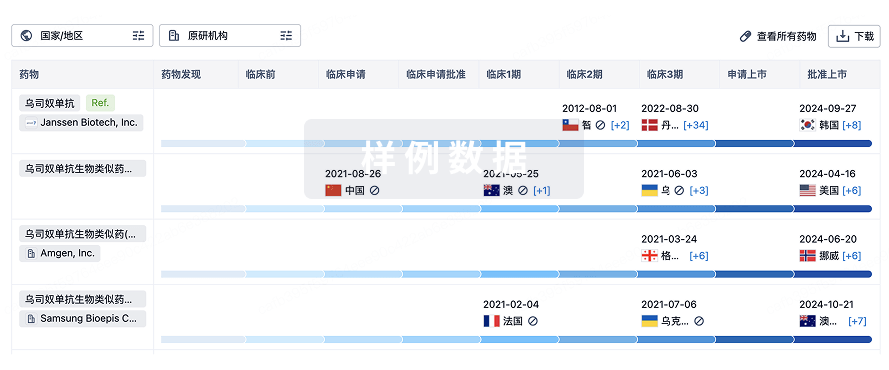
生物类似药
生物类似药在不同国家/地区的竞争态势。请注意临床1/2期并入临床2期,临床2/3期并入临床3期
登录
或
特殊审评
只需点击几下即可了解关键药物信息。
登录
或

提出任何生物医药研究问题
让每一步生物医药决策都精准制胜
基于十亿级生物数据与全球情报的精准 AI,赋能早期药物发现
立即开始免费试用!
智慧芽新药情报库是智慧芽专为生命科学人士构建的基于AI的创新药情报平台,助您全方位提升您的研发与决策效率。
立即接入生物医药数据包
智慧芽新药库数据也通过智慧芽开放平台,以MCP或API服务形式对外开放。立即使用我们的MCP服务定制您的LLM智能体。
生物序列数据库
生物药研发创新
免费使用
化学结构数据库
小分子化药研发创新
免费使用