预约演示
更新于:2026-10-03
Velafermin(CuraGen Corp.)
更新于:2026-10-03
概要
基本信息
原研机构 |
非在研机构- |
权益机构- |
最高研发阶段临床前 |
首次获批日期- |
最高研发阶段(中国)- |
特殊审评- |


登录后查看时间轴
结构/序列
Sequence Code 9098423
来源: *****
关联
2
项与 Velafermin(CuraGen Corp.) 相关的临床试验NCT00323518
A Phase II Randomized Double Blind Placebo Controlled Trial to Assess Safety and Efficacy of Velafermin for Prevention of Oral Mucositis in Hematologic Cancer Patients Receiving Autologous Stem Cell Transplant
NCT00104065
A Phase II, Multicenter, Randomized, Double-Blind, Placebo-Controlled Trial of the Safety and Efficacy of CG53135-05 Administered Intravenously as a Single Dose for the Prevention of Oral Mucositis in Patients Receiving Autologous Hematopoietic Stem Cell Transplant
100 项与 Velafermin(CuraGen Corp.) 相关的临床结果
登录后查看更多信息
100 项与 Velafermin(CuraGen Corp.) 相关的转化医学
登录后查看更多信息
100 项与 Velafermin(CuraGen Corp.) 相关的专利(医药)
登录后查看更多信息
18
项与 Velafermin(CuraGen Corp.) 相关的文献(医药)2026-09-01CELLULAR SIGNALLING
FGF20 activates FGFR1–PI3K–AKT signaling to coordinate barrier integrity and alveolar coagulation in sepsis-induced lung injury
Article
作者: Tao, Junling ; Xiao, Chuan ; Tian, Junyuan ; Wang, Jingni ; Yuan, Jia ; Cheng, Yumei ; Shen, Feng ; Li, Wei ; Wang, Ying ; Dong, Qi ; Chen, Xianjun
Acute lung injury (ALI) and acute respiratory distress syndrome (ARDS) are pathologically characterized by disruption of the alveolar-capillary barrier, excessive inflammatory responses, and dysregulated intra-pulmonary coagulation. Although inflammatory and thrombotic cascades have been extensively studied, endogenous epithelial-derived signaling mechanisms coordinating barrier stabilization with immunothrombotic restraint remain undefined. Here, we identify fibroblast growth factor 20 (FGF20) as a constitutive epithelial regulator suppressed in alveolar barrier-associated cells during sepsis-induced ALI. In a CLP rat model, both prophylactic and therapeutic administration of recombinant human FGF20 (rhFGF20) improved 7-day survival, attenuated pulmonary edema and inflammation, restored gas exchange, and preserved alveolar-capillary integrity. rhFGF20 restrained procoagulant and antifibrinolytic mediators tissue factor (TF) and plasminogen activator inhibitor-1 (PAI-1) while suppressing NF-κB activation. Mechanistically, FGF20 acted through fibroblast growth factor receptor 1 (FGFR1) to engage the FGFR1-PI3K-AKT cascade. AKT activation bifurcated into two axes: (i) inhibition of NF-κB phosphorylation and nuclear translocation, restraining TF/PAI-1 transcription; and (ii) inhibitory phosphorylation of glycogen synthase kinase 3β (GSK3β) at Ser9, stabilizing epithelial and endothelial junctional proteins (E-cadherin, VE-cadherin, ZO-1). Pharmacological inhibition of FGFR1 or AKT abolished both barrier-protective and anticoagulant effects, confirming pathway dependency. Clinically, serum and bronchoalveolar lavage fluid FGF20 levels were reduced in ARDS patients and positively correlated with PaO₂/FiO₂ ratios, linking reduced FGF20 to disease severity. Collectively, these findings position FGF20 as an upstream integrator of structural and immunothrombotic homeostasis within the alveolar-capillary unit. Restoration of the FGF20-FGFR1 axis reconstitutes a proximal checkpoint stabilizing barrier architecture and constraining NF-κB-dependent procoagulant activation, highlighting FGF20 as a mechanistically grounded therapeutic target in sepsis-induced ALI/ARDS. CLINICAL SIGNIFICANCE.
2025-09-01STROKE
Intracerebral Delivery of rhFGF20 via Heparin-Poloxamer Hydrogel Promotes Neurological Recovery in Ischemic Stroke
Article
作者: Wu, Rendi ; Li, Jiana ; Liang, Fei ; Lin, Li ; Cao, Chengkun ; Xu, Yuyun ; Wang, Yichen ; Wang, Xue ; Zhao, Yeli ; Zhang, Yujie ; Chen, Keyang ; Ye, Shasha
BACKGROUND::
Ischemic stroke poses a significant threat to human health. FGF (fibroblast growth factor) 20 is involved in the repair of central nervous system diseases, but it has the shortcomings of short half-life and inability to penetrate the blood-brain barrier. Therefore, to overcome the drawbacks of rhFGF20 (recombinant human FGF20) and explore its role in ischemic stroke, the effects of intracerebral administration of rhFGF20 by heparin-poloxamer hydrogel (HP-rhFGF20 [heparin-poloxamer hydrogel-encapsulated rhFGF20]) in a rat stroke model were the focus of this study.
METHODS::
A rat model of middle cerebral artery occlusion/reperfusion and oxygen-glucose deprivation-reoxygenation models were established to mimic ischemic stroke in vivo and in vitro, respectively. Endogenous FGF20 levels were measured in patients, ischemic rats, and oxygen-glucose deprivation-reoxygenation–injured neurons. To assess the therapeutic potential, rhFGF20 was administered intracerebrally via heparin-poloxamer hydrogel implants (1 mg/mL, 20 μL) on day 5 poststroke. 2,3,5-Triphenyltetrazolium chloride staining, neurobehavioral tests (including the mNSS test [modified Neuro-Severity Score], the corner test, the rotarod test, the cylinder test, and the Morris water maze test), and Nissl staining were performed to evaluate neurological recovery. Immunofluorescence and Western blotting were conducted to assess the brain repair processes (neurogenesis, neuronal remodeling, and angiogenesis).
RESULTS::
High expression of FGF20 was detected in the serum of patients with ischemic stroke, the cortex of ischemic rats, and oxygen-glucose deprivation-reoxygenation–injured neurons. Heparin-poloxamer increased the stability and bioavailability of rhFGF20. HP-rhFGF20 attenuated neurobehavioral deficits and infarct volume in ischemic stroke rats. HP-rhFGF20 inhibited neuronal cell death, microglial activation, and glial scar formation on day 7 post-implantation. Moreover, HP-rhFGF20 promoted the proliferation, migration, and differentiation of neural stem cells and improved neuronal plasticity and angiogenesis in ischemic stroke rats.
CONCLUSIONS::
HP-rhFGF20 promoted functional recovery in ischemic stroke rats by enhancing neurogenesis and angiogenesis. The combination of growth factors and biomaterials provides a promising therapeutic strategy for central nervous system diseases.
REGISTRATION::
URL:
http://www.chictr.org.cn
; Unique identifier: ChiCTR2100051104.
2025-06-01Materials Today Bio
Hydrogel derived from decellularized pig small intestine submucosa boosted the therapeutic effect of FGF-20 on TNBS-induced colitis in rats via restoring gut mucosal integrity
Article
作者: Hu, Sunkuan ; Ding, Bingyu ; Wang, Minmin ; Li, Dingwei ; Chen, Yumo ; Xu, Helin ; Wang, Jie ; Jiang, Zhijiang ; Tong, Bingjie ; Ouyang, Shenyuan
Ulcerative colitis (UC) is a chronic inflammatory bowel disease characterized by impaired intestinal mucosal barrier function, leading to persistent inflammation and tissue damage. Current therapies often fail to address barrier dysfunction, highlighting the need for innovative treatments. This study developed a novel therapeutic strategy by combining decellularized porcine small intestinal submucosa (D-SIS) with fibroblast growth factor 20 (FGF-20) to promote mucosal repair and restore barrier integrity in a TNBS-induced colitis rat model. The D-SIS-based hydrogel, supplemented with hyaluronic acid (HA), was designed to enhance FGF-20 stability and enable sustained drug release. Results showed that the FGF-20-loaded hydrogel (MAF) exhibited excellent rheological properties, erosion resistance, and controlled drug release, making it suitable for rectal administration. In vitro cell experiments demonstrated that MAF enhanced Caco-2 cell proliferation, migration, and tight junction protein expression, restoring epithelial barrier integrity. In the colitis model, MAF significantly reduced disease activity index (DAI) scores, attenuated inflammation, and restored mucosal morphology. Additionally, MAF promoted goblet cell regeneration, enhanced mucus secretion, and upregulated intestinal stem cell markers, indicating its ability to repair both epithelial and mucus barriers. In conclusion, the MAF hydrogel represents a promising therapeutic approach for UC by combining the regenerative properties of FGF-20 with the bioactive support of D-SIS.
1
项与 Velafermin(CuraGen Corp.) 相关的新闻(医药)2026-09-04
并购临床3期
100 项与 Velafermin(CuraGen Corp.) 相关的药物交易
登录后查看更多信息
研发状态
10 条进展最快的记录, 后查看更多信息
登录
| 适应症 | 最高研发状态 | 国家/地区 | 公司 | 日期 |
|---|---|---|---|---|
| 血液肿瘤 | 临床2期 | 美国 | 2006-05-01 | |
| 口腔炎 | 临床2期 | 美国 | 2005-01-01 | |
| 化疗性口腔黏膜炎 | 临床前 | 美国 | 2007-05-01 | |
| 化疗性口腔黏膜炎 | 临床前 | 美国 | 2007-05-01 | |
| 放射性口腔黏膜炎 | 临床前 | 美国 | 2007-05-01 | |
| 放射性口腔黏膜炎 | 临床前 | 美国 | 2007-05-01 |
登录后查看更多信息
临床结果
临床结果
适应症
分期
评价
查看全部结果
登录后查看更多信息
转化医学
使用我们的转化医学数据加速您的研究。
登录
或

药物交易
使用我们的药物交易数据加速您的研究。
登录
或

核心专利
使用我们的核心专利数据促进您的研究。
登录
或

临床分析
紧跟全球注册中心的最新临床试验。
登录
或

批准
利用最新的监管批准信息加速您的研究。
登录
或

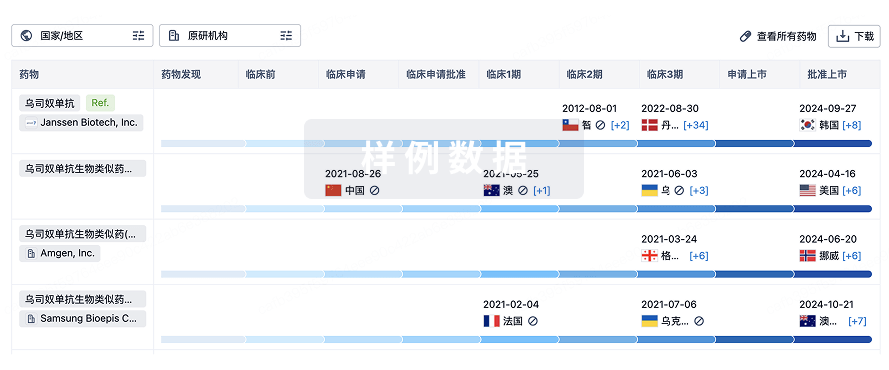
生物类似药
生物类似药在不同国家/地区的竞争态势。请注意临床1/2期并入临床2期,临床2/3期并入临床3期
登录
或
特殊审评
只需点击几下即可了解关键药物信息。
登录
或

提出任何生物医药研究问题
让每一步生物医药决策都精准制胜
基于十亿级生物数据与全球情报的精准 AI,赋能早期药物发现
立即开始免费试用!
智慧芽新药情报库是智慧芽专为生命科学人士构建的基于AI的创新药情报平台,助您全方位提升您的研发与决策效率。
立即接入生物医药数据包
智慧芽新药库数据也通过智慧芽开放平台,以MCP或API服务形式对外开放。立即使用我们的MCP服务定制您的LLM智能体。
生物序列数据库
生物药研发创新
免费使用
化学结构数据库
小分子化药研发创新
免费使用