预约演示
更新于:2026-10-24
Glucagon-Like-Peptide-1(Original Biomedicals)
更新于:2026-10-24
概要
基本信息
原研机构 |
在研机构 |
非在研机构- |
权益机构- |
最高研发阶段药物发现 |
首次获批日期- |
最高研发阶段(中国)药物发现 |
特殊审评- |

关联
100 项与 Glucagon-Like-Peptide-1(Original Biomedicals) 相关的临床结果
登录后查看更多信息
100 项与 Glucagon-Like-Peptide-1(Original Biomedicals) 相关的转化医学
登录后查看更多信息
100 项与 Glucagon-Like-Peptide-1(Original Biomedicals) 相关的专利(医药)
登录后查看更多信息
1,677
项与 Glucagon-Like-Peptide-1(Original Biomedicals) 相关的文献(医药)2026-12-01·Obesity pillars
Hope, hype, and high costs: Navigating glucagon-like Peptide-1 based therapy initiation among young adults
Article
作者: Hospital, Michelle M ; Loubeau, Jaqueline Krystel ; Cabrera Tineo, Yajaira A ; Sanchez, Mariana ; Das Gupta, Sourav ; Priyanka, Antara Swarnali ; Agarwal, Rumi ; Diaz-Martinez, Janet
Background:
Glucagon-like peptide-1 (GLP-1)-based therapies have emerged as a major option for weight management, with prescribing among young adults increasing nearly sixfold between 2020 and 2023 in the United States. Despite this growth, little is known about how young adults decide to initiate GLP-1 therapy, navigate access, and manage treatment costs. This study examined individual, social, financial, and structural influences shaping GLP-1 initiation for weight management among young adults.
Methods:
This was a qualitative interview study that employed a semi-structured interview design utilizing a hybrid inductive-deductive thematic analysis framework guided by Andersen's Behavioral Model of Health Services Use. We recruited 25 young adults aged 18-30 years from the South Florida community who were currently using or had used GLP-1-based therapy for weight management within the preceding 12 months. Transcripts were coded deductively based on constructs from Andersen's model and inductively from themes identified directly from participant narratives.
Results:
Participants had a mean age of 22 years; 20 (80%) were female and 19 (76%) identified as Hispanic or Latino. Four themes were identified: (1) motivations and expectations for initiation, including health needs, appearance-related goals, and social media-shaped expectations; (2) social and clinical pathways to GLP-1 introduction, particularly family networks and social media; (3) navigation of access pathways ranging from conventional clinical care to medical spas, telehealth, and unregulated self-procurement; and (4) financial barriers characterized by out-of-pocket costs and insurance exclusions that contributed to informal procurement.
Conclusions:
Within this sample, GLP-1 initiation among young adults was shaped by intersecting health needs, social influences, access structures, and financial constraints rather than by clinical considerations alone. Findings highlight that healthcare systems, policymakers, and public health practitioners must prioritize clinically appropriate access, reliable medication sourcing, and consistent clinical oversight to promote equity and safety among young adults.
2026-12-01·Journal of shoulder and elbow arthroplasty
Evaluating the safety of glucagon-like peptide-1 agonist use in non-diabetic overweight patients undergoing shoulder arthroplasty
Article
作者: Garrigues, Grant E ; Hummel, Amelia ; Acuña, Alexander J ; Nicholson, Gregory ; Lew, Ryan ; Harkin, William ; Hornung, Alexander
Background:
Initially indicated for diabetes mellitus (DM), glucagon-like peptide 1 (GLP-1) agonists are now indicated for obesity management in isolation of DM. While prior studies have examined post-operative outcomes after total shoulder arthroplasty (TSA) in GLP-1 users with DM, there is a paucity of literature evaluating its use in non-diabetic patients for weight loss rather than glucose control. Therefore, our analysis compared 90-day and 2-year outcomes following TSA between non-diabetic obese GLP-1 users and a matched cohort of obese GLP-1 non-users.
Methods:
The PearlDiver Mariner database was queried to identify patients who underwent anatomic TSA and reverse TSA between 2010 and 2023. Patients with a history of DM or who underwent TSA for cancer, infection, or pathologic fractures were excluded. Patients with a body mass index ≥ 30 kg/m2 within 6 months of surgery were included. GLP-1 users (within 3 months of surgery) were matched in a 1:10 ratio to GLP-1 non-users by age, sex, Elixhauser Comorbidity Index, smoking status, and various comorbidities. Multivariate logistic regression models were utilized to compare outcomes at 90 days and 2 years.
Results:
After matching, 462 GLP-1 users and 4,377 GLP-1 non-users were included in our analysis. GLP-1 users had higher readmission rates (odds ratio: 2.034; 95% confidence interval: 1.594-2.578; P < .001) and subsequently overall complication rates (odds ratio: 1.474; 95% confidence interval: 1.295-1.799; P < .001) compared to GLP-1 non-users at 90 days. However, no differences were seen between cohorts for the remaining 90-day outcomes nor for all evaluated 2-year outcomes including prosthetic joint infection, fracture, and all-cause revision.
Discussion:
Our analysis found a higher incidence of overall complications at 90 days among obese, non-diabetic GLP-1 users, driven largely by an increased incidence of readmissions. However, there were largely comparable outcomes at 2 years. These findings suggest that while GLP-1 agonists may be reasonable to use in the perioperative period, interventions to reduce readmissions among these patients may be warranted.
2026-12-01·Current Pain and Headache Reports
GLP-1-Based Therapies in Pain Medicine: A Narrative Review and Expert Opinion on Obesity-Related Low Back and Knee Pain
Review
作者: Hasoon, Jamal ; Nguyen, Anvinh ; Robinson, Christopher L ; Viswanath, Omar ; Urits, Ivan
PURPOSE OF REVIEW:
Obesity is highly prevalent among patients with chronic musculoskeletal pain and is associated with low back pain, knee osteoarthritis, reduced mobility, and poorer functional outcomes. Glucagon-like peptide-1 (GLP-1) receptor agonists and related therapies have transformed obesity medicine and may become more relevant to pain medicine specialists. This narrative review examines whether GLP-1-based medications should be considered within pain practice, particularly for obesity-associated low back pain and knee osteoarthritis.
RECENT FINDINGS:
Chronic pain impacts a substantial portion of adults, while low back pain and osteoarthritis remain leading causes of disability worldwide. Obesity is associated with low back pain and knee osteoarthritis, and weight reduction has been shown to improve pain and function in these conditions. GLP-1-based therapies can produce clinically meaningful weight loss in patients with obesity and chronic pain. Literature also suggests possible anti-inflammatory and chondroprotective effects relevant to pain. GLP-1-based medications should not be viewed as primary analgesics or replacements for standard pain evaluation, rehabilitation, pharmacologic care, or interventional treatment. However, they are reasonable to consider as part of comprehensive pain management in patients with obesity when excess weight plausibly contributes to chronic pain, impaired mobility, or reduced rehabilitation tolerance. Pain physicians familiar and comfortable with obesity pharmacotherapy may consider prescribing within appropriate indications and safety parameters. Alternatively, referral to obesity medicine, endocrinology, primary care, or another experienced clinician is appropriate.
1,349
项与 Glucagon-Like-Peptide-1(Original Biomedicals) 相关的新闻(医药)2026-10-22
For the first time, EY-Parthenon research shows that weight-management users represent the majority (54%) of US GLP-1 users, signaling a continued shift toward mainstream adoption and broader changes in consumer behavior.
63% of GLP-1 users report reducing sweet snacks and 57% have reduced salty snacks.
72% of GLP-1 users report changing clothing sizes and 46% have switched apparel brands, creating new opportunities for retailers and apparel companies.
NEW YORK, Oct. 22, 2026 /PRNewswire/ -- For the first time, more than half (54%) of US GLP-1 users take the medication primarily for weight management, surpassing use for diabetes and other health conditions, according to the EY-Parthenon GLP-1 Consumer Impact Report. The findings suggest GLP-1 adoption is increasingly influencing consumer behavior beyond health and weight management, affecting what consumers eat and drink, how they shop, what they wear and where they allocate discretionary spending.
"As affordability, access and awareness continue to increase, GLP-1s are changing how consumers live, shop and spend," says
Katie Johnson, EY-Parthenon Americas Consumer and Health Industry Leader. "We're seeing these medications reshape consumer behavior in tangible ways, from food and beverage choices to wellness, fitness and discretionary spending. This shift is creating a ripple effect across the consumer products and retail landscape."
Consumers are trading indulgence for nutrition
GLP-1 users prioritize nutrition-focused categories over traditional indulgence, with nearly two-thirds (63%) consuming fewer sweets and more than half (57%) reducing salty snacks. In turn, users increase consumption of fresh produce (66%) and protein (61%). Because 94% of GLP-1 users surveyed are primary grocery shoppers, these changes often extend beyond the individual, influencing household meal planning, cooking habits and grocery purchasing decisions.
This shift is also evident in beverages: more than half of users (51%) report drinking fewer soft drinks, while 44% consume more functional beverages. Meanwhile, 45% have reduced alcohol consumption and 40% have stopped altogether.
From the grocery aisle to the clothing rack
Weight loss is also driving a "wardrobe reset" for many users, with nearly three-quarters (72%) of GLP-1 users changing clothing sizes and almost half (46%) fully or partially switching apparel brands, most commonly because of changing fit and sizing needs. Consumers are also buying athletic wear, fitted tops and swimwear they previously avoided, suggesting GLP-1 adoption is driving spending beyond replacement purchases and into new apparel categories.
"With nearly three-quarters of users reporting new clothing sizes and almost half switching apparel brands, these shifts create meaningful implications for merchandising, inventory planning and customer acquisition," says
Will Auchincloss, EY-Parthenon Americas Retail Sector Leader. "Retailers that recognize these shifts early have an opportunity to build deeper relationships with consumers during a period of significant lifestyle change."
The report also identifies six distinct GLP-1 consumer personas, highlighting that adoption and behavior changes vary significantly across users and reinforcing the need for brands to avoid a one-size-fits-all approach. While concerns around side effects and insurance coverage remain, the EY-Parthenon research projects that by 2033, 35%–40% of US adults will have used a GLP-1.
"As adoption continues to grow, brands will need to understand where demand is evolving, where consumers are reallocating spending and how to adapt their portfolios to remain relevant in an increasingly health-focused consumer environment," says
Don Johnson, Principal, Strategy and Execution, EY-Parthenon, Ernst & Young LLP. "The best-positioned companies view GLP-1s as a structural shift in consumer behavior that will influence innovation, portfolio strategy and investment decisions."
Notes to editors
About EY
EY is building a better working world by creating new value for clients, people, society and the planet, while building trust in capital markets.
Enabled by data, AI and advanced technology, EY teams help clients shape the future with confidence and develop answers for the most pressing issues of today and tomorrow.
EY teams work across a full spectrum of services in assurance, consulting, tax, strategy and transactions. Fueled by sector insights, a globally connected multidisciplinary network and diverse ecosystem partners, EY teams can provide services in more than 150 countries and territories.
All in to shape the future with confidence.
EY refers to the global organization, and may refer to one or more, of the member firms of Ernst & Young Global Limited, each of which is a separate legal entity. Ernst & Young Global Limited, a UK company limited by guarantee, does not provide services to clients. Information about how EY collects and uses personal data and a description of the rights individuals have under data protection legislation are available via
ey.com/privacy. EY member firms do not practice law where prohibited by local laws. For more information about our organization, please visit
ey.com.
About EY Consumer and Health
The rise of the empowered consumer, coupled with technology advancements and the emergence of digitally focused entrants, is changing every aspect of health and care delivery. To retain relevancy in today's digitally focused, data-infused ecosystem, all participants in healthcare today must rethink their business practices, including capital strategy, partnering and the creation of patient-centric operating models.
The EY Consumer and Health architecture brings together a worldwide network of 34,000 professionals to build data-centric approaches to customer engagement and improved outcomes. We help our clients deliver on their strategic goals, design optimized operating models and form the right partnerships so they may thrive today and succeed in the health systems of tomorrow. We work across the ecosystem to understand the implications of today's trends, proactively finding solutions to business issues and seizing the upside of disruption in this Transformative Age.
Methodology
EY-Parthenon team conducted its third annual GLP-1 Consumer Survey between March and May 2026 to better understand how GLP-1 medications are affecting consumer behavior and spending patterns. The survey included 14,883 respondents from the general population and 3,602 current or former GLP-1 users. The research examined adoption trends, user behaviors and category impacts across snacking, food away from home, alcoholic beverages and apparel, with findings compared against prior surveys conducted in 2024 and 2025.
Caroline Acton; [email protected]
SOURCE Ernst & Young LLP
21%
more press release views with
Request a Demo
2026-10-22
Award recognizes Healthy Weight and Keep It Off® Program for helping employees achieve lasting results while providing a sustainable model for managing obesity care costs
CRANSTON, R.I., Oct. 22, 2026 /PRNewswire/ -- The City of Lynn, Massachusetts has been named a recipient of the 2026 New England Employee Benefits Council (NEEBC) Best Practice Award for its Healthy Weight and Keep It Off® Program by Abacus Health Solutions, an innovative obesity management strategy that demonstrates how employers can provide access to GLP-1 medications while managing rising healthcare costs and supporting long-term employee health outcomes.
Continue Reading
The City of Lynn, MA's Healthy Weight and Keep It Off® Programs earned a Net Promoter Score of 81, placing the program in the Excellent category for member satisfaction.
As demand for GLP-1 medications continues to grow, many employers and municipalities face increasing pressure to balance access, affordability, and sustainable outcomes. The City of Lynn's award-winning approach combines evidence-based obesity treatment, personalized coaching, clinical oversight, and structured medication management through a 24-month program that includes up to 12 fills of GLP-1 medication followed by ongoing coaching and support. This approach helps employees achieve meaningful weight loss while building the habits needed to maintain success beyond medication therapy.
By integrating evidence-based clinical care with behavioral support, the City's strategy demonstrates that employers do not have to choose between helping employees improve their health and managing the rising costs of obesity care.
"We didn't want to choose between providing access to medication and managing costs responsibly. This program showed that it's possible to do both," said Mayor Jared C. Nicholson, City of Lynn. "What we're most proud of isn't just the numbers. It's hearing employees tell us they feel healthier, more confident, and more in control of their lives. The overwhelming response from participants has reinforced that this approach is making a real difference."
The City's strategy has delivered meaningful results for both employees and the organization. Participants achieve an average of 20% weight loss, with 85% maintaining their results after completing medication therapy, while employers reduce prescription costs by approximately $14,000 per participant and have experienced GLP-1 utilization rates that are 50% lower than peer organizations.
The program's impact extends far beyond the scale. Participants consistently reported an improved quality of life and a renewed belief in their ability to manage their health long-term. Reflecting that positive experience, the Healthy Weight and Keep It Off® Program earned a Net Promoter Score of 81, placing it in the "excellent" category.
Recognized by NEEBC as a Best Practice Award recipient, the City of Lynn's Healthy Weight and Keep It Off® Program is helping redefine what employer-sponsored obesity care can look like. By combining responsible medication access with comprehensive behavioral and clinical support, the program offers a proven model for municipalities and employers seeking to improve health outcomes while managing the long-term cost of obesity care.
About the City of Lynn, Massachusetts
First incorporated in 1629, located north of Boston, Lynn is the 9th largest City in Massachusetts. Home to 102,000 people with a municipal health plan with 10,000 covered lives.
About Abacus Health Solutions
Abacus Health Solutions is a pioneer in behaviorally focused disease management, helping employers and health plans improve outcomes while lowering healthcare costs. Since 2008, Abacus has delivered evidence-based programs for diabetes, hypertension, and weight management that drive member engagement, strengthen provider relationships, improve medication adherence, and reduce hospitalizations. Through the use of innovative technology, personalized support, and behavioral incentives, Abacus helps members achieve better health while delivering measurable value for organizations.
Abacus Health Solutions
Adele Huffine
401-408-7265
[email protected]
SOURCE Abacus Health Solutions
21%
more press release views with
Request a Demo
2026-10-20
ROSEMONT, Ill., Oct. 20, 2026 /PRNewswire/ -- Over 3 million people have been diagnosed with hidradenitis suppurativa (HS) in the United States and today, the American Academy of Dermatology (AAD) and the Hidradenitis Suppurativa Foundation (HSF) have published the first-ever joint guidelines for the management and care of HS.
HS is a skin condition that causes painful lumps deep in the skin, typically in areas of the body where skin rubs together like armpits, inner thighs, and the groin. Early diagnosis of HS is critical as it is often confused with acne or infection, causing people to go years without an accurate diagnosis. A board-certified dermatologist can both identify HS and screen for the medical and psychiatric conditions that often accompany it, giving patients access to comprehensive, individualized care sooner.
"While hidradenitis suppurativa is a chronic condition, its painful symptoms are highly treatable," said AAD President and board-certified dermatologist
Murad Alam, MD, MSCI, MBA, FAAD. "For millions of people with HS, dermatologists provide more than just a diagnosis. They provide expert, comprehensive care that allows patients to have a better quality of life."
Compiled by a work group of 13 experts, including 12 board-certified dermatologists, the newly released guidelines, published in the Journal of the American Academy of Dermatology (JAAD), include 37 evidence-based recommendations designed to treat chronic HS disease and acute HS flares.
"These guidelines establish an evidence-based standard of care for HS, giving patients, dermatologists, and payers a shared roadmap for what high-quality HS care looks like," said board-certified dermatologist
Haley B. Naik, MD, FAAD, co-chair of the Hidradenitis Suppurativa Guideline Work Group and president of HSF. "Every person living with HS deserves care that meets this standard."
The largest barrier to impactful HS care is step therapy, an insurance requirement for patients to try insurer-designated treatments before coverage is approved for the dermatologist-prescribed preferred medication. Evidence does not support the use of step therapy in HS care as it delays access to appropriate treatment.
Strong recommendations of care
Strong recommendations imply that treatment benefits clearly outweigh risks and burdens. These recommendations apply to most patients in most circumstances.
Biologics (adalimumab, bimekizumab, infliximab, and secukinumab), injectable treatments that target the immune system, are strongly recommended for individuals with moderate-to-severe HS. These treatments are shown to reduce the number of abscesses and nodules by at least half, without any new abscess or tunnel development.
Abscesses are painful lumps that grow, join together, and fill with fluid. Tunnels are hollow channels that form under the skin.
Conditional recommendations of care
Conditional recommendations imply that treatment benefits are closely balanced with risks and burdens. These recommendations apply to most patients, but the best course depends on what matters most to each individual, including their tolerance for side effects, treatment goals, and day-to-day circumstances.
Topical therapies (clindamycin, resorcinol, and ruxolitinib) are applied to the skin to reduce abscesses and the severity of symptoms.
Systemic antibiotics (doxycycline, tetracycline, clindamycin in combination with rifampin, and ertapenem) work throughout the body to decrease severity of symptoms and improve quality of life.
Hormone therapy (spironolactone) is taken by mouth to decrease severity.
Systemic therapies (upadacitinib and short-term systemic steroids) are taken by mouth and work throughout the body for individuals with moderate-to-severe HS to reduce disease activity and pain.
Continuing injectable
biologics (adalimumab) is recommended for individuals with moderate-to-severe HS undergoing surgery.
In-office procedures can be especially helpful if abscesses and tunnels have formed in the skin, including:
Deroofing, a minor treatment to open and flatten the tunnels under the skin. This treats recurrent or persistently bothersome HS lesions, or bumps, spots, or growths.
Incision and drainage to treat painful abscesses.
Surgical removal of an area of affected skin for abscesses or tunnels that persist or continue to come back.
Laser hair removal for fewer flares.
Botulinum toxin to reduce flares.
Intralesional triamcinolone (a steroid injection) to treat painful, flaring bumps.
Conditional recommendations were made against the use of oral retinoids (acitretin and isotretinoin), certain biologics (etanercept, guselkumab, risankizumab, and vilobelimab), systemic therapies (avacopan, and methotrexate and azathioprine as primary treatments), and radiotherapy for pediatric and adolescent HS patients. In addition, there is insufficient evidence to support oral contraceptive pills or finasteride (hair loss medication) for HS management.
Supportive management
While HS therapies may reduce pain, they don't always achieve adequate pain relief. Supportive pain management is a conditional recommendation that helps manage sudden pain, consistent pain, and pain that does not improve after treatment and pain relief therapies.
Treatments to manage sudden pain include warm or cool compresses, topical lidocaine (a local anesthetic), acetaminophen (a pain reliever), nonsteroidal anti-inflammatory drugs like aspirin and ibuprofen, steroid injections, incision and drainage, and short-term steroids that work throughout the body. Opioids can be used if the pain doesn't decrease through other treatments.
Long-lasting pain can be managed with serotonin norepinephrine reuptake inhibitors (SNRIs), tricyclic antidepressants, psychotherapy, proper wound care, and nerve pain medications such as gabapentin and pregabalin.
There is insufficient evidence to support weight reduction and GLP-1 usage for HS treatment. There is also insufficient evidence that specific diet plans — intermittent fasting, the Mediterranean diet, the yeast exclusion diet, and the dairy-free diet — help manage HS. However, a heart-healthy diet of fruits and vegetables, whole grains, healthy fats, and lean proteins remains important for reducing heart and diabetes risk for individuals with HS.
Complementary medicine
Lifestyle changes and supplements can also help manage the pain and discomfort from HS. A conditional recommendation was made for quitting tobacco, which can improve an individual's response to treatments aimed at addressing the disease itself.
Conditional recommendations were made for complementary and alternative medicine, including vitamin D supplements for individuals with deficiencies, and zinc supplements. These supplements, taken under a doctor's supervision, may reduce lumps and tunnels and relieve pain.
"Untreated HS can have a serious impact on your health and well-being. It can cause scarring, wounds that limit your mobility, and intense pain. It also often happens in combination with other medical and psychiatric conditions, with this increasing its overall toll on patients," said
Dr. Alam. "Whether you've been diagnosed with HS or suspect you may have it, please take the time to see a board-certified dermatologist to have it expertly assessed, consider your options, and find the best plan for you."
To find a board-certified dermatologist in your area, visit aad.org/findaderm.
Resources
Hidradenitis Suppurativa: Overview (AAD)
How to Treat HS (HSF)
Find an HS Provider (HSF)
About the AAD
Headquartered in Rosemont, Ill., the American Academy of Dermatology, founded in 1938, is the largest, most influential and most representative of all dermatologic associations. With a membership of more than 21,500 physicians worldwide, the AAD is committed to advancing the diagnosis and medical, surgical, and cosmetic treatment of the skin, hair, and nails; advocating high standards in clinical practice, education and research in dermatology; and supporting and enhancing patient care because skin, hair, and nail conditions can have a serious impact on your health and well-being. For more information, contact the AAD at (888) 462-DERM (3376) or aad.org. Follow @AADskin on Facebook, TikTok, Pinterest, and YouTube, and @AADskin1 on Instagram.
About the Hidradenitis Suppurativa Foundation
Since its founding in 2005, the Hidradenitis Suppurativa Foundation has fostered and encouraged worldwide research by developing and supporting an interdisciplinary family of scientists and physicians devoted to studying Hidradenitis Suppurativa, in order to deliver more effective forms of treatment and preventative measures to those with this common, debilitating, and eminently chronic disease.
HSF is a 501(c)(3) dedicated to improving the lives of people affected by Hidradenitis Suppurativa (HS) through research, education, and advocacy. Explore their resources for patients, clinicians, and investigators at hs-foundation.org, and follow @hsforg on Instagram and YouTube, and @HidradenitisSuppurativaFoundation on Facebook and LinkedIn.
SOURCE American Academy of Dermatology
21%
more press release views with
Request a Demo
100 项与 Glucagon-Like-Peptide-1(Original Biomedicals) 相关的药物交易
登录后查看更多信息
研发状态
10 条进展最快的记录, 后查看更多信息
登录
| 适应症 | 最高研发状态 | 国家/地区 | 公司 | 日期 |
|---|---|---|---|---|
| 2型糖尿病 | 药物发现 | 中国 | - |
登录后查看更多信息
临床结果
临床结果
适应症
分期
评价
查看全部结果
| 研究 | 分期 | 人群特征 | 评价人数 | 分组 | 结果 | 评价 | 发布日期 |
|---|
No Data | |||||||
登录后查看更多信息
转化医学
使用我们的转化医学数据加速您的研究。
登录
或

药物交易
使用我们的药物交易数据加速您的研究。
登录
或

核心专利
使用我们的核心专利数据促进您的研究。
登录
或

临床分析
紧跟全球注册中心的最新临床试验。
登录
或

批准
利用最新的监管批准信息加速您的研究。
登录
或

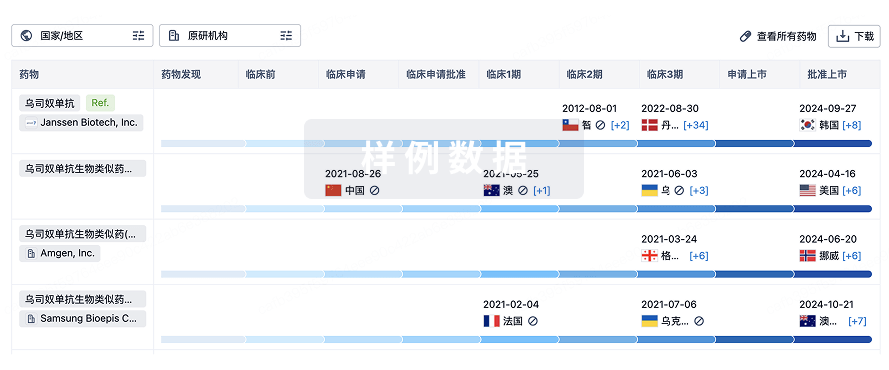
生物类似药
生物类似药在不同国家/地区的竞争态势。请注意临床1/2期并入临床2期,临床2/3期并入临床3期
登录
或
特殊审评
只需点击几下即可了解关键药物信息。
登录
或

提出任何生物医药研究问题
让每一步生物医药决策都精准制胜
基于十亿级生物数据与全球情报的精准 AI,赋能早期药物发现
立即开始免费试用!
智慧芽新药情报库是智慧芽专为生命科学人士构建的基于AI的创新药情报平台,助您全方位提升您的研发与决策效率。
立即接入生物医药数据包
智慧芽新药库数据也通过智慧芽开放平台,以MCP或API服务形式对外开放。立即使用我们的MCP服务定制您的LLM智能体。
生物序列数据库
生物药研发创新
免费使用
化学结构数据库
小分子化药研发创新
免费使用