预约演示
更新于:2025-12-27
Factor IX(Bio Products Laboratory)
更新于:2025-12-27
概要
基本信息
非在研机构- |
权益机构- |
最高研发阶段批准上市 |
首次获批日期 英国 (1999-08-09), |
最高研发阶段(中国)- |
特殊审评- |

登录后查看时间轴
关联
7
项与 Factor IX(Bio Products Laboratory) 相关的临床试验JPRN-UMIN000049908
Safety evaluation in an open-label study of an overdose of the capsules containing Valeriana fauriei root (VF) extract. - Safety evaluation of the capsules containing VF extract.
JPRN-UMIN000048811
A randomized, double-blind, placebo-controlled, crossover comparative study of evaluation of sleep-improvement effects of the capsules containing Valeriana fauriei root (VF) extract - Evaluation of sleep-improvement effects of the capsules containing VF extract
NCT02250573
An Open-study to Investigate the Safety and Efficacy of Replenine®-VF in Haemophilia B Subjects Undergoing Surgery.
100 项与 Factor IX(Bio Products Laboratory) 相关的临床结果
登录后查看更多信息
100 项与 Factor IX(Bio Products Laboratory) 相关的转化医学
登录后查看更多信息
100 项与 Factor IX(Bio Products Laboratory) 相关的专利(医药)
登录后查看更多信息
82
项与 Factor IX(Bio Products Laboratory) 相关的文献(医药)2025-11-01ADVANCES IN THERAPY
Comparing Real-World Outcomes of Prophylaxis with Extended Half-life Factor IX (rIX-FP vs. rFIXFc and N9-GP) for Haemophilia B: An Analysis of Medical Chart Data from Germany
Article
作者: Drelich, Douglass ; Olivieri, Martin ; Zhang, Xiang ; Tomic, Radovan ; Yan, Songkai ; Miesbach, Wolfgang ; Linhoff, Thomas ; Yang, Ying ; Jakobs, Natalie
INTRODUCTION:
In Germany, three extended half-life factor IX (FIX) products are commonly used to treat people with haemophilia B (PwHB). However, there remains a critical need to differentiate treatments for PwHB. The aim of this study was to assess the effectiveness and utilisation of rIX-FP compared with rFIXFc and N9-GP for prophylaxis in clinical practice in Germany.
METHODS:
A retrospective chart review was performed for PwHB aged ≥ 12 years with moderate/severe haemophilia B, who received prophylaxis with rIX-FP, rFIXFc or N9-GP for ≥ 12 months. The primary outcome was FIX consumption; secondary outcomes included annualised bleeding rate (ABR), annualised spontaneous bleeding rate (AsBR) and annualised joint bleeding rate (AjBR).
RESULTS:
The study included 138 PwHB: rIX-FP, n = 52; rFIXFc, n = 55; and N9-GP, n = 31. Mean FIX consumption with rIX-FP (46.9 IU/kg/week) was significantly lower than that of rFIXFc (70.1 IU/kg/week, p = 0.0083) but not significantly different from N9-GP (47.2 IU/kg/week, p = 0.9331). PwHB receiving rIX-FP prophylaxis had significantly lower mean bleeding rates than those receiving N9-GP (ABR: 0.8 vs. 1.5, p = 0.0472; AsBR: 0.1 vs. 0.6, p = 0.0092; and AjBR: 0.2 vs. 0.6, p = 0.0140). Bleeding rates for rIX-FP and rFIXFc did not differ significantly.
CONCLUSION:
rIX-FP prophylaxis was associated with significantly lower FIX consumption and numerically (but not significantly) lower bleeding rates compared with rFIXFc. Compared to N9-GP, prophylaxis with rIX-FP was associated with similar FIX consumption and significantly lower bleeding rates.
2024-11-01Special Care in Dentistry
Spontaneous resolution and bone regeneration in hemophilic pseudotumor: A rare case report and literature review
Review
作者: Aggarwal, Sunita ; Gupta, Sunita ; Singh, Khushboo
Abstract:
Aim:
Hemophilic pseudotumor (HP) is a very rare complication of hemophilia seen in only 1–2% of the cases. Although it is much more common in long bones, pelvis and small bones of hands and feet and very rarely involving jaw bones.
Method and result:
In the present case, the presence of a rare hemophilic pseudotumor of the mandible with the positive history of Hemophilia B justifies that the history, clinical and radiological examinations were sufficient to arrive at conclusive diagnosis precluding invasive diagnostic procedures such as biopsy hence avoiding the risk of hemorrhage, infection, or fistula. This case also highlights that patient was conservatively managed with Factor IX replacement alone with a very good clinical outcome.
Conclusion:
HP should be considered as a differential diagnosis of any progressive swelling of hard and soft tissues occurring in a patient with severe haemophilia.
2020-11-01Hamostaseologie4区 · 医学
Extended Half-Life Factor VIII/Factor IX Products: Assay Discrepancies and Implications for Hemophilia Management
4区 · 医学
Article
作者: Marquardt, Natascha ; Müller, Jens ; Pötzsch, Bernd ; Oldenburg, Johannes ; Goldmann, Georg
Abstract:
Due to structural differences between extended half-life (EHL) factor VIII (FVIII) or FIX products and equivalent plasma wild-type molecules used for assay calibration, reagent-dependent discrepancies during monitoring of FVIII- and FIX-replacement therapies with EHL products have been described. To assess the performance of available one-stage clotting and chromogenic substrate assays on the Siemens Atellica COAG 360 analyzer, an in vitro study using spiked plasma samples was performed. The described results confirm previously described findings and allowed allocation of each EHL product to an appropriate assay. In addition, corresponding EHL product–specific analytes were defined within the order entry system of the University Hospital Bonn. The requirement of product-specific FVIII and FIX assays complicates patient monitoring and demonstrates the need for both continuous education and communication between treating physicians and the coagulation laboratory.
1
项与 Factor IX(Bio Products Laboratory) 相关的新闻(医药)2025-12-02
·今日头条
100 项与 Factor IX(Bio Products Laboratory) 相关的药物交易
登录后查看更多信息
外链
| KEGG | Wiki | ATC | Drug Bank |
|---|---|---|---|
| D04123 | Factor IX(Bio Products Laboratory) | - |
研发状态
10 条最早获批的记录, 后查看更多信息
登录
| 适应症 | 国家/地区 | 公司 | 日期 |
|---|---|---|---|
| 血友病B | 英国 | 1999-08-09 |
登录后查看更多信息
临床结果
临床结果
适应症
分期
评价
查看全部结果
登录后查看更多信息
转化医学
使用我们的转化医学数据加速您的研究。
登录
或

药物交易
使用我们的药物交易数据加速您的研究。
登录
或

核心专利
使用我们的核心专利数据促进您的研究。
登录
或

临床分析
紧跟全球注册中心的最新临床试验。
登录
或

批准
利用最新的监管批准信息加速您的研究。
登录
或

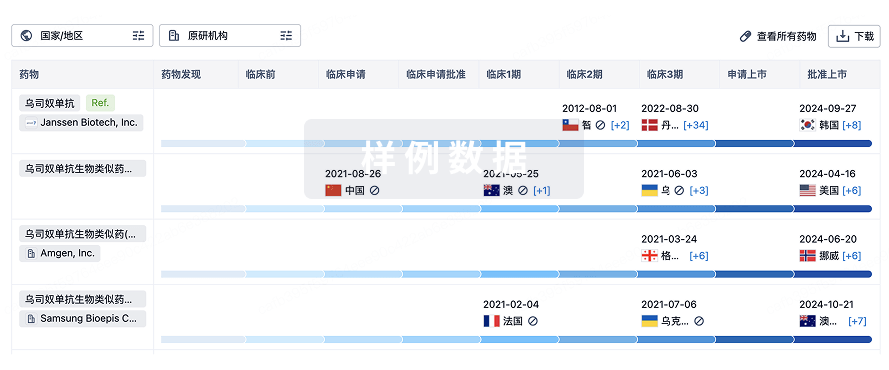
生物类似药
生物类似药在不同国家/地区的竞争态势。请注意临床1/2期并入临床2期,临床2/3期并入临床3期
登录
或
特殊审评
只需点击几下即可了解关键药物信息。
登录
或

提出任何生物医药研究问题
让每一步生物医药决策都精准制胜
基于十亿级生物数据与全球情报的精准 AI,赋能早期药物发现
立即开始免费试用!
智慧芽新药情报库是智慧芽专为生命科学人士构建的基于AI的创新药情报平台,助您全方位提升您的研发与决策效率。
立即接入生物医药数据包
智慧芽新药库数据也通过智慧芽开放平台,以MCP或API服务形式对外开放。立即使用我们的MCP服务定制您的LLM智能体。
生物序列数据库
生物药研发创新
免费使用
化学结构数据库
小分子化药研发创新
免费使用