预约演示
更新于:2026-09-19
SynB1-ELP-p50i
更新于:2026-09-19
概要
基本信息
非在研机构- |
权益机构- |
最高研发阶段临床前 |
首次获批日期- |
最高研发阶段(中国)- |
特殊审评- |

关联
100 项与 SynB1-ELP-p50i 相关的临床结果
登录后查看更多信息
100 项与 SynB1-ELP-p50i 相关的转化医学
登录后查看更多信息
100 项与 SynB1-ELP-p50i 相关的专利(医药)
登录后查看更多信息
3
项与 SynB1-ELP-p50i 相关的文献(医药)2026-01-01·EXPERIMENTAL NEUROLOGY
Elastin-like polypeptide delivery of an NF-kB inhibitor for treatment of juvenile mild TBI complicated by high-fat diet consumption
Article
作者: Haskell, Jacob P ; Bidwell, Gene L ; McGee, Ian G ; Grayson, Bernadette E ; Garrett, Michael R ; Challagundla, Lavanya ; Beeton, Komal ; Howell, John Aaron ; Smith, Allie M
Juveniles are at increased risk for mild traumatic brain injury (mTBI) due to recreational activities, domestic violence, and vulnerabilities of the developing skull. In industrialized nations, adolescents often consume high-sugar, high-fat diets (HFD), which can impair CNS health and exacerbate mTBI outcomes. Secondary injury following mTBI is characterized by prolonged neuroinflammation, with nuclear factor kappa B (NF-κB) acting as a central regulator of these inflammatory responses. We developed a polypeptide biologic, SynB1-ELP-p50i, consisting of an elastin-like polypeptide delivered NF-κB inhibitor (p50i) and the cell-penetrating peptide SynB1. This study investigates the interaction between diet and NF-κB inhibition in juvenile rats with mTBI by examining SynB1-ELP-p50i biodistribution, pharmacokinetics, therapeutic efficacy, and cell-specific effects. Long Evans rats were assigned to chow or HFD groups at postnatal day 20 (PND20), and mTBI or sham injury was induced at PND30 using the CHIMERA TBI model. Rats received 50 mg/kg SynB1-ELP-p50i or saline post-injury. Behavioral outcomes were assessed with the Morris water maze (MWM), and neuroinflammatory markers were measured using RT-qPCR and single-nucleus RNA sequencing (snRNA-seq). SynB1-ELP-p50i accumulated at injury sites (p < 0.05), and SynB1-ELP-p50i treated chow-fed rats showed improved MWM performance compared to vehicle controls and HFD subjects (p < 0.05). RT-qPCR confirmed increased Aif1 and Gfap expression post-injury (p < 0.05), and snRNA-seq revealed upregulation of markers of microgliosis in activated microglia. These findings indicate that mTBI triggers acute cognitive deficits and neuroinflammation, worsened by HFD. SynB1-ELP-p50i mitigated memory deficits in chow-fed animals, supporting NF-κB inhibition as a promising therapeutic strategy for juvenile mTBI.
2020-01-01·Hypertension (Dallas, Tex. : 1979)1区 · 医学
Biopolymer-Delivered, Maternally Sequestered NF-κB (Nuclear Factor-κB) Inhibitory Peptide for Treatment of Preeclampsia
1区 · 医学
Article
作者: Howell, John Aaron ; Taylor, Erin ; Chapman, Heather ; Eddy, Adrian C. ; Mahdi, Fakhri ; George, Eric M. ; Bidwell, Gene L.
Preeclampsia is a hypertensive disorder of pregnancy that causes significant acute and long-term risk to the mother and the baby. The multifaceted maternal syndrome is driven by overproduction of circulating anti-angiogenic factors, widespread inflammation, and endothelial dysfunction. Nuclear factor-κB (NF-κB) is a transcription factor that plays a central role in the inflammatory response. Its activity is increased in the preeclamptic placenta, and it promotes the systemic endothelial dysfunction present in preeclampsia. There is an acute need for new therapeutics targeted to the causative pathways of preeclampsia. Our group has developed a drug delivery system based on the bioengineered protein ELP (elastin-like polypeptide) that is capable of stabilizing therapeutics in the maternal circulation and preventing their placental transfer. Here we used the ELP carrier system to deliver a peptide known to inhibit the NF-κB pathway. This polypeptide, containing a cell-penetrating peptide and an NF-κB inhibitory peptide derived from the p50 nuclear localization sequence (abbreviated SynB1-ELP-p50i), blocked NF-κB activation and prevented TNF-α (tumor necrosis factor alpha)–induced endothelin production in vitro. Fusion of the p50i peptide to the SynB1-ELP carrier slowed its plasma clearance and prevented its placental transfer in pregnant rats, resulting in increased deposition in the maternal kidney, liver, and placenta relative to the free peptide. When administered in a rat model of placental ischemia, SynB1-ELP-p50i partially ameliorated placental ischemia-induced hypertension and reduced placental TNF-α levels with no signs of toxicity. These data support the continued development of ELP-delivered NF-κB inhibitors as maternally sequestered anti-inflammatory agents for preeclampsia therapy.
bioRxiv : the preprint server for biology
Elastin-like polypeptide delivery of anti-inflammatory peptides to the brain following ischemic stroke
作者: Burke, Stephen P ; Perkins, Eddie ; Howell, John Aaron ; Lopez, Mariper ; Bidwell, Gene L ; Gaouette, Nicholas
Abstract:
Inflammatory processes are activated following ischemic strokes and lead to increased tissue damage for weeks following the ischemic insult, but there are no approved therapies that target this inflammation-induced secondary injury. Here, we report that SynB1-ELP-p50i, a novel protein inhibitor of the nuclear factor kappa B (NF-κB) inflammatory cascade bound to drug carrier elastin-like polypeptide (ELP), is able to enter both neurons and microglia, cross the blood-brain barrier, localize exclusively in the ischemic core and penumbra in Wistar-Kyoto and spontaneously hypertensive rats (SHRs), and reduce infarct volume in male SHRs. Additionally, in male SHRs, SynB1-ELP-p50i treatment improves survival for 14 days following stroke with no effects of toxicity or peripheral organ dysfunction. These results show high potential for ELP-delivered biologics for therapy of ischemic stroke and other central nervous system disorders and further support targeting inflammation in ischemic stroke.
100 项与 SynB1-ELP-p50i 相关的药物交易
登录后查看更多信息
研发状态
10 条进展最快的记录, 后查看更多信息
登录
| 适应症 | 最高研发状态 | 国家/地区 | 公司 | 日期 |
|---|---|---|---|---|
| 创伤性脑损伤 | 临床前 | 美国 | 2026-01-01 |
登录后查看更多信息
临床结果
临床结果
适应症
分期
评价
查看全部结果
| 研究 | 分期 | 人群特征 | 评价人数 | 分组 | 结果 | 评价 | 发布日期 |
|---|
No Data | |||||||
登录后查看更多信息
转化医学
使用我们的转化医学数据加速您的研究。
登录
或

药物交易
使用我们的药物交易数据加速您的研究。
登录
或

核心专利
使用我们的核心专利数据促进您的研究。
登录
或

临床分析
紧跟全球注册中心的最新临床试验。
登录
或

批准
利用最新的监管批准信息加速您的研究。
登录
或

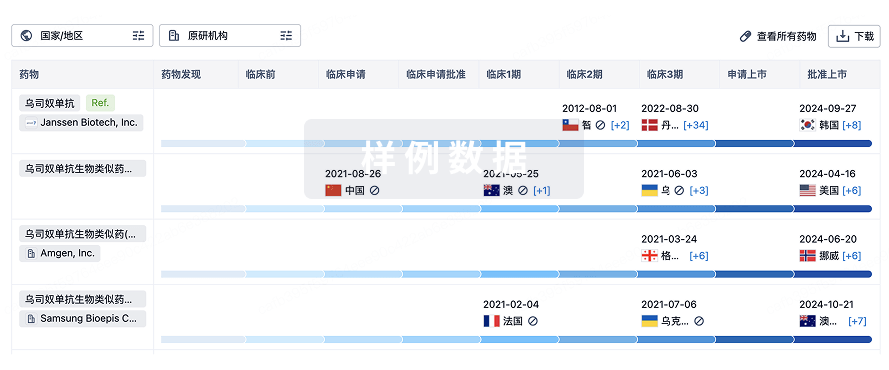
生物类似药
生物类似药在不同国家/地区的竞争态势。请注意临床1/2期并入临床2期,临床2/3期并入临床3期
登录
或
特殊审评
只需点击几下即可了解关键药物信息。
登录
或

提出任何生物医药研究问题
让每一步生物医药决策都精准制胜
基于十亿级生物数据与全球情报的精准 AI,赋能早期药物发现
立即开始免费试用!
智慧芽新药情报库是智慧芽专为生命科学人士构建的基于AI的创新药情报平台,助您全方位提升您的研发与决策效率。
立即接入生物医药数据包
智慧芽新药库数据也通过智慧芽开放平台,以MCP或API服务形式对外开放。立即使用我们的MCP服务定制您的LLM智能体。
生物序列数据库
生物药研发创新
免费使用
化学结构数据库
小分子化药研发创新
免费使用