预约演示
更新于:2026-09-26
VGV-1
更新于:2026-09-26
概要
基本信息
在研机构- |
权益机构- |
最高研发阶段终止临床3期 |
首次获批日期- |
最高研发阶段(中国)终止 |
特殊审评- |

登录后查看时间轴
关联
100 项与 VGV-1 相关的临床结果
登录后查看更多信息
100 项与 VGV-1 相关的转化医学
登录后查看更多信息
100 项与 VGV-1 相关的专利(医药)
登录后查看更多信息
290
项与 VGV-1 相关的文献(医药)2026-12-01·SPECTROCHIMICA ACTA PART A-MOLECULAR AND BIOMOLECULAR SPECTROSCOPY
Synthesis of a cyanine-based fluorescent probe and its dual-channel recognition of TNP and PYX in aqueous solution
Article
作者: Wang, Mingya ; Wang, Qi ; Cheng, Ying ; Li, Shengling ; Cao, Duanlin ; Shi, Junli ; Jing, Ziye
A fluorescent probe with excellent biocompatibility and water solubility was constructed, which can achieve highly selective detection of trace 2,4,6-trinitrophenol (TNP) and 2,6-bis(picrylamino)-3,5-dinitropyridine (PYX). The probe exhibits a purple color and red fluorescence in aqueous solution, and can specifically and rapidly recognize TNP and PYX through a dual-channel mode of naked-eye color change and fluorescence quenching, showing good detection sensitivity. Spectroscopic test results indicated that the limits of detection (LOD) of TNP and PYX measured by UV-vis absorption spectroscopy were as low as 3.4830 μM and 14.4785 μM, respectively. In contrast, fluorescence spectroscopy further improved the LODs to 1.5956 μM and 3.0820 μM, demonstrating its advantage of high sensitivity in the field of fluorescence detection. Stability studies showed that the probe could maintain stable detection performance in the pH range of 4-9. To promote practical application, the probe was fabricated into test strips, which can quickly complete qualitative and visual detection of TNP and PYX. Combined with smartphone visual colorimetric analysis, semi-quantitative detection of target analytes in water samples can be realized. In addition, the probe can be successfully applied to the fluorescence imaging analysis of exogenous TNP and PYX in HeLa cells.
2026-04-01·Advanced Healthcare Materials
Nano‐Engineered Titanium Implants Loaded With Gingival Fibroblasts‐Derived Microvesicles Enhance Early Osseointegration And Soft Tissue Attachment In Vivo
Article
作者: Huang, Baoxin ; Gulati, Karan ; Lee, Ryan SB ; Ivanovski, Sašo ; Jayasree, Anjana ; Liaw, Andrew ; Han, Pingping ; Salomon, Carlos ; Sokolowski, Kamil ; Liu, Dingbin ; Liu, Chun
ABSTRACT:
Titanium dental implants require both reliable osseointegration and peri‐implant soft tissue seal formation to ensure long‐term success. While osseointegration has been widely studied, strategies to optimize soft tissue healing remain underexplored. In this study, we developed titania nanopore (TNP) implant surfaces functionalized with human primary gingival fibroblasts‐derived microvesicles (hGFs‐MVs) to investigate early peri‐implant soft and hard tissue healing in vivo. hGFs‐MVs were enriched, characterized, and loaded onto TNP implants at 10
9
particles per implant (2 mm × 3 mm) via passive adsorptive loading. Rat first molars were extracted, and implants were placed into healed sockets after 4 weeks. Animals were assigned to TNP or hGFs‐MVs/TNP groups (n = 5–6) and assessed at 1 and 4 weeks by micro‐CT and histology. Cryo‐electron microscopy confirmed the double‐membrane structure of hGFs‐MVs, and in vitro release studies showed peak vesicle release at day 3. Histology revealed early osteoid formation at week 1 and mature mineralized bone by week 4. hGFs‐MVs/TNP implants exhibited significantly higher percentage of bone‐to‐implant contact (BIC%) at 4 weeks. Importantly, the hGFs‐MVs/TNP group showed markedly enhanced soft tissue attachment and mature collagen fibers. These ‘proof‐of‐concept’ findings suggest that hGFs‐MVs‐loaded TNP implants enhance both in vivo osseointegration and soft tissue integration, providing a clinically relevant, cell‐free strategy for improving peri‐implant healing.
2026-03-14·EUROPEAN JOURNAL OF PUBLIC HEALTH
Gender trends in youth tobacco and nicotine use in Georgia across GYTS rounds, 2014–23
Article
作者: Gvinianidze, Kakha ; Abuladze, Tamar ; Sturua, Lela ; Gegenava, Veriko ; Dekanosidze, Ana ; Ciobanu, Angela ; Bakhturidze, George ; Tarasenko, Yelena
Abstract:
Adolescent tobacco and nicotine product (TNP) use remains a public health concern, with emerging gender convergence and rising e-cigarette use among females. We examined gender-specific trends in Georgian adolescents alongside national tobacco control policies and social context. We analyzed nationally representative Global Youth Tobacco Survey data from Georgia (2014, 2017, and 2023) for youth aged 11–17 to estimate the prevalence and patterns of current TNP use in the context of tobacco-related advertising and promotion, secondhand smoke, and national policy, via a policy review. Adjusted prevalence estimates were derived using post-estimation predictive margins after fitting multinomial logistic regression models. From 2014 to 2023, current TNP use declined among boys but increased among girls, particularly in exclusive e-cigarette use. The percentages reporting no current TNP use increased among boys from 77.4% to 85.6% (P < .01), but declined among girls from 92.1% to 88.1% (P = .04). By 2023, exclusive e-cigarette use was more prevalent among girls than boys. Across sexes, exposure to pro-tobacco advertising and promotion and secondhand smoke declined. Exposure to anti-tobacco promotion peaked in 2017 and receded by 2023. The policy review documented strengthened measures, alongside gaps in oversight of digital marketing and newer products, including e-cigarettes. Georgia’s tobacco control policies have contributed to reduced TNP use among boys and a less permissive social environment. Rising e-cigarette use among girls is concerning. Policies should close regulatory gaps, enhance enforcement, and address evolving product and marketing developments to prevent TNP uptake and protect adolescents from tobacco-related harms.
100 项与 VGV-1 相关的药物交易
登录后查看更多信息
外链
| KEGG | Wiki | ATC | Drug Bank |
|---|---|---|---|
| - | - | - |
研发状态
10 条进展最快的记录, 后查看更多信息
登录
| 适应症 | 最高研发状态 | 国家/地区 | 公司 | 日期 |
|---|---|---|---|---|
| HIV感染 | 临床3期 | 南非 | - |
登录后查看更多信息
临床结果
临床结果
适应症
分期
评价
查看全部结果
| 研究 | 分期 | 人群特征 | 评价人数 | 分组 | 结果 | 评价 | 发布日期 |
|---|
No Data | |||||||
登录后查看更多信息
转化医学
使用我们的转化医学数据加速您的研究。
登录
或

药物交易
使用我们的药物交易数据加速您的研究。
登录
或

核心专利
使用我们的核心专利数据促进您的研究。
登录
或

临床分析
紧跟全球注册中心的最新临床试验。
登录
或

批准
利用最新的监管批准信息加速您的研究。
登录
或

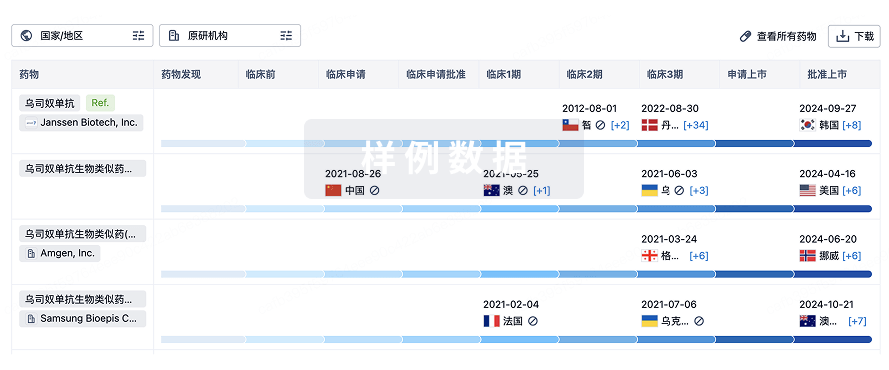
生物类似药
生物类似药在不同国家/地区的竞争态势。请注意临床1/2期并入临床2期,临床2/3期并入临床3期
登录
或
特殊审评
只需点击几下即可了解关键药物信息。
登录
或

提出任何生物医药研究问题
让每一步生物医药决策都精准制胜
基于十亿级生物数据与全球情报的精准 AI,赋能早期药物发现
立即开始免费试用!
智慧芽新药情报库是智慧芽专为生命科学人士构建的基于AI的创新药情报平台,助您全方位提升您的研发与决策效率。
立即接入生物医药数据包
智慧芽新药库数据也通过智慧芽开放平台,以MCP或API服务形式对外开放。立即使用我们的MCP服务定制您的LLM智能体。
生物序列数据库
生物药研发创新
免费使用
化学结构数据库
小分子化药研发创新
免费使用