预约演示
更新于:2026-03-21
C25
更新于:2026-03-21
概要
基本信息
药物类型 小分子化药 |
别名- |
作用方式 抑制剂 |
作用机制 CDK4抑制剂(细胞周期蛋白依赖性激酶4抑制剂)、CDK9抑制剂(细胞周期蛋白依赖性激酶9抑制剂) |
在研适应症 |
非在研适应症- |
原研机构 |
在研机构 |
非在研机构- |
权益机构- |
最高研发阶段临床前 |
首次获批日期- |
最高研发阶段(中国)临床前 |
特殊审评- |

关联
100 项与 C25 相关的临床结果
登录后查看更多信息
100 项与 C25 相关的转化医学
登录后查看更多信息
100 项与 C25 相关的专利(医药)
登录后查看更多信息
44
项与 C25 相关的文献(医药)2026-01-01·Cancer Medicine
Heterogeneity in Treatment Effects of Reduced Versus Standard Dose of Cabazitaxel in Metastatic Castration‐Resistant Prostate Cancer
Article
作者: Wataru Fukuokaya ; Keiichiro Mori ; Fumihiko Urabe ; Kagenori Ito ; Takahiro Kimura ; Takafumi Yanagisawa ; Shahrokh F. Shariat ; Akihiro Hirakawa ; Pawel Rajwa
ABSTRACT:
Background:
In the
PROSELICA
, a randomized controlled trial (
RCT
) comparing cabazitaxel 20 mg/m
2
(
C20
) versus 25 mg/m
2
(
C25
) in metastatic castration‐resistant prostate cancer (
mCRPC
), one‐variable‐at‐a‐time subgroup analysis suggested possible heterogeneity in treatment effect (
HTE
) of
C25
versus
C20
among study participants. Novel predictive
HTE
analysis approaches may provide an in‐depth understanding of such results.
Methods:
We analyzed patient‐level data from 1200 patients with mCRPC who were randomized in the PROSELICA trial. Outcomes included overall survival (OS) and progression‐free survival (PFS). Using baseline characteristics, patients were stratified into quartiles based on either quantitative baseline risk of poor outcome (risk modeling) or predicted individualized treatment effect (ITE) using a causal survival forest algorithm (effect modeling). Treatment effects were measured as differences in restricted mean survival time (RMST).
Results:
For risk modeling, the
OS
effect of
C25
increased with risk quartiles: −0.07 months (95%
CI
, −1.60 to 1.46) in the lowest risk quartile and 1.67 months (95%
CI
, 0.25 to 3.10) in the highest risk quartile. For effect modeling, the
OS
effect ranged from −0.17 months (95%
CI
, −3.01 to 2.68) in the lowest
ITE
quartile to 0.57 months (95%
CI
, −2.27 to 3.41) in the highest
ITE
quartile. Both approaches demonstrated greater
C25
benefit in patients with extensive previous treatment and baseline disease burden.
PFS
effects remained consistent across all quartiles.
Conclusions:
The OS effect of C25 versus C20 may vary based on baseline characteristics in post‐docetaxel mCRPC. Patients with extensive treatment history and disease burden may benefit more from C25.
2025-11-01·CURRENT DRUG TARGETS
Novel Glitazones Protect Rotenone-induced Parkinsonism in Mouse Models by Targeting PGC1α
Article
作者: Ayachit, Shreyas ; Ramesha, Ganavi Bethanagere ; Krishna, Kamsagara Linganna ; Pathak, Suman ; Ravanappa, Prashanthakumar Bommenahalli ; Babu, Divya Durai ; Mehdi, Seema ; Pesaladinne, Ujwal Reddy
Introduction::
Parkinson’s disease (PD) is a persistent neurodegenerative condition
marked by rising global rates of disability and mortality, warranting the need for new treatment options.
The present investigation evaluated the protective effects of novel glitazones C7 and C25
against rotenone-induced PD in a mouse model.
Methods::
Molecular docking using Discovery Studio and molecular dynamics simulations were
employed to evaluate the binding ability of C7 and C25 to the PGC-1α target protein. Pharmacokinetic
evaluations of C7 and C25 were performed against the standard pioglitazone in the rats model,
and acute toxicity assessments were conducted following OECD guidelines 423. The neuroprotective
effects of C7 were tested in a rotenone-induced mouse model of PD at doses of 10, 20, and
30 mg/kg body weight. Behavioral studies, including locomotor activity, grip strength, and catalepsy,
as well as biochemical analyses such as endogenous antioxidant levels and AChE levels, were
assessed.
Results::
The novel compound C7 demonstrated good binding and simulation at the PGC-1α target
protein. The kinetic profile of C7 was found to be good when compared to C25. Both the novel glitazones
were safe at 300 mg/kg body weight when tested for oral acute toxicity. The novel compound
C7 effectively alleviated symptoms related to rotenone-induced PD, demonstrating its
promise as a therapeutic candidate.
Discussion::
In the rotenone-induced mouse model, compound C7 exhibited a promising anti-PD
effect by attenuating oxidative stress and increasing muscular activity, which merits further investigations.
Conclusion::
Additional research using various induction models, along with further investigation
of cellular and molecular markers in larger animal studies, is needed to validate these findings.
2025-09-01·DRUG DEVELOPMENT RESEARCH
Targeting the Enzymatic Site of Botulinum Neurotoxin Type E With 8‐Hydroxyquinolinol–Based Inhibitors: In Silico, In Vitro, and In Vivo Evaluation
Article
作者: Dhaked, Ram Kumar ; Vimal, Manorama ; Kushwah, Vinita Chauhan ; Disoriya, Deeksha ; Sonkar, Priyanka ; Agnihotri, Surabhi
ABSTRACT:
Botulinum neurotoxins are the most potent toxins responsible for causing flaccid paralysis of muscles by blocking the release of acetylcholine at the neuromuscular junction. There are no postexposure therapeutics and effective active/passive prophylaxis available for the treatment. Therefore, it is highly desirable to develop a potential antidote to counter botulinum neurotoxicity. In this study, ~800 molecules were mined by a structure similarity search from open databases and docked into the pocket of the catalytic domain of botulinum toxin type E using AutoDock 4.2. Twenty‐four small molecules with the best scoring function were selected and evaluated using in vitro and in vivo assays. Among these, two molecules, NSC1011 and NSC1012, were identified as inhibiting the catalytic activity of BoNT/E, with IC50 values of 31.25 ± 1.0 μM and 55.45 ± 5.2 μM and KD of 5.54E−07 and 6.51E−06 M, respectively. To find inhibitors that can reverse the neurotoxicity more effectively, we have derived and synthesized 12 analogs of NSC1011. These compounds showed higher inhibition than the parent molecules, with IC50 and KD values of 4.375 ± 2.3 µM and 1.61E−08 M (C25.12) and 10.25 ± 3.0 µM and 4.70E‐08 M (C25.9). Compounds C25.9 and C25.12 completely protected mice in premixed doses and led to significant extension in survival of up to 60 h with therapeutic treatment. This study showed that these 8‐HQ derivatives had the potency to inhibit BoNT/E by interacting with the active site. Further studies could lead to the development of undiscovered postexposure therapeutics against this deadly neurotoxin.
100 项与 C25 相关的药物交易
登录后查看更多信息
研发状态
10 条进展最快的记录, 后查看更多信息
登录
| 适应症 | 最高研发状态 | 国家/地区 | 公司 | 日期 |
|---|---|---|---|---|
| HR阳性/HER2阴性乳腺癌 | 临床前 | 中国 | 2025-10-01 |
登录后查看更多信息
临床结果
临床结果
适应症
分期
评价
查看全部结果
| 研究 | 分期 | 人群特征 | 评价人数 | 分组 | 结果 | 评价 | 发布日期 |
|---|
No Data | |||||||
登录后查看更多信息
转化医学
使用我们的转化医学数据加速您的研究。
登录
或
药物交易
使用我们的药物交易数据加速您的研究。
登录
或
核心专利
使用我们的核心专利数据促进您的研究。
登录
或
临床分析
紧跟全球注册中心的最新临床试验。
登录
或
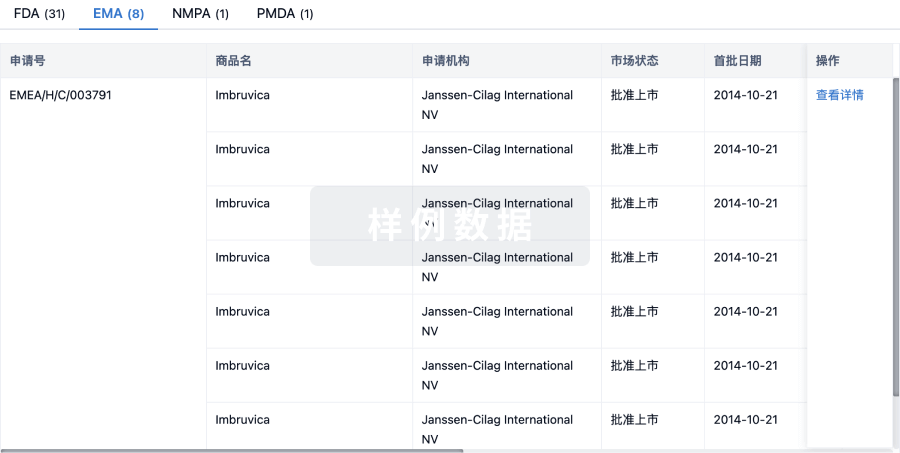
批准
利用最新的监管批准信息加速您的研究。
登录
或
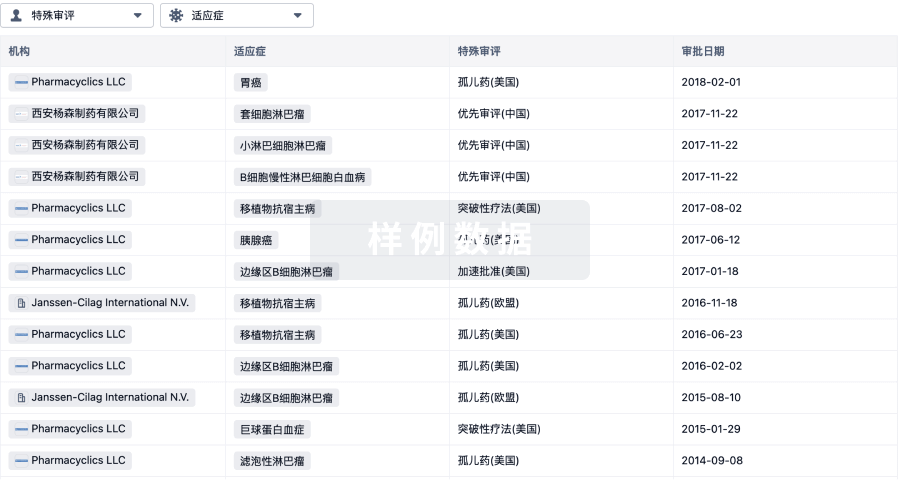
特殊审评
只需点击几下即可了解关键药物信息。
登录
或
生物医药百科问答
全新生物医药AI Agent 覆盖科研全链路,让突破性发现快人一步
立即开始免费试用!
智慧芽新药情报库是智慧芽专为生命科学人士构建的基于AI的创新药情报平台,助您全方位提升您的研发与决策效率。
立即开始数据试用!
智慧芽新药库数据也通过智慧芽数据服务平台,以API或者数据包形式对外开放,助您更加充分利用智慧芽新药情报信息。
生物序列数据库
生物药研发创新
免费使用
化学结构数据库
小分子化药研发创新
免费使用