预约演示
更新于:2026-10-17
FB-003
更新于:2026-10-17
概要
基本信息
原研机构 |
在研机构- |
非在研机构 |
权益机构- |
最高研发阶段终止药物发现 |
首次获批日期- |
最高研发阶段(中国)- |
特殊审评- |

关联
100 项与 FB-003 相关的临床结果
登录后查看更多信息
100 项与 FB-003 相关的转化医学
登录后查看更多信息
100 项与 FB-003 相关的专利(医药)
登录后查看更多信息
41
项与 FB-003 相关的文献(医药)2026-06-01FOOD CHEMISTRY
Chain length distribution and its effects on the pasting and thermal properties of lotus root starch
Article
作者: Gao, Haiyan ; Yu, Zhimin ; Zheng, Bin ; Chen, Hangjun ; Tong, Chuan ; Deng, Rubing
This study investigated the variations in chain length distribution of six lotus root starch and relationships with starch functional properties. The amylose content (13.7-16.4%), peak degree of polymerization (DP) of amylose (XAM, 4,308-6,031), peak height of amylose (hAM, 0.141-0.172), second peak height of amylopectin (hAP2, 0.581-0.616), proportion of short amylose chain (SAM, 8.36-13.29%) showed significant genetic diversity. Amylopectin chain fractions fa (DP 6-12, 20.8-22.5%), fb1 (DP 13-24, 49.4-51.1%) and fb3 (DP ≥ 37, 13.7-15.3%) greatly varied among different lotus roots. Amylose content and hAM showed positive relations with onset temperature. DPs at the maximum of amylopectin peak and hAP2 were significantly correlated with pasting properties and gelatinization enthalpy. The SAM, fa and fa/fb1 ratio significantly correlated with peak viscosity, setback, pasting temperature and peak temperature. fb3 showed a positive relation with gelatinization enthalpy (P < 0.05). These results provided insights into the structure-function relationships of lotus root amylose and amylopectin.
2026-02-01Food Additives and Contaminants Part A-Chemistry Analysis Control Exposure & Risk Assessment
Determination of fumonisins in grains and feed: an efficient clean-up method combined with lC-MS/mS
Article
作者: Zhou, Xin ; Li, Aijun ; Wang, Xuesong ; Qu, Bin ; Zheng, Baiqin ; Hou, Qiang ; Pan, Canping ; Guo, Xinyu
Fumonisins are mycotoxins produced by Fusarium species. Their contamination of grain and animal feed poses significant health risks to both humans and livestock. Among the fumonisins, FB1, FB2, and FB3 are commonly found in staple crops like maize, rice, and wheat, necessitating reliable detection and quantification methods to ensure food and feed safety. We successfully developed and validated a rapid and optimised method for the simultaneous detection and quantification of three major fumonisins in diverse grain and feed matrices (rice, wheat flour, maize, alfalfa, oat grass, and soybean meal) by LC-MS/MS. Various extraction techniques and clean-up strategies have been evaluated to address the challenges posed by complex sample matrices. Finally, an acetonitrile/water/formic acid solution (50:49:1, v/v/v) and the multi-plug filtration clean-up (m-PFC) column were selected for fumonisins extraction and clean-up respectively, due to their ability to offer superior performance in terms of both recovery rates and minimising interference. The results of matrix effects demonstrated that solvent-based calibration curves were adequate for simpler matrices such as rice and wheat flour, while matrix-matched calibration was essential for more complex matrices like alfalfa and oat grass. Recovery rates for fumonisins in various matrices ranged from 72.5% to 99.3%, while the limits of detection and quantification ranged from 0.3 to 3.3 µg/kg and 1 to 10 µg/kg, respectively, indicating the robustness and reliability of the method. This optimised approach provides a cost-effective and highly reliable solution for fumonisins monitoring, thereby helping mitigate the health risks associated with mycotoxins in food and feed products.
2025-12-02ACS Omega
Removal of Methylparaben from an Aqueous Medium Using Biochars Derived from Fique Bagasse. Experimental and Theoretical Approach
Article
作者: Rivera-Giraldo, Juan David ; Correa-Navarro, Yaned Milena ; Murcia-Garcia, Juan Diego ; Rodas-Rodríguez, José Mauricio ; Galviz-Quintero, Richard Alejandro
Emerging pollutants, such as parabens, pose challenges to removal through conventional wastewater treatment and require innovative approaches to remove these contaminants from water. This research evaluated the adsorption of methylparaben onto six biochars derived from fique bagasse. Batch experiments were carried out to investigate adsorption kinetics, equilibrium adsorption, and the influence of solution pH. Results showed that the adsorption capacity decreased at pH values above 6.0 for all evaluated biochars. Kinetic studies revealed that approximately 90% of methylparaben was removed within 10 h, with the pseudo-first-order (PFO) model providing the best fit to the experimental data compared to other tested models. The adsorption process was governed by both internal and external diffusion mechanisms. Equilibrium adsorption data were best described by the Langmuir isotherm, with the adsorption capacity strongly correlated to the specific surface area of the biochars. Maximum adsorption capacities (Q max) were 134.285 mg g-1 (FB-3Na), 87.461 mg g-1 (FB-3C), and 64.349 mg g-1 (FB-3). Molecular dynamics simulations provided insights into the physisorption of methylparaben onto fique bagasse biochar, confirming that the interactions were exclusively of the π-π and π-alkyl types.
1
项与 FB-003 相关的新闻(医药)2023-06-22

100 项与 FB-003 相关的药物交易
登录后查看更多信息
研发状态
10 条进展最快的记录, 后查看更多信息
登录
| 适应症 | 最高研发状态 | 国家/地区 | 公司 | 日期 |
|---|---|---|---|---|
| 肿瘤 | 药物发现 | 美国 | - |
登录后查看更多信息
临床结果
临床结果
适应症
分期
评价
查看全部结果
登录后查看更多信息
转化医学
使用我们的转化医学数据加速您的研究。
登录
或

药物交易
使用我们的药物交易数据加速您的研究。
登录
或

核心专利
使用我们的核心专利数据促进您的研究。
登录
或

临床分析
紧跟全球注册中心的最新临床试验。
登录
或

批准
利用最新的监管批准信息加速您的研究。
登录
或

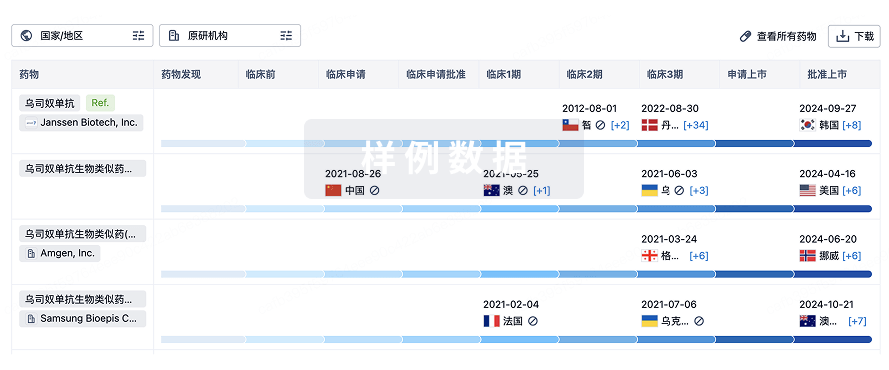
生物类似药
生物类似药在不同国家/地区的竞争态势。请注意临床1/2期并入临床2期,临床2/3期并入临床3期
登录
或
特殊审评
只需点击几下即可了解关键药物信息。
登录
或

提出任何生物医药研究问题
让每一步生物医药决策都精准制胜
基于十亿级生物数据与全球情报的精准 AI,赋能早期药物发现
立即开始免费试用!
智慧芽新药情报库是智慧芽专为生命科学人士构建的基于AI的创新药情报平台,助您全方位提升您的研发与决策效率。
立即接入生物医药数据包
智慧芽新药库数据也通过智慧芽开放平台,以MCP或API服务形式对外开放。立即使用我们的MCP服务定制您的LLM智能体。
生物序列数据库
生物药研发创新
免费使用
化学结构数据库
小分子化药研发创新
免费使用