预约演示
更新于:2026-08-15
TIGIT checkpoint inhibitor (GigaGen)
更新于:2026-08-15
概要
基本信息
原研机构 |
在研机构- |
非在研机构 |
权益机构- |
最高研发阶段无进展药物发现 |
首次获批日期- |
最高研发阶段(中国)- |
特殊审评- |

关联
100 项与 TIGIT checkpoint inhibitor (GigaGen) 相关的临床结果
登录后查看更多信息
100 项与 TIGIT checkpoint inhibitor (GigaGen) 相关的转化医学
登录后查看更多信息
100 项与 TIGIT checkpoint inhibitor (GigaGen) 相关的专利(医药)
登录后查看更多信息
15
项与 TIGIT checkpoint inhibitor (GigaGen) 相关的文献(医药)2026-03-12·JOURNAL OF MEDICINAL CHEMISTRY
Coupling PD-L1 Inhibition and Lysosomal Degradation: Innovative Anti-PD-L1 Peptides for NSCLC Immunotherapy
Article
作者: Merlino, Francesco ; Russomanno, Pasquale ; Di Maro, Salvatore ; Maione, Francesco ; Marinelli, Luciana ; Pagliara, Valentina ; Sabbatino, Francesco ; Brancaccio, Diego ; Diakogiannaki, Isidora ; Di Leva, Francesco Saverio ; Amato, Jussara ; Arosio, Daniela ; Plewka, Jacek ; Donati, Greta ; Marzano, Simona ; Skalniak, Lukasz ; Seneci, Pierfausto ; D’Amore, Vincenzo Maria ; Boccino, Ida ; Mazzarella, Vincenzo ; Polcaro, Giovanna ; Liguori, Luigi ; Saviano, Anella ; Pepe, Stefano
Antibodies targeting PD-1 and PD-L1 have achieved considerable success against various cancers, however their effectiveness is limited as both therapeutic and diagnostic tools. Meanwhile, small organic molecules and macrocyclic peptides are currently at various stages of development as modulators of the PD-1/PD-L1 axis. Here, we report an array of low molecular weight anti-PD-L1 macrocyclic peptides, among which two─FM2 and FM213─emerged as promising bifunctional suppressors of PD-1/PD-L1 binding. Through a compound-centric proteomic approach, we demonstrated that FM213 robustly binds to PD-L1 in NSCLC cells and exosomes. Furthermore, at its highest non-cytotoxic concentration (2 μM), FM213 (i) significantly enhances recognition and destruction of NSCLC cells by human PBMCs, and (ii) promotes the internalization of cell-surface PD-L1 into the cytosol, leading to its degradation via a lysosome-dependent pathway. Finally, coinhibition of TIGIT and PD-L1 by DTBP-3, a TIGIT inhibitor, and FM213, respectively, enhances the antitumor immunity of anti-PD-L1 ligands.
2026-02-01·MOLECULAR DIVERSITY
Computational screening for natural compounds as potential immune checkpoint inhibitors against TIGIT, a new avenue in cancer immunotherapy
Article
作者: Chakraborty, Aritra ; Kumar, Amit
The TIGIT-PVR signalling pathway is a key mechanism of tumour immune evasion, making it an attractive target for cancer immunotherapy. Despite the recent advances in anti-TIGIT antibodies, monoclonal antibody-based therapeutics present significant challenges because of their immunogenicity and immune-related side effects. This study presents a new path involving natural compounds as potential small molecule inhibitors of TIGIT, providing a possible alternative to antibodies in cancer immunotherapy. Through a comprehensive in silico workflow combining structure-based virtual screening, ADMET analysis, Molecular docking and molecular dynamics simulations, six promising candidates, mostly of bacterial origin, were identified: Neomycin K, 4'-Deoxybutirosin A, 5-Glucosyl-neamine, S-11-A, 12-carbamoylstreptothricin E acid, and Zwittermicin A. These candidates demonstrated favourable binding energies, stable interactions, and the capacity to block TIGIT-PVR signalling. The compounds can potentially compete with PVR to bind to TIGIT, limiting the formation of the TIGIT-PVR complex, which typically activates an inhibitory cascade in T cells and NK cells, reducing their anti-tumour activity. By disrupting this interaction, the identified compounds have the potential to stimulate T cell and NK cell responses against cancer cells. Such natural compounds potentially provide better tissue penetration and reduced immunogenicity compared to conventional antibody therapies. The discovery of bacterial-derived compounds as TIGIT inhibitors presents a new direction in the investigation of microbial metabolites for cancer immunotherapy. This strategy not only identifies a new class of TIGIT inhibitors but also provides a robust computational framework for discovering and characterizing small molecule immune checkpoint inhibitors, paving the way for subsequent experimental validation to explore their efficacy in restoring anti-tumour immune responses and improving clinical outcomes for cancer patients.
2026-02-01·BMJ oncology
Human and financial consequences of herding in oncology drug development: clinical trials of TIGIT inhibitors
Article
作者: Hickman, John A ; Osipenko, Leeza ; Zhang, Emily H
Objectives:
To illustrate and quantitate how herding in oncology drug development (five or more biopharmaceutical companies competing to develop modulators of an identical target) amplifies the number of patients enrolled in clinical trials of experimental drugs, and to estimate the cost of trials.
Methods and analysis:
In the setting of globally based clinical trials in oncology drug development, two public databases (ClinicalTrials.gov and International Clinical Trials Registry Platform), registering clinical trials, were interrogated to determine patient enrolment numbers and clinical trial details for the development of inhibitors of the immune checkpoint protein TIGIT (T-cell immunoreceptor with Ig and immunoreceptor tyrosine-based inhibitory motif domains). Estimates were made of the costs of trials to biopharmaceutical companies and of the numbers of anonymous patients enrolled in clinical trials.
Results:
21 companies are or were seeking to have 30 TIGIT inhibitors approved for clinical use in a case of herding. Nearly 49 000 patients were enrolled in 220 clinical trials of TIGIT inhibitors between May 2016 and September 2025 at an estimated cost of between US$3.1 billion and US$3.6 billion. Development of 8 of 30 (27%) TIGIT inhibitors in oncology has been terminated to date (November 2025) due to their failure to demonstrate significant clinical activity or for strategic reasons. Nearly 15 000 patients were enrolled in these terminated trials. None of the TIGIT inhibitors had received marketing authorisation as of November 2025.
Conclusions:
Because of the high attrition rate (95%) in the development of drugs for oncology, herding amplifies the loss of human and financial resources incurred during drug development, with large number of patients enrolled in clinical trials of experimental drugs that are unlikely to receive approval for clinical use. Herding concentrates resources at the expense of investment in a broader portfolio of drug development programmes with a spread of risk against attrition.
1
项与 TIGIT checkpoint inhibitor (GigaGen) 相关的新闻(医药)2026-01-07
DUBLIN--(BUSINESS WIRE)--The "TIGIT Inhibitors Drugs Clinical Trials & Global Market Opportunity Outlook 2026" report has been added to ResearchAndMarkets.com's offering.
This report tracks developments currently taking place within the sector, providing key insights for investors, researchers, and clinicians are navigating this high risk, high reward market. By examining both the clinical potential and commercial opportunities, this report highlights the strategic relevance of TIGIT inhibitors in the broader oncology field and underlines their growing importance for the treatment of cancer.
The market for TIGIT inhibitors is rapidly evolving, with growing recognition of the role of TIGIT in immune evasion and its potential to enhance cancer immunotherapy. This report provides an essential analysis of the expanding TIGIT inhibitor landscape, offering a comprehensive overview of recent scientific advances, clinical trials, and the future commercial prospects of this promising therapeutic class. While many cancers remain resistant to current treatments, a growing need exists for the development of new ways to inhibit immune checkpoints, making the development of TIGIT inhibitors of highest importance.
Clinical Studies & Trials Insight Included in This Report
The report provides comprehensive insight into main clinical trials of the inhibitors targeting TIGIT, offering valued data on different indications, trial sponsors, geographical regions, and phases of development. While TIGIT inhibitors progress through the clinical pipeline, it becomes paramount to understand their potential in certain cancers. Clinical trials for TIGIT inhibitors are testing the inhibitor's efficacy in different solid tumors such as NSCLC, gastric cancer, melanoma, and many more. Trials are underway to study a combination of TIGIT inhibitors with PD-1/PD-L1 inhibitors, chemotherapy, and other immunotherapies for improving anti-tumor immune responses.
The report also details trial sponsors, including big pharmaceutical players and emerging biotech, which helps paint a picture of the stakeholders involved in driving innovation in this space. From a geographical perspective, these trials are ongoing across North America, Europe, and Asia, with global participation reflecting widespread interest in the therapeutic potential of TIGIT inhibition. This section therefore is an important tool for commercial decision makers as well as academic researchers who need to keep up to date with the momentum within the clinical development landscape.
Leading Companies Engaged in R&D of TIGIT Inhibitors
The report provides an in-depth review of the major companies actively pursuing research and development activities for TIGIT inhibitors, whether pharmaceutical companies such as Roche, Gilead Sciences, and Merck or innovative biotech firms including Arcus Biosciences, Compugen, and Vir Biotechnology. Leading developers of TIGIT inhibitors are currently working with deep pipelines targeting multiple cancer indications. Large pharma companies are evaluating monotherapies and combinations, often in association with PD-1/PD-L1 inhibitors to enhance immune responses. It highlights the research approaches and clinical development for such companies and provides a clear picture of the competitive landscape to stakeholders.
Report Indicating Future Direction of TIGIT Inhibitors Segment
This report looks ahead to the future of the TIGIT inhibitors segment in cancer immunotherapy. While clinical trials continue to churn out encouraging data, TIGIT inhibitors will increasingly take center stage, especially in combination regimens that can obviate limitations seen with currently deployed approaches such as PD-1/PD-L1 inhibitors. The ability of TIGIT inhibitors to enhance immune responses in tumors resistant to other immune checkpoint inhibitors makes the drugs a key therapeutic modality in cancers with unmet needs. Furthermore, active research into biomarkers predictive of patient response to TIGIT inhibition may allow for tailored treatments and improvement in clinical outcome.
The report predicts that more TIGIT inhibitors will enter the market, with a strong emphasis on their combination with other immunotherapies, chemotherapy, and even radiation therapy. As more data is unveiled from clinical trials, the potential for TIGIT inhibitors to become a cornerstone in cancer immunotherapy becomes much more real, bringing hope to patients and opportunities to all those invested in this burgeoning segment.
Report Findings & Highlights:
Competitive Landscape
Key Topics Covered:
1. Introduction To TIGIT Inhibitors
1.1 Overview
1.2 Mechanistic Insights into TIGIT Inhibitor Function
1.3 Clinical Strategies for Targeting TIGIT
2. Global TIGIT Inhibitors Clinical Trials Overview
2.1 By Company
2.2 By Country
2.3 By Indication
2.4 By Phase
3. Global TIGIT Inhibitors Clinical Pipeline by Company, Indication and Phase
3.1 Research
3.2 Preclinical
3.3 Phase I
3.4 Phase I/II
3.5 Phase II
3.6 Phase III
4. Global TIGIT Inhibitors Market Outlook
4.1 Current Clinical & Market Trends
4.2 Future Market Opportunities
5. TIGIT Inhibitors Market Trends by Indication
5.1 Cancer
5.2 Autoimmune & Inflammatory Disorders
5.3 Microbial Infections
6. TIGIT Inhibitors Market Trends by Region
6.1 US
6.2 China
6.3 South Korea
6.4 Australia
6.5 Europe
7. Integrating TIGIT Inhibition With Other Therapeutic Modalities
8. Dual Checkpoint Blockade - TIGIT With PD-1/PD-L1
9. Global TIGIT Inhibitors Market Dynamics
9.1 Market Drivers & Opportunities
9.2 Commercialization Challenges & Solutions
For more information about this report visit https://www.researchandmarkets.com/r/61tonm
About ResearchAndMarkets.com
ResearchAndMarkets.com is the world's leading source for international market research reports and market data. We provide you with the latest data on international and regional markets, key industries, the top companies, new products and the latest trends.
免疫疗法临床3期
100 项与 TIGIT checkpoint inhibitor (GigaGen) 相关的药物交易
登录后查看更多信息
研发状态
10 条进展最快的记录, 后查看更多信息
登录
| 适应症 | 最高研发状态 | 国家/地区 | 公司 | 日期 |
|---|---|---|---|---|
| 肿瘤 | 药物发现 | 美国 | 2017-12-19 |
登录后查看更多信息
临床结果
临床结果
适应症
分期
评价
查看全部结果
| 研究 | 分期 | 人群特征 | 评价人数 | 分组 | 结果 | 评价 | 发布日期 |
|---|
No Data | |||||||
登录后查看更多信息
转化医学
使用我们的转化医学数据加速您的研究。
登录
或

药物交易
使用我们的药物交易数据加速您的研究。
登录
或

核心专利
使用我们的核心专利数据促进您的研究。
登录
或

临床分析
紧跟全球注册中心的最新临床试验。
登录
或

批准
利用最新的监管批准信息加速您的研究。
登录
或

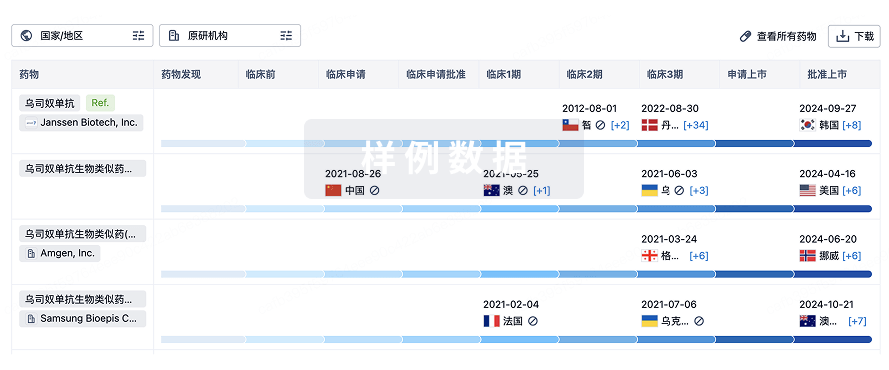
生物类似药
生物类似药在不同国家/地区的竞争态势。请注意临床1/2期并入临床2期,临床2/3期并入临床3期
登录
或
特殊审评
只需点击几下即可了解关键药物信息。
登录
或

提出任何生物医药研究问题
让每一步生物医药决策都精准制胜
基于十亿级生物数据与全球情报的精准 AI,赋能早期药物发现
立即开始免费试用!
智慧芽新药情报库是智慧芽专为生命科学人士构建的基于AI的创新药情报平台,助您全方位提升您的研发与决策效率。
立即接入生物医药数据包
智慧芽新药库数据也通过智慧芽开放平台,以MCP或API服务形式对外开放。立即使用我们的MCP服务定制您的LLM智能体。
生物序列数据库
生物药研发创新
免费使用
化学结构数据库
小分子化药研发创新
免费使用