预约演示
更新于:2026-10-21
Vipivotide tetraxetan
更新于:2026-10-21
概要
基本信息
原研机构 |
在研机构 |
非在研机构- |
权益机构- |
最高研发阶段药物发现 |
首次获批日期- |
最高研发阶段(中国)- |
特殊审评- |

结构/序列
分子式C49H71N9O16 |
InChIKeyJBHPLHATEXGMQR-LFWIOBPJSA-N |
CAS号1702967-37-0 |
关联
100 项与 Vipivotide tetraxetan 相关的临床结果
登录后查看更多信息
100 项与 Vipivotide tetraxetan 相关的转化医学
登录后查看更多信息
100 项与 Vipivotide tetraxetan 相关的专利(医药)
登录后查看更多信息
9
项与 Vipivotide tetraxetan 相关的文献(医药)2026-11-01·CANCER BIOTHERAPY AND RADIOPHARMACEUTICALS
Characterization of Adverse Drug Effects for Three Radiopharmaceuticals: A Descriptive Analysis from WHO-VigiAccess
Article
作者: Jin, Yiheng ; Chen, Kaixin ; Qu, Shugen ; Wan, Xinlong ; Wang, Xiaowu ; Gui, Kunlun
Background::
Radiopharmaceuticals are being used more frequently to treat neuroendocrine tumors and advanced prostate cancer; however, their clinical application is associated with adverse drug reactions (ADRs) that may affect patient safety. Real-world data from spontaneous reporting systems such as the World Health Organization’s (WHO’s)-VigiAccess can aid in assessing safety after the drugs have been marketed.
Materials and Methods::
A retrospective descriptive analysis was conducted using ADR reports from the WHO-VigiAccess database up to November 2024. Reports related to lutetium (
177
Lu) dotatate (Lutathera
®
), lutetium (
177
Lu) vipivotide tetraxetan (Pluvicto
®
), and radium (
223
Ra) dichloride (Xofigo
®
) were extracted and analyzed with respect to patient demographics, geographic distribution, and ADRs classified by MedDRA System Organ Class and Preferred Terms. Descriptive statistics were used to compare safety profiles.
Results::
A total of 17,743 ADR reports were analyzed. Lutathera was predominantly associated with gastrointestinal disorders and skin or subcutaneous tissue reactions. In contrast, Pluvicto demonstrated a higher frequency of general systemic disorders and a disproportionately higher number of fatal outcomes, a finding consistent with its indication for the treatment of advanced prostate cancer. Xofigo was primarily linked to hematological and musculoskeletal toxicities. In addition to 169 ADRs that were common to all three agents, distinct drug-specific reaction patterns were also observed.
Conclusions::
WHO-VigiAccess data reveal clearly differentiated ADR profiles among Lutathera, Pluvicto, and Xofigo. These results highlight the necessity for individualized risk assessment, careful monitoring, and further prospective investigations to optimize the safe clinical application of radiopharmaceuticals.
2026-10-01·JOURNAL OF ONCOLOGY PHARMACY PRACTICE
Lutetium Lu 177 vipivotide tetraxetan: A literature review
Review
作者: Morrison, Grace ; Holle, Lisa M
To review pharmacology, pharmacokinetics, therapeutic use, product safety/description and perspectives on use of lutetium Lu 177 vipivotide tetraxetan in patients with metastatic castration-resistant prostate cancer (mCRPC).
Data sources:
A literature search was conducted using PubMed/Dynamed (October 2013-May 2025), limited to English language, humans, clinical trials, case reports, and guidelines.
Data summary:
Lutetium Lu 177 vipivotide tetraxetan is comprised of the beta-emitting radioisotope lutetium Lu-177 linked to a peptide, vipivotide tetraxetan, which binds to cells expressing prostate-specific membrane antigen (PSMA), resulting in cell death from the radiation. Kidney excretion may result in increased renal toxicity in patients with reduced renal function. Based on 2 phase III clinical trials, lutetium Lu 177 vipivotide tetraxetan 7.4 GBq administered intravenously every 6 weeks for up to 6 doses is effective in patients with mCRPC and PSMA-positive metastases after progressing on an androgen receptor pathway inhibitor and docetaxel therapy or an androgen receptor pathway inhibitor alone, by significantly improving radiographic progression-free survival. It is generally well tolerated, with asthenia/fatigue, dry mouth, mild nausea and low-grade anemia most commonly occurring. Severe adverse drug reactions are uncommon. It should only be administered by trained personnel in a designated clinical setting with existing radiation safety protocols. Patients must limit close contact, use precautions with using the bathroom and other daily activities in days following treatment. Patient education is necessary to ensure safe daily practices. Several ongoing trials are evaluating lutetium Lu 177 vipivotide tetraxetan in combination with other anticancer agents for treatment of mCRPC, using different dosing strategies, or in other settings (metastatic castration-sensitive prostate cancer and early-stage prostate cancer).
Conclusion:
Lutetium Lu 177 vipivotide tetraxetan is an effective and well tolerated treatment for patients with mCRPC, PSMA-positive metastases after progressing on an androgen receptor pathway inhibitor ± docetaxel. Ongoing studies evaluating its use in earlier disease stages and with different dosing strategies, will better define the role of this therapy in the treatment of prostate cancer.
2025-12-01·Oncology and Therapy
Sequencing of Radium-223 and Lutetium-177 Vipivotide Tetraxetan: Maximizing the Benefit of Systemic Targeted Radiation Therapy in Metastatic Castration-Resistant Prostate Cancer
Review
作者: Hauke, Ralph ; Mehr, Samuel
INTRODUCTION:
The goals of treatment for metastatic castration-resistant prostate cancer are disease management, improving quality of life, and prolonging life. Although androgen-receptor blockade and chemotherapy can control the disease for several years in most patients, resistance to treatment and continued disease progression are inevitable. Radionuclides have emerged as important tools in the therapeutic arsenal against prostate cancer. Appropriate sequencing with existing standards of care is paramount to ensure that patients get the maximum clinical benefit from as many life-prolonging therapies as possible during the treatment journey.
METHODS:
We review radionuclide therapy for men with metastatic castration-resistant prostate cancer and present a treatment algorithm used in our specialist center to provide optimal care.
RESULTS:
The goal of the treatment algorithm employed in our specialist center is to provide optimal patient care by using and sequencing appropriate systemic radionuclide therapy. The first step is to determine the extent of disease and metastases to offer personalized treatment to extend survival. Appropriate treatment sequencing can allow men to receive the life-prolonging benefits of radium-223 immediately upon bone-only progression, while remaining eligible to benefit from chemotherapy and/or lutetium-177 vipivotide tetraxetan (177Lu-PSMA) upon further disease progression. Importantly, although prostate-specific antigen (PSA) is frequently perceived as a marker for prostatic disease burden, survival benefits of radionuclide therapy may be independent of change in PSA.
CONCLUSIONS:
As the majority of men with metastatic castration-resistant prostate cancer first present with bone-only metastases, they may be treated initially with radium-223, while still remaining eligible to benefit from chemotherapy and 177Lu-PSMA upon subsequent progression of skeletal metastatic disease and/or the emergence of lymph node or visceral metastases. Graphical abstract available for this article.
44
项与 Vipivotide tetraxetan 相关的新闻(医药)2026-09-17
·核药文献
Wolfgang P Fendler, Michael S Hofman, David Kersting, Jeremie Calais, Thomas A Hope. Pivotal Phase 3 Theranostic Trials: Future Indications.J Nucl Med, 2026; 67(Suppl 2): 30S–35S.
DOI:10.2967/jnumed.125.269486摘要
目前有多项正在进行的、涉及放射性药物治疗(radiopharmaceutical therapies,RPT)的 3 期随机试验,预计将在未来数年提供改变临床实践的证据。本综述涵盖旨在拓展 RPT 应用范围的、正在进行的关键性(pivotal)3 期试验。PSMAcTION、STAMPEDE2、PSMA-DC 与 PSMAddition 等试验聚焦于前列腺癌患者的前列腺特异性膜抗原(prostate-specific membrane antigen,PSMA)导向治疗;NETTER-3、ACTION-1 与 COMPOSE 则在神经内分泌肿瘤(neuroendocrine neoplasms,NEN)患者中评估生长抑素受体(somatostatin receptor,SSTR)靶向放射性药物。3 期注册试验的扩张由产业界投入的增加所驱动。正在进行的 RPT 3 期试验具有「混合体」特征:将核医学的显像与药物给药流程,与肿瘤学驱动的标准治疗(standard of care,SOC)及终点定义相融合。尽管这种整合伴随诸多挑战,3 期 RPT 试验仍为未来肿瘤诊疗带来一次变革性机遇——引入并扩大影像引导 RPT 的应用。
关键词:prospective, phase 3, clinical trial, theranostic一、引言
3 期试验对于把新型放射性药物治疗(RPT)转化为常规临床实践至关重要。此类试验在依据分子影像筛选出的患者中,评估相对标准治疗的治疗有效性。研究在国际范围招募受试者,且几乎均采用治疗随机化,以期为监管审批提供化合物疗效与安全性的明确证据。研究终点通过与监管机构讨论后确定,并依据瘤种与适应症选择无进展生存期(progression-free survival,PFS)或总生存期(overall survival,OS)。3 期试验数据对于欧洲药品管理局(European Medicines Agency,EMA)或美国食品药品监督管理局(Food and Drug Administration,FDA)等机构的监管审批不可或缺,同时也为临床指南与报销决策提供依据。二、通过 3 期试验拓展应用
3 期注册试验对于新放射性药物的引入与已获批适应症的拓展均至关重要。药物的引入通常自肿瘤晚期阶段开始,随后再向前线(更早期)用途探索。一个典型例子是 177Lu-PSMA 用于转移性去势抵抗性前列腺癌(metastatic castration-resistant prostate cancer,mCRPC)的三线治疗(VISION 试验,NCT03511664),随后又基于采用相似治疗方案设计的 PSMAfore 研究结果获批二线应用(1,2)。SPLASH(NCT04647526)与 ECLIPSE(NCT05204927)试验采用类似设计实施,并已在前列腺癌治疗中达到主要终点。
探索新用途伴随风险。ERA-223 试验在一线骨转移 mCRPC 患者中得出阴性结果后,EMA 对 223Ra 的标签作出限制,即为佐证(3)。反过来,阴性试验结果同样有助于 RPT 的研发——它们指导后续研究的方案优化。例如,ERA-223 促使 PEACE3 试验采纳强制使用骨靶向药物的规定,这很可能促成了 PEACE3 试验的成功,并为在欧盟重新调整 223Ra 标签带来机会(4)。三、里程碑式 RPT 试验的启示
VISION 与 NETTER-1 两项 3 期试验促成了 2 种新 RPT 的获批,从而大幅拓展了治疗性与诊断性核医学在肿瘤学中的应用(1,5)。NETTER-1 试验(NCT01578239)是一项里程碑式的 3 期诊疗一体化研究,评估了 177Lu-DOTATATE 在进展性、高分化、不可手术的中肠神经内分泌肿瘤患者中的作用(5)。入组患者为转移性或局部晚期、不可手术的神经内分泌肿瘤,且在奥曲肽治疗下最长 3 年内经 CT 或 MRI 评估显示疾病进展(依据 RECIST)。该试验促成了首个 177Lu 药物基于影像引导的生长抑素受体特异性患者筛选而获得监管批准——EMA 于 2017 年、FDA 于 2018 年先后批准。
VISION 试验(NCT03511664)在 3 期框架下评估了 177Lu-PSMA-617 RPT 在 PSMA 阳性 mCRPC 患者中的疗效与安全性,入组者既往至少接受过 1 种雄激素受体通路抑制剂(androgen receptor pathway inhibitor,ARPI)以及 1 或 2 种紫杉烷方案(1)。VISION 研究所有患者均接受 PSMA PET/CT,并依据在不同阅片者间可重复的标准排除了存在 PSMA 阴性病灶的患者(6)。基线 PSMA PET/CT 显像的高摄取是缓解持续时间与总生存期最强的预测因素(7)。VISION 试验通过将 SOC 与 RPT 联合,确立了新的治疗适应症,并推动了 PET/CT 显像在临床试验设计与常规实践中用于患者筛选。
尽管本综述聚焦于 3 期试验(它对 RPT 的获批、报销与临床落地不可或缺),仍有必要强调早期阶段研究的必要性,因为监管机构通常不会在缺乏稳健的 1 期和 2 期数据的情况下允许开展 3 期研究。2 期数据用于支持研究设计,并提供用于确定 3 期研究把握度的初步数据。在此背景下,PSMA 的研发历程颇具意味,因为其缺乏 1 期数据。来自同情用药的安全性数据,连同 1 项里程碑式的 2 期试验(8,9),为监管机构提供了推进 3 期 VISION 研究的足够信心。此外,VISION 试验还辅以对 177Lu-PSMA-617 的随机化研究——即比较 PSMA RPT 与卡巴他赛的 2 期 TheraP 试验(10,11)。
在 VISION 与 NETTER-1 之前,RPT 曾被用于淋巴瘤治疗的评估。来自血液肿瘤 RPT 试验的启示是喜忧参半的。131I-apamistamab 在 SIERRA 试验(NCT02665065)中未达到预设主要终点。在此之前的 131I-tositumomab 与 90Y-ibritumomab 展现出确切的临床获益并获批,但两者在商业上均告失败。其局限包括缺乏配套显像、面临其他治疗选择的竞争,以及所用核素的辐射安全特性不如 177Lu 有利。具体而言,其他有效且更易给药的非放射性药物替代方案的疗效,也促成了其商业失败。
尽管初期研发前景可观,血液系统恶性肿瘤目前仍缺乏诊疗一体化 RPT,这凸显了可行治疗方案的重要性,以及在高度动态的领域中针对不同阶段与场景持续开展后期研究以维持其价值的必要性。四、3 期 RPT 试验全景
为梳理 3 期核医学临床试验的全貌,作者于 2025 年 4 月 11 日进行了系统性在线检索(ClinicalTrials.gov,3 期,关键词 "^223^Ra OR ^212^Pb OR ^131^I OR ^177^Lu OR ^225^Ac OR ^90^Y OR ^67^Cu OR ^161^Tb")。自 1990 年代中期以来,共登记 68 项临床试验。该结果并不构成已启动 3 期核医学试验的完整清单,因为核素表述可能存在差异,或条目未及时更新。但就作者判断,其结果覆盖了最具相关性与代表性的试验。ClinicalTrials.gov 条目汇总见图 1。
图 1 3 期核医学治疗试验概览(n = 68 项),按疾病谱(A)与主要资金来源(B)分类。非完整系统性调查,数据检索自 ClinicalTrials.gov。柱内显示各亚组的构成百分比。NEN = 神经内分泌肿瘤(neuroendocrine neoplasm)。
按 5 年时段划分,RPT 试验的启动数量显著增加,从 ALSYMPCA 时代(该研究于 2008 年启动)的 6 项增至过去 5 年的 30 项(12)。与此并行,这些试验针对的疾病谱也已拓宽,重心从甲状腺(2006 至 2010 年间占 3 期试验的 50%)转向前列腺癌或神经内分泌恶性肿瘤(过去 5 年占 76%;图 1A)。此外,前瞻性试验的主要资金来源已从研究者转向产业界,原因很可能是诊疗一体化注册试验规模与复杂度的不断增加。尤其是,诊断与治疗两种配对药物的实施,往往需要超出学术机构范畴的物流与财务资源。在过去 5 年启动的 RPT 试验中,70% 主要由产业界资助,而在 2010 年之前,研究者承担的资助比例为 50%–100%(图 1B)。因此,近年启动的大多数诊疗一体化试验与产业界在前列腺癌和神经内分泌恶性肿瘤领域的活动方向一致。NETTER-1 与 VISION 为后续多项以拓展适应症为目标的试验提供了起点。五、正在进行的相关关键性 3 期试验及其对未来诊疗一体化的影响
在 177Lu-PSMA-617(VISION 试验)与 177Lu-DOTATATE(NETTER-1 试验)成功的基础上,当前所有 3 期 RPT 试验均探讨 RPT 在前列腺癌与神经内分泌肿瘤中的作用。多数试验聚焦于疾病早期阶段患者的治疗,并且正在探索 α 发射体,以期通过序贯或联合方式增强已获批 β 发射体药物的治疗效能。当前试验采用影像引导策略,依据基线 PET/CT 对患者进行筛选或分层,随后给予随机化靶向治疗。预计将影响未来 RPT 应用的、入选的关键性 3 期诊疗一体化试验汇总见表 1。
表 1 预计将影响未来 RPT 应用的 3 期试验
NCT 编号
研究名称
缩写
状态
治疗性放射性药物
主要结局指标
申办方
启动日期
主要完成日期
前列腺癌
NCT06780670
开放标签研究,比较 AAA817 与标准治疗用于既往接受过治疗、在 [177Lu]Lu-PSMA 靶向治疗后出现疾病进展的 PSMA 阳性 mCRPC 成人患者
PSMAcTION
招募中225
Ac-PSMA617
2 期:生化缓解率;3 期:rPFS、OS
产业界
2025-02-27
2028-05-09
NCT06320067
一项在转移性激素敏感性前列腺癌中检验多种治疗的随机对照平台试验
STAMPEDE2
招募中177
Lu-PSMA-617
rPFS
研究者
2024-06-11
2031-04-01
NCT05939414
开放标签研究,比较镥(177Lu)vipivotide tetraxetan 与观察等待用于 PSMA 阳性寡转移前列腺癌
PSMA-DC
招募中177
Lu-PSMA-617
MFS
产业界
2024-03-12
2027-12-21
NCT04720157
一项国际性、前瞻性、开放标签、随机 3 期研究,比较 177Lu-PSMA-617 联合 SoC 与单用 SoC 用于成年男性 mHSPC 患者
PSMAddition
随访中177
Lu-PSMA-617
rPFS
产业界
2021-06-09
2025-07-23
神经内分泌肿瘤
NCT06784752
评估 [177Lu]Lu-DOTA-TATE 在 1 级和 2 级晚期 GEP-NET 患者中疗效与安全性的研究
NETTER-3
拟启动177
Lu-DOTATATE
PFS
产业界
2025-05-06
2028-06-23
NCT05477576
RYZ101 与 SOC 比较用于不可手术、SSTR 阳性、高分化、在 177Lu-SSA 治疗后进展的 GEP-NET 患者的研究
ACTION-1
招募中225
Ac-DOTATATE
1b 期:推荐活度;3 期:PFS
产业界
2022-03-24
2025-12-01
NCT04919226
镥 177Lu-edotreotide 与最佳标准治疗比较用于高分化侵袭性 2 级和 3 级胃肠胰神经内分泌肿瘤
COMPOSE
招募中177
Lu-DOTATOC
PFS
产业界
2021-12-21
2027-06-01六、PSMAcTION:前列腺癌的 α 治疗
225Ac 等 α 发射体被认为具有更强的细胞毒作用与更低的脱靶效应,因为相比 177Lu 等 β 发射体,它们具有更高的传能线密度(linear energy transfer)和更短的路径长度。对 β-RPT 耐药的患者尤其需要更强疗效。PSMAcTION 试验(NCT06780670)力图满足这一需求,向既往治疗(包括 177Lu-PSMA)后进展的 PSMA 阳性 mCRPC 成人患者提供 225Ac-PSMA-617。该 3 期试验的共同主要终点为影像学无进展生存期(radiographic PFS,rPFS)与总生存期。
基于 225Ac 的 PSMA 导向治疗还将在即将开展的另外两项 3 期方案中进一步评估——分别针对 mCRPC 早期与晚期的 AcTFirst(NCT06855277)与 AlphaBreak(NCT06402331);两项研究的启动均计划于 2025 年。七、STAMPEDE2:转移性激素敏感性前列腺癌的影像与生物标志物引导治疗
在 STAMPEDE 试验基础上,STAMPEDE2(NCT063200679)旨在评估在 SOC 基础上加用新疗法能否改善 mHSPC 男性的临床结局(stampede2trial.org)。STAMPEDE2 是一项正在进行的、多臂、随机、开放标签 3 期平台研究,评估多种引导式治疗策略。新诊断的 mHSPC 患者,若适合长期雄激素剥夺治疗(androgen deprivation therapy,ADT)、聚(腺苷二磷酸-核糖)聚合酶(PARP)抑制剂相关生物标志物为阴性、且常规显像(CT/MRI 与骨扫描)显示转移灶超过 5 个,可入组 STAMPEDE2 的 P 臂。P 臂受试者按 1:1 随机接受单用 SOC(ARPI ± 前列腺放疗 ± 多西他赛)或 SOC 联合 177Lu-PSMA-617。
STAMPEDE2 将探索 177Lu-PSMA-617 在转移性前列腺癌病程早期给药时增强疗效的潜力。研究采用加速给药方案——第 1 天与第 8 天分别重复给予 7.4 GBq——以期在 ARPI 诱导的 PSMA 表达一过性上调期间改善肿瘤靶向。八、PSMA-DC:寡转移性疾病患者
药物去势常伴随不良事件与生活质量下降,患者对推迟去势起始时间有显著意愿。PSMA-DC 试验(NCT05939414)是一项随机 3 期试验,旨在确定在立体定向体部放疗(stereotactic body radiation therapy,SBRT)之后加用 RPT,相比单用 SBRT 能否推迟 ADT 的开始(13)。主要终点为无转移生存期,关键次要终点为至 ADT 启动的时间。患者筛选由 PSMA PET 引导;但 PET 入组标准允许存在不符合 VISION 入选条件的病灶,以适配小转移灶可探测性较低的问题。PSMA-DC 试验正在招募中。未来结果或可为寡转移性前列腺癌患者的局部与全身放疗联合提供重要启示。九、PSMAddition:mHSPC 中的 177Lu-PSMA
VISION 试验证实了 177Lu-PSMA-617 在 mCRPC 中的疗效。PSMAddition(NCT04720157)旨在探索其在疾病更早期阶段——特别是激素敏感性转移性疾病男性——中的价值。PSMAddition 评估 177Lu-PSMA-617 联合允许的 SOC 相比单用 SOC 在 mHSPC 患者中的疗效与安全性(14)。允许的 SOC 包括 ADT 与 ARPI。筛选后,受试者接受 6 次 177Lu-PSMA 治疗——即便出现极佳缓解或微小残留病灶亦如此,此点曾受到批评。研究主要终点为 rPFS,对照组在进展时允许交叉。PSMAddition 已于 2023 年完成入组,首批数据预计于 2025 年公布。若结果为阳性,该试验将把 PSMA RPT 推进至去势敏感阶段,从而带来向更早期应用的大幅拓展。十、NETTER-3:低级别胃肠胰神经内分泌肿瘤患者的一线肽受体放射性核素治疗
基于既往 NETTER 系列试验(已证实 177Lu-DOTATATE 在高分化 GEP-NET 中的疗效),NETTER-3(NCT06784752)旨在探讨一线 PRRT 用于低级别、高肿瘤负荷患者的潜在获益。NETTER-3 将评估 177Lu-DOTATATE 联合奥曲肽作为 1 级和 2 级 GEP-NET 患者初始治疗的疗效与安全性。该试验入组高疾病负荷患者,力图确定加用 177Lu-DOTATATE 能否延长该人群的 PFS。十一、ACTION-1:β-PRRT 后进展的神经内分泌肿瘤患者的 α-PRRT
ACTION-1 试验(NCT05477576)是一项正在进行的、随机、1b/3 期临床研究,评估 225Ac-DOTATATE 的疗效与安全性(15)。该试验入组既往 177Lu-PRRT 后进展的晚期、高分化 GEP-NET 患者。ACTION-1 将 225Ac-DOTATATE 与 SOC 随机比较,SOC 可包括依维莫司、舒尼替尼、大剂量奥曲肽或兰瑞肽。1b 期部分已完成入组,3 期部分正在招募受试者。
此外,其他 α 发射体亦在研究中。212Pb 的 2 期评估取得成功(16),为未来在 GEP-NET 患者中开展基于 212Pb 的 PRRT 3 期研究开辟了路径。十二、GEP-NET 领域的 COMPETE 与 COMPOSE
COMPETE 与 COMPOSE 是评估 177Lu-DOTATOC 的两项 3 期试验;177Lu-DOTATOC 是一种与 177Lu-DOTATATE 类似的、靶向生长抑素受体的 RPT。COMPETE 试验将患者随机分配接受 177Lu-DOTATOC 或依维莫司,其初步结果显示影像学 PFS 延长(17)。COMPOSE 试验(NCT04919226)将高级别(2 级或 3 级)GEP-NET 患者随机分配接受 177Lu-DOTATOC 或 SOC(18)。COMPOSE 已完成全部招募,首批结果有待公布。十三、讨论与总结
基于 3 期试验数量的日益增加,可以预期肿瘤学领域的诊疗一体化应用将持续拓展。前列腺癌与神经内分泌肿瘤领域增长尤为显著,其驱动力来自产业界投入。既往在甲状腺癌与淋巴瘤领域的适应症目前仅占很小份额、或已从 3 期试验版图中消失。正在进行的 3 期诊疗一体化试验扩张,可能受若干关键因素影响。重要的驱动因素包括:对更优治疗的迫切需求;通过学术机构主导的探索而获得的配体可得性与初步疗效数据;放射性生物类似药(radiobiosimilar,即生物分布几乎相同、仅 β 或 α 发射核素标记不同的药物)转化风险可控;RPT 用于早期治疗时总体良好的安全性;以及为实现更好患者筛选与招募而整合的配套显像。近期的其他进展也在助推这一趋势:RPT 的商业成功带来产业界投入、注册试验范围扩大,以及核素供应改善。
新的 3 期 RPT 试验设计遵循常规肿瘤内科药物研发模式,其动因是监管要求。这一路径使 RPT 得以置于更广阔的肿瘤学版图之中并加速被接受,从而使该领域大为受益。
然而,RPT 试验往往缺失诊疗一体化的关键原则,例如个体化给药、适应性治疗周期、基于配套显像的疗效评估,以及剂量学引导的优化。3 期设计通常采用固定剂量,除合格性评估之外显像有限。其结果是,尽管 3 期试验在监管获批中作用关键,当前 3 期试验并未充分利用 RPT 的个体化潜力。未来研发工作应致力于更好地整合显像与适应性策略,以优化治疗结局。影像适应性治疗成功实施配套方案的实例包括:淋巴瘤或乳腺癌研究中的中期 18F-FDG PET/CT,以及 ENZA-p 试验中用于适应性 PSMA RPT 的中期 PSMA PET/CT(19–22)。
3 期研究取得的成功,可由 FDA 近期对 177Lu-PSMA-617 的标签扩展佐证——其获批用于化疗前 mCRPC 患者。其依据的 PSMAfore 研究显示,相比化疗前二线更换 ARPI,177Lu-PSMA-617 显著改善了 PSMA 阳性 mCRPC 患者的影像学 PFS 与生活质量结局(2)。同样,NETTER-2 试验通过在新诊断的、晚期 2–3 级高分化 GEP-NET 患者中证实肿瘤控制,将该 PRRT 标签扩展至更早期应用(23)。
本综述回顾了若干关键性 3 期试验。这些试验均在现行临床证据指导下,纳入了经 PET/CT 的患者筛选,以及伴随治疗或对照治疗。STAMPEDE2、PSMA-DC 与 PSMAddition 可能将 PSMA RPT 拓展至寡转移性前列腺癌或 mHSPC;NETTER-3 与 COMPOSE 则可能支持 PRRT 用于高负荷或高级别神经内分泌肿瘤的早期治疗。PSMAcTION 与 ACTION-1 分别旨在把 α 发射体诊疗一体化纳入前列腺癌与神经内分泌肿瘤的治疗体系。
其他领域亦可见 3 期临床试验活动,例如甲状腺癌。METHYR 试验(NCT05468554)将有助于更好地理解放射性碘治疗期间的合并用药问题。
随着被识别的放射性配体靶点不断增加,未来预计将出现更多晚期临床试验(24)。此外,试验的成功还将支撑新核素的采用——包括生产、物流、剂量学与操作处理——并促进其在各类化合物中的应用。
除 3 期临床试验设计相关的挑战之外,越来越多的注册试验还将向未来的监管评价提出若干关键问题:
· 在 RPT 标签中,基线 PET/CT 与治疗中显像应扮演什么角色?
· 治疗活度方案应像肿瘤内科那样受到限制,还是像放射性碘治疗那样保持开放,以支持个体化治疗计划?
· 放射性生物类似药(即剂量学几乎相同的药物)应获得同步的标签或报销,还是应对其进行严格独立的评价?
· RPT 联合治疗的标签应如何确立?例如将 223Ra 与 177Lu-PSMA 联合的 AlphaBet 试验(25)、以及将 177Lu-PSMA 与恩扎卢胺联合的 ENZA-p 试验(20)。
除 3 期试验所提供的证据之外,上述方面将决定放射性诊疗一体化未来的创新、拓展与可及性。
END
译文仅供参考,欢迎批评指正。
声明:① 本公众号旨在促进核药相关专业人士更全面的了解国内外核素诊疗相关信息,不构成诊疗建议、用药指导,不对任何药品和诊疗项目作推荐,如需了解具体疾病诊疗信息,请咨询当地医生。②免责声明:因文中相关信息产生的任何直接或间接损失,核药文献公众号不承担任何责任。③版权声明:文献版权归英文原版作者所有,翻译仅供学习交流,不做任何商业用途。如涉及侵权,请联系公众号管理员处理。
2026-09-14
·知乎专栏
一、基本信息英文名称:Vipivotide tetraxetan Linker,又称 PSMA-617 Linker中文名称:维派妥肽连接子中间体,即前列腺特异性膜抗原抑制剂连接臂前体CAS 编号:1703768-74-4分子式:C₃₃H₄₅N₅O₉分子量:655.74 Da理论等电点:该分子为小分子 PSMA 药效团与连接臂的共价偶联物,不属于多肽类化合物,无氨基酸序列、单字母序列、三字母序列及传统多肽等电点参数;分子内含多个羧基、脲基与氨基基团,整体呈弱酸性,生理 pH 条件下羧基解离,分子带净负电荷外观性状:白色至类白色固体粉末化合物类型:PSMA 靶向药效团 - 连接臂中间体,是合成 PSMA-617(Vipivotide tetraxetan)的核心合成砌块溶解特性:二甲基亚砜(DMSO)中溶解度可达 125 mg/mL,易溶于二甲基亚砜、二甲基甲酰胺等有机溶剂,在水中溶解度中等,可溶于碱性缓冲体系。二、结构信息Vipivotide tetraxetan Linker 由两大核心结构单元共价连接而成。第一部分为谷氨酸 - 脲 - 赖氨酸(Glu-urea-Lys)PSMA 经典药效团,即二羧基赖氨酸(DCL)活性骨架,可精准嵌入 PSMA 胞外域的锌依赖性酶活性口袋,是实现靶点特异性结合的核心结构。第二部分为优化长度的脂肪族连接臂,通过酰胺键与药效团的赖氨酸侧链相连,末端带有活性羧基反应位点,可通过酰胺化反应进一步偶联 DOTA 等螯合剂、荧光团或其他功能分子,是构建各类 PSMA 靶向诊疗探针的关键连接结构。对比游离 DCL 小分子抑制剂,该分子引入的连接臂在不显著影响药效团结合活性的前提下,提供了可功能化的反应位点,避免后续偶联的功能基团对药效团结合产生空间位阻;对比完整的 PSMA-617 分子,该分子仅缺少 DOTA 螯合基团,是 PSMA-617 合成路线中的核心中间体,也可作为通用骨架衍生其他 PSMA 靶向分子。三、生物活性Vipivotide tetraxetan Linker 保留了完整的 Glu-urea-Lys 药效团,对人源前列腺特异性膜抗原(PSMA)具有纳摩尔级的竞争性抑制活性,靶点选择性良好,对同家族其他金属羧肽酶的抑制活性显著降低,脱靶风险小。连接臂的引入未破坏药效团与酶活性口袋的结合模式,对 PSMA 的抑制亲和力与游离 DCL 相当,略低于完整的 PSMA-617 分子。该分子本身无直接细胞毒性,也不具备独立的肿瘤显像或治疗活性,核心功能为靶点识别与合成连接介导,最终的诊疗功能依赖于后续偶联的螯合剂、显像基团或治疗性分子。四、作用机理前列腺特异性膜抗原(PSMA)是一种跨膜锌依赖性金属羧肽酶,在前列腺癌细胞表面呈显著高表达,同时在肿瘤新生血管内皮细胞中也有表达。Vipivotide tetraxetan Linker 通过其 Glu-urea-Lys 药效团特异性结合 PSMA 胞外域的酶活性口袋,谷氨酸端的羧基与活性中心的锌离子发生配位结合,脲键与口袋内的天冬氨酸、精氨酸等关键氨基酸残基形成稳定的氢键网络,竞争性阻断天然底物与酶的结合,抑制 PSMA 的催化功能。结合后分子可随 PSMA 蛋白发生细胞内吞,进入肿瘤细胞内部。分子末端的连接臂与活性羧基可通过酰胺化反应定点偶联各类功能分子,将螯合剂、药物、荧光团等效应分子精准递送至 PSMA 阳性肿瘤细胞,实现靶向诊疗的功能。五、研究进展Vipivotide tetraxetan Linker 是伴随 PSMA-617(Vipivotide tetraxetan)的研发而开发的核心合成中间体,初衷是优化 PSMA-617 的合成路线,提升产物纯度与产率。早期合成工艺研究验证了该中间体的反应活性与 PSMA 结合活性,证实其可高效偶联 DOTA 螯合剂,生成的 PSMA-617 保持高靶点亲和力与体内肿瘤富集能力。随着 PSMA 靶向诊疗领域的发展,该分子也作为通用 PSMA 靶向骨架,用于衍生开发不同功能的 PSMA 靶向探针,包括荧光探针、其他核素螯合探针、药物偶联物等。目前该分子主要作为科研合成中间体使用,本身未进入临床研究,但其终产物 PSMA-617 已在全球多个国家获批用于前列腺癌的核素治疗。六、药物研发Vipivotide tetraxetan Linker 定位为 PSMA 靶向诊疗药物的关键合成中间体,而非终末治疗药物。研发方向围绕合成工艺优化、纯化方法改进展开,降低生产成本,提升产品纯度,满足 PSMA-617 规模化生产的需求。同时也有研究基于该骨架进行结构修饰,调整连接臂长度与极性,开发性能更优的新一代 PSMA 靶向诊疗探针中间体。当前研发重点在于优化偶联反应的选择性与产率,减少副产物生成,同时拓展该中间体的应用场景,用于构建更多类型的 PSMA 靶向诊疗一体化制剂。目前该分子主要处于实验室与工业化合成生产阶段,未作为独立药品获批上市。七、相关应用作为核心合成中间体,用于制备 PSMA-617 等 PSMA 靶向核素诊疗探针,是生产⁶⁸Ga-PSMA-617、¹⁷⁷Lu-PSMA-617 的关键起始物料。作为通用 PSMA 靶向骨架,用于衍生开发 PSMA 靶向荧光成像探针、药物偶联物、纳米递送系统配体等,通过末端羧基偶联各类功能分子。用于体外 PSMA 酶活性抑制实验,作为工具化合物评价连接臂结构对靶点亲和力的影响,为新型 PSMA 抑制剂的结构优化提供参考。用于药物合成工艺研究,优化 PSMA 靶向探针的合成路线与纯化方法。本品仅限实验室与工业合成科研使用,不可直接用于人体临床。八、溶解与储存条件溶解方法:固体粉末易溶于二甲基亚砜、二甲基甲酰胺等有机溶剂,DMSO 中溶解度可达 125 mg/mL;在水中溶解度中等,可通过调节 pH 提升水溶性;操作过程避免强酸、强碱性环境,避免引入高浓度重金属离子,防止破坏药效团的活性结构。储存条件:密封避光,置于 - 20℃干燥环境中长期保存,防潮、隔绝空气;储备液分装为单次使用的小体积,-20℃冷冻储存,避免反复冻融。九、相关化合物PSMA-617、PSMA-I&T、HYNIC-PSMA、PSMA-NH₂、PSMA-02、PSMA-04、PSMA-07、DCL-PEG10-NH₂、DCL-PEG4-N₃、DCL-PEG20-N₃、PSMA-617、各类点击化学型 PSMA 靶向衍生物。所有产品仅用作实验室科学研究,不为任何个人用途提供产品和服务。
2026-09-14
·搜狐新闻
一、基本信息
英文名称:Vipivotide tetraxetan Linker,又称 PSMA-617 Linker
中文名称:维派妥肽连接子中间体,即前列腺特异性膜抗原抑制剂连接臂前体
CAS 编号:1703768-74-4
分子式:C₃₃H₄₅N₅O₉
分子量:655.74 Da
理论等电点:该分子为小分子 PSMA 药效团与连接臂的共价偶联物,不属于多肽类化合物,无氨基酸序列、单字母序列、三字母序列及传统多肽等电点参数;分子内含多个羧基、脲基与氨基基团,整体呈弱酸性,生理 pH 条件下羧基解离,分子带净负电荷
外观性状:白色至类白色固体粉末
化合物类型:PSMA 靶向药效团 - 连接臂中间体,是合成 PSMA-617(Vipivotide tetraxetan)的核心合成砌块
溶解特性:二甲基亚砜(DMSO)中溶解度可达 125 mg/mL,易溶于二甲基亚砜、二甲基甲酰胺等有机溶剂,在水中溶解度中等,可溶于碱性缓冲体系。
二、结构信息
Vipivotide tetraxetan Linker 由两大核心结构单元共价连接而成。第一部分为谷氨酸 - 脲 - 赖氨酸(Glu-urea-Lys)PSMA 经典药效团,即二羧基赖氨酸(DCL)活性骨架,可精准嵌入 PSMA 胞外域的锌依赖性酶活性口袋,是实现靶点特异性结合的核心结构。第二部分为优化长度的脂肪族连接臂,通过酰胺键与药效团的赖氨酸侧链相连,末端带有活性羧基反应位点,可通过酰胺化反应进一步偶联 DOTA 等螯合剂、荧光团或其他功能分子,是构建各类 PSMA 靶向诊疗探针的关键连接结构。
对比游离 DCL 小分子抑制剂,该分子引入的连接臂在不显著影响药效团结合活性的前提下,提供了可功能化的反应位点,避免后续偶联的功能基团对药效团结合产生空间位阻;对比完整的 PSMA-617 分子,该分子仅缺少 DOTA 螯合基团,是 PSMA-617 合成路线中的核心中间体,也可作为通用骨架衍生其他 PSMA 靶向分子。
三、生物活性
Vipivotide tetraxetan Linker 保留了完整的 Glu-urea-Lys 药效团,对人源前列腺特异性膜抗原(PSMA)具有纳摩尔级的竞争性抑制活性,靶点选择性良好,对同家族其他金属羧肽酶的抑制活性显著降低,脱靶风险小。连接臂的引入未破坏药效团与酶活性口袋的结合模式,对 PSMA 的抑制亲和力与游离 DCL 相当,略低于完整的 PSMA-617 分子。
该分子本身无直接细胞毒性,也不具备独立的肿瘤显像或治疗活性,核心功能为靶点识别与合成连接介导,最终的诊疗功能依赖于后续偶联的螯合剂、显像基团或治疗性分子。
四、作用机理
前列腺特异性膜抗原(PSMA)是一种跨膜锌依赖性金属羧肽酶,在前列腺癌细胞表面呈显著高表达,同时在肿瘤新生血管内皮细胞中也有表达。Vipivotide tetraxetan Linker 通过其 Glu-urea-Lys 药效团特异性结合 PSMA 胞外域的酶活性口袋,谷氨酸端的羧基与活性中心的锌离子发生配位结合,脲键与口袋内的天冬氨酸、精氨酸等关键氨基酸残基形成稳定的氢键网络,竞争性阻断天然底物与酶的结合,抑制 PSMA 的催化功能。结合后分子可随 PSMA 蛋白发生细胞内吞,进入肿瘤细胞内部。
分子末端的连接臂与活性羧基可通过酰胺化反应定点偶联各类功能分子,将螯合剂、药物、荧光团等效应分子精准递送至 PSMA 阳性肿瘤细胞,实现靶向诊疗的功能。
五、研究进展
Vipivotide tetraxetan Linker 是伴随 PSMA-617(Vipivotide tetraxetan)的研发而开发的核心合成中间体,初衷是优化 PSMA-617 的合成路线,提升产物纯度与产率。早期合成工艺研究验证了该中间体的反应活性与 PSMA 结合活性,证实其可高效偶联 DOTA 螯合剂,生成的 PSMA-617 保持高靶点亲和力与体内肿瘤富集能力。
随着 PSMA 靶向诊疗领域的发展,该分子也作为通用 PSMA 靶向骨架,用于衍生开发不同功能的 PSMA 靶向探针,包括荧光探针、其他核素螯合探针、药物偶联物等。目前该分子主要作为科研合成中间体使用,本身未进入临床研究,但其终产物 PSMA-617 已在全球多个国家获批用于前列腺癌的核素治疗。
六、药物研发
Vipivotide tetraxetan Linker 定位为 PSMA 靶向诊疗药物的关键合成中间体,而非终末治疗药物。研发方向围绕合成工艺优化、纯化方法改进展开,降低生产成本,提升产品纯度,满足 PSMA-617 规模化生产的需求。同时也有研究基于该骨架进行结构修饰,调整连接臂长度与极性,开发性能更优的新一代 PSMA 靶向诊疗探针中间体。
当前研发重点在于优化偶联反应的选择性与产率,减少副产物生成,同时拓展该中间体的应用场景,用于构建更多类型的 PSMA 靶向诊疗一体化制剂。目前该分子主要处于实验室与工业化合成生产阶段,未作为独立药品获批上市。
七、相关应用
作为核心合成中间体,用于制备 PSMA-617 等 PSMA 靶向核素诊疗探针,是生产⁶⁸Ga-PSMA-617、¹⁷⁷Lu-PSMA-617 的关键起始物料。
作为通用 PSMA 靶向骨架,用于衍生开发 PSMA 靶向荧光成像探针、药物偶联物、纳米递送系统配体等,通过末端羧基偶联各类功能分子。
用于体外 PSMA 酶活性抑制实验,作为工具化合物评价连接臂结构对靶点亲和力的影响,为新型 PSMA 抑制剂的结构优化提供参考。
用于药物合成工艺研究,优化 PSMA 靶向探针的合成路线与纯化方法。本品仅限实验室与工业合成科研使用,不可直接用于人体临床。
八、溶解与储存条件
溶解方法:固体粉末易溶于二甲基亚砜、二甲基甲酰胺等有机溶剂,DMSO 中溶解度可达 125 mg/mL;在水中溶解度中等,可通过调节 pH 提升水溶性;操作过程避免强酸、强碱性环境,避免引入高浓度重金属离子,防止破坏药效团的活性结构。
储存条件:密封避光,置于 - 20℃干燥环境中长期保存,防潮、隔绝空气;储备液分装为单次使用的小体积,-20℃冷冻储存,避免反复冻融。
九、相关化合物
PSMA-617、PSMA-I&T、HYNIC-PSMA、PSMA-NH₂、PSMA-02、PSMA-04、PSMA-07、DCL-PEG10-NH₂、DCL-PEG4-N₃、DCL-PEG20-N₃、PSMA-617、各类点击化学型 PSMA 靶向衍生物。
所有产品仅用作实验室科学研究,不为任何个人用途提供产品和服务。返回搜狐,查看更多
100 项与 Vipivotide tetraxetan 相关的药物交易
登录后查看更多信息
外链
| KEGG | Wiki | ATC | Drug Bank |
|---|---|---|---|
| D11697 | - | - | - |
研发状态
10 条进展最快的记录, 后查看更多信息
登录
| 适应症 | 最高研发状态 | 国家/地区 | 公司 | 日期 |
|---|---|---|---|---|
| 前列腺癌 | 药物发现 | 美国 | 2014-10-17 |
登录后查看更多信息
临床结果
临床结果
适应症
分期
评价
查看全部结果
| 研究 | 分期 | 人群特征 | 评价人数 | 分组 | 结果 | 评价 | 发布日期 |
|---|
No Data | |||||||
登录后查看更多信息
转化医学
使用我们的转化医学数据加速您的研究。
登录
或

药物交易
使用我们的药物交易数据加速您的研究。
登录
或

核心专利
使用我们的核心专利数据促进您的研究。
登录
或

临床分析
紧跟全球注册中心的最新临床试验。
登录
或

批准
利用最新的监管批准信息加速您的研究。
登录
或

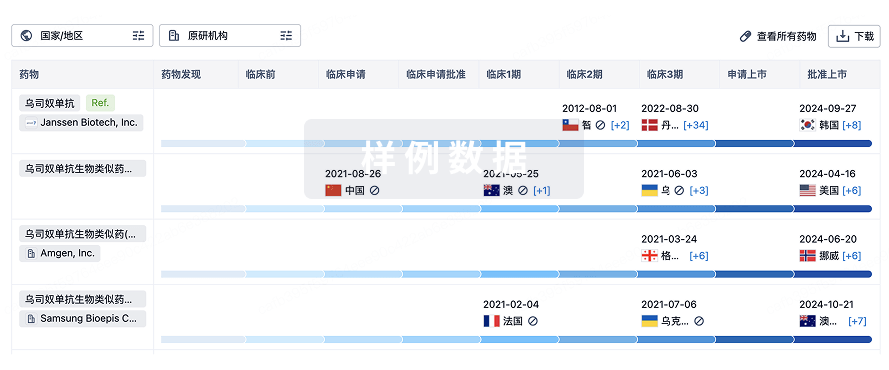
生物类似药
生物类似药在不同国家/地区的竞争态势。请注意临床1/2期并入临床2期,临床2/3期并入临床3期
登录
或
特殊审评
只需点击几下即可了解关键药物信息。
登录
或

提出任何生物医药研究问题
让每一步生物医药决策都精准制胜
基于十亿级生物数据与全球情报的精准 AI,赋能早期药物发现
立即开始免费试用!
智慧芽新药情报库是智慧芽专为生命科学人士构建的基于AI的创新药情报平台,助您全方位提升您的研发与决策效率。
立即接入生物医药数据包
智慧芽新药库数据也通过智慧芽开放平台,以MCP或API服务形式对外开放。立即使用我们的MCP服务定制您的LLM智能体。
生物序列数据库
生物药研发创新
免费使用
化学结构数据库
小分子化药研发创新
免费使用