预约演示
更新于:2026-09-12
Benzenesulfonamide derivatives (Universidad de Salamanca)
更新于:2026-09-12
概要
基本信息
非在研机构- |
权益机构- |
最高研发阶段临床前 |
首次获批日期- |
最高研发阶段(中国)- |
特殊审评- |

关联
100 项与 Benzenesulfonamide derivatives (Universidad de Salamanca) 相关的临床结果
登录后查看更多信息
100 项与 Benzenesulfonamide derivatives (Universidad de Salamanca) 相关的转化医学
登录后查看更多信息
100 项与 Benzenesulfonamide derivatives (Universidad de Salamanca) 相关的专利(医药)
登录后查看更多信息
54
项与 Benzenesulfonamide derivatives (Universidad de Salamanca) 相关的文献(医药)2026-07-01·NUCLEAR MEDICINE AND BIOLOGY
Carbonic anhydrase IX-targeted small molecule radiopharmaceuticals: A review of their role in clear cell renal cell carcinoma theranostics
Review
作者: Ge, Xinyue ; Zhang, Mengyi ; Meng, Xiangjun ; Liu, Yuying
BACKGROUND:
Clear cell renal cell carcinoma (ccRCC) is the most common renal cancer subtype, representing 70-80% of cases. Its unique molecular profile and therapeutic resistance make it a key focus in oncology. Recent advances in targeting the ccRCC-specific biomarker carbonic anhydrase IX (CAIX), especially through radiolabeled small-molecule inhibitors, are revolutionizing its management.
METHODS:
We conducted a systematic literature search using PubMed, Web of Science, ACS, and CAS databases to identify promising small-molecule CAIX-targeted radiopharmaceuticals for ccRCC published between 2011 and early 2026.
RESULTS:
This review systematically outlines the biology and pathological role of CAIX in ccRCC, and surveys the landscape of CAIX-targeted radioligands under investigation-from acetazolamide and benzenesulfonamide to cyclic peptide-based probes. It also presents single-photon emission computed tomography (SPECT) and positron emission tomography (PET) imaging results for selected promising candidates. We critically assess the current state and promise of theranostics, highlighting future directions and challenges. By summarizing key clinical findings, this work aims to inform the development of CAIX-targeted radiopharmaceuticals and to promote precision medicine in ccRCC.
CONCLUSIONS:
[68Ga]Ga-NY104, [99mTc]Tc-PHC-102, [68Ga]Ga-DPI-4452, [18F]F-VM4-037 and [18F]F-U-104 exhibit promising CAIX targeting. Structural optimization of these compounds holds promise for developing CAIX inhibitors with enhanced selectivity and lower toxicity for ccRCC therapy. At the clinical translation level, a series of novel probes represented by [68Ga]Ga-NY104 and [64Cu]Cu-PD-32766 have entered clinical investigation, enabling high-sensitivity and high-specificity detection of both primary and metastatic ccRCC lesions via PET/CT imaging. Moreover, theranostic platforms based on identical molecular scaffolds (e.g., US2 platform, DPI-4452) have laid the foundation for a "see-and-treat" precision medicine paradigm.
2026-02-01·JOURNAL OF CHROMATOGRAPHY A
Development of an LC–ESI-MS/MS method for the determination of contaminants of emerging concern – towards extending quality surveillance of water resources
Article
作者: Leonova, Nataliia ; Konovalova, Olga ; Tarábek, Peter
Inclusion of emerging contaminants into water quality monitoring programs can serve as an additional layer for protecting water resources against deterioration. Based on prior non-target screening using LC-QTOF, a direct injection liquid chromatography-electrospray ionization-tandem mass spectrometry with multiple reaction monitoring method was developed for the determination of 23 micropollutants in natural waters. The combination of methodological simplicity, flexibility, environmental compatibility, and demonstrated performance under real-world monitoring conditions represents a significant advancement over existing chromatographic strategies for the determination of relevant and emerging pollutants. The method provides high sensitivity and reliability, enabling the simultaneous quantification of target analytes (pesticides, pharmaceuticals and products of their transformation) spanning a wide polarity range (XLogP3 0.3-6.1) and extending the applicability of multianalytes chromatographic analysis to complex environmental matrices. The limits of detection and quantification and linearity were evaluated in deionized water, groundwater, and surface water, while accuracy in terms of recovery and precision were determined in surface water. Pesticides provided satisfactory recoveries ranging from 83 to 120%, with quantification limits between 0.02 µg L-1 and 0.18 µg L-1, whereas pharmaceuticals displayed recoveries of 83-119%, with quantification limits of 0.03-0.20 µg L-1 in different types of water. Using the developed method, 599 water samples were analyzed between 2023 and 2025. The most frequently detected compounds at concentrations above the limit of quantification were terbumeton-desethyl, prometon and benzenesulfonamide in groundwater; fluconazole and sulfamethoxazole in surface water; and propazine-2‑hydroxy, terbuthylazine-2‑hydroxy and carbamazepine in both types of water samples.
2025-07-01·BULLETIN OF EXPERIMENTAL BIOLOGY AND MEDICINE
Antiparkinsonian Activity of Benzenesulfonamide Derivatives, Selective MAO-B Inhibitors
Article
作者: Khokhlov, A L ; Fedorov, V N ; Suleimanov, S Sh ; Khokhlova, A A ; Petukhov, S S ; Korsakov, M K ; Shetnev, A A ; Vdovichenko, V P
The anti-parkinsonian activity of benzolsulfonamide selective MAO-B inhibitors was evaluated in a model of experimental parkinsonism in white mice (systemic administration of 1-methyl-4-phenyl-1,2,3,6-tetrahydropyridine; MPTP). Six candidate compounds (laboratory codes S6-S8 and S11-S13) were analyzed. Rasagiline was used as the reference drug. Only compound S13 was comparable to rasagiline in preventing the development of rigidity and hypokinesia in animals and surpassed the reference drug in correcting emotional and behavioral activity.
100 项与 Benzenesulfonamide derivatives (Universidad de Salamanca) 相关的药物交易
登录后查看更多信息
研发状态
10 条进展最快的记录, 后查看更多信息
登录
| 适应症 | 最高研发状态 | 国家/地区 | 公司 | 日期 |
|---|---|---|---|---|
| 肿瘤 | 临床前 | 西班牙 | 2024-06-27 |
登录后查看更多信息
临床结果
临床结果
适应症
分期
评价
查看全部结果
| 研究 | 分期 | 人群特征 | 评价人数 | 分组 | 结果 | 评价 | 发布日期 |
|---|
No Data | |||||||
登录后查看更多信息
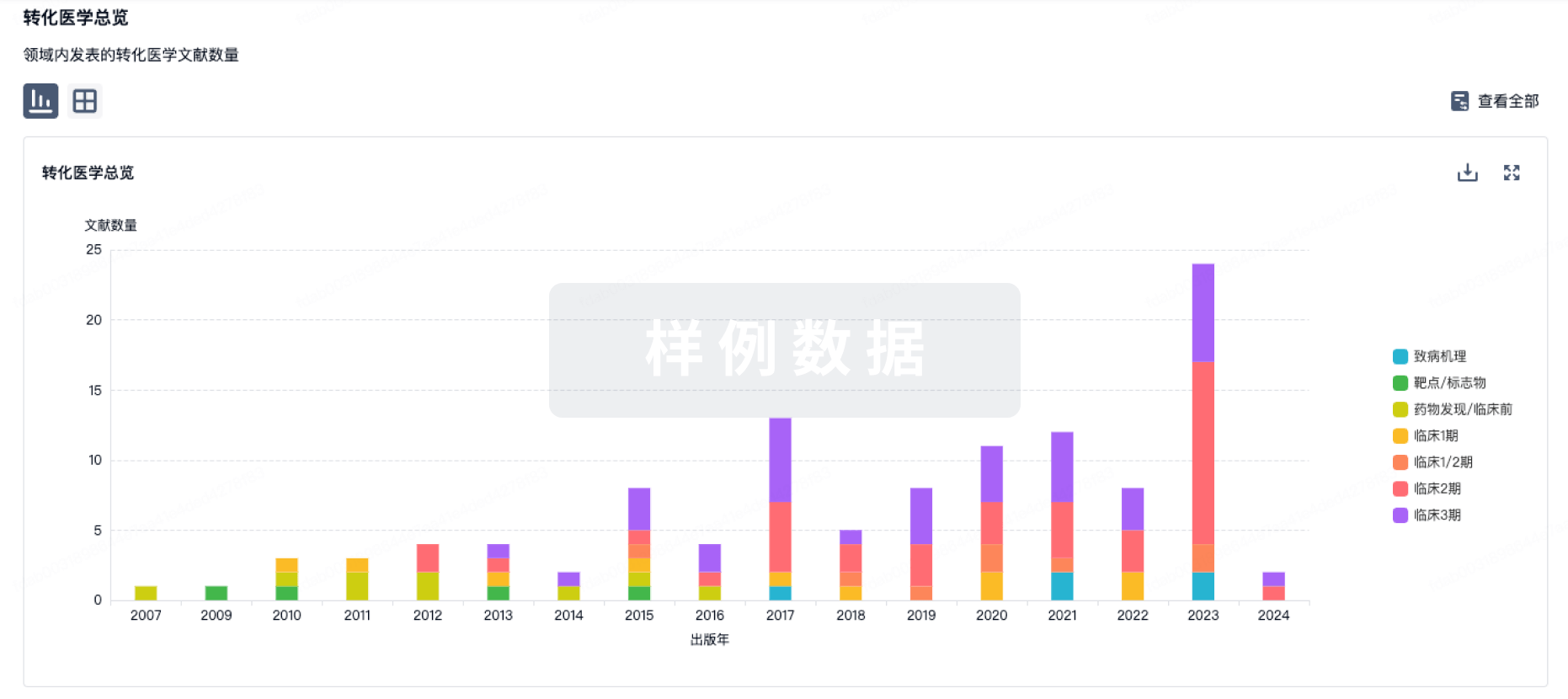
转化医学
使用我们的转化医学数据加速您的研究。
登录
或
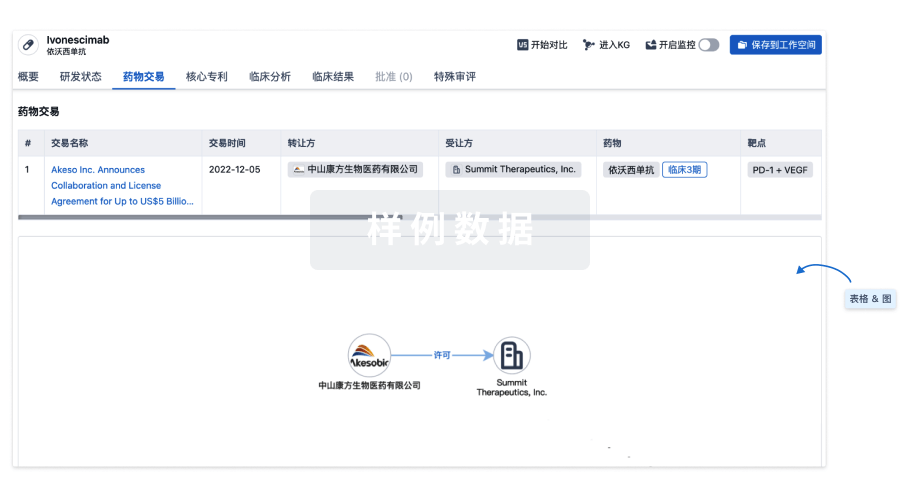
药物交易
使用我们的药物交易数据加速您的研究。
登录
或
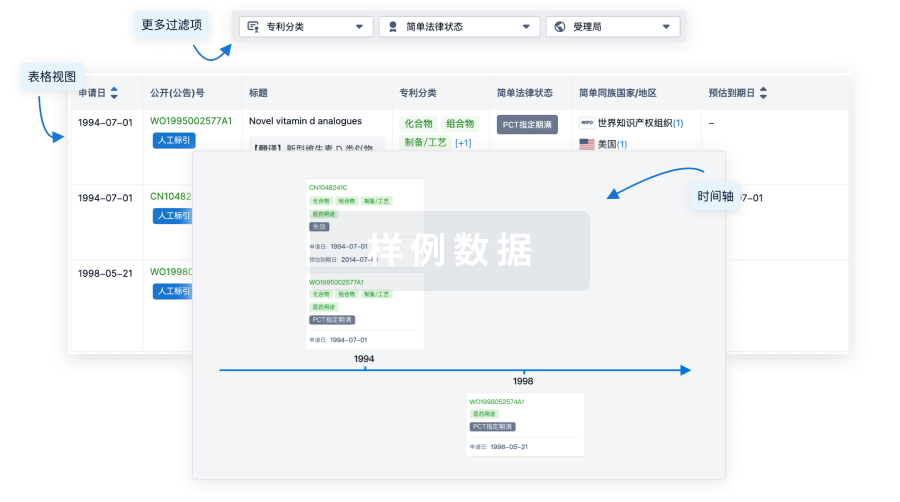
核心专利
使用我们的核心专利数据促进您的研究。
登录
或
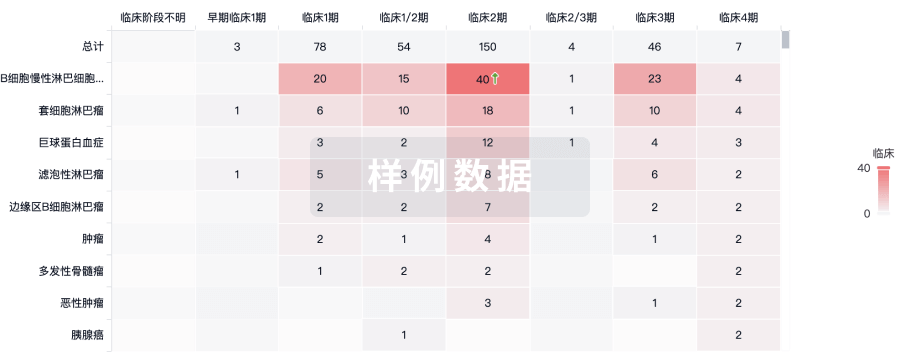
临床分析
紧跟全球注册中心的最新临床试验。
登录
或
批准
利用最新的监管批准信息加速您的研究。
登录
或
特殊审评
只需点击几下即可了解关键药物信息。
登录
或
提出任何生物医药研究问题
让每一步生物医药决策都精准制胜
基于十亿级生物数据与全球情报的精准 AI,赋能早期药物发现
立即开始免费试用!
智慧芽新药情报库是智慧芽专为生命科学人士构建的基于AI的创新药情报平台,助您全方位提升您的研发与决策效率。
立即接入生物医药数据包
智慧芽新药库数据也通过智慧芽开放平台,以MCP或API服务形式对外开放。立即使用我们的MCP服务定制您的LLM智能体。
生物序列数据库
生物药研发创新
免费使用
化学结构数据库
小分子化药研发创新
免费使用