预约演示
更新于:2026-09-26
Octreotide(CSPC Zhongqi)
奥曲肽(中奇制药)
更新于:2026-09-26
概要
基本信息
非在研机构- |
权益机构- |
最高研发阶段临床3期 |
首次获批日期- |
最高研发阶段(中国)临床3期 |
特殊审评- |

登录后查看时间轴
关联
7
项与 奥曲肽(中奇制药) 相关的临床试验CTR20261498
评价奥曲肽长效注射液在肢端肥大症患者中的有效性、安全性的随机、平行、开放、多中心、阳性对照、优效的Ⅲ期临床试验
CTR20254378
评价奥曲肽长效注射液在胰腺神经内分泌瘤术后辅助治疗中有效性和安全性的III期临床研究
NCT07165886
Phase II/III Study to Evaluate the Safety and Efficacy of Sirolimus for Injection (Albumin Bound) Combined With Octreotide Long-acting Injection in Patients With Metastatic Gastroenteropancreatic Neuroendocrine Tumors (GEP-NETs)
100 项与 奥曲肽(中奇制药) 相关的临床结果
登录后查看更多信息
100 项与 奥曲肽(中奇制药) 相关的转化医学
登录后查看更多信息
100 项与 奥曲肽(中奇制药) 相关的专利(医药)
登录后查看更多信息
2,388
项与 奥曲肽(中奇制药) 相关的文献(医药)2026-12-01JOURNAL OF COLLOID AND INTERFACE SCIENCE
Double emulsions enable in situ generation of permeation enhancers for oral delivery of macromolecules
Article
作者: Bini, Estela Isabel ; Pohlit, Hannah ; Li, Lingxiao ; Salas Cotaquispe, Cristhian Fernando ; Bergström, Christel A S ; Hossain, Shakhawath ; Sikström, Maja ; Teleki, Alexandra ; Colucci, Dario ; Brayden, David J ; Larsson, Per
Oral administration of peptide therapeutics is limited by gastrointestinal degradation and poor epithelial permeability. Here, water-in-oil-in-water (W/O/W) double emulsions produced by microfluidics were designed to co-entrap octreotide and medium-chain triglycerides, enabling digestion-triggered generation of permeation-enhancing medium chain fatty acids. Synthesis parameters were systematically optimized to obtain stable, monodisperse droplets with defined core-shell morphology. The emulsions comprised an inner aqueous phase containing the payload, encapsulated within a Miglyol® 812 N oil phase stabilized by polyglycerol polyricinoleate (PGPR), and dispersed in an external aqueous phase stabilized by Tween® 80. The produced double emulsion had droplets of ∼190 μm in diameter with a single inner aqueous core of ∼78 μm. Lipolysis studies confirmed minimal fatty acid release under gastric conditions, but substantial release of caprylic (C8) and capric (C10) acids following small intestinal digestion, accompanied by release of payload. In Caco-2 monolayers, digested emulsions increased the apparent permeability (Papp) of fluorescein isothiocyanate-dextran (FD-4) and octreotide in a fatty acid concentration-dependent manner. Immunostaining showed occludin redistribution under permeation-enhancing conditions. Ex vivo studies with rat colonic mucosae mounted in Ussing chambers demonstrated a ∼ 4-fold increase in FD-4 permeability for the digested emulsions, comparable to matched concentrations of free fatty acids, while octreotide permeability remained unchanged. Coarse-grained molecular dynamics simulations revealed strong association of octreotide with mixed bile salt-fatty acid micelles, limiting its freely dissolved fraction, whereas FD-4 remained predominantly solvated, consistent with the experimental findings. This study demonstrates that digestion of structured double emulsions enables in situ generation of permeation enhancers while simultaneously releasing hydrophilic cargo, providing a formulation strategy for oral delivery of peptide therapeutics.
2026-09-01INTERNATIONAL JOURNAL OF PHARMACEUTICS
Impact of dosage form on the pharmacokinetics of octreotide after oral administration with permeation enhancers
Article
作者: Fredholt, Freja ; Varum, Felipe ; Blaabjerg, Lasse Ingerslev ; Hofmann, Michael ; Rønholt, Stine ; Nielsen, Hanne Mørck ; Raptis, Konstantinos
The permeation enhancers (PEs) sodium salcaprozate (SNAC) and sodium decanoate (C10) are reported to enhance gastric and intestinal absorption of different macromolecules. While previous preclinical and clinical studies report effects of these PEs, no head-to-head comparison between their effect in different dosage forms administered by oral gavage in rats is reported. For that purpose, we developed mini-tablets containing octreotide and SNAC or C10 as the PE. The disintegration behavior of the mini-tablets was evaluated using biorelevant liquid volumes of 0.1-0.5 mL in different experimental setups. The efficacy of the PEs co-administered in solution and as a solid dosage form was compared in rats after oral gavage and subsequent assessment of the octreotide pharmacokinetics (PK). While the type of PE and the volume only slightly affected the disintegration time for the mini-tablets, significant differences were observed to depend on the exact experimental setup. Upon oral gavage, plasma octreotide concentrations were enhanced in presence of a PE for both solution and mini-tablet formulations compared to control formulations without PEs, as reflected by the higher area under the plasma concentration curves (AUC). SNAC produced a significantly greater relative bioavailability than both the control and the C10-containing formulations. The relative bioavailability increased 2.0- and 9.4-fold for C10 and SNAC solutions, respectively. Notably, the mini-tablets both with and without PE showed higher numerical octreotide absorption than their solution counterparts and the mini-tablets resulted in a 1.6- and 1.8-fold increase for C10, and a 4.8- and 5.4-fold increase for SNAC in relative bioavailability after co-administration with low and high liquid volumes, respectively. In conclusion, the study shows that the PK profiles for octreotide are different after oral gavage administration of solutions compared to mini-tablets containing the PEs SNAC and C10 and that SNAC outperformed C10 as a permeation enhancer when administered by oral gavage.
2026-08-01Trauma case reports
Traumatic chylothorax after blunt thoracic injury: A case series from a level 1 trauma centre
Article
作者: Mathew, Joseph ; Groombridge, Christopher ; Marasco, Silvana ; Cabbabe, Kaiwen ; Clements, Warren
Traumatic chylothorax is an uncommon complication of thoracic injury resulting from disruption of the thoracic duct or its tributaries. Non-iatrogenic blunt traumatic chylothorax is particularly rare and may present with delayed clinical features, making diagnosis challenging. We present a case series of four patients with blunt trauma-associated chylothorax managed at a level 1 trauma centre over a 22-year period. We aim to highlight patterns of delayed diagnosis, explore the relationship between injury level and chylothorax laterality, and describe the multidisciplinary management strategies used in this rare but clinically significant complication of thoracic trauma. All patients presented with pleural effusions following thoracic trauma, with diagnostic delays ranging from 2 to 10 days. Mechanisms of injury included falls and high-speed motor vehicle collisions, and associated injuries commonly involved rib or vertebral fractures. Diagnosis was confirmed with pleural fluid triglyceride analysis. Initial management consisted of thoracostomy drainage and dietary modification in all cases, with additional therapies including octreotide infusion and surgical pleurodesis when conservative measures failed. Chylous drainage volumes ranged from 903 mL to 3680 mL, with leak duration between 4 and 22 days. One patient developed significant complications related to prolonged chyle loss including malnutrition and infection. All cases ultimately achieved resolution. This case series highlights the delayed diagnosis of traumatic chylothorax following blunt thoracic trauma and underscores the importance of maintaining clinical suspicion in patients with evolving pleural effusions. Management requires a multidisciplinary approach, and while conservative measures are often effective, persistent high-output leaks may require pharmacological or surgical intervention.
100 项与 奥曲肽(中奇制药) 相关的药物交易
登录后查看更多信息
研发状态
10 条进展最快的记录, 后查看更多信息
登录
| 适应症 | 最高研发状态 | 国家/地区 | 公司 | 日期 |
|---|---|---|---|---|
| 肢端肥大症 | 临床3期 | 中国 | 2026-05-11 | |
| 胰腺神经内分泌肿瘤 | 临床3期 | 中国 | 2026-01-16 | |
| 胃肠胰神经内分泌肿瘤 | 临床3期 | 中国 | 2025-08-29 |
登录后查看更多信息
临床结果
临床结果
适应症
分期
评价
查看全部结果
登录后查看更多信息
转化医学
使用我们的转化医学数据加速您的研究。
登录
或

药物交易
使用我们的药物交易数据加速您的研究。
登录
或

核心专利
使用我们的核心专利数据促进您的研究。
登录
或

临床分析
紧跟全球注册中心的最新临床试验。
登录
或

批准
利用最新的监管批准信息加速您的研究。
登录
或

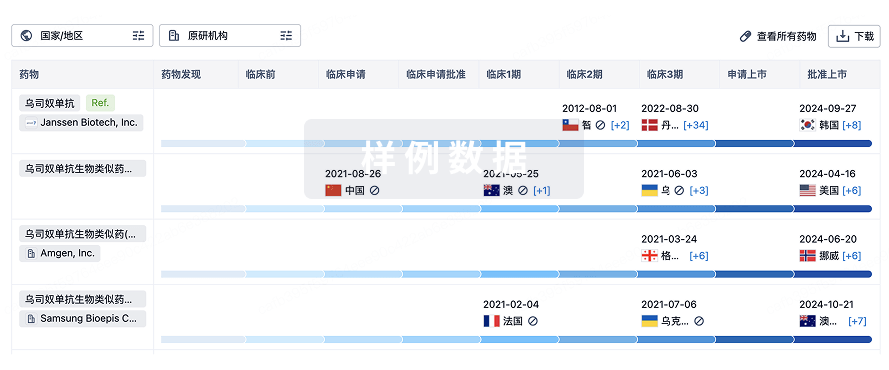
生物类似药
生物类似药在不同国家/地区的竞争态势。请注意临床1/2期并入临床2期,临床2/3期并入临床3期
登录
或
特殊审评
只需点击几下即可了解关键药物信息。
登录
或

提出任何生物医药研究问题
让每一步生物医药决策都精准制胜
基于十亿级生物数据与全球情报的精准 AI,赋能早期药物发现
立即开始免费试用!
智慧芽新药情报库是智慧芽专为生命科学人士构建的基于AI的创新药情报平台,助您全方位提升您的研发与决策效率。
立即接入生物医药数据包
智慧芽新药库数据也通过智慧芽开放平台,以MCP或API服务形式对外开放。立即使用我们的MCP服务定制您的LLM智能体。
生物序列数据库
生物药研发创新
免费使用
化学结构数据库
小分子化药研发创新
免费使用