预约演示
更新于:2026-10-24
BCMA(Abzyme Therapeutics)
更新于:2026-10-24
概要
基本信息
非在研机构- |
权益机构- |
最高研发阶段临床前 |
首次获批日期- |
最高研发阶段(中国)- |
特殊审评- |

关联
100 项与 BCMA(Abzyme Therapeutics) 相关的临床结果
登录后查看更多信息
100 项与 BCMA(Abzyme Therapeutics) 相关的转化医学
登录后查看更多信息
100 项与 BCMA(Abzyme Therapeutics) 相关的专利(医药)
登录后查看更多信息
115
项与 BCMA(Abzyme Therapeutics) 相关的文献(医药)2026-12-31·JOURNAL OF MEDICAL ECONOMICS
Cost-effectiveness analysis of elranatamab versus physician’s choice of treatment (non–BCMA-directed regimens) in patients with triple class exposed multiple myeloma in Japan
Article
作者: Matsuda, Hiroyuki ; Nagano, Mitsuhiro ; Kamei, Yoichi ; Hatsuyama, Kengo ; Hlavacek, Patrick ; Yuasa, Akira ; Suzuki, Kenshi ; DiBonaventura, Marco
AIM:
To evaluate the cost-effectiveness of elranatamab versus physician's choice of treatment (PCT) for patients with triple class exposed multiple myeloma in Japan.
MATERIALS AND METHODS:
A cost-effectiveness analysis was conducted comparing elranatamab with PCT using a partitioned survival model with three health states from the Japanese public healthcare payer perspective. A weekly cycle length and a 25-year lifetime horizon were applied, with costs and health outcomes discounted at 2% annually in accordance with Japanese HTA guidelines. Clinical inputs for elranatamab were derived from the phase 2 MagnetisMM-3 trial. Comparative effectiveness versus PCT was estimated using an unanchored matching-adjusted indirect comparison (MAIC) with the prospective real-world LocoMMotion study. Utility values were calculated by applying the Japanese value set to EQ-5D-5L data collected in MagnetisMM-3. Scenario analyses were performed using MAIC-based comparisons versus teclistamab and idecabtagene vicleucel (ide-cel).
RESULTS:
In the base-case analysis, elranatamab increased quality-adjusted life-years (QALYs) compared with PCT (2.59 vs 0.82) at a higher total cost (JPY 36,901,695 (USD 246,570) vs 30,899,696 (USD 206,466)), resulting in an incremental cost of JPY 6,001,999 (USD 40,104) and an incremental QALY gain of 1.77. The incremental cost-effectiveness ratio (ICER) was JPY 3,394,966 (USD 22,684) per QALY, remaining within cost-effectiveness thresholds in Japan. Sensitivity analyses demonstrated the robustness of the base-case results. In scenario analyses, elranatamab was dominant versus teclistamab and ide-cel.
LIMITATIONS:
Limitations include reliance on the clinical opinion of a single hematology expert for Japanese clinical practice patterns, extrapolation beyond observed trial follow-up, and inherent constraints of MAIC due to the lack of head-to-head trials.
CONCLUSION:
From the healthcare payer perspective, elranatamab was cost-effective versus PCT in the base case and scenario analyses, with ICERs consistently below commonly accepted thresholds in Japan; contingent on the unanchored MAIC and long-term extrapolation, this should be interpreted with caution.
2026-10-01·JOURNAL OF ONCOLOGY PHARMACY PRACTICE
Progressive multifocal leukoencephalopathy associated with elranatamab therapy in relapsed/refractory multiple myeloma
Article
作者: Ataş, Ünal ; Karaali, Kamil ; Kirezli, Selin Arslan ; Çağla Bilek, Merve ; Iltar, Utku ; Üçüncü, Gökhan Yavuz ; Çetiner, Tansuhan ; Salim, Ozan ; Yücel, Orhan Kemal ; Çakin, Özlem
Introduction:
Elranatamab, a bispecific antibody targeting B-cell maturation antigen (BCMA) and CD3, has demonstrated remarkable efficacy in relapsed or refractory multiple myeloma (RRMM). With the growing clinical use of BCMA-directed bispecific antibodies, their safety profile continues to evolve; however, progressive multifocal leukoencephalopathy (PML) has not been systematically described with elranatamab to date.
Case Report:
A 67-year-old woman with RRMM achieved a complete response following elranatamab therapy. After the seventh treatment cycle, she developed neurological symptoms including dysarthria and gait disturbance. Brain magnetic resonance imaging revealed multifocal, non-enhancing white-matter lesions, and cerebrospinal fluid polymerase chain reaction confirmed JC virus infection, establishing the diagnosis of PML.
Management and Outcome:
Elranatamab was discontinued immediately. Despite treatment with intravenous immunoglobulin, mirtazapine, and compassionate-use nivolumab, her neurological status progressively worsened, necessitating intubation and intensive care management.
Discussion:
This case suggests a probable association between elranatamab therapy and JC virus reactivation leading to PML. The pathogenesis is likely multifactorial, reflecting both prior cumulative immunosuppression and elranatamab-induced plasma-cell depletion with resultant hypogammaglobulinemia. Clinicians should maintain vigilance for new or unexplained neurological manifestations in patients receiving BCMA-directed T-cell–redirecting therapies. Early neuroimaging and cerebrospinal fluid JC virus testing, combined with proactive immunoglobulin replacement and systematic pharmacovigilance, are essential for timely diagnosis and improved outcomes. Overall, this case highlights the need for early JC virus monitoring and awareness of delayed neuroinfectious complications associated with BCMA-targeted immunotherapies.
2026-10-01·Arthritis & Rheumatology
Dual‐Targeting
BCMA
–
CD19 CAR
‐T Cell Therapy in Systemic Lupus Erythematosus: Single‐Cell and Immune Repertoire Analysis Reveals Mechanisms of Immune Reconstitution
Article
作者: Wang, Weijia ; He, Zhenghao ; Li, Qianwen ; Ding, Shihao ; Hong, Ming ; Wang, Mingxia
Objective:
To investigate peripheral immune reconstitution following BCMA–CD19 dual‐targeting CAR‐T therapy in patients with systemic lupus erythematosus (SLE).
Methods:
Single‐cell RNA sequencing and parallel B cell receptor (BCR) and T cell receptor sequencing were performed on peripheral blood mononuclear cells from five patients with SLE before infusion and after peripheral B cell reconstitution (median 90 days postinfusion). These data were integrated with public datasets from seven patients with SLE treated with CD19 single‐targeting CAR‐T and three healthy controls for comparative analysis (total N = 15 subjects; 176,182 single cells analyzed).
Results:
Dual‐targeting CAR‐T induced marked depletion of B‐lineage populations, including plasma‐lineage clusters that persisted after CD19 therapy. Specifically, cluster 2 decreased from 10.70% to 2.67% and cluster 3 from 9.55% to 3.12% in the dual‐targeting cohort, whereas cluster 3 increased (6.78%–12.19%) in the single‐targeting comparator. In B cells, dual targeting produced greater suppression of RIG‐I/MDA5 and type I interferon transcriptional programs than single‐targeting therapy. BCR repertoires shifted toward an IGHM‐dominant (49.83%–89.19%,
P
< 0.05), naïve‐biased profile, with contraction of pre‐enriched class‐switched clones and restoration of diversity toward healthy‐like profiles. Clinical improvement was significant (mean SLE Disease Activity Index decreased from 9.6 to 2.4,
P
< 0.05), paralleling these molecular changes.
Conclusion:
BCMA–CD19 dual CAR‐T therapy was associated with deeper depletion of plasma‐lineage compartments and a tendency toward more pronounced reversal of SLE‐associated molecular signatures. This exploratory finding suggests a potential advantage of dual targeting in achieving a more comprehensive humoral reset in SLE, which warrants further direct comparative studies to determine clinical superiority.image
48
项与 BCMA(Abzyme Therapeutics) 相关的新闻(医药)2026-10-22
·美通社
此次获批是基于III期MajesTEC-9研究结果
[1]
。针对既往至少接受过一线治疗(包括抗CD38单抗及来那度胺)的复发或难治性多发性骨髓瘤患者,泰立珂
®
将疾病进展或死亡风险降低71%,死亡风险降低40%
[2]
此次适应症拓展进一步丰富了泰立珂
®
在疾病更早治疗阶段应用的循证医学证据
北京
2026年10月22日
/美通社/ -- 强生公司今日宣布,国家药品监督管理局已批准泰立珂®(特立妥单抗注射液)新增适应症,用于既往至少接受过一线治疗(包括抗CD38单克隆抗体和来那度胺)的复发或难治性多发性骨髓瘤成人患者
[1]
。此次获批是基于III期MajesTEC-9研究结果
[1]
。研究显示,泰立珂®在无进展生存期(PFS)和总生存期(OS)方面均展现出具有临床意义和统计学显著性的获益
[2]
。在以抗CD38单抗和来那度胺耐药患者为主的研究人群中,泰立珂®将疾病进展或死亡风险降低71%,死亡风险降低40%
[2]
。此次获批使泰立珂®治疗前移至首次复发阶段,为中国复发或难治性多发性骨髓瘤患者带来全球范围内同类首创
[3]
的免疫治疗新选择。
着力解决首次复发或难治性多发性骨髓瘤患者的临床未满足需求
尽管多发性骨髓瘤一线治疗取得了重大进展,包括以抗CD38单抗为基础的四药联合方案,但大多数患者最终仍面临疾病复发
[4]
。一旦患者对主要治疗方案(如抗CD38单抗和来那度胺)产生耐药,其预后尤为不佳
[5]
。该患者群体长期面临治疗选择有限、二线治疗路径复杂的困境,进一步凸显了对更多可广泛应用于临床实践的免疫治疗方案的迫切需求
[3]
。
重新定义多发性骨髓瘤患者的治疗新可能
强生创新制药中国区总裁Cherry Huang女士表示:"将特立妥单抗应用于更早的二线治疗阶段,有望显著改善患者的长期生存结局,并改变疾病进程,为患者及其家庭带来新的希望。随着特立妥单抗取得这一里程碑突破,我们正在推进一种可广泛应用的免疫治疗方式进入更早治疗阶段,帮助患者实现更深、更持久的缓解。在强生,我们始终秉持明确的使命,持续探索创新疗法和潜在治愈方案,致力于改善多发性骨髓瘤患者在疾病各阶段的治疗前景,向着治愈的未来不断前行。"
III期MajesTEC-9研究结果显示,与标准治疗相比,更早使用泰立珂
®
可显著改善无进展生存期和总生存期
MajesTEC-9研究旨在评估双特异性T细胞衔接抗体疗法泰立珂®相较于标准治疗,即泊马度胺、硼替佐米联合地塞米松(PVd)或卡非佐米联合地塞米松(Kd),用于既往接受过1至3线治疗(包括来那度胺和抗CD38单克隆抗体)的复发或难治性多发性骨髓瘤患者的疗效
[2]
。在这一经多线治疗的人群中,85%的患者对抗CD38单克隆抗体耐药、79%对来那度胺耐药,以及超过90%对末次治疗耐药
[2]
。与标准治疗相比,泰立珂®将疾病进展或死亡风险降低71%(风险比[HR]=0.29;95%置信区间[CI]:0.23-0.38),将死亡风险降低40%(HR=0.60;95% CI:0.43-0.83),在无进展生存期(PFS)和总生存期(OS)方面均取得显著改善
[2]
。此外,与标准治疗相比,泰立珂®在所有关键次要终点上均显示出显著改善,包括近三分之二的患者达到完全缓解或以上(≥CR;65.9% vs. 16.8%)
[2]
。
泰立珂®在该研究中的总体安全性特征与其已知安全性特征一致。与标准治疗相比,泰立珂®治疗期间出现的不良事件(TEAE)发生率相近(99.7% vs. 97.9%)
[2]
。3/4级TEAE发生率分别为84.9%和76.3%
[2]
。两组5级TEAE发生率均较低(6.5% vs. 3.5%)
[2]
。两组中大多数5级TEAE均与感染相关(5.5% vs. 2.8%),且多数发生于治疗开始后的前6个月内
[2]
。在发生致死性感染的患者中,特立妥单抗组16例患者中有5例、PVd或Kd组8例患者中有6例未接受免疫球蛋白替代治疗;两组末次血清IgG水平低于400 mg/dL的患者分别为8例和2例
[2]
。与标准治疗相比,泰立珂®组感染发生率更高(3/4级:41.6% vs. 29.0%);但随着疾病得到控制,3级及以上感染的发生率随时间推移而下降
[2]
。细胞因子释放综合征(CRS)发生于66.0%的泰立珂®治疗患者中,且大多数为1/2级,可通过标准管理措施进行处理
[2]
。所有CRS事件均已缓解,且未导致治疗终止
[2]
。免疫效应细胞相关神经毒性综合征(ICANS)发生率较低(4.1%),且主要为1/2级事件
[2]
。泰立珂®组的中位治疗持续时间接近标准治疗组的两倍(13.1个月 vs. 7.0个月)
[2]
。
关于特立妥单抗
泰立珂
®
是全球范围内同类首创、即用型的皮下注射双特异性抗体
[3]
,
[6]
。该药物具有双结合位点,可将CD3+T细胞重定向到表达BCMA的骨髓瘤细胞,从而激活人体免疫系统以诱导杀伤肿瘤细胞
[7]
。目前,特立妥单抗正在多项联合研究中开展进一步评估
[8]
,
[9]
,
[10]
,
[11]
,
[12]
。
关于MajesTEC-9研究
[1]
MajesTEC-9(NCT05572515)是一项正在开展的随机III期研究,旨在对比特立妥单抗单药方案与泊马度胺、硼替佐米联合地塞米松(PVd)或卡非佐米联合地塞米松(Kd),用于既往接受过1–3线治疗(包括来那度胺及抗CD38单抗)的复发或难治性多发性骨髓瘤患者的疗效。研究主要终点为无进展生存期(PFS);次要终点包括完全缓解或更好的缓解(≥CR)、缓解持续时间(DoR)、至下次治疗时间(TTNT)、第二次无进展生存期(PFS2)、总生存期(OS)、安全性以及患者报告结局。
关于多发性骨髓瘤
多发性骨髓瘤是一种复杂的血液恶性肿瘤,累及骨髓内被称为浆细胞的白细胞
[13]
。在多发性骨髓瘤中,这类浆细胞异常增殖并快速扩散,形成肿瘤,取代骨髓内的正常细胞
[14]
。多发性骨髓瘤是全球第三大常见血液肿瘤
[15]
,每年全球新确诊病例超过18万例
[16]
。多发性骨髓瘤患者的五年生存率为59.8%
[17]
。尽管部分患者在确诊时无明显症状,但大多数患者因出现骨折或骨痛、贫血相关症状、疲劳、高钙血症以及肾脏问题或感染等症状而被诊断
[18]
,
[19]
。近年来,随着治疗手段不断进步,多发性骨髓瘤患者的总生存期已从以"年"为单位延长至以"十年"为单位,目前在疾病各阶段及各治疗线别均已有有效的治疗选择
[20]
。
关于强生创新制药
作为首批进入中国的跨国制药企业之一,强生创新制药自1985年在华成立以来,始终致力于以科学领拓医药未来。科学为本,我们是忠于科学的创新者,积极探索突破性疗法,变革健康未来;使命为上,我们是健康中国的贡献者,以应对中国最为迫切的医药健康需求为己任,共筑健康中国;患者为先,我们是心系患者的同行者,不断创新治疗途径,帮助患者寻找治疗方法抵御疾病。作为强生在华制药子公司,我们聚焦于肿瘤学、免疫学、神经科学、心肺疾病、眼科等能够为人类健康带来巨大改变的疾病领域。
关于前瞻性陈述的警示
本新闻稿包含《1995年私人证券诉讼改革法案》所定义的关于泰立珂®(特立妥单抗注射液)的"前瞻性陈述"。请读者切勿过度依赖这些前瞻性陈述。这些陈述基于对未来事件的当前预期。如果基本假设被证明不准确,或者已知或未知的风险或不确定性成为现实,实际结果可能与强生公司的预期和预测存在重大差异。风险和不确定性包括但不限于:产品研发固有的挑战和不确定性,包括临床成功与获得监管批准的不确定性;商业成功的不确定性;生产困难和延误;竞争,包括技术进步、新产品以及竞争对手获得的专利;专利挑战;因产品疗效或安全性问题导致的产品召回或监管行动;医疗保健产品及服务购买者的行为和消费模式变化;适用法律法规的变化,包括全球医疗保健改革;以及医疗保健成本控制的趋势。有关这些风险、不确定性及其他因素的进一步列表和描述,可参见强生公司最新的Form 10-K 年报中的"关于前瞻性陈述的警示性声明"和"项目 1A. 风险因素"章节,以及强生公司后续向美国证券交易委员会提交的 Form 10-Q 季度报告和其他文件。这些文件的副本可在
www.sec.gov
、
www.jnj.com
线上获取或向强生公司索取。强生公司不承担因新信息、未来事件或发展而更新任何前瞻性陈述的义务。
[1]
特立妥单抗注射液说明书,2026年10月
[2]
Costa LJ, et al. N Engl J Med. DOI: 10.1056/NEJMoa2514663.
[3]
Nooka AK, Rodriguez C, Mateos MV, et al. Incidence, timing, and management of infections in patients receiving teclistamab for the treatment of relapsed/refractory multiple myeloma in the MajesTEC‐1 study. Cancer. 2024;130(6):886‐900. doi:10.1002/cncr.35107.
[4]
Rajkumar SV. Multiple Myeloma: 2026 Update on Diagnosis, Risk-Stratification and Management. Am J Hematol. 2026 Aug 18. doi: 10.1002/ajh.70475. Epub ahead of print. PMID: 42613778.
[5]
Ramasamy K, et. al. Real-World Treatment Patterns and Clinical Outcomes in Patients With Multiple Myeloma Previously Treated With Lenalidomide and an Anti-CD38 Monoclonal Antibody. Clin Lymphoma Myeloma Leuk. 2025 May;25(5):337-348.e2.
[6]
Moreau P, et al. Teclistamab in Relapsed or Refractory Multiple Myeloma. New England Journal of Medicine. 2022;287(6):494-505.
[7]
Padala SA et al. Epidemiology, Staging, and Management of Multiple Myeloma. Med Sci (Basel). 2021;9(1):3.
[8]
European Medicines Agency. TECVAYLI Summary of Product Characteristics. Available at: https://www.ema.europa.eu/en/documents/product-information/tecvayli-epar-product-information_en.pdf. Last accessed: March 2026.
[9]
ClinicalTrials.gov. A Study of Teclistamab in Combination With Daratumumab Subcutaneously (SC) (Tec-Dara) Versus Daratumumab SC, Pomalidomide, and Dexamethasone (DPd) or Daratumumab SC, Bortezomib, and Dexamethasone (DVd) in Participants With Relapsed or Refractory Multiple Myeloma (MajesTEC-3). Available at: https://clinicaltrials.gov/study/NCT05083169. Last accessed: March 2026.
[10]
ClinicalTrials.gov. A Study of Teclistamab With Other Anticancer Therapies in Participants With Multiple Myeloma (MajesTEC-2). Available at: https://clinicaltrials.gov/ct2/show/NCT04722146. Last accessed: March 2026.
[11]
ClinicalTrials.gov. A Study of the Combination of Talquetamab and Teclistamab in Participants With Relapsed or Refractory Multiple Myeloma. Available at: https://clinicaltrials.gov/ct2/show/NCT04586426. Last accessed: March 2026.
[12]
ClinicalTrials.gov. A Study of Subcutaneous Daratumumab Regimens in Combination With Bispecific T Cell Redirection Antibodies for the Treatment of Participants With Multiple Myeloma. Available at: https://clinicaltrials.gov/ct2/show/NCT04108195. Last accessed: March 2026.
[13]
Rajkumar SV. Multiple Myeloma: 2020 Update on Diagnosis, Risk-Stratification and Management. Am J Hematol. 2020;95(5):548-567.
[14]
National Cancer Institute. Plasma cell neoplasms. Accessed May 2026. https://www.cancer.gov/types/myeloma/patient/myeloma-treatment-pdq
[15]
City of Hope. Multiple myeloma: Causes, symptoms & treatments. 2022. Accessed May 2026. https://www.cancercenter.com/cancer-types/multiple-myeloma
[16]
International Agency for Research on Cancer (World Health Organization). Multiple myeloma fact sheet. 2024. Accessed May 2026. https://gco.iarc.who.int/media/globocan/factsheets/cancers/35-multiple-myeloma-fact-sheet.pdf
[17]
SEER Explorer: An interactive website for SEER cancer statistics. Surveillance Research Program, National Cancer Institute. Accessed May 2026. https://seer.cancer.gov/explorer/
[18]
American Cancer Society. What is multiple myeloma? Accessed May 2026. https://www.cancer.org/cancer/multiple-myeloma/about/what-is-multiple-myeloma.html
[19]
American Cancer Society. Multiple myeloma early detection, diagnosis, and staging. Accessed May 2026. https://www.cancer.org/cancer/types/multiple-myeloma/detection-diagnosis-staging/detection.html
[20]
Kazandjian D. Multiple myeloma epidemiology and survival: a unique malignancy. J Clin Oncol. 2018;36(15):1479–1487. https://pmc.ncbi.nlm.nih.gov/articles/PMC6119139/
2026-10-13
·甚是重要
标签: #狼疮肾炎 #CAR-T #生育 #系统性红斑狼疮 #肾脏病 #科普
摘要: 狼疮肾炎好发于育龄女性。过去,怀孕对她们来说是一个需要反复权衡的选择——疾病本身可能加重,许多免疫抑制剂在孕期禁用。近两年,CAR-T细胞治疗让一部分难治性患者实现了停药后病情稳定,也让成功生育从个例走向可重复验证。2026年,N Engl J Med 首次系统报告了CAR-T治疗后自身免疫病患者的妊娠结局:14次妊娠,没有一例疾病复发,已有8名健康婴儿出生。
拨开科普迷雾,只为少走弯路。一、成功生育有多难
系统性红斑狼疮好发于20到40岁的女性,正是大多数人计划组建家庭的年龄。但狼疮肾炎的出现,让这件事变得复杂。
疾病本身可能影响妊娠。狼疮活动期怀孕,母体可能出现子痫前期、肾功能恶化,胎儿可能面临早产、生长受限甚至丢失。一项2025年发表的大规模多中心队列研究显示,中国SLE患者中,符合孕前条件(至少稳定6个月、无重要脏器活动、泼尼松不超过每天7.5毫克、使用羟氯喹)的患者活产率为86.1%,不良妊娠结局风险为29.4%;不符合条件的患者活产率为73.7%,不良妊娠结局风险为52.1%。
药物也是一个障碍。霉酚酸酯和环磷酰胺在孕期禁用,可能对胎儿造成伤害。激素虽然可以用,但高剂量使用与妊娠期糖尿病、高血压、子痫前期和胎膜早破风险增加相关,妊娠期应尽量将激素减至最低有效剂量。
过去,医生能给出的建议往往是“先把病情控制稳定,停药一段时间,再考虑怀孕”。但对难治性患者来说,病情稳定本身就是一个难以达到的目标。二、一位24岁女性的经历
CAR-T细胞治疗改变了这个局面。
CAR-T是一种把患者自己的免疫细胞取出来、改造后再输回去的治疗方法。它的目标不是压制病情,而是重置免疫系统——把产生自身抗体的那批细胞清掉,让新的、正常的免疫细胞重新长出来。
2026年2月发表在 Arthritis Rheumatol 上的一篇病例报告,记录了一个具体的案例。一位24岁的女性,患有IV型狼疮肾炎,接受了靶向BCMA和CD19的双靶点CAR-T治疗。治疗后,她的狼疮达到了持续缓解,并且在超过30个月的随访中,没有复发。
更让人关注的是后面的事。她在CAR-T输注后6个月自然怀孕,足月分娩了一名健康女婴。21个月后,她再次自然怀孕,又生下了一名健康女婴。两次怀孕期间,她停用了所有免疫抑制剂和激素,病情保持稳定。研究者对母体外周血、新生儿脐带血和胎盘组织进行了检测,均未检出CAR-T细胞残留。这是全球首例经该疗法治疗后自然妊娠并成功分娩健康婴儿的病例。
这意味着,CAR-T细胞没有穿过胎盘,也没有在新生儿体内留下任何痕迹。
三、不止一例
这位24岁女性的案例不是孤例。
2026年1月发表在 J Hematol Oncol 上的一项研究,对12例接受双靶点CAR-T(ICG318)治疗的难治性狼疮患者进行了长期随访,其中10例患有狼疮肾炎。12例中有10例达到严格完全缓解,9例在重复肾活检中显示免疫复合物沉积被清除。一位患者在CAR-T输注后15个月和36个月分别自然怀孕,生下两名健康足月婴儿。这是首例双靶点CAR-T治疗SLE后成功生育的报道。
2026年7月,N Engl J Med 发表了一项多中心研究,汇总了13名自身免疫病患者在CAR-T治疗后的14次妊娠。结果是这样的:所有妊娠均未报告孕期并发症,没有一例患者出现疾病复发,已有8名婴儿健康出生,所有婴儿的免疫系统发育与同龄儿相符,没有出现B细胞缺乏或严重感染。
从CAR-T治疗到怀孕的中位间隔是18个月,时间范围从6个月到36个月不等。这意味着,部分患者在治疗后半年就具备了自然受孕的条件。
在儿童难治性狼疮肾炎中,双靶点CD19/22 CAR-T治疗3例患儿,全部在3个月内达到显著临床缓解,停用所有激素和免疫抑制剂后,维持无病状态9至15个月。其中2例发生1级细胞因子释放综合征,1例发生4级细胞因子释放综合征合并噬血细胞性淋巴组织细胞增多症和血栓性微血管病,经联合治疗后控制。四、为什么能保住生育能力
狼疮肾炎患者面临的不只是疾病本身的风险,还有长期用药对生育能力的影响。
传统的免疫抑制剂中,环磷酰胺是明确具有生殖毒性的药物,会损伤卵巢储备。许多难治性患者在尝试CAR-T之前,已经用过多种免疫抑制剂,卵巢功能可能已经受到一定程度的损伤。
CAR-T的治疗逻辑不一样。它是一次性输注,不需要长期维持用药。如果治疗后能达到停药缓解,患者就不再需要暴露于那些可能损害生育能力的药物中。
2026年8月发表在 Rheumatology (Oxford) 上的一项研究,专门评估了CAR-T治疗对系统性红斑狼疮女性患者卵巢储备功能的影响。研究者对13名接受抗CD19 CAR-T治疗的患者进行了激素水平分析,中位年龄27岁。结果显示,反映卵巢储备的关键指标抗苗勒管激素在治疗前后保持稳定,没有观察到卵巢储备受损的信号。
简单说,CAR-T不仅可能让病情缓解,还可能让患者在停药之后,保留自然怀孕的机会。五、不只是生育
对于狼疮肾炎患者,尤其是年轻女性,怀孕从来不是一个纯粹的医学问题。它涉及到能否组建家庭、能否过上“正常”的生活、能否在未来的人生里拥有选择的权利。
过去的治疗模式是“终身用药、控制症状”。患者需要长期服用免疫抑制剂,定期复查,小心翼翼地维持病情稳定。在这种状态下,怀孕是一个需要反复评估、冒着风险才能尝试的事情。
CAR-T带来的变化在于,它让一部分难治性患者实现了停药之后病情仍然稳定。当患者不再需要依赖那些可能影响生育的药物时,怀孕就从一个“禁忌”变成了一个“可以讨论和实现的选择”。
那位24岁的女性在两次怀孕期间,没有用任何免疫抑制剂和激素。她的狼疮没有复发,她的孩子健康出生。六、写在最后
CAR-T治疗狼疮目前尚未在任何国家获批,全部处于临床试验阶段。上述妊娠案例来自小样本的早期临床研究,样本量有限。研究者也在论文中强调,这些结果需要在更大规模的前瞻性注册研究中持续验证。
不是所有狼疮肾炎患者都适合CAR-T。目前的临床研究主要针对“难治性”患者,即已经试过多种免疫抑制剂和生物制剂、病情仍然控制不住的群体。对于病情稳定、常规治疗有效的患者,CAR-T并不是首选。
此外,CAR-T治疗本身也有风险,包括细胞因子释放综合征和神经毒性。在儿童难治性狼疮肾炎的研究中,3例患儿中有1例出现了4级细胞因子释放综合征合并噬血细胞性淋巴组织细胞增多症和血栓性微血管病,经联合治疗后控制。在自身免疫病患者中,这些不良反应的发生率和严重程度总体低于血液肿瘤患者,但仍需要严密监测。
但对于那些已经在治疗选择上走到尽头的难治性患者来说,CAR-T提供的不只是一次缓解的机会,还可能是重新拥有选择的权利。
参考文献
Jiang Q, Wang M, Wang M, et al. Successful Spontaneous Pregnancies and Healthy Neonates After Dual-Target CAR–T Cell Therapy in Systemic Lupus Erythematosus[J]. Arthritis Rheumatol. 2026;78(8):1687-1691. DOI: 10.1002/art.70070.
Hong M, Wang M, Zeng R, et al. BCMA-CD19 armored compound CAR T cells in systemic lupus erythematosus: extended follow-up of a phase 1 clinical trial[J]. J Hematol Oncol. 2026;19(1):13. DOI: 10.1186/s13045-026-01779-6. PMID: 41612420.
Schett G, Wirsching A, Rothe T, et al. Pregnancies in Patients with Autoimmune Disease Receiving CAR T-Cell Therapy[J]. N Engl J Med. 2026;395(8):821-824. DOI: 10.1056/NEJMc2607737.
Pecher AC, Henes J, Henes M, et al. Hormone levels of female patients with SLE after anti-CD19 CAR T-cell treatment do not indicate a signal of impaired ovarian reserve[J]. Rheumatology (Oxford). 2026:keag413. DOI: 10.1093/rheumatology/keag413. PMID: 42584071.
Mao Y, Shen W, Shen J, et al. Bicistronic-CD19/22 Chimeric Antigen Receptor T-Cell Therapy for Childhood Refractory Lupus Nephritis[J]. Kidney Int Rep. 2026;11(1):53-61. DOI: 10.1016/j.ekir.2025.10.008. PMID: 41541778.
Zhang X, Liu L, Lin S, et al. The conditions that patients with systemic lupus erythematosus should fulfill before pregnancy to optimize outcomes: a large-scale multicenter cohort study from China[J]. Arthritis Res Ther. 2025;27(1):31. DOI: 10.1186/s13075-025-03476-2. PMID: 39934898.
如果你觉得这篇文章有帮助,欢迎转发给身边关心肾脏健康的朋友。关于狼疮肾炎与生育,你还有什么想了解的?欢迎在评论区聊聊。
膜性肾病:从压制到清除
膜性肾病、IgA 肾病、狼疮肾炎,各项抗体、补体怎么看?
肾病到底该吃多少盐?哪些食物绝对不能吃?
肾病吃什么?蛋白多吃还是少吃?
尿蛋白要降到多少才算安全?1g、0.5g 还是必须转阴?
糖尿病肾病:指南强烈推荐这三类药
血脂管理:分层、定标、阶梯用药
血肌酐已达700 μmol/L,这些女性却能长期不透析
血脂管理变革:从每天吃药到半年一针
IgA肾病能不能稳住?2025最新指南:关键看三件事
高尿酸血症:老药怎么选,新药怎么用?
2026-10-06
·生物谷
所有 38 名接受治疗的参与者都对疗法产生应答,近 80% 达到完全缓解。许多人获得了持久获益,超过一半在 2 年后仍无进展,65% 在 3 年后仍存活。
一项由麻省总医院布莱根癌症研究所和芝加哥大学医学综合癌症中心的研究人员领导的1期临床试验发现,一种研究性 CAR-T细胞疗法可在复发或难治性多发性骨髓瘤患者中产生深度且持久的缓解。结果发表在 The New England Journal of Medicine 上。
复发或难治性多发性骨髓瘤患者在多轮治疗后往往用尽有效治疗选择。一些现有的靶向 BCMA 的 CAR-T 细胞疗法也与罕见但严重的神经系统副作用有关,BCMA 是一种表达于骨髓瘤细胞表面的蛋白。
研究团队报告了 anitocabtagene autoleucel (anito-cel) 的1期临床试验结果,这是一种研究性 BCMA 靶向 CAR-T 细胞疗法,由吉利德公司旗下的Kite公司开发。
所有 38 名接受治疗的参与者都对疗法产生应答,近 80% 达到完全缓解。许多人获得了持久获益,超过一半在 2 年后仍无进展,65% 在 3 年后仍存活。严重免疫相关和神经系统副作用不常见,且未报告迟发性神经系统并发症。
“对于一项1期临床试验来说,这些结果非常出色,”资深作者 Michael R. Bishop, MD 说,他是芝加哥大学医学综合癌症中心医学教授。“即使在低剂量 anito-cel 下,我们一开始就看到大多数患者出现完全缓解,而且没有一名患者出现严重毒性,所以我们想进一步研究为什么会这样。”
基于他们的实验室分析,研究人员假设 anito-cel 工程化的 BCMA 结合域维持了杀癌活性,同时限制了过度免疫激活以及其他可能损害 CAR-T 细胞功能或导致毒性的特征。
“在这项1期临床研究中没有神经毒性和炎症副作用尤其令人鼓舞,鉴于这些并发症的严重且可能持久的影响,”第一作者 Matthew Frigault, MD 说,他是麻省总医院布莱根癌症研究所血液学/肿瘤学临床研究副主席。“新型的D结构域结合剂(D-domain binder)可能促成了这一发现,而引人注目的疗效和令人鼓舞的安全性数据相结合,为继续研究这一新的患者治疗选择奠定了重要基础。”
anito-cel 目前正在2期和3期临床试验中评估,以在更大多发性骨髓瘤患者群体中确认这些发现。(生物谷Bioon.com)
参考文献:
Matthew J. Frigault et al, Phase 1 Study of Anito-cel, a d -Domain BCMA CAR T Cell for Refractory or Recurrent Myeloma, New England Journal of Medicine (2026). DOI: 10.1056/nejmoa2603527.
细胞疗法免疫疗法临床1期临床2期临床结果
100 项与 BCMA(Abzyme Therapeutics) 相关的药物交易
登录后查看更多信息
研发状态
10 条进展最快的记录, 后查看更多信息
登录
| 适应症 | 最高研发状态 | 国家/地区 | 公司 | 日期 |
|---|---|---|---|---|
| 肿瘤 | 临床前 | 美国 | 2024-07-16 |
登录后查看更多信息
临床结果
临床结果
适应症
分期
评价
查看全部结果
| 研究 | 分期 | 人群特征 | 评价人数 | 分组 | 结果 | 评价 | 发布日期 |
|---|
No Data | |||||||
登录后查看更多信息
转化医学
使用我们的转化医学数据加速您的研究。
登录
或

药物交易
使用我们的药物交易数据加速您的研究。
登录
或

核心专利
使用我们的核心专利数据促进您的研究。
登录
或

临床分析
紧跟全球注册中心的最新临床试验。
登录
或

批准
利用最新的监管批准信息加速您的研究。
登录
或

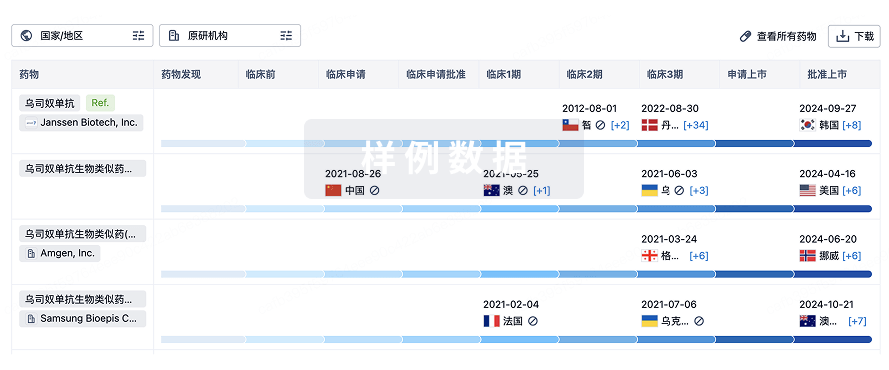
生物类似药
生物类似药在不同国家/地区的竞争态势。请注意临床1/2期并入临床2期,临床2/3期并入临床3期
登录
或
特殊审评
只需点击几下即可了解关键药物信息。
登录
或

提出任何生物医药研究问题
让每一步生物医药决策都精准制胜
基于十亿级生物数据与全球情报的精准 AI,赋能早期药物发现
立即开始免费试用!
智慧芽新药情报库是智慧芽专为生命科学人士构建的基于AI的创新药情报平台,助您全方位提升您的研发与决策效率。
立即接入生物医药数据包
智慧芽新药库数据也通过智慧芽开放平台,以MCP或API服务形式对外开放。立即使用我们的MCP服务定制您的LLM智能体。
生物序列数据库
生物药研发创新
免费使用
化学结构数据库
小分子化药研发创新
免费使用