预约演示
更新于:2026-10-03
Mecasermin biosimilar (Chiron Corp.)
美卡舍明生物类似药(Chiron Corp)
更新于:2026-10-03
概要
基本信息
原研机构 |
在研机构- |
权益机构- |
最高研发阶段终止临床2期 |
首次获批日期- |
最高研发阶段(中国)- |
特殊审评- |

登录后查看时间轴
结构/序列
Sequence Code 9612
当前序列信息引自: *****
关联
1
项与 美卡舍明生物类似药(Chiron Corp) 相关的临床试验CTRI/2024/04/066294
Comparative evaluation of recombinant human epidermal growth factor and insulin like growth factor-1 coated membranes in the management of isolated millers class 1 gingval recession defects. - NIL
开始日期2024-06-01 |
申办/合作机构- |
100 项与 美卡舍明生物类似药(Chiron Corp) 相关的临床结果
登录后查看更多信息
100 项与 美卡舍明生物类似药(Chiron Corp) 相关的转化医学
登录后查看更多信息
100 项与 美卡舍明生物类似药(Chiron Corp) 相关的专利(医药)
登录后查看更多信息
113
项与 美卡舍明生物类似药(Chiron Corp) 相关的文献(医药)2026-06-17·JOURNAL OF CLINICAL ENDOCRINOLOGY & METABOLISM
Clinical spectrum of extreme insulin resistance syndromes treated with rhIGF-1: A single-center experience
Article
作者: Alexander, Saji ; Improda, Nicola ; Katugampola, Harshini ; Peters, Catherine J ; Semple, Robert K ; Dattani, Mehul Tulsidas ; Shah, Pratik ; Atterbury, Abigail ; Cerbone, Manuela ; Hadj-Rabia, Smail
Abstract:
Context:
Donohue syndrome (DS) and Rabson-Mendenhall syndrome (RMS) are extreme forms of insulin resistance (IR) caused by biallelic mutations in the insulin receptor gene. Recombinant human insulin-like growth factor-1 (rhIGF-1) treatment is often used but its long-term benefits and risks are still poorly delineated.
Objective:
We describe rhIGF-1 treatment outcomes of a cohort of patients with DS and RMS, and compare them to previously published patients.
Methods:
A single-center retrospective observational study with case note review was conducted. A literature search was performed for previously published DS and RMS patients treated with rhIGF-1.
Results:
rhIGF-1 outcomes beyond 4 months have been reported for only 11 patients with DS and RMS to date. We provide outcome data for 3 more males, and report the long-term clinical course of a patient already described. Metabolic benefits of rhIGF-1 included improved glycemic control and fasting tolerance in early years of life, and some growth enhancement. Two patients exhibited poor response or intolerance to rhIGF-1 and died in infancy. The 2 longest-lived patients had progressive decompensation to diabetes mellitus, in 1 case despite long-term uninterrupted rhIGF-1 therapy. We also describe new features associated with severe insulin receptoropathies, such as cataract, liver hemangioma, and impaired hepatic protein synthesis.
Conclusion:
The phenotypes of DS and RMS are heterogeneous. Current treatment options remain unsatisfactory as high-dose rhIGF-1 exerts only limited beneficial effects and does not prevent decompensation to diabetes mellitus. More research is needed to identify alternative treatment strategies for extreme forms of IR.
2026-04-01·AMERICAN JOURNAL OF RESPIRATORY AND CRITICAL CARE MEDICINE
Recombinant human insulin-like growth factor 1 complex preserves lung development in mechanically ventilated preterm lambs
Article
作者: Albertine, Kurt H ; Simmons, Maggie ; Yang, Haixia ; Dawson, Elaine ; McHale, Mark ; Douglass, Matthew ; Hansen, Cannon ; Ward, Robert ; Vordos, Zoë ; Rebentisch, Andrew ; Major, Emily ; Carter, Linden ; Van Boerum, Jakob ; Beck, Emily ; Niklas, Victoria ; Null, Donald M ; Dahl, Mar Janna ; Barton, Norman
Abstract:
Rationale:
Bronchopulmonary dysplasia is associated with low concentrations of insulin-like growth factor 1 (IGF-1) protein in preterm infants. Postnatal replenishment of IGF-1 protein is a potential approach to prevent the decline in preterm human infants. Our recent 3-day pilot study in mechanically ventilated preterm lambs (131 days’ gestation; n = 6) demonstrated downstream signaling of human IGF-1 in sheep cells in vitro and that 1.5 mg/kg/d of recombinant human (rh) IGF-1 bound to binding protein 3 (IGFBP3; rhIGF-1 complex) delivered by continuous intravenous infusion provided physiological replacement of IGF-1 protein in plasma and suggested better pulmonary outcomes.
Objective:
This study assessed a longer period (7 days) of continuous treatment and larger sample size (10/group), using younger mechanically ventilated preterm lambs (128 days’ gestation; equivalent to human lung development at ∼28 weeks’ gestation) to allow evidence of preservation of respiratory gas exchange, alveolar formation and capillary growth, lung mechanics, and terminal bronchiole smooth muscle abundance.
Methods:
Preterm lambs were mechanically ventilated for 7 days. Lambs were randomized to blinded treatment with continuous intravenous infusion of either saline (vehicle control; 5 female/5 male) or rhIGF-1 complex (5 female/5 male), starting at 6 hours after operative delivery.
Measurements and Main Results:
RhIGF-1 complex significantly improved indices of respiratory gas exchange, alveolar formation, alveolar capillary growth, and VEGF-R2 messenger RNA expression, without adverse effects on liver or kidney function.
Conclusions:
RhIGF-1 complex may be an effective and safe therapy to promote functional and structural development underlying lung maturation in preterm infants and reduce the risk of developing bronchopulmonary dysplasia.
2026-03-01·BMJ Paediatrics Open
Randomised Phase 2b trial of rhIGF-1/rhIGFBP-3 (OHB-607) for bronchopulmonary dysplasia prevention in preterm neonates: study protocol
Article
作者: Ramanathan, Rangasamy ; Bonadies, Luca ; Niklas, Victoria ; De Luca, Daniele ; Kusuda, Satoshi ; Lee, Jane ; Baraldi, Eugenio ; Barton, Norman ; Hirano, Shinya ; Nickless, Alecia ; Bancalari, Eduardo ; Mahajan, Navdeep
Introduction:
Bronchopulmonary dysplasia (BPD) is the most common complication of prematurity, characterised by impaired alveolarisation and pulmonary vascular development. BPD has been associated with an increased risk of respiratory morbidity, neurodevelopmental impairment and death, intensifying a lifelong health and economic burden. The current standard of neonatal care is primarily supportive, with no approved therapies to restore lung development, promote maturation and lung growth or prevent long-term sequelae. Therefore, there is a critical unmet need for novel interventions, particularly in high-risk, extremely premature (EP) infants. In EP infants, serum insulin-like growth factor-1 (IGF-1) levels decrease rapidly and remain low for the first weeks after birth relative to the corresponding foetal levels in utero.
Methods and analysis:
OHB-607, a recombinant human IGF-1 combined with its binding protein-3, may replenish IGF-1 during this period of deficiency and support lung and vascular maturation. OHB-607 is being investigated as a first-line therapy to prevent severe BPD in EP infants in a Phase 2b, multicentre, open-label, randomised trial. Here, we present the Phase 2b study protocol. Target enrolment is 338 EP infants. To mimic physiological IGF-1 levels in utero, OHB-607 will be administered starting within 24 hours of birth until 29
+6
weeks postmenstrual age (PMA) via continuous intravenous infusion. The primary endpoint is the incidence of severe BPD, based on the modified National Institute of Child Health and Human Development criteria, or death by 36 weeks PMA. Key secondary endpoints include weaning from respiratory support at 12 months corrected age and BPD severity (Grade 2/3) by the 2019 Neonatal Research Network definition. Other secondary endpoints include other complications of prematurity, neurodevelopmental outcomes and family and infant well-being and social functioning through 24 months’ corrected age, and pharmacokinetic and dynamic impact of OHB-607 on the multisystem consequences of prematurity, and overall safety in modifying the natural history of BPD and its consequences.
Ethics and dissemination:
Findings will be disseminated via local and international congresses and publications.
Trial registration number:
ClinicalTrials.gov (
NCT03253263
), Clinicaltrialsregister.eu (EudraCT: 2018-001393-16), Euclinicaltrials.eu (EUCT: 2024-515914-41-00) and Pmda.go.jp (PMDA: jRCT2031240339).
5
项与 美卡舍明生物类似药(Chiron Corp) 相关的新闻(医药)2026-08-28
每周抗体专利速递 | 2026 W35B
检索窗口:2026年8月21日 – 8月27日 | 数据源 EPO OPS + USPTO PPUBS | 精选全文解读 12 篇
W35B · 2026
📌 编辑导语 本期基于 EPO OPS + USPTO PPUBS 公开数据,精选综合评分 Top 12 篇专利进行全文深度解读。本期亮点:Novartis 双管齐下——IL-13×IL-18 双抗(皮肤炎症)+ 抗 BAFF-R 治 HS;偶联技术密集登场——Silver Creek IGF-1 融合(组织修复)、City of Hope Meditope(定点偶联,横跨 ADC/RDC)、Ionis AOC(反义偶联);神经退行/罕见病升温——Vigil TREM2 抗体、TrueBinding Gal-3、PINCELL sFasL PC111。
🔥 亮点速读
1️⃣ Novartis US-20260250373-A1(58.2分★):IL-13×IL-18 双抗,特应性皮炎"双锁"策略,系列案优先权 2023-04-25。 2️⃣ Regeneron US-20260248911-A1(58.2分★):CD3+共刺激受体多抗,T 细胞活性精准调控,9 个 CPC。 3️⃣ Novartis EP4794719(51.2分):抗 BAFF-R 抗体治化脓性汗腺炎 HS,优先权 2024-10-18。 4️⃣ Silver Creek US-12715937-B2(43.2分):SCP776 双抗融合蛋白,IGF-1 靶向递送,卒中 II 期已完成入组 + FDA 快速通道。 5️⃣ City of Hope US-12714753-B2(43.2分):Meditope 非天然氨基酸定点偶联,横跨 ADC/RDC,US 已授权。 6️⃣ PINCELL AU2025241897(40.8分):PC111 抗 sFasL,天疱疮/SJS-TEN 罕见病,First-in-Class 非免疫抑制。 7️⃣ Ionis US-20260250680-A1(39.2分):偶联反义 AOC,20 个 CPC,核酸药物递送革命。 8️⃣ Vigil US-20260250381-A1(35.2分):抗 TREM2 抗体,与 VG-3927 小分子构成"双模态"覆盖 AD。
📈 本周要点 ① 双靶点/多特异性成主流:Top 2 均为双/多抗(IL-13×IL-18、CD3+共刺激),多特异性架构占比显著提升。 ② 偶联技术多元化:从传统 ADC(Meditope)到反义偶联(Ionis AOC)、生长因子的融合递送(Silver Creek),"偶联"内涵持续扩展。 ③ 神经退行 + 罕见病升温:TREM2、Gal-3、sFasL 三大新颖靶点聚焦 AD 与皮肤罕见病,差异化路径清晰。 ④ 抗感染广谱化:泛神经氨酸酶(广谱流感)+ 汉坦病毒抗体,公共卫生/突发传染病储备型资产活跃。 ⑤ 再生医学交叉:Silver Creek(组织修复)、AntlerA(Wnt 四价)将抗体工程延伸至细胞存活与通路调控。
0️⃣1️⃣ Novartis · IL-13 × IL-18 双抗(并列 ★ 58.2)
公开号:US-20260250373-A1 | 申请人:Novartis AG | 综合分:58.2 | 领域:BsAb | 公开日:2026-08-27
机制与立题:本专利保护一种同时靶向 IL-13 与 IL-18 的多特异性拮抗抗体,可同步抑制两个促炎细胞因子,用于治疗 IL-13/IL-18 介导的炎症性疾病,重点适应症为特应性皮炎(AD)等 2 型炎症皮肤病(CPC 含 A61P17/00 皮肤病)。该申请为系列案,基础优先权可追溯至 2023-04-25(US20230357381A1),核心发明人来自 Novartis 巴塞尔团队。
维度
内容
综合评分
58.2(技术 50 + 申请人 100 + 影响 40 + 可读性 35)
靶点
IL-13 + IL-18(双靶点拮抗)
机制
同时阻断 IL-13 与 IL-18 信号通路
适应症
特应性皮炎等 2 型炎症皮肤病(A61P17/00)
CPC
C07K16/244; A61P17/00; C07K2317/31; C07K2317/92(4 个)
优先权日
2023-04-25(系列案 US20230357381A1)
核心判断:IL-13 与 IL-18 双靶点协同阻断,是 Novartis 在 2 型炎症皮肤病领域的"双锁"策略——IL-13 已是 AD 成熟靶点(dupilumab 通路),叠加 IL-18 意在覆盖更难治、更炎症化的患者亚群。相比单靶点,双抗可简化联合用药方案、提升给药便利性。Novartis 此前已有 IL-18 靶点布局(如 anti-IL-18 抗体),本专利将其与 IL-13 整合,形成差异化 IO/炎症组合。
⚑ 关注点• 优先权日:2023-04-25,系列案已公开多年,推断研发阶段为临床前至早期临床。• 同族进展:US 公开(A1),建议关注 EP/US/CN 同族授权状态与权利要求范围。• FTO 风险:IL-13 通路(dupilumab/tralokinumab)专利密集,需排查序列自由度与组合用药权利要求的重叠风险。
0️⃣2️⃣ Regeneron · 调控 T 细胞活性的多特异性分子(并列 ★ 58.2)
公开号:US-20260248911-A1 | 申请人:Regeneron Pharmaceuticals, Inc. | 综合分:58.2 | 领域:BsAb | 公开日:2026-08-27
机制与立题:本专利保护调控 T 细胞活性的多特异性分子(MULTISPECIFIC MOLECULES FOR MODULATING T-CELL ACTIVITY)。CPC 覆盖 C07K14/70539(T 细胞受体相关蛋白)、C07K16/2821、C07K16/2887、C07K16/2896(CD3 家族)、C12N15/85(转基因动物/细胞),以及 C07K2317/622、C07K2319/30。从分类看,该分子很可能采用 CD3 + 共刺激受体(如 CD28) 的双/多特异性架构,通过同时结合 TCR/CD3 复合体与共刺激信号,实现对 T 细胞活性的"油门+刹车"式精准调控。
维度
内容
综合评分
58.2(技术 50 + 申请人 100 + 影响 40 + 可读性 35)
靶点
T 细胞活性调控(CD3 家族 + C07K14/70539)
机制
多特异性分子同时结合 TCR/CD3 与共刺激受体,调控 T 细胞活化
CPC
9 个(覆盖 C07K16/2821、/2887、/2896、C07K2317/622 等)
平台
Regeneron VelocImmune 全人源抗体平台
优先权日
推断较早(系列案)
核心判断:Regeneron 将双抗技术从肿瘤 TCE(CD3×肿瘤抗原)拓展至免疫调节 T 细胞工程。CD3 + 共刺激受体的双/多抗架构,可比传统单一 CD3 结合获得更可控的 T 细胞活化窗口——既能激活(如自身免疫/感染)也能抑制(如自免耐受),取决于结合亲和力与价态设计。CPC 中出现 C12N15/85(转基因动物),暗示该分子可能通过 Regeneron 的 VelociMouse 平台产生。
⚑ 关注点• 优先权日:较早,推断研发阶段为中后期。• 同族进展:US 公开(A1),建议关注 EP/CN/JP 同族。• FTO 风险:CD3 双抗领域(CD3×CD28、CD3×GPC3 等)专利密集,需排查与已有 TCE 平台(如 Amgen BiTE、Genentech)的交叉风险。
0️⃣3️⃣ Novartis · 抗 BAFF-R 抗体治疗化脓性汗腺炎(HS)(51.2)
公开号:EP4794719 | 申请人:NOVARTIS AG [CH] | 综合分:51.2 | 领域:mAb_other | 公开日:2026-08-26 | 优先权日:2024-10-18
机制与立题:本专利保护使用抗 BAFF-R(B 细胞活化因子受体)抗体治疗化脓性汗腺炎(Hidradenitits Suppurativa, HS)的方法。CPC 含 A61P17/10(皮肤病 HS)、A61P37/06(免疫调节)、C07K16/2878(抗 BAFF-R 抗体)、C07K2317/21、/24、/41、/76 等 10 个。BAFF-R 是 B 细胞存活的关键受体,抗 BAFF-R 抗体通过阻断 BAFF 信号抑制 B 细胞存活与成熟。HS 是一种慢性炎症性皮肤病,B 细胞/T 细胞浸润明显,靶向 BAFF-R 可系统性清除致病性 B 细胞。
维度
内容
综合评分
51.2(技术 30 + 申请人 100 + 影响 45 + 可读性 35)
靶点
BAFF-R(B 细胞活化因子受体)
适应症
化脓性汗腺炎 HS(A61P17/10)
机制
阻断 BAFF 信号 → 抑制 B 细胞存活与成熟
CPC
10 个(A61P17/10; A61P37/06; C07K16/2878 等)
优先权日
2024-10-18(较新)
核心判断:这是 Novartis 将成熟的 B 细胞靶点(BAFF-R)重新定位至罕见皮肤病 HS的典型策略。BAFF/BAFF-R 通路已有 belimumab(抗 BAFF)等获批,但 HS 适应症尚属蓝海。优先权 2024-10-18 表明项目较新,正处临床前/早期临床。与当前 HS 标准疗法(抗 TNF、IL-17)相比,BAFF-R 抗体提供更上游的 B 细胞清除机制,有望覆盖 TNF 无效患者。
⚑ 关注点• 优先权日:2024-10-18,较新,推断研发阶段为临床前/IND-enabling。• 同族进展:EP 公开(A1 系列),建议关注 US/CN/JP 同族进入。• FTO 风险:BAFF-R 抗体领域(如 velinexor 非抗体类)专利相对较少,序列自由度较好,但仍需排查与 Novartis 内部 BAFF 家族专利的关系。
0️⃣4️⃣ Silver Creek · 双抗融合蛋白 SCP776(组织修复/细胞存活)(43.2)
公开号:US-12715937-B2 | 申请人:Silver Creek Pharmaceuticals, Inc. | 综合分:43.2 | 领域:ADC(实为融合蛋白/双抗)| 公开日:2026-08-25
机制与立题:本专利保护双特异性融合蛋白(Bi-specific fusion proteins)。核心资产是 Silver Creek 的Smart Growth Factor™ 平台:将 IGF-1(胰岛素样生长因子 1)选择性递送至受损细胞,抑制细胞凋亡、促进组织修复。代表资产 SCP776 为多特异性靶向生物制剂,靶向受损组织中的凋亡通路。临床进展:卒中 II 期 ARPEGGIO 试验已完成入组,并已获 FDA 快速通道资格。除卒中外,机制可拓展至 STEMI、缺血再灌注急性肾损伤、急性肺损伤等细胞凋亡驱动疾病。Silver Creek 临床阶段资产命名惯例为小写(如 scp776),本段采用一致写法。CPC 17 个(C07K16/46 双抗、C07K14/475 IGF、C07K2317/31 Fc 工程等)。
维度
内容
综合评分
43.2(技术 50 + 申请人 40 + 影响 40 + 可读性 35)
靶点/平台
Smart Growth Factor™:IGF-1 靶向递送
资产
SCP776(多特异性靶向生物制剂)
机制
选择性递送 IGF-1 至受损细胞,抑制凋亡、促修复
临床
SCP776 卒中 II 期 ARPEGGIO 已完成入组;FDA 快速通道
CPC
17 个(C07K16/46; C07K14/475; C07K2317/31 等)
核心判断:Silver Creek 走的是"组织修复/细胞存活"赛道,与典型 ADC(连接子-载荷杀伤)本质不同——这里是保护性递送。SCP776 利用双抗融合架构将 IGF-1 的促存活功能精准导向受损组织,最小化对健康细胞的脱靶效应。卒中 II 期 ARPEGGIO 已完成入组 + FDA 快速通道,是该赛道较靠前的资产之一。CSV 将其归类为 ADC 属误分类,实为融合蛋白/双抗。
⚑ 关注点• 优先权日:较早,US 已授权 B2,推断临床 II 期。• 同族进展:US 已授权(B2),建议关注 EP/CN 同族。• FTO 风险:无连接子/载荷问题;需关注 IGF-1 融合蛋白序列自由度与 Fc 工程专利的交叉许可。• 临床看点:ARPEGGIO 读出将验证"靶向细胞存活"概念在卒中中的可行性。
0️⃣5️⃣ City of Hope · Meditope 化学偶联平台(RDC/ADC,43.2)
公开号:US-12714753-B2 | 申请人:City of Hope | 综合分:43.2 | 领域:RDC(兼 ADC)| 公开日:2026-08-25
机制与立题:本专利保护 Meditope 及 meditope 结合抗体(Meditopes and meditope-binding antibodies)。Meditope 是一种非天然氨基酸介导的位点特异性偶联技术:通过在抗体特定位置引入非天然氨基酸(如 p-acetylphenylalanine),再与含肟/腙等反应性基团的载荷(毒素、放射性核素、荧光团)进行生物正交偶联,实现均一、可控的 DAR 定点偶联。CPC 18 个,覆盖 A61K47/6811(偶联物)、A61K47/66、A61K47/6813、A61K47/6851、A61K47/6877、A61K47/6897(多种载荷)、A61K51/1087(放射性药物)、C07K16/18、C07K16/2863、C07K16/32 等。可用于构建 ADC(毒素载荷)与 RDC(放射性核素载荷)两类偶联药物。
维度
内容
综合评分
43.2(技术 50 + 申请人 40 + 影响 40 + 可读性 35)
靶点/平台
Meditope 非天然氨基酸定点偶联
机制
非天然氨基酸 + 生物正交反应 → 均一 DAR 偶联
应用
ADC(毒素载荷)+ RDC(放射性核素载荷)双模态
CPC
18 个(A61K47/6811; /6851; /6877; A61K51/1087 等)
法律状态
US 已授权 B2
核心判断:City of Hope 的 Meditope 平台是位点特异性偶联的经典方案之一,与 Synaffix(HydraSpace)、Abzena(PAB linker)、Sutro(无细胞表达)等构成 ADC 定点偶联的技术矩阵。其优势在于无需工程化糖链或 cysteine,直接利用非天然氨基酸实现高均一性,且可兼容毒素与核素两种载荷——同一平台横跨 ADC 与 RDC,是"一石二鸟"的工程策略。US 已授权增强了对该平台的独占保护。
⚑ 关注点• 优先权日:较早,US 已授权 B2。• 同族进展:US 已授权,建议关注 EP 同族。• FTO 风险:位点特异性偶联领域专利密集,需重点排查与 Synaffix/Abzena/Sutro 等平台的交叉许可(尤其非天然氨基酸正交偶联核心专利)。
0️⃣6️⃣ PINCELL · 抗 sFasL 抗体 PC111(罕见皮肤水疱病,40.8)
公开号:AU2025241897 | 申请人:PINCELL S R L(意大利) | 综合分:40.8 | 领域:mAb_other | 公开日:2026-08-27 | 优先权日:2025-03-21
机制与立题:本专利保护 PC111——一种全人源抗可溶性 Fas 配体(sFasL)单抗,具有新颖的靶标亲和力与特异性。PC111 由意大利摩德纳-雷焦艾米利亚大学学术 spin-off PINCELL 开发(Sofinnova 种子轮支持),靶向 FasL/Fas 凋亡通路:FasL(CD95L/CD178)以膜结合型(mFasL)和金属蛋白酶切割产生的可溶性型(sFasL)存在,后者与角质形成细胞 FasR 结合驱动棘层松解(acantholysis)与水疱形成。PC111 高亲和力特异性结合 sFasL,阻断其致凋亡作用。适应症:天疱疮(Pemphigus,全球约 30 万患者,死亡率 5-15%)、SJS/TEN(死亡率高达 30%)等罕见皮肤水疱病,为 First-in-Class、非免疫抑制机制。
维度
内容
综合评分
40.8(技术 30 + 申请人 40 + 影响 45 + 可读性 65)
靶点
可溶性 Fas 配体(sFasL / CD178)
资产
PC111(全人源单抗,First-in-Class)
机制
高亲和力结合 sFasL,阻断 FasR 介导的角质细胞凋亡/水疱形成
适应症
天疱疮、SJS/TEN 等罕见皮肤水疱病(非免疫抑制)
CPC
C07K16/2875; C07K2317/92; C07K2317/94(3 个)
核心判断:PC111 是罕见病抗体中的差异化亮点:① 靶点新颖(sFasL),机制清晰且与疾病病理直接挂钩;② 非免疫抑制,避免长期广谱免疫抑制的副作用,对 SJS/TEN 这类急重症尤为重要;③ 覆盖两个罕见但致死率高的适应症,具备孤儿药 + 快速审评潜力。优先权 2025-03-21 表明项目很新,正处早期发现/IND 阶段。
⚑ 关注点• 优先权日:2025-03-21,较新,推断研发阶段为早期发现/IND-enabling。• 同族进展:AU 公开,建议关注 EP/US/CN 同族进入(尤其 WO 阶段)。• FTO 风险:FasL/Fas 通路抗体专利较少,序列自由度较高,但需排查与 Fas 靶向药物家族的关系。• 商业价值:罕见病 + First-in-Class,若验证成功具备显著差异化定价空间。
0️⃣7️⃣ Ionis · 偶联反义化合物 AOC(39.2)
公开号:US-20260250680-A1 | 申请人:Ionis Pharmaceuticals, Inc. | 综合分:39.2 | 领域:AOC(偶联反义寡核苷酸)| 公开日:2026-08-27
机制与立题:本专利保护 偶联反义化合物(Conjugated Antisense Compounds)及其应用。CPC 密集(20 个),覆盖 C12N15/113(反义核酸)、A61K31/7088、A61K31/713(寡核苷酸药物)、A61K47/549(偶联递送)、C07H21/04、C12N15/111、以及 C12N2310/ 系列(寡核苷酸修饰:硫代磷酸酯、2'-O-甲氧基乙基、锁核酸 LNA、吗啉代、肽核酸等)。本质是 AOC(Antisense Oligonucleotide Conjugate)——将反义寡核苷酸(ASO)通过共价连接子偶联至靶向配体(如抗体片段、GalNAc、脂质),以实现组织/细胞特异性递送,克服裸 ASO 的递送局限。
维度
内容
综合评分
39.2(技术 40 + 申请人 40 + 影响 40 + 可读性 35)
靶点/平台
AOC = 反义寡核苷酸 + 靶向偶联配体
机制
偶联配体介导组织/细胞特异性递送,ASO 沉默靶 mRNA
递送
抗体片段 / GalNAc / 脂质等配体
修饰
PS、2'-MOE、LNA、PNA、吗啉代等(C12N2310/ 系列)
CPC
20 个(C12N15/113; A61K31/7088; A61K47/549 等)
核心判断:Ionis 将反义寡核苷酸与偶联技术深度融合,是核酸药物"递送革命"的延续。裸 ASO 的瓶颈在于全身分布与脱靶,AOC 通过抗体/配体偶联实现精准递送,可拓展至肝脏以外组织(肌肉、CNS、肺等)。20 个 CPC 显示保护范围广泛,覆盖多种核酸修饰化学。该专利与 Ionis 既有 ASO 管线(如 nusinersen、tofersen)形成平台级互补。
⚑ 关注点• 优先权日:推断较早。• 同族进展:US 公开(A1),建议关注 EP/CN/JP 同族。• FTO 风险:ASO 化学修饰 + 偶联连接子均为专利密集区,需排查与 Alnylam(GalNAc-siRNA)、Arrowhead 等的交叉风险。
0️⃣8️⃣ 华盛顿大学/Icahn · 泛神经氨酸酶抑制抗体(广谱流感,37.8)
公开号:US-20260250365-A1 | 申请人:Washington University; Icahn School of Medicine at Mount Sinai | 综合分:37.8 | 领域:mAb_other | 公开日:2026-08-27
机制与立题:本专利保护 Pan-neuraminidase inhibiting antibodies(泛神经氨酸酶抑制抗体)。神经氨酸酶(Neuraminidase, NA)是流感病毒表面的关键糖蛋白,是疫苗诱导抗体的重要靶点。传统抗体多为型别特异(如 H1N1 或 H3N2),而"Pan"型抗体可跨型别识别 NA 的保守表位,提供广谱保护。CPC 含 C07K16/108、C07K16/40(抗病毒抗体)、C07K2317/34、/52、/55、/565、/76(多株/保守表位)。来自两所顶级学术机构(华盛顿大学 + Icahn 西奈山),属高校源头创新。
维度
内容
综合评分
37.8(技术 30 + 申请人 50 + 影响 40 + 可读性 35)
靶点
流感病毒神经氨酸酶 NA(保守表位)
资产
Pan-neuraminidase 广谱抑制抗体
机制
跨型别识别 NA 保守表位,提供广谱流感保护
申请人
Washington University + Icahn School of Medicine(高校)
CPC
7 个(C07K16/108; /40; C07K2317/34; /52; /55; /565; /76)
核心判断:广谱流感抗体是大流行 preparedness 的核心资产。与血凝素(HA)靶向抗体相比,NA 靶向抗体的优势在于:① NA 进化压力较小、更保守;② 可叠加 HA 抗体形成"双靶点"更广谱保护。"Pan"型保守表位设计可覆盖 Drift/Shift,具备应对未知流感株的潜力。高校源头创新,后续通常通过授权/合作(如与 Vir、Regeneron)推进临床。
⚑ 关注点• 优先权日:推断较早。• 同族进展:US 公开(A1),建议关注 EP/CN 同族。• FTO 风险:流感广谱抗体领域(如 VIR-2482 靶向 HA)竞争激烈,需排查 NA 保守表位专利重叠。• 转化路径:高校资产通常需产业伙伴完成临床开发。
0️⃣9️⃣ MAPP + Karolinska · 抗 Orthohantavirus 抗体(37.8)
公开号:US-20260250362-A1 | 申请人:MAPP BIOPHARMACEUTICAL, INC.; AHLM Clas; FORSELL Mattias(卡罗林斯卡) | 综合分:37.8 | 领域:mAb_other | 公开日:2026-08-27
机制与立题:本专利保护 抗 Orthohantavirus(正汉坦病毒)抗体。汉坦病毒是布尼亚病毒目,可引起汉坦病毒心肺综合征(HCPS,新世界)与汉坦病毒肾综合征(HFRS,旧世界),致死率较高,目前缺乏特效治疗。MAPP Biopharmaceutical 是抗体发现专家(曾开发 ZMapp 抗埃博拉),合作方来自卡罗林斯卡学院(瑞典)。CPC 含 C07K16/10(抗病毒)、A61P31/14(抗病毒药)、A61K2039/505(抗病毒抗体)、C07K2317/10。
维度
内容
综合评分
37.8(技术 30 + 申请人 50 + 影响 40 + 可读性 35)
靶点
Orthohantavirus(正汉坦病毒)
适应症
汉坦病毒心肺综合征 HCPS / 肾综合征 HFRS
机制
中和抗体阻断病毒入侵
申请人
MAPP Biopharmaceutical + 卡罗林斯卡学院(瑞典)
CPC
4 个(C07K16/10; A61P31/14; A61K2039/505; C07K2317/10)
核心判断:这是高致病性病毒抗体的"储备型"资产。汉坦病毒属罕见但高致死(HCPS 致死率 ~35%),且与啮齿类动物暴露相关,属潜在生物安全/突发传染病范畴。MAPP 的抗体发现能力(ZMapp 经验)+ 卡罗林斯卡的基础病毒学,构成"发现-开发"强组合。此类资产通常走 BARDA/CEPI 等政府/国际组织资助路径,临床开发模式特殊。
⚑ 关注点• 优先权日:推断较早。• 同族进展:US 公开(A1),建议关注 EP/CN 同族。• FTO 风险:病毒特异性抗体专利较少,序列自由度较好。• 转化路径:可能依托 BARDA/CEPI 等公共卫生 funding,临床策略以应急使用为主。
1️⃣0️⃣ AntlerA · 四价 FZD/WNT 共受体结合抗体(35.2)
公开号:US-20260250398-A1 | 申请人:AntlerA Therapeutics, Inc. | 综合分:35.2 | 领域:mAb_other | 公开日:2026-08-27
机制与立题:本专利保护 四价(Tetravalent)FZD 与 WNT 共受体结合抗体分子。FZD(Frizzled)是 Wnt 信号通路的跨膜受体,Wnt 通路在胚胎发育、干细胞维持、组织再生及肿瘤(β-catenin 异常激活)中至关重要。四价架构可同时结合多个 FZD/WNT 共受体,实现对 Wnt 信号的高亲和力、高特异性调控。CPC 含 C07K16/2863(抗 FZD)、C07K16/28、A61K39/00、C07K2317/31、/35、/622、/626、/92(8 个)。AntlerA 专注再生医学与 Wnt 通路靶向。
维度
内容
综合评分
35.2(技术 30 + 申请人 40 + 影响 40 + 可读性 35)
靶点
FZD(Frizzled)+ WNT 共受体
架构
四价(Tetravalent)抗体
机制
同时结合多 FZD/WNT 共受体,调控 Wnt/β-catenin 信号
申请人
AntlerA Therapeutics(Wnt 通路再生医学公司)
CPC
8 个(C07K16/2863; /28; C07K2317/622; /626; /92 等)
核心判断:AntlerA 的差异化在于四价架构对 Wnt 通路的精细调控。Wnt 通路"调控窗口"极窄——过弱无效应、过强致癌,四价设计可提供更精准的亲和力与选择性。应用方向可能横跨再生医学(组织修复/干细胞)与肿瘤(抑制异常激活)两端。这是"通路工程"而非传统靶点抑制的代表。
⚑ 关注点• 优先权日:推断较早。• 同族进展:US 公开(A1),建议关注 EP/CN 同族。• FTO 风险:Wnt/FZD 通路抗体专利有一定布局(如 OMP-54F28 靶向 FZD8),需排查序列与用途重叠。• 关键挑战:Wnt 通路治疗窗窄,安全性(肿瘤风险)是核心验证点。
1️⃣1️⃣ TrueBinding · 抗 Gal-3 抗体(神经退行/纤维化,35.2)
公开号:US-20260250396-A1 | 申请人:TrueBinding, Inc. | 综合分:35.2 | 领域:mAb_other | 公开日:2026-08-27
机制与立题:本专利保护 抗 Gal-3(半乳糖凝集素-3, Galectin-3)抗体及其治疗方法。Gal-3 是 β-半乳糖苷结合凝集素,参与细胞黏附、凋亡、纤维化与炎症,在神经退行性疾病(A61P25/28,如阿尔茨海默病)、肝/肺纤维化、肿瘤免疫中高表达/分泌。抗 Gal-3 抗体通过阻断 Gal-3 与其配体(如 Mac-2 binding protein)的相互作用,抑制纤维化进程与炎症信号。TrueBinding 此前已有 anti-Gal-3 抗体(TB006)临床项目。CPC 5 个(C07K16/2851、A61P25/28、A61K2039/505、/54、/545)。
维度
内容
综合评分
35.2(技术 30 + 申请人 40 + 影响 40 + 可读性 35)
靶点
Galectin-3(Gal-3,半乳糖凝集素-3)
机制
阻断 Gal-3 配体相互作用,抑制纤维化/炎症
适应症
神经退行(A61P25/28,AD)+ 纤维化 + 肿瘤免疫
申请人
TrueBinding, Inc.(已有 TB006 临床项目)
CPC
5 个(C07K16/2851; A61P25/28; A61K2039/505 等)
核心判断:Gal-3 是纤维化 + 神经退行的"双重枢纽"靶点。TrueBinding 的差异化在于已有临床资产(TB006),本专利可能是其新一代抗 Gal-3 抗体或适应症扩展(尤其 AD 方向,A61P25/28)。Gal-3 在 AD 中参与 Aβ 聚集与神经炎症,抗 Gal-3 有望同时干预多条病理轴。该靶点的挑战在于组织分布广泛,需精准控制抑制强度。
⚑ 关注点• 优先权日:推断较早。• 同族进展:US 公开(A1),建议关注 EP/CN 同族。• FTO 风险:Gal-3 抗体领域有一定布局,需排查与既有专利(如 galectin 抑制剂小分子)的交叉。• 临床看点:TrueBinding TB006 的既有临床数据将直接影响本专利资产价值。
1️⃣2️⃣ Vigil Neuroscience · 抗 TREM2 抗体(阿尔茨海默病,35.2)
公开号:US-20260250381-A1 | 申请人:Vigil Neuroscience, Inc. | 综合分:35.2 | 领域:mAb_other | 公开日:2026-08-27
机制与立题:本专利保护 抗 TREM2(Triggering Receptor Expressed on Myeloid Cells 2)抗体及其应用。TREM2 是小胶质细胞(microglia)上的关键免疫受体,在 AD 等神经退行性疾病中介导髓系细胞的吞噬、存活与炎症响应,是 AD 遗传风险基因(R47H 变异显著增加 AD 风险)。抗 TREM2 抗体可激动或调控 TREM2 信号,增强小胶质细胞的 Aβ/tau 清除功能、改善神经炎症。Vigil 此前核心资产 VG-3927 是口服小分子 TREM2 激动剂(2025 年赛诺菲以约 4.7 亿美元收购 Vigil 获得),本专利的抗体 modality 与 VG-3927 小分子构成"双模态"覆盖。CPC 5 个(C07K16/2803、A61P25/28、A61K2039/505、/54、/545)。
维度
内容
综合评分
35.2(技术 30 + 申请人 40 + 影响 40 + 可读性 35)
靶点
TREM2(髓系细胞触发受体 2,小胶质细胞)
机制
激动/调控 TREM2 → 增强小胶质细胞 Aβ/tau 清除、改善神经炎症
适应症
阿尔茨海默病 AD(A61P25/28)
背景
Vigil 核心资产 VG-3927(口服小分子激动剂,已被赛诺菲 ~4.7 亿美元收购)
CPC
5 个(C07K16/2803; A61P25/28; A61K2039/505 等)
核心判断:Vigil 的"双模态 TREM2 激动"策略极具前瞻性:VG-3927 小分子 + 本专利抗体,分别覆盖口服便利性与抗体精准性。TREM2 是 AD 领域近年最受关注的免疫靶点之一(遗传证据强),激动方向旨在"激活"而非抑制小胶质细胞。抗体 modality 的优势在于更长半衰期与 CNS 靶向递送潜力(如工程化 Fc 或 TfR 穿梭)。
⚑ 关注点• 优先权日:推断较早。• 同族进展:US 公开(A1),建议关注 EP/CN 同族。• FTO 风险:TREM2 激动剂领域近年升温(赛诺菲收购 Vigil、Alector ALEC-TRM),需排查抗体与小分子专利家族的交叉。• 关键看点:VG-3927 的临床进展(赛诺菲管线)将为本抗体 modality 提供重要概念验证。
📋 本周精选专利速查表
公开号
申请人
靶点/方向
综合分
US-20260250373-A1
Novartis
IL-13 × IL-18 双抗
58.2
US-20260248911-A1
Regeneron
T 细胞多抗(CD3+共刺激)
58.2
EP4794719
Novartis
抗 BAFF-R(治 HS)
51.2
US-12715937-B2
Silver Creek
IGF-1 融合蛋白 SCP776
43.2
US-12714753-B2
City of Hope
Meditope 定点偶联(ADC/RDC)
43.2
AU2025241897
PINCELL
抗 sFasL PC111
40.8
US-20260250680-A1
Ionis
偶联反义 AOC
39.2
US-20260250365-A1
WashU + Icahn
泛神经氨酸酶抗体(流感)
37.8
US-20260250362-A1
MAPP + Karolinska
抗 Orthohantavirus
37.8
US-20260250398-A1
AntlerA
四价 FZD/WNT 抗体
35.2
US-20260250396-A1
TrueBinding
抗 Gal-3(AD/纤维化)
35.2
US-20260250381-A1
Vigil
抗 TREM2(AD)
35.2
⚖️ 免责声明 本文基于公开专利数据整理,仅供行业研究与学习参考,不构成任何投资、法律或商业建议。专利法律状态、权利要求范围及临床进展请以官方公布为准。文中数据来源:EPO OPS / USPTO PPUBS / WIPO PATENTSCOPE / CNIPA。
每周抗体专利速递 | 2026 W35B | 数据截至 2026-08-27 | 公众号兼容版(全 inline 样式)
2026-07-14
BLAINVILLE, QC, July 14, 2026 /PRNewswire/ - Médunik Canada, a Canadian owned and operated pharmaceutical company dedicated to improving the health and quality of life of people living with rare and debilitating diseases, part of Duchesnay Pharmaceutical Group, is pleased to announce that it has become the exclusive distributor of INCRELEX® (mecasermin), a recombinant human insulin-like growth factor-1 (rhIGF-1), in Canada. This significant milestone aims to support continuity of supply of this important treatment for Canadian patients affected by this rare disease.
Continue Reading
Médunik Canada is now exclusive distributor of Increlex in Canada
Mecasermin (rhIGF-1) therapy is indicated for the treatment of growth failure in children and adolescents from 2 to 18 years with confirmed severe primary insulin-like growth factor-1 deficiency (SPIGFD). SPIGFD is an ultra-rare endocrine disorder characterized by the body's inability to produce adequate levels of insulin-like growth factor-1 (IGF-1), a hormone essential for normal childhood growth. Without appropriate treatment, children with SPIGFD might experience severely impaired growth, which can lead to significant short stature and its associated physical and emotional challenges.
"Becoming the exclusive distributor of INCRELEX® in Canada is a natural extension of Médunik Canada's mission to improve the lives of patients with rare conditions,"
said Carla Létourneau
Director, Marketing Strategy, Médunik Canada.
"Children living with severe primary IGF-1 deficiency face unique diagnostic and treatment challenges. We are proud to partner with ESTEVE to ensure continued access to this important therapy and to support families throughout their treatment journey."
ESTEVE, a global pharmaceutical company focused on delivering highly specialized treatments, partnered with Médunik Canada to distribute mecasermin (rhIGF-1) nationally, recognizing its established expertise in rare diseases and patient-centered support programs.
As part of the transition, Médunik Canada will maintain the existing patient support program, helping to ensure uninterrupted services for patients and caregivers.
"Early and accurate diagnosis of severe primary IGF-1 deficiency is critical to achieving optimal outcomes,"
said Dr Cheri Deal, Ph.D., M.D., Pediatric Endocrinologist, CHU Sainte-Justine.
"Having a therapy like INCRELEX®, combined with comprehensive patient support and education, makes a meaningful difference for children who have limited treatment options. This partnership represents an important step forward for patients and healthcare providers."
Through this collaboration, Médunik Canada and ESTEVE reaffirm their shared commitment to supporting patients with rare diseases and the healthcare professionals who serve them across Canada.
ABOUT MÉDUNIK CANADA
Médunik Canada's vision is to improve the health and quality of life of Canadians living with a rare and debilitating disease. Founded in December 2009, and part of Duchesnay Pharmaceutical Group, the company provides access to orphan drugs through strategic global partnerships as well as domestic and international research and development projects.
For more information about Médunik Canada, please visit .
Follow us on LinkedIn
.
ABOUT DUCHESNAY PHARMACEUTICAL GROUP
Duchesnay Pharmaceutical Group (DPG), with its affiliated companies, is headquartered in Blainville, Quebec. The Group consists of six pharmaceutical companies to meet the needs of patients in Canada, the U.S. and abroad. The companies are Duchesnay (Canada) and Duchesnay USA, both dedicated to women's health; Médunik Canada and Medunik USA, which provide treatments for rare and debilitating diseases; and Analog Pharma Canada and Analog Pharma, specializing in orphan generic medications. From its state-of-the-art manufacturing plant, DPG exports its innovative treatments to more than 50 countries.
DPG is one of the eight companies across the country chosen to participate in the Government of Canada's Global Hypergrowth Project. This appointment offers exclusive and personalized support for at least two years, in order to accelerate its growth to become an anchor firm in the Canadian economy.
DPG is the winner of the 2024 Life Sciences Innovation Award by ADRIQ, the Association for the Development of Research and Innovation of Quebec, which recognizes DPG's healthy workplace culture and commitment to pharmaceutical innovation, while DPG president Éric Gervais is the recipient of the 2024 Bernard-Landry Award by ADRIQ which acknowledges his impactful leadership on Quebec's research and innovation ecosystem.
DPG, through its proprietary research and development, and through exclusive partnerships, offers innovative treatments for a variety of medical conditions in women's health, urology, oncology and for rare diseases, plus lower-cost generic medications. DPG recognizes the dedication and professionalism of its employees and promotes a positive culture and flexible work environment. It is deeply committed to environmental responsibility and to giving back to the community through the support of various charitable organizations.
For more information, please visit
.
Follow us on
LinkedIn.
SOURCE Médunik Canada
21%
more press release views with
Request a Demo
孤儿药
2026-06-24
作者:唐立成
美工:何国红 罗真真
排版:马超
▶ 引言
在描述抗衰老药物机制与最新临床进展之前,我们先对全球抗衰老药物的市场规模与资本流向做一个快速扫描,以便更清晰地理解这个即将爆发的赛道。
目前,抗衰老市场存在多个统计口径,但核心趋势高度一致——即该领域正从“大健康概念”向“严肃医疗”快速转轨。
根据最新的行业报告,我们对市场体量有了更清晰的界定:
狭义衰老治疗市场:如果仅统计真正以衰老生物学为靶点的药物(Senolytics及Anti-aging Pharmaceuticals),2024-2025年的规模在20-60亿美元之间。该领域年复合增长率约为7.6%,预计到2030年将达到63.9亿美元。
广义长寿科技市场:包含药物、诊断及生物技术的综合市场,2024年约232亿美元。随着部分管线进入商业化,预计到2033年将增长至437亿美元,年复合增长率约为7.8%。
泛长寿产业:若囊括保健品、医美、康养等,全球长寿产业已是一个超过600亿美元的巨大市场。
当衰老被从“自然规律”重新定义为可解析、可靶向、可干预的病理生理过程,老年科学(Geroscience)正式成为生命科学领域最具潜力的前沿赛道。依托分子生物学、遗传学的技术迭代,全球科研人员搭建起完整的衰老理论体系,而以抗体、细胞治疗为代表的创新生物药,正凭借精准靶向、系统性干预的优势,成为抗衰老药物研发的核心方向。本文结合经典理论与近年顶刊研究,深度梳理衰老底层机制、前沿热门靶点,并探讨当下抗衰生物药的研发难点与产业解决方案。
一、衰老的生物学框架:从九大标识到十二大标识,分层解读衰老本质
2013年《Cell》提出的九大衰老标识,奠定了现代衰老研究的理论基石;2023年该体系进一步拓展为十二大标识,将衰老划分为源头损伤、中游代谢失调、下游功能衰退三大层级,清晰勾勒出衰老发生、发展的完整路径。
1. 源头损伤:基因组与表观遗传的不可逆熵增
衰老的起始诱因,源于遗传物质的持续受损。基因组不稳定性、表观遗传改变、端粒磨损层层叠加,如同反复复印的文件不断累积错误。初期细胞会启动应激保护机制,但损伤长期累积后,保护作用彻底失效,为全身细胞衰退埋下根源。
2. 中游紊乱:细胞代谢与稳态全面失衡
遗传损伤持续传导,引发细胞内部运转体系崩塌:蛋白折叠与降解系统失灵,毒性蛋白异常聚集;线粒体功能障碍,能量供给不足并释放大量活性氧;各类营养感应通路调控失常。这一阶段也是代谢类老年疾病的高发期,成为小分子药物的主要干预靶点。
3. 下游表型:细胞衰老、慢性炎症与器官功能衰竭
分子层面的损伤最终体现在组织与器官上。衰老细胞大量分泌SASP(衰老相关分泌表型),诱发全身性慢性炎症,并“传染”健康细胞;干细胞不断耗竭,直接造成免疫力下降、肌肉萎缩、骨质疏松等典型衰老症状。动脉粥样硬化、神经退行性疾病、器官纤维化等老年慢病,均由此衍生。
▲ 十二大衰老标识分层体系
二、两大技术路线分野:小分子调控代谢,生物药主攻系统干预
基于衰老的分层机制,目前全球抗衰药物研发形成两大主流路线:小分子药物聚焦代谢通路精准调控,作用于mTOR、AMPK、Sirtuins、IGF-1等经典通路;而抗体、细胞治疗等生物大分子药物,主打系统性干预,靶向炎症、纤维化、衰老细胞清除等下游核心环节,也是近两年科研突破最集中的领域。
如果说过去几年,抗衰老领域的明星是二甲双胍、雷帕霉素这类调节代谢的小分子药物,那么最近的前沿研究,已经进入了一个更具想象力的阶段——用生物大分子药物进行“系统干预”,从根源上重构身体的微环境。
01
炎症靶点:IL-6/IL-1β,慢性炎性衰老的核心靶点
慢性炎症是连接分子损伤与老年疾病的关键桥梁,IL-6与IL-1β是SASP中最具代表性的两大炎症因子。
IL-6作为炎症衰老的标志性分子,在衰老组织中异常高表达,推动肝脏病变、代谢紊乱持续进展;IL-1β依托NLRP3炎症小体激活,是诱发心血管疾病、老年性肿瘤的重要推手。经典CANTOS临床试验证实,靶向IL-1β的抗体药物可显著降低心血管事件与肺癌风险,也让抗炎抗体成为抗衰领域的热门研发方向。
02
颠覆性新靶点:IL-11,器官纤维化与代谢衰退的关键靶点
2024年《Nature》重磅研究改写行业认知:既往被误判为抗炎因子的IL-11,是驱动多器官纤维化、肌肉减少症、脂肪代谢紊乱的核心因子。
动物实验数据显示,靶向IL-11的单克隆抗体可使老年小鼠寿命延长22.5%~25%,同时改善肌肉机能、减少肿瘤发生。该靶点仅作用于基质细胞,不会干扰机体核心免疫功能,安全性优势突出,是现阶段抗衰抗体赛道最具转化价值的黑马靶点。
03
衰老细胞清除:uPAR与GD3,两大全新技术方向
衰老细胞滞留体内是衰老加速的核心诱因,如何精准清除衰老细胞,是行业长期探索的难题。uPAR,衰老细胞特异性表面标志物,靶向uPAR的CAR-T疗法可精准裂解衰老细胞,单次给药即可改善机体代谢与运动能力,长效输注还能实现衰老提前预防;GD3,通过抗体阻断GD3通路,唤醒人体NK细胞的免疫清扫功能,自主清除衰老细胞,在改善组织纤维化、骨质疏松方面效果显著,且健康组织脱靶风险极低。
三、2025-2026年全球最新抗衰老药物临床进展
进入2025-2026年,行业最显著的变化是资本与研发重心的集体转移。过去五年,我们见证了Senolytics(衰老细胞清除术)从概念走向人体临床验证,但随着Epigenetic Reprogramming(重编程技术)的突破,资本目前关注的“延长健康寿命”赛道已转向多样化。
目前,全球明星公司形成了明显的梯队:
第一梯队(重仓Epigenetic Reprogramming):以获得贝索斯30亿美元投资的Altos Labs、山姆·奥特曼重注的Retro Biosciences,以及Life Biosciences和Turn Biotechnologies为代表。它们几乎垄断了顶级资本,目标直指“表观遗传重编程”,虽然大多管线尚处临床前,但商业估值潜力已超百亿美元。
第二梯队(多样化临床验证者):以Unity Biotechnology和BioAge Labs为典型。前者手握全球最成功的Senolytic临床数据(UBX1325),后者代表了代谢衰老干预的方向。它们通过人体临床数据证明了“衰老适应症”的可成药性。
四、机遇与挑战并存:抗衰老药物研发,痛点究竟在哪?
抗衰老赛道前景广阔,全球药企、资本纷纷加码,传统如诺华、礼来、强生,新兴如OpenAI等巨头持续重金布局,AI技术也深度融入药物筛选、靶点验证环节,大幅压缩研发周期。但纵观全产业链,从靶点发现到IND申报,再到临床转化,创新生物药研发依旧面临多重难题:
早期预研风险高:全新抗衰老靶点机制复杂,早期分子筛选、抗体工程、动物模型构建投入大、失败率高,中小药企难以独自承担;
研发周期漫长:单抗、双抗、ADC、CAR-T等不同分子形式,研发流程差异大,从靶点到PCC、IND全流程耗时久,人力、平台成本居高不下;
技术壁垒高:万亿级抗体库构建、抗体亲和力成熟、成药性分析、细胞株开发等核心技术,依赖顶尖平台与专业团队;
资源分散:多数药企专注后期临床,缺乏完整的临床前研发体系,优质预研项目储备不足。
一边是千亿级蓝海市场、层出不穷的优质靶点,一边是高风险、高投入、高技术的研发门槛。
精细化分工、专业外包协同研发,成为当下药企入局抗衰老赛道最高效的选择。而这,正是三优生物CPO(协同研发)业务的核心战场。
五、为什么选择三优生物CPO?从客户视角看四大核心价值
三优生物不是传统的“按单收费”的CRO,而是真正与客户共担风险、共享收益的研发合作伙伴。针对抗衰药物研发的四大痛点,三优提供了一套完整的、可落地的解决方案,这也是其区别于其他公司的核心优势。
01
用“预研嫁接”模式,直接跳过80%的早期风险
这是三优独有的亮眼优势。
传统CRO:客户提供靶点,CRO只负责执行研发工作,所有风险由客户承担。如果靶点验证失败,客户投入的时间和资金全部打水漂。
新兴Biotech:自己做早期研发,成功了自己推进,失败了自己承担损失。
三优生物:依托超百个内部预研项目,提前完成了大量高风险靶点的早期验证工作,包括抗体筛选、分子优化、初步体内药效评价。客户不需要从零开始,只需要从三优的项目库中挑选合适的成熟项目进行嫁接,直接跳过最危险的早期靶点验证阶段,节省1-2年研发时间,降低80%的早期风险。
特别是对于一批衰老相关前沿靶点,三优已经启动了内部预研,客户可以直接获得已经完成初步验证的候选分子,率先抢占全球市场空白。
02
超万亿抗体平台+全流程能力,解决技术壁垒问题
三优拥有自主搭建的超万亿创新抗体发现平台(AI-STAL和SAI-DA),是全球最大的抗体库之一。这意味着:
更快的筛选速度:可以在几周内筛选到高亲和力、高特异性的候选抗体,而传统平台需要几个月时间。
更优的分子质量:更大的库容量意味着更高的概率筛选到成药性好的分子,降低后期临床失败风险。
更全的分子形式:三优具备单抗、双抗、三抗、ADC、CAR-T等多种分子形式的研发能力,可以根据靶点特性选择最优的药物形式。
同时,三优拥有从靶点调研到IND申报的全流程研发能力,包括成药性分析、动物模型验证、细胞株开发、工艺放大、质量研究和中试生产。客户不需要对接多家供应商,只需要与三优一家合作,就能完成整个临床前研发过程,大大提高沟通效率,降低项目管理成本。
03
灵活的合作模式与权益分配,适配所有客户需求
三优提供三种核心合作模式,以及五种梯度投入比例,完全根据客户的需求和资金状况量身定制。
想象一下,无论是针对某个新发现的炎症因子,还是设计一款能精准靶向衰老细胞的CAR-T疗法,三优生物依托其超万亿创新抗体发现平台和AI-STAL驱动的原创新药创新工场,都能以灵活的模式介入:
如果你的团队有靶点但不想承担过高早期风险,可以通过“创新探索(定向预研)”模式低投入启动;
如果你想快速进入赛道,可以直接“预研嫁接”三优生物预先布局完成的、针对高风险靶点的阶段性成果;
如果你想深度绑定、利益共享,则有“协同预研”模式共同投入、共担风险。
04
数据说话,三优CPO的成熟度与可靠性
截至2026年6月10日,三优生物CPO业务已经取得了令人瞩目的成绩:
累计签单108个项目,服务68家国内外客户,包括多家跨国药企和头部Biotech;
12个项目进入临床阶段,其中3个处于关键性III期临床;
项目成功率显著高于行业平均水平,在肿瘤、自免、代谢等领域积累了丰富的研发经验,这些经验可以无缝迁移到抗衰赛道;
标准化的费用和周期体系,让客户可以清晰地预测研发成本和时间,避免预算超支和进度延误。如一个双抗分子的IND申报全流程,最快可在13-16个月内完成,并支持灵活的“首付款+里程碑+销售分成”转让模式。
六、行业展望:协同研发是抗衰产业的未来
衰老干预是人类有史以来最伟大的科学探索之一,也是一个需要全行业共同努力的系统工程。在这个赛道上,没有任何一家公司能够独自完成所有环节的工作。专业化分工、产学研协同,将成为未来抗衰产业发展的必然趋势。
三优生物作为全球创新药研发的引领者,将持续依托AI-STAL与SAI-DA,为全球客户提供最优质的协同研发服务。我们愿与所有行业同仁携手,攻克抗衰药物研发的技术难关,加速前沿靶点的临床转化,让科学的进步真正惠及每一个人,共同开启人类健康长寿的新时代。
▶ 文末引导
如果您正在考虑布局抗衰老、炎症、纤维化或代谢疾病相关的创新生物药管线;如果您担心早期研发风险高、周期长、投入大;如果您想要快速扩充管线,抢占市场先机,欢迎联系三优生物,我们将为您提供量身定制的协同研发解决方案。
In-Depth Analysis: Can Humans Reverse Aging? Sanyou Bio’s CPO Model Powers Full-Stream Development of Anti-Aging Biologics
▶ Introduction
Before exploring the mechanisms of anti-aging therapeutics and the latest clinical advances, it is helpful to first examine the global longevity market and investment landscape. This provides important context for understanding one of the most promising and rapidly emerging sectors in modern biomedicine.
Although market estimates vary depending on methodology, the overarching trend is remarkably consistent: the anti-aging field is rapidly transitioning from a broad "wellness" concept into a serious medical discipline.
Recent industry reports provide a clearer picture of the market opportunity:
Narrow-Sense Anti-Aging Therapeutics Market
When considering only therapeutics that directly target the biology of aging—including senolytics and anti-aging pharmaceuticals—the global market size was estimated at approximately USD 2–6 billion in 2024–2025. With a compound annual growth rate (CAGR) of approximately 7.6%, the market is projected to reach USD 6.39 billion by 2030.
Broader Longevity Biotechnology Market
Including therapeutics, diagnostics, and biotechnology solutions, the longevity biotech market reached approximately USD 23.2 billion in 2024. As multiple pipelines advance toward commercialization, the market is expected to grow to USD 43.7 billion by 2033, representing a CAGR of approximately 7.8%.
The Extended Longevity Industry
When supplements, medical aesthetics, wellness services, and healthy aging products are included, the global longevity economy already exceeds USD 60 billion.
As aging is increasingly redefined from a natural inevitability into a biological process that can be understood, targeted, and potentially modified, Geroscience has emerged as one of the most promising frontiers in life sciences. Advances in molecular biology and genetics have established a comprehensive framework for understanding aging, while innovative biologics—including antibody therapeutics and cell therapies—are becoming the centerpiece of anti-aging drug development due to their precision-targeting capabilities and systemic intervention potential.
Drawing upon foundational theories and recent high-impact publications, this article reviews the biological mechanisms underlying aging, highlights emerging therapeutic targets, and discusses both the key challenges and industry solutions for developing next-generation anti-aging biologics.
I. The Biological Framework of Aging: From the Nine Hallmarks to the Twelve Hallmarks
The Nine Hallmarks of Aging proposed in Cell in 2013 established the theoretical foundation of modern aging research. In 2023, the framework was expanded into the Twelve Hallmarks of Aging, categorizing aging into three interconnected layers: primary damage, antagonistic responses/metabolic dysregulation, and integrative functional decline.
This framework provides a comprehensive roadmap of how aging originates, progresses, and ultimately manifests as disease.
1. Primary Damage: Irreversible Entropy in the Genome and Epigenome
Aging begins with the gradual accumulation of damage to genetic material. Genomic instability, epigenetic alterations, and telomere attrition collectively resemble repeated photocopying of a document, where errors accumulate over time.
Cells initially activate protective stress-response mechanisms, but as damage continues to accumulate, these defense systems eventually fail, laying the foundation for widespread cellular dysfunction.
2. Intermediate Dysregulation: Breakdown of Cellular Metabolism and Homeostasis
Persistent genetic damage propagates throughout cellular systems, leading to:
Loss of proteostasis and accumulation of toxic protein aggregates Mitochondrial dysfunction, resulting in impaired energy production and excessive reactive oxygen species (ROS) generationDysregulation of nutrient-sensing pathways
This stage is closely associated with age-related metabolic disorders and has become a primary focus of small-molecule drug development.
3. Downstream Phenotypes: Cellular Senescence, Chronic Inflammation, and Organ Failure
At the tissue and organ levels, molecular damage manifests as aging phenotypes.
Senescent cells secrete large quantities of SASP (Senescence-Associated Secretory Phenotype) factors, triggering chronic systemic inflammation and propagating senescence to neighboring healthy cells. Simultaneously, stem cell exhaustion contributes directly to immune decline, sarcopenia, osteoporosis, and other hallmarks of aging.
Many age-related chronic diseases—including atherosclerosis, neurodegenerative disorders, and organ fibrosis—ultimately arise from these processes.
▲ The Hierarchical Framework of the 12 Hallmarks of Aging
II. Two Major Development Paradigms: Metabolic Modulation by Small Molecules vs Systemic Intervention by Biologics
Based on current understanding of aging biology, anti-aging drug development has largely diverged into two major approaches.
Small-molecule therapeutics primarily focus on precise regulation of metabolic pathways such as:
mTORAMPKSirtuinsIGF-1
In contrast, biologics—including monoclonal antibodies and cell therapies—are designed for systemic intervention, targeting downstream drivers of aging such as inflammation, fibrosis, and senescent-cell accumulation.
Over the past several years, small molecules such as metformin and rapamycin dominated the anti-aging spotlight. Today, however, cutting-edge research is entering a more transformative era: using biologics to remodel the aging microenvironment itself.
01
Inflammatory Targets: IL-6 and IL-1β
Chronic inflammation serves as the critical bridge between molecular damage and age-related disease.
Among SASP factors, IL-6 and IL-1β are two of the most prominent inflammatory mediators.
IL-6 is widely recognized as a hallmark molecule of inflammaging and is highly upregulated in aging tissues, driving liver pathology and metabolic dysfunction.
IL-1β, activated through the NLRP3 inflammasome, contributes significantly to cardiovascular disease and age-related cancer development.
The landmark CANTOS clinical trial demonstrated that IL-1β-targeting antibody therapy can significantly reduce both cardiovascular events and lung cancer incidence, making anti-inflammatory antibodies an increasingly attractive anti-aging strategy.
02
A Transformative Emerging Target: IL-11
A landmark Naturestudy published in 2024 reshaped scientific understanding of IL-11.
Previously believed to possess anti-inflammatory properties, IL-11 is now recognized as a key driver of:
Multi-organ fibrosisSarcopeniaLipid metabolic dysfunction
Animal studies demonstrated that IL-11-targeting monoclonal antibodies extended lifespan in aged mice by approximately 22.5–25%, while simultaneously improving muscle function and reducing tumor incidence.
Importantly, IL-11 signaling primarily affects stromal cells and does not significantly impair core immune functions, providing a potentially favorable safety profile.
As a result, IL-11 has rapidly emerged as one of the most promising antibody targets in the anti-aging field.
03
Senescent Cell Clearance: uPAR and GD3
The accumulation of senescent cells is considered a fundamental driver of aging progression.
Efficient and selective elimination of senescent cells remains one of the field's most important challenges.
uPAR
uPAR serves as a senescence-associated surface marker.
uPAR-targeted CAR-T therapies have demonstrated the ability to selectively eliminate senescent cells, improving metabolic health and physical performance after a single administration. Long-term application may even offer preventive benefits against aging-associated decline.
GD3
By blocking the GD3 pathway, therapeutic antibodies can reactivate NK-cell-mediated immune surveillance, enabling endogenous clearance of senescent cells.
Preclinical studies suggest substantial benefits in reducing fibrosis and osteoporosis while minimizing off-target toxicity in healthy tissues.
III. Latest Global Clinical Progress in Anti-Aging Therapeutics (2025–2026)
The most significant shift during 2025–2026 has been the collective migration of capital and R&D focus.
Over the past five years, Senolytics have progressed from theoretical concepts into human clinical validation. More recently, breakthroughs in Epigenetic Reprogramming have diversified investment strategies aimed at extending healthspan.
Today, leading companies can be broadly categorized into two tiers.
Tier 1: Epigenetic Reprogramming Leaders
This category includes Altos Labs (backed by Jeff Bezos with USD 3 billion), Retro Biosciences (supported by Sam Altman), Life Biosciences, and Turn Biotechnologies. These companies have attracted the majority of top-tier investment capital and are focused on epigenetic rejuvenation technologies. While most programs remain in preclinical development, their valuation potential already exceeds tens of billions of dollars.
Tier 2: Clinical Validation Pioneers
Representative companies include:Unity BiotechnologyBioAge Labs
Unity Biotechnology has generated some of the most advanced clinical data in the senolytics field through UBX1325, while BioAge Labs exemplifies metabolic-aging intervention strategies.
Together, these companies have helped validate aging-related indications as legitimate drug-development opportunities.
IV. Opportunities and Challenges: Where Are the Bottlenecks in Anti-Aging Drug Development?
The anti-aging sector presents enormous opportunities, attracting increasing investment from both established pharmaceutical companies such as Novartis, Eli Lilly and Company, and Johnson & Johnson, as well as emerging technology leaders including OpenAI.
Artificial intelligence is increasingly integrated into target discovery and drug screening workflows, significantly accelerating R&D timelines.
However, major challenges remain throughout the development process:
High Early-Stage Risk
Novel aging targets often involve complex biological mechanisms. Early-stage activities such as target validation, antibody engineering, and animal model development require substantial investment and carry high failure rates.
Long Development Timelines
Different modalities—including monoclonal antibodies, bispecific antibodies, ADCs, and CAR-T therapies—require distinct development pathways, resulting in lengthy timelines from target discovery through PCC and IND submission.
Significant Technical Barriers
Key capabilities such as trillion-scale antibody library construction, affinity maturation, developability assessment, and cell-line development require world-class technology platforms and highly specialized expertise.
Fragmented Resources
Many pharmaceutical companies focus primarily on late-stage clinical development and lack integrated preclinical research infrastructure, limiting access to high-quality discovery-stage assets.
This creates a paradoxical landscape: a vast blue-ocean market with abundant high-value targets, yet formidable technical and financial barriers to entry.
As a result, specialized outsourcing and collaborative R&D models have become the most efficient pathway into the anti-aging sector.
This is precisely where Sanyou Bio's CPO (Collaborative Partnership Organization) platform creates value.
V. Why Choose Sanyou Bio CPO? Four Core Values from the Client Perspective
Unlike traditional fee-for-service CROs, Sanyou Bio operates as a true strategic R&D partner, sharing both risks and rewards with clients.
To address the key challenges of anti-aging drug development, Sanyou Bio offers a comprehensive and highly executable solution.
01
Bypass Up to 80% of Early-Stage Risk Through the "Pre-R&D Bridging" Model
This is one of Sanyou Bio's most distinctive advantages.
Traditional CROs execute projects based on client-provided targets, leaving all scientific risk with the client.
In contrast, Sanyou Bio has independently advanced more than one hundred internal pre-R&D programs, completing high-risk activities such as: Antibody discovery, Molecular optimization and Preliminary in vivo efficacy evaluation.
Clients can directly license or bridge into these partially de-risked programs rather than starting from scratch, potentially saving 1–2 years of development time while substantially reducing early-stage risk.
For several cutting-edge aging-related targets, Sanyou Bio has already generated preliminary validation data and candidate molecules, enabling partners to gain first-mover advantages in emerging markets.
02
Trillion-Scale Antibody Platforms and End-to-End Development Capabilities
Sanyou Bio has established proprietary trillion-scale antibody discovery platforms, including AI-STAL and SAI-DA, among the largest antibody libraries worldwide.
These platforms enable:
Faster identification of high-affinity, high-specificity antibodiesImproved developability profilesReduced downstream clinical riskSupport for multiple therapeutic modalities, including mAbs, bsAbs, trispecific antibodies, ADCs, and CAR-T therapies
In addition, Sanyou Bio provides fully integrated preclinical development services from target assessment through IND submission, including:
Developability assessmentAnimal model validationCell line developmentProcess development and scale-upQuality studiesPilot manufacturing
Clients can complete the entire preclinical journey through a single partner, significantly improving efficiency and reducing project management complexity.
03
Flexible Collaboration Models Tailored to Every Client
Sanyou Bio offers three primary collaboration models and five investment-sharing structures, allowing partnerships to be customized according to strategic objectives and budget requirements.
Whether targeting a newly identified inflammatory mediator or developing a senescence-targeting CAR-T therapy, Sanyou Bio can engage through flexible frameworks:
Innovation Exploration (Directed Pre-R&D): Ideal for teams seeking low-risk entry into novel targets.Pre-R&D Bridging: Direct access to Sanyou Bio's internally developed, de-risked programs.Collaborative Pre-R&D: Joint investment, shared risk, and shared rewards.
04
Proven Performance and Reliability
As of June 10, 2026, Sanyou Bio's CPO business has achieved:
108 signed projects68 domestic and international clients, including multinational pharmaceutical companies and leading biotech firms12 clinical-stage programs3 pivotal Phase III clinical programs
Project success rates have consistently exceeded industry averages across oncology, autoimmune disease, and metabolic disease programs, creating valuable expertise that can be readily applied to anti-aging therapeutics.
A standardized cost and timeline framework enables clients to accurately forecast budgets and development schedules. For example, a bispecific antibody program can progress from discovery through IND submission in as little as 13–16 months, supported by flexible commercial structures incorporating upfront payments, milestone payments, and royalty-sharing arrangements.
VI. Industry Outlook: Collaborative R&D Will Define the Future of Longevity Therapeutics
Intervening in the aging process represents one of humanity's most ambitious scientific endeavors. It is also a challenge too large for any single organization to solve alone.
As the field matures, specialized division of labor and close collaboration among academia, industry, and technology innovators will become the defining model for the longevity ecosystem.
As a global leader in innovative biologics discovery and development, Sanyou Bio will continue leveraging its AI-STAL and SAI-DA platforms to deliver world-class collaborative R&D solutions for partners worldwide.
Together with industry stakeholders, we aim to overcome the scientific and technical barriers of anti-aging drug development, accelerate the clinical translation of breakthrough targets, and help usher in a new era of healthier, longer lives for people around the world.
▶ Contact Us
If you are exploring innovative biologic programs targeting aging, inflammation, fibrosis, or metabolic diseases; if you are concerned about the risks, costs, and timelines associated with early-stage development; or if you are looking to rapidly expand your pipeline and gain a competitive advantage, we invite you to connect with Sanyou Bio.
Our team is ready to provide tailored collaborative R&D solutions designed to accelerate your innovation journey and maximize the value of your therapeutic pipeline.
推荐阅读
AI-STAL 2.0 | 智能化多肽亲和力成熟解决方案
AI-STAL 2.0 | 全程智能多肽分子产生系统解决方案
Clicklinks | 新药圈你好,我是原创新药创新工场
SAI-DA 1.0 | 创新药你好,我叫智能新药加速器
AI-STAL 2.0 | 做药人你好,我是AI-STAL
Click & Go | 结直肠癌的差异化靶点
创新前沿 | OpenClaw化身生物医药智能工匠
Clicklinks | 三优AI-STAL 2.0-14天先导分子发现
浙江大学上海校友会莅临三优生物考察交流
Clicklinks | oneClick+ 人源化应用程序发布
三优大事记 | “荣膺上海市企业技术中心”
“为源头活水” | 企业家科学家共议原创新药研发生态
三优生物郎国竣:让天下没有难做的创新生物药
三优生物十周年庆典暨2026年年会
现场 | “2026中国新药源头创新论坛”
三优生物十年,从智能超万亿分子库到“创新工场”
关于三优生物
三优生物是一家以“让天下没有难做的创新药”为使命,致力于透彻解决创新药源头创新问题的生物医药高科技企业。
公司以智能超万亿分子库(AI-STAL)为核心驱动,以智能新药加速器(SAI-DA)为依托,致力于一站式透彻解决创新药各类分子产生和新药研发问题。
公司致力于打造全球顶尖的原创新药创新工场,协同各方共同加速全球创新药的研发进程。
公司总部位于中国上海,在亚洲、北美洲、欧洲等多地建立了业务中心,形成了全球化的业务网络,现有投产及布局的研发及GMP场地20000多平方米。
公司已与全球2000多家药企、生技公司等建立了良好的合作关系,已赋能1200多个新药研发项目;已完成50多个合作研发项目,其中10多个协同研发项目已推至IND及临床研发阶段。
公司已申请170多项发明专利,其中30多项发明专利已获得授权,并获得了国家级高新技术企业、上海市专精特新、ISO9001、ISO27001等10余项资质及体系认证。
100 项与 美卡舍明生物类似药(Chiron Corp) 相关的药物交易
登录后查看更多信息
研发状态
10 条进展最快的记录, 后查看更多信息
登录
| 适应症 | 最高研发状态 | 国家/地区 | 公司 | 日期 |
|---|---|---|---|---|
| 骨关节炎 | 临床2期 | 美国 | - | - |
| 骨关节炎 | 临床2期 | - | - | |
| 骨关节炎 | 临床2期 | - | - |
登录后查看更多信息
临床结果
临床结果
适应症
分期
评价
查看全部结果
| 研究 | 分期 | 人群特征 | 评价人数 | 分组 | 结果 | 评价 | 发布日期 |
|---|
No Data | |||||||
登录后查看更多信息
转化医学
使用我们的转化医学数据加速您的研究。
登录
或

药物交易
使用我们的药物交易数据加速您的研究。
登录
或

核心专利
使用我们的核心专利数据促进您的研究。
登录
或

临床分析
紧跟全球注册中心的最新临床试验。
登录
或

批准
利用最新的监管批准信息加速您的研究。
登录
或

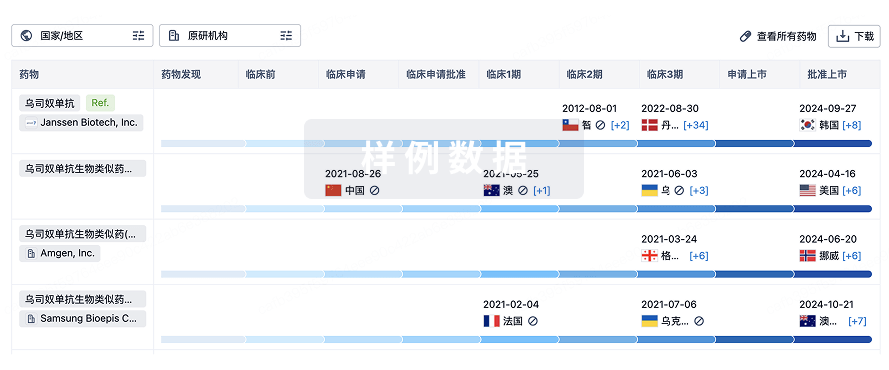
生物类似药
生物类似药在不同国家/地区的竞争态势。请注意临床1/2期并入临床2期,临床2/3期并入临床3期
登录
或
特殊审评
只需点击几下即可了解关键药物信息。
登录
或

提出任何生物医药研究问题
让每一步生物医药决策都精准制胜
基于十亿级生物数据与全球情报的精准 AI,赋能早期药物发现
立即开始免费试用!
智慧芽新药情报库是智慧芽专为生命科学人士构建的基于AI的创新药情报平台,助您全方位提升您的研发与决策效率。
立即接入生物医药数据包
智慧芽新药库数据也通过智慧芽开放平台,以MCP或API服务形式对外开放。立即使用我们的MCP服务定制您的LLM智能体。
生物序列数据库
生物药研发创新
免费使用
化学结构数据库
小分子化药研发创新
免费使用