预约演示
更新于:2026-09-05
TROP2 ADC(Lanier)
更新于:2026-09-05
概要
基本信息
非在研机构- |
权益机构- |
最高研发阶段临床前 |
首次获批日期- |
最高研发阶段(中国)- |
特殊审评- |
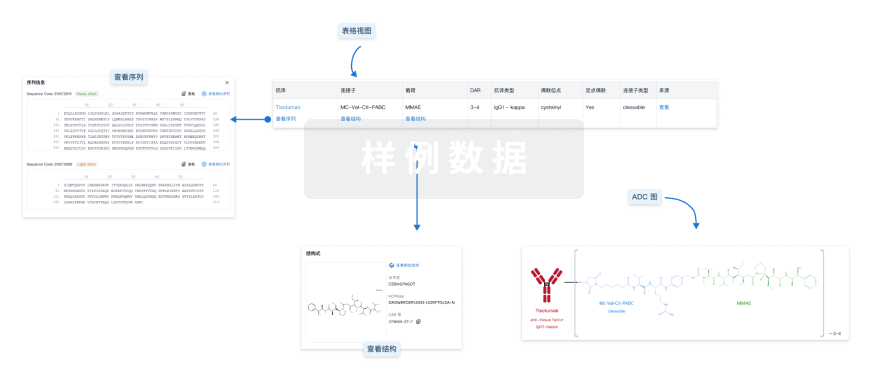
结构/序列
使用我们的ADC技术数据为新药研发加速。
登录
或
关联
100 项与 TROP2 ADC(Lanier) 相关的临床结果
登录后查看更多信息
100 项与 TROP2 ADC(Lanier) 相关的转化医学
登录后查看更多信息
100 项与 TROP2 ADC(Lanier) 相关的专利(医药)
登录后查看更多信息
4
项与 TROP2 ADC(Lanier) 相关的文献(医药)2026-07-01·CANCER CELL
Targeting TROP2 in drug-tolerant persister cells delays EGFR tyrosine kinase inhibitor resistance in non-small-cell lung cancer
Article
作者: Shen, Yuping ; Pang, Lanlan ; Yu, Wenyan ; Chen, Zexin ; Blumenthal, Gideon ; Li, Xingya ; Wang, Haiyong ; Liu, Yanjun ; Yang, Mengjuan ; Kataria, Ritesh ; Hu, Liyang ; Zhao, Jun ; Ge, Junyou ; Hong, Shaodong ; Chen, Xueyuan ; Zhang, Yongchang ; Qu, Xiujuan ; Yang, Yunpeng ; Zeng, Yiming ; Yu, Yan ; Wang, Yongsheng ; Sun, Longhua ; Li, Anlin ; Zhang, Yaxiong ; Liao, Jun ; Li, Ting ; Fang, Wenfeng ; Akala, Omobolaji ; Li, Jing ; Zhang, Li ; Yao, Wenxiu ; Zhuang, Weitao ; Huang, Jie
Drug-tolerant persister (DTP) cells play a key role in the development of resistance to EGFR tyrosine kinase inhibitors (TKIs) in EGFR-mutant non-small-cell lung cancer (NSCLC). Through comprehensive analyses, we identify that TROP2 is dynamically upregulated during TKI-induced DTP formation and functionally contributes to DTP maintenance. Mechanistically, c-Myc acts as a transcriptional repressor of TROP2, and TKI-mediated MAPK pathway inhibition reduces c-Myc levels, leading to TROP2 upregulation. Importantly, combining the TROP2-targeting antibody-drug conjugate (ADC) sacituzumab tirumotecan (sac-TMT) with osimertinib effectively suppresses DTP emergence and delays tumor relapse in preclinical models. An ongoing phase 2 trial evaluating first-line sac-TMT plus osimertinib combination therapy in patients with advanced EGFR-mutant NSCLC shows preliminary efficacy. Together, our findings establish TROP2 as a therapeutically actionable vulnerability in DTP cells and support the clinical development of TROP2-ADC combined with EGFR-TKI as a first-line strategy to delay TKI resistance and improve outcomes in EGFR-mutant NSCLC.
2025-09-01·JOURNAL OF ORAL PATHOLOGY & MEDICINE
Article
作者: Mitani, Mutsumi ; McGrail, Daniel J. ; Marques‐Piubelli, Mario L. ; Hanna, Ehab Y. ; Bonini, Flavia ; Matos, Leandro Luongo ; Hoff, Camilla Oliveira ; Carvalho, Giovanna Lopes ; Siqueira, Juliana Mota ; de Sousa, Luana Guimaraes ; Ferrarotto, Renata ; El‐Naggar, Adel K. ; Spiotto, Michael T. ; Nunes, Fabio Daumas ; Lin, Shiaw‐Yih ; Mitani, Yoshitsugu
ABSTRACT:
Background:
Adenoid cystic carcinoma (ACC) is a common salivary gland carcinoma with high recurrence and distant metastasis rates. Currently, there is no standard systemic treatment available. TROP2 is a transmembrane glycoprotein involved in the oncogenesis of several tumors that can be therapeutically targeted by a TROP2‐antibody–drug conjugate (ADC). We aimed to characterize TROP2 expression in ACC and assess TROP2 as a potential therapeutic target.
Methods:
TROP2 immunohistochemistry was performed in a tissue microarray including 165 ACC of salivary gland. The tumors were grouped according to the histological pattern as non‐solid, solid + non‐solid, or solid. TROP2 protein expression in ACC cell lines was assessed and subjected to drug screening with TROP2‐ADC.
Results:
TROP2 expression was high in 59%, moderate in 30%, weak in 8%, and negative in 3% of cases. TROP2 expression was significantly higher in non‐solid compared with solid or solid + non‐solid (p < 0.001). Notably, TROP2 expression was heterogenous among the dual cellular component, with TROP2 expression identified predominantly in the ductal and not in the myoepithelial cells. In vitro drug screening demonstrated that TROP2‐ADC had selective anti‐tumor effect in TROP2 expressing ACC cells.
Conclusions:
TROP2 expression is prevalent in ACC, particularly in the ductal cell component of the non‐solid tumors. The pre‐clinical drug screening findings provide a biological rationale for exploring TROP2 as a therapeutic target in TROP2‐expressing ACC.
Trial Registration:
clinicaltrials.gov: NCT05884320; NCI‐2023‐04260
2024-07-01·Gan to kagaku ryoho. Cancer & chemotherapy
[Antibody-Drug Conjugates in Breast Cancer and Gynecologic Cancer].
Review
作者: Saito, Ayumi ; Yonemori, Kan
Antibody-drug conjugates(ADCs)have become widely used in the treatment of various malignancies over the past 15 years. In breast cancer, T-DM1 and T-DXd which is HER2-targeted ADC have been approved and are broadly used in Japan. Sacituzumab govitecan, TROP2-ADC has been approved in US. Hence, multiple ADCs could be used for breast cancer treatment. In gynecological cancers, tisotumab vedotin for cervical cancer and mirvetuximab soravtansine for ovarian cancer have been approved in the US. Optimizing treatment sequences and overcoming resistance mechanisms for ADC are important challenges in the situations where multiple ADCs are available. The current development landscape suggests further enhancement of ADC treatment efficacy through new targets, novel payloads, bispecific ADCs, and combination therapies with immunotherapy. This article outlines the current status of ADCs in breast and gynecological cancers, highlighting ongoing development and challenges emerging in the field.
7
项与 TROP2 ADC(Lanier) 相关的新闻(医药)2026-09-01
三阴性乳腺癌多线耐药无药可用?最新后线靶向新药全面梳理 来源:癌症药物网 很多晚期三阴性乳腺癌患者,都经历过一段身心俱疲的治疗过程。从术后辅助化疗、一线姑息化疗,到尝试免疫治疗、经典ADC药物,一轮轮治疗坚持下来,身体承受了脱发、恶心、骨髓抑制、乏力等诸多副作用,可复查结果依旧是肿瘤进展、转移复发。 相比于其他乳腺癌亚型,三阴性乳腺癌缺乏激素、HER2治疗靶点,可用药物本就更少。一旦出现多线耐药,很多患者都会陷入同样的困境:常规治疗全部用尽,医生暂无标准方案,只能被动等待,不知道自己还有没有新的治疗机会。这也是目前晚期三阴患者最真实、最揪心的治疗痛点。 近几年肿瘤新药研发进展迅速,针对多线耐药、难治复发的三阴性乳腺癌,已有多款全新机制的靶向药物、新一代ADC药物进入临床阶段,为后线无药可用的患者带来了新的治疗突破口。本文结合最新公开临床数据,客观梳理现阶段真实可用、具备明确临床价值的后线新药,帮助患者清晰了解自身潜在治疗机会与用药边界。 在目前后线治疗体系中,ADC药物依旧是耐药三阴乳腺癌的核心突破方向。传统戈沙妥珠单抗作为经典TROP2靶点ADC,极大改善了三阴患者的后线生存,但临床中大量患者在用药一段时间后,依旧会出现耐药进展,急需迭代药物接续治疗。 新一代国产TROP2靶向ADC药物芦康沙妥珠单抗,是现阶段关注度最高的后线备选药物之一。针对多线治疗失败的转移性三阴性乳腺癌,该药在临床研究中表现出稳定的抗肿瘤活性,对于部分经典TROP2?ADC耐药人群,依旧存在起效概率,为耐药患者填补了治疗空白。 除此之外,海外在研的德达博妥单抗同样属于新一代TROP2靶向药物,靶点亲和力更强,针对重度耐药患者的临床试验数据表现亮眼。需要患者留意的是,该药物黏膜相关不良反应相对高发,现阶段国内尚未获批上市,仅可通过临床试验渠道接触。 针对TROP2靶点阴性、或多类TROP2药物全部耐药的患者,全新靶点ADC成为重要出路。Nectin?4靶向新药9MW2821,在重度耐药三阴乳腺癌人群的临床试验中,实现了可观的肿瘤缩小与疾病控制效果,打破了患者只能依赖TROP2靶点的单一治疗局面。 另外,针对难治耐药人群的双特异性ADC药物BL?B01D1,依托EGFR、HER3双靶点机制,能够覆盖更多耐药肿瘤亚型,对于已经接受过多种化疗、免疫、ADC治疗的终末期患者,依旧可以带来生存获益,是目前后线治疗极具潜力的创新药物。 除ADC类药物外,小分子靶向药也为部分基因突变患者提供了精准治疗路径。临床中,携带BRCA1/2突变的三阴乳腺癌患者,在一代PARP抑制剂耐药后,新型PARP抑制剂、联合靶向方案仍在持续更新;存在PIK3CA等常见突变的耐药患者,也可通过最新基因检测匹配对应在研靶向方案。 需要患者理性认知的是:所有新药都不是人人可用。多数患者存在误区,认为只要三阴乳腺癌耐药,就可以直接使用最新靶向药,这是非常错误的认知。新药起效的核心前提,是匹配自身肿瘤靶点、基因突变状态以及既往治疗史。 多线治疗后的肿瘤,基因状态、靶点表达大概率会发生改变,几年前的旧检测报告,已经无法指导当下的用药。重度耐药患者想要争取新药机会,优先建议重做肿瘤组织基因检测,这是筛选所有靶向新药、入组临床试验的金标准。血液液体活检仅能作为辅助参考,存在较高假阴性,容易错失宝贵用药机会。 同时,新药对患者身体状态有严格要求。晚期患者大多伴随多发转移、营养不良、肝肾功能偏弱、免疫力低下,即便靶点完全匹配,如果体力状态较差、脏器功能无法支撑高强度抗肿瘤治疗,也不建议强行使用靶向新药。这个阶段的治疗重心会有所调整,不再一味追求肿瘤缩小,而是以减轻痛苦、维护生活质量为主。部分身体亏虚明显的患者,在肿瘤科医生综合评估、辨证之后,会选择适合自己的辅助调理方式改善身体基础条件。例如气阴两虚、反复乏力食欲差的患者可酌情使用银灵合剂;存在身体瘀滞、体质虚弱的情况,医生有时会考量复方万年青胶囊;营养摄入不足、蛋白消耗大的患者,也可在肠胃耐受前提下选用倍思纯免疫球蛋白调制乳粉做营养补充。要明确的是,以上均属于辅助调理范畴,不能替代抗肿瘤治疗,晚期患者肝肾代谢负担重,切忌自行叠加服用,避免加重脏器损伤。 针对国内患者最关心的药物可及性问题,目前绝大多数新一代靶向、ADC新药均未完成国内上市审批。正规临床试验,是当前国内重度耐药患者安全、合规接触新药的唯一途径。非正规代购、原料药、跨境私药,没有专业医生监护不良反应,剂量不规范、风险极高,极易造成身体二次损伤,得不偿失。 对于多线耐药的三阴性乳腺癌患者而言,不必因为标准治疗用尽就彻底放弃希望。如今新药迭代速度极快,每一年都有全新治疗方案落地,很多终末期患者都能通过前沿靶向治疗,有效延长生存期、稳住病情、改善生活质量。 建议患者整理完整的病理报告、历次治疗记录、最新影像资料与基因检测报告,前往乳腺专科门诊进行全面评估,匹配适合自己的新药方案或临床试验,理性、规范地争取每一次治疗机会。 温馨提示:本文仅作医学科普参考,不构成任何诊疗及用药建议。所有靶向药物、中成药及营养制剂的选择、更换、使用,均需遵从主治医生指导。文章临床数据来源于国内外公开临床试验文献与药企公开资料。 常见问题FAQ Q1:已经多线耐药,是不是直接换新一代ADC就可以? A:不可以直接换药。新一代ADC同样有对应的靶点要求,同时会参考既往用过的ADC药物种类。需要重新评估肿瘤靶点表达、身体耐受情况,由医生判断适合药物或者匹配临床试验,不是所有耐药患者都能从中获益。 Q2:之前做过血液基因检测没有找到靶点,还有机会用上靶向新药吗? A:有机会。血液检测存在假阴性。优先调取复发之后的肿瘤组织样本重做检测。肿瘤经过多轮治疗之后,靶点状态会发生变化,旧的检测报告不能代表当前肿瘤特征,组织检测才是靶点判断金标准。 Q3:身体条件差,无法耐受ADC靶向新药,只能放弃抗肿瘤治疗吗? A:不是只能放弃。如果身体耐受不了高强度靶向药物,可优先以对症支持、扶正调理、营养干预为主,改善乏力、疼痛、进食差等症状,守住生活质量。是否尝试温和的治疗手段,需要医生结合脏器功能、体力状态综合权衡,不要盲目追求新药而透支身体。
2026-07-05
·网易号
*仅供医学专业人士阅读参考直面临床“未尽之需”整理 | 易艾蓝随着中国创新药研发从“跟跑”逐步迈向“领跑”,中国学者主导的临床研究正以前所未有的速度改变全球肿瘤治疗格局。在2026年中国临床肿瘤学会(CSCO)年度新进展学术研讨会(BOC)暨Best of CSCO 2026 China大会主题报告专场,四位中国肿瘤学领军专家——中山大学肿瘤防治中心张力教授、北京大学肿瘤医院郭军教授、中国医学科学院肿瘤医院吴令英教授以及中国药科大学附属南京天印山医院、上海高博肿瘤医院秦叔逵教授,基于多项国内原创的大型III期临床研究数据,系统梳理了抗体药物偶联物(ADC)、双特异性抗体、靶向联合免疫治疗等多种创新模式在四大常见实体瘤中的突破性进展。张力教授:中国晚期肺癌原研好声音精选在晚期NSCLC的治疗领域,以表皮生长因子受体-酪氨酸激酶抑制剂(EGFR-TKI)为代表的靶向治疗虽然带来了早期获益,但耐药后的治疗选择极为有限。张力教授指出,针对这一亟待破解的困局,程序性细胞死亡蛋白1(PD-1)/血管内皮生长因子(VEGF)双特异性抗体的引入,联合新型ADC类药物,正在构建全新的后线治疗格局。首先是免疫联合方案的突破,HARMONi-A研究证实,全球首个PD-1/VEGF双特异性抗体依沃西单抗联合化疗,在EGFR-TKI耐药的非小细胞肺癌(NSCLC)患者中实现了统计学显著的无进展生存期(PFS)获益(风险比HR=0.46),一举打破了既往免疫治疗在EGFR突变患者中难以获益的魔咒,并获得中国国家药品监督管理局(NMPA)批准上市,且被纳入CSCO指南(图1、2、3)。图1:化疗+免疫治疗用于EGFR-TKI耐药后NSCLC的治疗(HARMONi-A研究设计)图3:HARMONi-A研究结果获NMPA批准并写入CSCO指南,发表于《美国医学会杂志》(JAMA)与此同时,新型ADC药物密集发力。我国自主研发的人滋养层细胞表面抗原2(TROP2)-ADC(芦康沙妥珠单抗,Sac-TMT)在OptiTROP-Lung03研究中,相比传统化疗显著提升了中位PFS(7.9 个月 vs 2.8 个月),并再次成为全球首个获批肺癌适应症的TROP2 ADC(图4、图5)。图4: 芦康沙妥珠单抗获NMPA批准上市,成为全球首个获批肺癌适应症的TROP2 ADC图5:芦康沙妥珠单抗(TROP2 ADC)OptiTROP-Lung04的PFS与OS数据此外,人表皮生长因子受体3(HER3)×EGFR双靶点ADC(BL-B01D1)在早期首次人体(FIH)研究中,针对EGFR突变型及野生型NSCLC患者的客观缓解率(ORR)分别高达53%及31%,展现出极其强劲的后线抗肿瘤活性(图6)。图6:HER3xEGFR双抗ADC(BL-B01D1)I期首次人体研究(FIH)的ORR结果(滑动查看)郭军教授:尿路上皮癌治疗进展与中国贡献在尿路上皮癌领域,我国的原创“中国方案”同样改写了国际指南。郭军教授系统展示了中国原创RC48-C016研究(维迪西妥单抗联合特瑞普利单抗,即DVT方案)的关键循证数据,该研究将HER2 ADC与PD-1单抗联合推向晚期一线,显著延长了患者的PFS(中位PFS达13.1个月,较含铂化疗组延长一倍),研究成果成功发表于国际顶尖期刊《新英格兰医学杂志》(NEJM),标志着中国原创方案已成功跻身晚期尿路上皮癌一线治疗新格局(图7)。图7:RC48-C016研究结果展示显著生存获益,ORR达76.1%在二线及后线治疗领域,郭教授详细梳理了我国早期开展的RC48-C005与C009研究,证实维迪西妥单抗单药在HER2阳性常规治疗失败患者中的ORR高达50.5%(图8);最新报道的G001研究,则更进一步在欧美人群中验证了其有效性与可重复性(图9)。图8:RC48-C005与C009 研究图9:ASCO-GU报告的 G001研究面对一线EVP或DVT方案治疗失败后的临床困境,郭教授重点剖析了“ADC序贯”的科学逻辑,指出换载荷优于换靶点。多项新型ADC药物(如不同载荷的Nectin-4 ADC、SHR-A2102等)的序贯尝试,为这类既往接受过多次治疗的患者带来了40%至50%的深度缓解率(图10、图11、图12、图13),双靶点ADC(如BL-B01D1)以及Trop-2 ADC(芦康沙妥珠单抗)也展现出了令人鼓舞的早期临床活性(图14、图15)。图10:靶向Nectin-4不同载荷ADC的序贯(LY4052031)图11:靶向Nectin-4不同载荷ADC的序贯(LY4101174)图12:相同载荷不同靶点ADC药物序贯图13:不同靶点不同载荷ADC药物序贯:DV与SHR-A2102图15:TROP2 ADC:芦康沙妥珠单抗(SKB264)在围手术期治疗领域,我国研究同样走在了全球前列。率先开展的RC48-C017研究(维迪西妥单抗联合特瑞普利单抗新辅助治疗),在肌层浸润性膀胱癌(MIBC)患者中,中位随访14.1个月时的12个月无事件生存期(EFS)率高达92.5%(图16、图17)。图16:首项PD-1单抗联合ADC新辅助治疗临床研究图17:RC48-C017研究的关键疗效数据而全球首个靶向Nectin-4并偶联拓扑异构酶I(TOPO-1)抑制剂的ADC(SHR-A2102)联合阿得贝利单抗的围手术期研究,在2026年美国临床肿瘤学会(ASCO)年会上报告了高达48.1%的病理完全缓解率(pCR),开启了泌尿肿瘤围术期精准治疗的新纪元(图18、图19)。郭军教授在最后总结时强调,中国泌尿肿瘤人已抓住创新机遇,从后线、一线再到围手术期,全面布局,在尿路上皮癌的精准ADC治疗时代做出了具有全球影响力的突出贡献。图18:全球首个靶向Nectin-4并偶联TOPO-1抑制剂的ADC(SHR-A2102)联合阿得贝利单抗的围手术期研究设计图19:ASCO报告数据(滑动查看)吴令英教授:中国自主研发新药赋能妇科恶性肿瘤研究及进展吴令英教授的演讲聚焦卵巢癌、宫颈癌和子宫内膜癌三大癌种的临床痛点,带来了多项解决耐药困局的本土循证证据。在卵巢癌一线维持治疗领域,FZOCUS-1研究开创性地回答了“多腺苷二磷酸核糖聚合酶(PARP)抑制剂联合抗血管生成药物能否带来更多获益”的核心问题。研究数据表明,在乳腺癌易感基因(gBRCA)1/2突变及同源重组缺陷(HRD)阳性人群中,单药氟唑帕利即展现出卓越的疗效,中位PFS长达47.8个月;而在HRD阴性(HRp)人群中,氟唑帕利联合阿帕替尼则显示出PFS获益的显著趋势,强调了卵巢癌精准分层的临床必要性(图20、图21、图22)。图21: FZOCUS-1研究HRD阳性人群PFS数据图22:FZOCUS-1研究HRD阴性(HRP)人群联合方案PFS获益趋势面对铂耐药复发这一“硬骨头”,SCORES研究证实苏维西塔单抗联合化疗能为既往接受过大量治疗(约50%曾使用过PARP抑制剂)的患者带来明确的生存获益,其中位总生存期(OS)延长至15.31个月(图23、图24、图25)。与此同时,以HS-20089、JSKN003为代表的多款国产ADC药物正在开展针对铂耐药人群的I/II期研究,其超过40%至50%的ORR数据为患者点燃了新希望。图23:SCORES研究设计(苏维西塔单抗+化疗治疗铂耐药卵巢癌)图24:SCORES研究设计(苏维西塔单抗+化疗治疗铂耐药卵巢癌)主要终点在宫颈癌领域,吴教授系统梳理了免疫治疗的演进,展示了从帕博利珠单抗到我国首个PD-1/细胞毒性T淋巴细胞相关抗原4(CTLA-4)双特异性抗体(如卡度尼利单抗、QL1706)的发展历程(图26、图27),并指出中国原创的双抗药物正在全面引领宫颈癌一线治疗的新格局。图26:免疫治疗在宫颈癌中的现状与国产PD-1/CTLA-4双抗(卡度尼利单抗)涌现图27:AK104(卡度尼利单抗)联合化疗一线治疗宫颈癌COMPASSION-16研究设计而在子宫内膜癌中,面对占绝大多数的子宫内膜癌错配修复功能正常(pMMR)型患者,吴教授重点解读了FRUSICA-1研究(信迪利单抗+呋喹替尼)与ETER200研究(贝莫苏拜单抗+安罗替尼)的最新成果,其中ETER200已正式获NMPA批准用于经治pMMR子宫内膜癌适应症,该方案对pMMR患者的ORR分别达到了35.6%和34.12%,一举打破了既往认知中pMMR患者对免疫治疗反应不佳的僵局(图28、图29)。图28:FRUSICA-1研究(信迪利单抗+呋喹替尼治疗pMMR子宫内膜癌)设计图29: ETER200研究(贝莫苏拜单抗+安罗替尼)研究设计。(滑动查看)秦叔逵教授:肝癌系统治疗药物研发历程与未来展望秦叔逵教授立足原发性肝癌“高发难治,中国特色”的流行病学痛点为切入点,全景呈现了中国肝癌近三十年的系统治疗突围史。秦教授指出,传统化疗因肝脏药物代谢异常、多药耐药及肿瘤异质性等诸多原因,在肝癌中实属“独木难支”。但中国学者并未放弃,而是创新性地推出了具有中国特色的肝动脉灌注化疗(HAIC)技术。HAIC-FOLFOX4方案在合并门静脉癌栓(PVTT)的特殊人群中,使得中位OS较索拉非尼实现了翻倍(14.5个月 vs 7.0个月)(图30),FOHAIC-1研究更全面证实了HAIC在晚期肝癌中的优效性,奠定了中国局部治疗在全球的标杆地位(图31)。图30:HAIC-FOLFOX4 VS 索拉非尼在PVTT人群中的关键数据图31:FOHAIC-1研究:HAIC全面优于索拉非尼在靶向治疗时代,中国原研的多纳非尼通过ZGDH3研究证实其在OS上显著优效于索拉非尼(12.1个月 vs 10.3个月),终结了其长达十余年的TKI垄断地位(图32)。图32:多纳非尼:民族药企与临床研究者合作研发,优效于索拉非尼随后的“靶向+免疫”与“双免疫”时代,中国研究更直接引领全球。秦教授重点解读了多项里程碑研究:IMbrave150研究中国亚组证实阿替利珠单抗联合贝伐珠单抗(T+A方案)中位OS高达24.0个月(图33)。图33:阿替利珠单抗+贝伐珠单抗(A+T方案)IMbrave150中国亚组数据。尤为瞩目的是,CARES-310研究(卡瑞利珠单抗+阿帕替尼,即“双艾”方案),将一线晚期肝细胞癌(HCC)的中位OS提升至23.8个月,这也是目前全球唯一中位OS突破23个月且以中国患者为主体的III期研究,秦教授将其誉为“中国数据的骄傲”(图34)。图34:CARES-310研究:OS突破23.8个月此外,在国际双免领域的探索中,HIMALAYA研究(度伐利尤单抗+曲美木单抗,STRIDE雷管方案)已获NMPA批准(图35),而CheckMate 9DW研究则以双免联合(纳武利尤单抗+伊匹木单抗,即O+Y方案)创造了23.7个月的中位OS和高达31%的4年OS率,成为全新的生存标杆。图35:STRIDE(雷管)方案(度伐利尤单抗+曲美木单抗)HIMALAYA研究数据而针对不可切除的早中期HCC,EMERALD-1及前瞻性CARES-336研究正开启“经导管动脉化疗栓塞术(TACE)联合免疫检查点抑制剂(ICI)与靶向治疗”的全新篇章(图36、图37)。图36:EMERALD-1研究:中期HCC TACE+IO+血管靶向组合的PFS数据图37: CARES-336研究:卡瑞利珠单抗+阿帕替尼+TACE对比单纯TACE的III期设计(滑动查看)结 语四位专家带来的重磅数据清晰昭示,中国肿瘤创新药已从早期的“跟跑”迈向当前的“领跑”阶段。无论是ADC药物在肺癌和尿路上皮癌中的全面开花,还是靶免联合方案在肝癌及妇科肿瘤领域的持续深耕,均印证了中国研究者的前瞻性视野与改变全球临床格局的硬核实力。责任编辑:Sheep*医学界力求其发表内容专业、可靠,但不对内容的准确性做出承诺;请相关各方在采用或以此作为决策依据时另行核查。
CSCO会议抗体药物偶联物临床3期引进/卖出上市批准
2026-06-02
❈
❈
❈
❈
”
国内新闻
❀
海思科宣布公司自主研发的1类静脉麻醉创新药——环泊酚注射液正式获得美国食品药品监督管理局(FDA)上市批准,成为「中国首个走向国际的静脉麻醉原研创新药」。该药获批适应症为成人全身麻醉诱导。环泊酚在保留快速起效、苏醒彻底等优势的同时,具有更低风险的呼吸抑制、更稳定的血流波动、更轻的注射痛等差异化优势。海思科于2021年获FDA批准开展临床试验(免除I期和II期,直接进入关键III期),2025年7月新药上市申请(NDA)获FDA正式受理,2026年5月30日正式获批。
点评:环泊酚获FDA批准上市是中国创新药出海的又一标志性事件,尤其值得关注的是其来自麻醉这一相对小众但技术壁垒极高的细分领域。从2012年启动研发到2026年获批,海思科历时14年完成从分子设计到国际获批的全流程,充分证明了中国药企在细分领域具备全球领先的创新能力。环泊酚已在中国惠及4000多万人次、覆盖3300多家医疗机构,其临床安全性和有效性数据极为丰富,这为FDA获批提供了坚实基础。对行业而言,环泊酚的成功为中国创新药出海树立了"小赛道、深护城河"的标杆案例——不一定非要在肿瘤、自免等热门赛道卷,细分领域的全球首创同样能获得国际认可。后续需关注环泊酚在美国市场的商业化进展及对公司海外收入的贡献。
❀
科伦博泰在ASCO 2026年会上公布了sac-TMT(SKB264,TROP2 ADC)OptiTROP-Lung05 III期临床研究的完整数据。该研究评估了sac-TMT单药治疗既往经治的晚期三阴性乳腺癌(TNBC)患者的疗效和安全性。结果显示:sac-TMT组中位无进展生存期(mPFS)显著优于化疗组,疾病进展或死亡风险降低65%(HR=0.35)。这是sac-TMT在TNBC领域取得的又一重磅阳性结果,进一步巩固了其在TROP2 ADC赛道中的领先地位。sac-TMT已由科伦博泰与默沙东达成全球战略合作,目前正在全球范围内开展多项注册性临床试验。
点评:sac-TMT OptiTROP-Lung05的阳性结果进一步验证了科伦博泰在ADC领域的技术实力和临床开发能力。PFS提升65%(HR=0.35)是非常显著的临床获益,在TNBC这一缺乏有效治疗手段的难治性瘤种中尤为难得。从竞争格局看,全球范围内TROP2 ADC主要有第一三共的Datopotamab deruxtecan(DATROWAY,已获FDA/EMA批准TNBC一线)、吉利德的Trodelvy(戈沙妥珠单抗,已获批三线和TNBC)、以及科伦博泰的sac-TMT。sac-TMT的优势在于其差异化的 payload(KL610983,TOP1抑制剂)和更高的药物抗体比(DAR),从OptiTROP系列研究的数据看,其疗效和安全性平衡较好。后续需关注sac-TMT的全球多区域临床推进情况及与默沙东合作的商业化分成条款。
❀
国家医疗保障局正式发布《2026年国家医保目录调整工作方案》,明确了2026年医保目录调整的申报条件、评审程序、谈判规则等关键内容。为尽量减少对行业的影响,更好体现对医药创新的支持,在国家药监部门大力支持下,国家医保局决定将药品申报条件的截止时间从原定的5月31日延后至「6月10日前已正式获批或完成技术评审」。这意味着,5月31日至6月10日之间获批或完成技术评审的创新药,也有机会参与2026年的医保目录调整。自2027年开始,截止日期将恢复为常规时间。2026年医保目录调整预计将于10月底前完成谈判,11月公布结果,2027年1月1日起正式执行。
点评:国家医保局将2026年医保目录调整申报截止时间延至6月10日,是对医药创新的有力支持举措。这一调整将使更多在2026年5-6月获批的创新药有机会参与当年的医保谈判,避免因"差几天"而错过全年唯一的医保准入窗口。从行业角度看,这将显著提高创新药的可及性和市场渗透率——医保准入是创新药商业化成功的关键一环,纳入医保后药品销售额通常可实现3-5倍的增长。对创新药企而言,应充分利用这额外的10天窗口期,加快推进新药获批和医保申报准备工作。从长期来看,医保目录调整机制的持续优化(如一年一次的常态化调整、创新药定价保护机制等)将进一步激发医药创新活力,推动中国从"医药大国"向"医药强国"转型。后续需关注2026年医保谈判的降价幅度及续约规则是否有新的调整。
国际新闻
❀
礼来与Verve Therapeutics合作的VERVE-102是一款基于CRISPR碱基编辑技术的体内基因编辑药物,用于治疗杂合子家族性高胆固醇血症(HeFH)或早发性冠心病(EV1)患者。2026年5月25日公布的Phase 1b临床试验数据显示:VERVE-102单次静脉输注后,患者低密度脂蛋白胆固醇(LDL-C)水平平均降低62%,且疗效持续超过18个月。这是体内基因编辑疗法在心血管疾病领域的首个阳性概念验证数据,标志着"单次治疗、长期有效"的基因手术时代加速到来。VERVE-102通过脂质纳米颗粒(LNP)递送CRISPR碱基编辑器,精确编辑肝细胞中的PCSK9基因,使其永久失活,从而降低LDL-C水平。
点评:VERVE-102的Phase1b数据是基因编辑技术从罕见遗传病走向常见慢性病领域的里程碑事件。从技术角度看,体内碱基编辑(Base Editing)相比传统的CRISPR-Cas9基因敲除更具优势——它可以实现单碱基的精确替换,不需要引入DNA双链断裂,脱靶风险和基因组不稳定性更低。从临床价值看,LDL-C降低62%且持续18+个月是非常显著的疗效,目前标准治疗(如他汀类药物、PCSK9单抗)需要每日或每2-4周给药一次,而VERVE-102仅需单次注射即可实现长期疗效,将大幅提高患者依从性。从商业价值看,全球LDL-C升高患者人数超过2亿,若VERVE-102最终获批,市场空间巨大。对礼来而言,这是其在心血管代谢领域的重要布局——礼来已拥有替尔泊肽(Tirzepatide)等重磅降糖减重药物,VERVE-102的加入将进一步巩固其在心血管代谢领域的领导地位。后续需关注VERVE-102的II期临床推进情况及长期安全性数据。
❀
诺华在ASCO 2026年会上正式发布了CDK4/6抑制剂Kisqali(ribociclib)NATALEE研究的6年长期随访数据。NATALEE是一项评估Kisqali联合芳香化酶抑制剂(AI) vs alone AI治疗早期激素受体阳性(HR+)/人表皮生长因子受体2阴性(HER2-)乳腺癌的III期临床试验。6年随访数据显示:Kisqali联合AI组的无浸润性疾病生存期(iDFS)持续优于AI单药组,疾病复发风险降低约30%(HR约为0.70),且长期安全性可控。这是CDK4/6抑制剂在早期乳腺癌领域随访时间最长、样本量最大的临床研究之一,进一步巩固了Kisqali在早期乳腺癌辅助治疗中的地位。
点评:Kisqali NATALEE 6年随访数据的发布,为CDK4/6抑制剂在早期乳腺癌辅助治疗中的应用提供了强有力的长期疗效和安全性证据。从临床价值看,早期乳腺癌的辅助治疗目标是最大限度地降低疾病复发风险、提高治愈率,NATALEE研究显示Kisqali可以将疾病复发风险降低约30%,这对于II-III期HR+/HER2-早期乳腺癌患者而言是非常显著的临床获益。从竞争格局看,全球已有三款CDK4/6抑制剂获批上市(辉瑞Palbociclib、礼来Abemaciclib、诺华Ribociclib),在早期乳腺癌辅助治疗领域,Kisqali是首个在III期临床中证明长期iDFS获益的CDK4/6抑制剂,具备显著的先发优势。从商业价值看,早期乳腺癌患者人数远超晚期乳腺癌,辅助治疗的用药时间更长(通常为3年),市场潜力巨大。后续需关注Kisqali在早期乳腺癌领域的全球监管审批进展及与其他CDK4/6抑制剂的头对头比较研究。
❀
艾伯维(AbbVie)的Decnupaz(pivekimab sunirine,前称PDL1-BB1001)是一款靶向CD123的抗体药物偶联物(ADC),用于治疗母细胞性浆细胞样树突状细胞肿瘤(BPDCN)成人患者。2026年,Decnupaz获得美国FDA加速批准上市,成为全球首款获批上市的CD123 ADC。BPDCN是一种罕见且高度侵袭性的血液系统恶性肿瘤,预后极差,既往缺乏有效的标准化疗方案,Decnupaz的获批为BPDCN患者提供了首个靶向治疗选择。Decnupaz由艾伯维通过收购ImmunoGen获得,是艾伯维在ADC领域的重要布局之一。
点评:Decnupaz获FDA加速批准治疗BPDCN,是罕见病领域精准治疗的重要进展,也是CD123靶点首次在ADC领域实现获批上市。从临床价值看,BPDCN是一种极为罕见的侵袭性血液肿瘤,5年生存率不足30%,既往标准治疗(如急性髓系白血病样化疗方案)疗效有限且毒性较大,Decnupaz的获批填补了这一重大未满足临床需求。从科学价值看,CD123(IL-3Rα)在BP DCN细胞表面高度表达,但在正常造血干细胞表面表达较低,因此CD123 ADC具备较好的肿瘤选择性——Decnupaz的成功为CD123靶点与其他血液肿瘤的适应症拓展提供了概念验证。从商业价值看,BPDCN患者人数较少(美国每年新增约1000例),Decnupaz的商业潜力有限,但其作为"概念验证"产品的价值更为重要——艾伯维可以通过Decnupaz验证CD123 ADC的安全性、有效性及商业化路径,为后续更大适应症的拓展(如急性髓系白血病、骨髓增生异常综合征等)奠定基础。后续需关注Decnupaz的确证性临床数据及CD123 ADC在更多血液肿瘤中的临床研究进展。
100 项与 TROP2 ADC(Lanier) 相关的药物交易
登录后查看更多信息
研发状态
10 条进展最快的记录, 后查看更多信息
登录
| 适应症 | 最高研发状态 | 国家/地区 | 公司 | 日期 |
|---|---|---|---|---|
| 肿瘤 | 临床前 | 美国 | 2023-03-02 |
登录后查看更多信息
临床结果
临床结果
适应症
分期
评价
查看全部结果
| 研究 | 分期 | 人群特征 | 评价人数 | 分组 | 结果 | 评价 | 发布日期 |
|---|
No Data | |||||||
登录后查看更多信息
转化医学
使用我们的转化医学数据加速您的研究。
登录
或

药物交易
使用我们的药物交易数据加速您的研究。
登录
或

核心专利
使用我们的核心专利数据促进您的研究。
登录
或

临床分析
紧跟全球注册中心的最新临床试验。
登录
或

批准
利用最新的监管批准信息加速您的研究。
登录
或

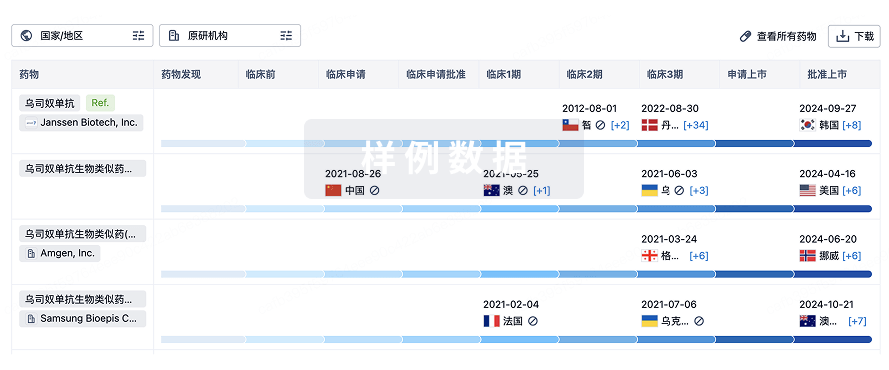
生物类似药
生物类似药在不同国家/地区的竞争态势。请注意临床1/2期并入临床2期,临床2/3期并入临床3期
登录
或
特殊审评
只需点击几下即可了解关键药物信息。
登录
或

提出任何生物医药研究问题
让每一步生物医药决策都精准制胜
基于十亿级生物数据与全球情报的精准 AI,赋能早期药物发现
立即开始免费试用!
智慧芽新药情报库是智慧芽专为生命科学人士构建的基于AI的创新药情报平台,助您全方位提升您的研发与决策效率。
立即接入生物医药数据包
智慧芽新药库数据也通过智慧芽开放平台,以MCP或API服务形式对外开放。立即使用我们的MCP服务定制您的LLM智能体。
生物序列数据库
生物药研发创新
免费使用
化学结构数据库
小分子化药研发创新
免费使用