预约演示
更新于:2025-08-11

Buffalo Neuroimaging Analysis Center
更新于:2025-08-11
概览
关联
100 项与 Buffalo Neuroimaging Analysis Center 相关的临床结果
登录后查看更多信息
0 项与 Buffalo Neuroimaging Analysis Center 相关的专利(医药)
登录后查看更多信息
43
项与 Buffalo Neuroimaging Analysis Center 相关的文献(医药)2025-09-01·MAGNETIC RESONANCE IN MEDICINE
Quantitative susceptibility mapping in magnetically inhomogeneous tissues
Article
作者: Salman, Fahad ; Dwyer, Michael G. ; Haueisen, Jens ; Bergsland, Niels ; Schweser, Ferdinand ; Zivadinov, Robert ; Jochmann, Thomas
Abstract:
Purpose:
Conventional quantitative susceptibility mapping (QSM) methods rely on simplified physical models that assume isotropic and homogeneous tissue properties, leading to artifacts and inaccuracies in biological tissues. This study aims to develop and evaluate DEEPOLE, a deep learning–based method that incorporates macroscopically nondipolar Larmor frequency shifts into QSM to enhance the quality and accuracy of susceptibility maps.
Methods:
DEEPOLE integrates the QUASAR model into a deep convolutional neural network to account for frequency contributions neglected by conventional QSM. We trained DEEPOLE using synthesized data reflecting realistic power spectrum distributions. Its performance was evaluated against traditional QSM algorithms—including deep learning QSM, QUASAR (quantitative susceptibility and residual mapping), morphology‐enabled dipole inversion (MEDI), fast nonlinear susceptibility inversion (FANSI), and superfast dipole inversion (SDI)—using realistic digital brain models with and without microstructure effects, as well as in vivo human brain data. Quantitative assessments focused on susceptibility estimation accuracy, artifact reduction, and anatomical consistency.
Results:
In digital brain models, DEEPOLE outperformed conventional QSM methods by producing susceptibility maps with fewer artifacts and greater quantitative accuracy, especially in regions affected by microstructure effects. In vivo, DEEPOLE generated more anatomically consistent susceptibility maps and mitigated artifacts such as inhomogeneities and streaking, providing improved susceptibility estimates in deep gray matter and white matter.
Conclusion:
Incorporating macroscopically nondipolar Larmor frequency shifts into QSM through DEEPOLE improves the quality and accuracy of susceptibility maps. This methodological advancement enhances the reliability of susceptibility measurements, particularly in studies of neurodegenerative and demyelinating conditions where macroscopically nondipolar contributions are substantial.
2025-04-15·HUMAN BRAIN MAPPING
Sensitivity of Quantitative Susceptibility Mapping for Clinical Research in Deep Gray Matter
Article
作者: Salman, Fahad ; Wilding, Gregory E. ; Dwyer, Michael G. ; Jochmann, Thomas ; Reeves, Jack A. ; Jakimovski, Dejan ; Zivadinov, Robert ; Prayer, Mirjam ; Cho, Junghun ; Schweser, Ferdinand ; Ramesh, Abhisri ; Bergsland, Niels ; Adegbemigun, Ademola
ABSTRACT:
Quantitative susceptibility mapping (QSM) is an advanced MRI technique for assessing iron, calcium, and myelin tissue levels based on magnetic susceptibility. QSM consists of multiple processing steps, with various choices for each step. While QSM is increasingly applied in neurodegenerative disease research, its reproducibility and sensitivity in detecting susceptibility changes across groups or over time, which underpin the interpretation of clinical outcomes, have not been thoroughly quantified. This study aimed to evaluate how choices in background field removal (BFR), dipole inversion algorithms, and anatomical referencing impact the detection of changes in deep gray matter susceptibility. We used aging‐related changes in brain iron, established in earlier foundational studies, as a surrogate model to test the sensitivity and reproducibility of 378 different QSM pipelines toward the detection of longitudinal susceptibility changes in a clinical setting. We used 10‐year follow‐up data and scan‐rescan data of healthy adults scanned at 3T. Our results demonstrated high variability in the sensitivity of QSM pipelines toward detecting susceptibility changes. While most pipelines detected the same over‐time changes, the choice of the BFR algorithm and the referencing strategy influenced reproducibility error and sensitivity substantially. Notably, pipelines using RESHARP with AMP‐PE, HEIDI, or LSQR inversion showed the highest overall sensitivity. The findings suggest a strong impact of algorithmic choices in QSM processing on the ability to detect physiological changes in the brain. Careful consideration should be given to the pipeline configuration for reliable clinical outcomes.
2024-05-01·Magnetic resonance in medicine
Recommended implementation of quantitative susceptibility mapping for clinical research in the brain: A consensus of the ISMRM electro‐magnetic tissue properties study group
Article
作者: Langkammer, Christian ; Milovic, Carlos ; Shmueli, Karin ; Wang, Yi ; Duyn, Jeff ; Liu, Chunlei ; Costagli, Mauro ; Spincemaille, Pascal ; Li, Xu ; Robinson, Simon Daniel ; Chan, Kwok‐Shing ; Bilgic, Berkin ; Straub, Sina ; Schweser, Ferdinand ; van Zijl, Peter ; Lee, Jongho ; Marques, José P.
Abstract:
This article provides recommendations for implementing QSM for clinical brain research. It is a consensus of the International Society of Magnetic Resonance in Medicine, Electro‐Magnetic Tissue Properties Study Group. While QSM technical development continues to advance rapidly, the current QSM methods have been demonstrated to be repeatable and reproducible for generating quantitative tissue magnetic susceptibility maps in the brain. However, the many QSM approaches available have generated a need in the neuroimaging community for guidelines on implementation. This article outlines considerations and implementation recommendations for QSM data acquisition, processing, analysis, and publication. We recommend that data be acquired using a monopolar 3D multi‐echo gradient echo (GRE) sequence and that phase images be saved and exported in Digital Imaging and Communications in Medicine (DICOM) format and unwrapped using an exact unwrapping approach. Multi‐echo images should be combined before background field removal, and a brain mask created using a brain extraction tool with the incorporation of phase‐quality‐based masking. Background fields within the brain mask should be removed using a technique based on SHARP or PDF, and the optimization approach to dipole inversion should be employed with a sparsity‐based regularization. Susceptibility values should be measured relative to a specified reference, including the common reference region of the whole brain as a region of interest in the analysis. The minimum acquisition and processing details required when reporting QSM results are also provided. These recommendations should facilitate clinical QSM research and promote harmonized data acquisition, analysis, and reporting.
100 项与 Buffalo Neuroimaging Analysis Center 相关的药物交易
登录后查看更多信息
100 项与 Buffalo Neuroimaging Analysis Center 相关的转化医学
登录后查看更多信息
组织架构
使用我们的机构树数据加速您的研究。
登录
或
管线布局
2026年02月07日管线快照
无数据报导
登录后保持更新
药物交易
使用我们的药物交易数据加速您的研究。
登录
或
转化医学
使用我们的转化医学数据加速您的研究。
登录
或
营收
使用 Synapse 探索超过 36 万个组织的财务状况。
登录
或
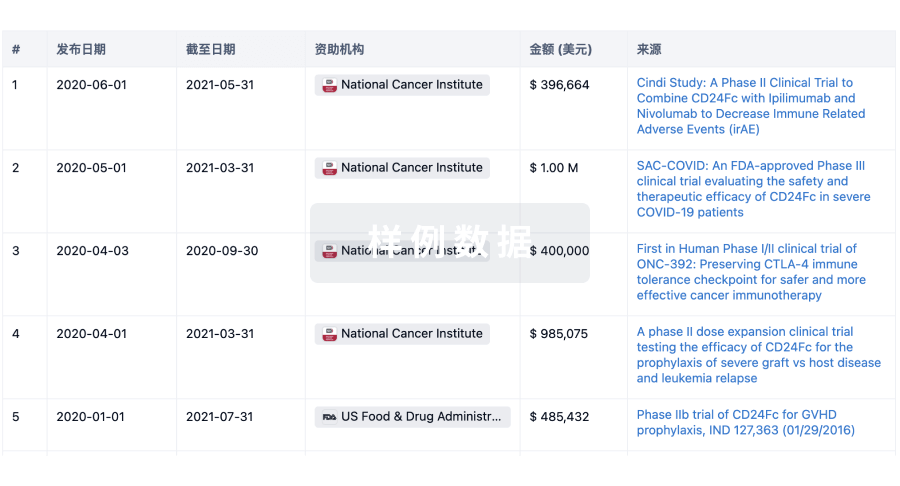
科研基金(NIH)
访问超过 200 万项资助和基金信息,以提升您的研究之旅。
登录
或
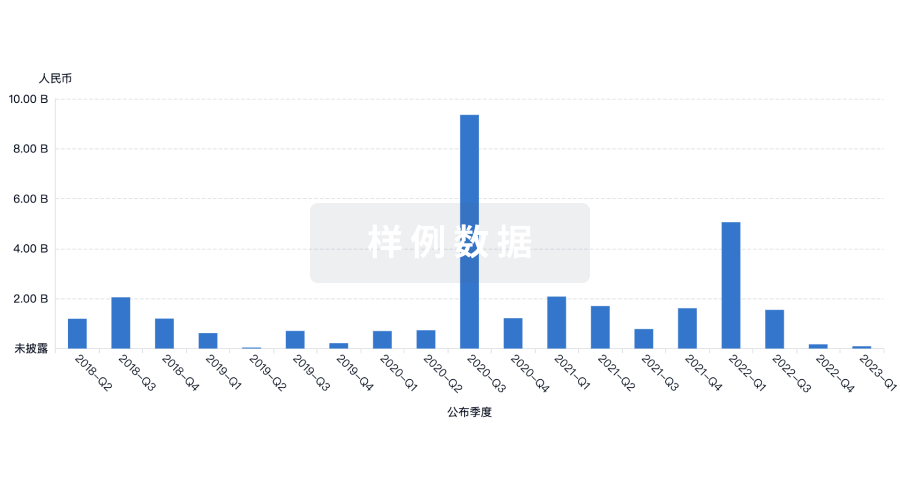
投资
深入了解从初创企业到成熟企业的最新公司投资动态。
登录
或
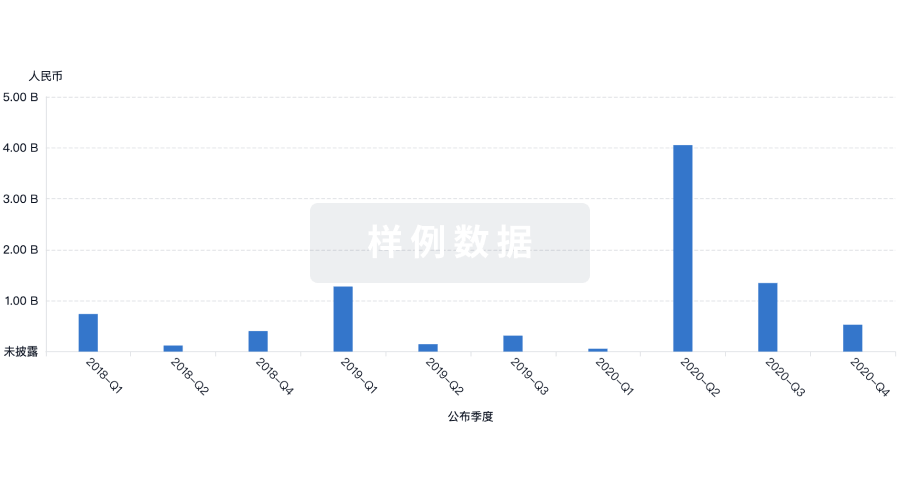
融资
发掘融资趋势以验证和推进您的投资机会。
登录
或
生物医药百科问答
全新生物医药AI Agent 覆盖科研全链路,让突破性发现快人一步
立即开始免费试用!
智慧芽新药情报库是智慧芽专为生命科学人士构建的基于AI的创新药情报平台,助您全方位提升您的研发与决策效率。
立即开始数据试用!
智慧芽新药库数据也通过智慧芽数据服务平台,以API或者数据包形式对外开放,助您更加充分利用智慧芽新药情报信息。
生物序列数据库
生物药研发创新
免费使用
化学结构数据库
小分子化药研发创新
免费使用