预约演示
更新于:2025-12-09

Carl R. Woese Institute For Genomic Biology
更新于:2025-12-09
概览
关联
100 项与 Carl R. Woese Institute For Genomic Biology 相关的临床结果
登录后查看更多信息
0 项与 Carl R. Woese Institute For Genomic Biology 相关的专利(医药)
登录后查看更多信息
125
项与 Carl R. Woese Institute For Genomic Biology 相关的文献(医药)2025-12-01·APL Bioengineering
Oligonucleotide surface attachment by tosylation for digital detection of microRNA using photonic resonator absorption microscopy
Article
作者: Bala, Zayd ; Bhaskar, Seemesh ; Tibbs, Joseph ; Ayupova, Takhmina ; Shepherd, Skye ; Akin, Lucas D. ; Monaco, Marcia H. ; Cunningham, Brian T. ; Donovan, Sharon M. ; Liu, Weinan
DNA capture probes attached to surfaces are necessary for many biosensing assays for the specific detection of nucleic acid target sequences. In this work, we present a chemically mediated direct oligonucleotide–titanium dioxide bond for stable DNA surface immobilization on photonic crystal (PC) biosensors. We validated the DNA–TiO2 functionalization using photonic resonator absorption microscopy (PRAM) to digitally detect hybridization-bound nanoparticles, then compared the tosylate-mediated chemical binding method to commonly used silanes (3-aminopropyl)triethoxysilane and (3-glycidyloxypropyl)trimethoxysilane. This surface functionalization process was then applied to the digital detection of nanoparticles for the ultrasensitive detection of microRNA (miRNA) sequences on PRAM. By immobilizing a single-stranded capture DNA sequence onto a titanium dioxide PC surface through a reaction with p-toluenesulfonic anhydride, we demonstrate the target recycling amplification process for digital detection of miRNA using PRAM through toehold-mediated strand displacement reactions with linear signal amplification. Using this method of DNA surface functionalization, we achieved attomolar levels of detection of target miRNA-148a-3p, a potential biomarker for certain cancers, without requiring silanes or polyethylene glycol linkers, which can be unstable or expensive. While demonstrated here using PCs for the detection of miRNA, this functionalization approach could be broadly applied to any biosensor with a titanium dioxide surface.
2025-11-26·NANO LETTERS
Engineering Two-Dimensional Nanobody-Origami Architectures for Enhanced Antiviral Activity
Article
作者: Le, Linh T.P. ; Rong, Lijun ; Anirudhan, Varada ; Song, Tingjie ; Gandavadi, Dhanush ; Hammound, Kadmos C. ; Wang, Xiaojing ; Morshed, Mehzabin ; Galván Achi, Jazmin ; Wang, Xing
The nanoscale organization of binding ligands offers a powerful strategy to combat viral infections. Herein, we report a programmable 2D DNA origami platform that enables nanoscale control of multivalent nanobody (Nb) spatial patterns for a broad-spectrum antiviral application. By site-selective Nb-DNA conjugation and spatial positioning on 2D origami, we synthesized origami-Nb nanoarchitectures with Nb patterns rationally designed to approximately match the geometric presentation of viral surface proteins. We demonstrate that Nb configurations greatly enhanced viral binding affinity and neutralization potency. For SARS-CoV-2, a triangular Nb pattern matching that of the spike proteins achieved an IC50 of 1.52 nM, representing a 171-fold improvement over monomeric Nbs. Utilizing a gp120-binding Nb, we observed a 233-fold increase in HIV-1 neutralization efficiency using an optimal Nb pattern. The study demonstrates a generalizable strategy for engineering potent viral inhibitors through spatially optimized Nb patterns for high affinity binding of corresponding viral surface antigens.
2025-11-26·ACS Central Science
A Versatile Enzymatic Pathway for Modification of Peptide C-Termini
Article
作者: Chekan, Jonathan R. ; Kandy, Sanath K. ; Fujiki, Shogo ; Luciano, Dominic P. ; Ren, Hengqian ; Zhao, Huimin ; Dommaraju, Shravan R. ; Sarlah, David ; Mitchell, Douglas A.
Advances in bioinformatics have enabled the discovery of unique enzymatic reactions, particularly for ribosomally synthesized and post-translationally modified peptides (RiPPs). The recently discovered daptides, peptides with their C-terminus replaced by an amine, represent one such case, but the diversity, requirements, and engineering potential of daptide biosynthesis remain to be established. Using the daptide biosynthetic gene clusters from Thermobifida fusca and Streptomyces azureus, we reconstituted daptide biosynthesis in vitro, revealing the enzymatic requirements for successive oxidative decarboxylation, transamination, and N,N-dimethylation. In vitro and in vivo studies showed a tailoring family of YcaO enzymes convert a secondary amine intermediate to a C-terminal imidazoline. We further demonstrated enzymatic activity toward shortened, leader peptide-free, and non-native core peptides, highlighting a broad substrate tolerance. Using these insights, we directed the daptide pathway to install new C-termini, including a bioconjugation-compatible aminoacetone, on various peptide and protein substrates.
16
项与 Carl R. Woese Institute For Genomic Biology 相关的新闻(医药)2024-02-13
Researchers are further improving CRISPR's versatility to engineer new grasses and yeasts for biochemical production.
CRISPR/Cas systems have undergone tremendous advancement in the past decade. These precise genome editing tools have applications ranging from transgenic crop development to gene therapy and beyond. And with their recent development of CRISPR-COPIES, researchers at the Center for Advanced Bioenergy and Bioproducts Innovation (CABBI) are further improving CRISPR's versatility and ease of use.
"CRISPR-COPIES is a tool that can quickly identify appropriate chromosomal integration sites for genetic engineering in any organism," said Huimin Zhao, CABBI Conversion Theme Leader and Steven L. Miller Chair of Chemical and Biomolecular Engineering (ChBE) at the University of Illinois. "It will accelerate our work in the metabolic engineering of non-model yeasts for cost-effective production of chemicals and biofuels."
Gene editing has revolutionized scientists' capabilities in understanding and manipulating genetic information. This form of genetic engineering allows researchers to introduce new traits into an organism, such as resistance to pests or the ability to produce a valuable biochemical.
With CRISPR/Cas systems, researchers can make precise, targeted genetic edits. However, locating optimal integration sites in the genome for these edits has been a critical and largely unsolved problem. Historically, when researchers needed to determine where to target their edits, they would typically manually screen for potential integration sites, then test the site by integrating a reporter gene to assess its cellular fitness and gene expression levels. It's a time- and resource-intensive process.
To address this challenge, the CABBI team developed CRISPR-COPIES, a COmputational Pipeline for the Identification of CRISPR/Cas-facilitated intEgration Sites. This tool can identify genome-wide neutral integration sites for most bacterial and fungal genomes within two to three minutes.
"Finding the integration site in the genome manually is like searching for a needle in a haystack," said Aashutosh Boob, a ChBE Ph.D. student at the University of Illinois and primary author of the study. "However, with CRISPR-COPIES, we transform the haystack into a searchable space, empowering researchers to efficiently locate all the needles that align with their specific criteria."
In their paper published in Nucleic Acids Research, the researchers demonstrated the versatility and scalability of CRISPR-COPIES by characterizing integration sites in three diverse species: Cupriavidus necator, Saccharomyces cerevisiae, and HEK 293T cells. They used integration sites found by CRISPR-COPIES to engineer cells with increased production of 5-aminolevulinic acid, a valuable biochemical that has applications in agriculture and the food industry.
In addition, the team has created a user-friendly web interface for CRISPR-COPIES. This incredibly accessible application can be used by researchers even without significant bioinformatics expertise.
A primary objective of CABBI is the engineering of non-model yeasts to produce chemicals and fuels from plant biomass. Economically producing biofuels and bioproducts from low-cost feedstocks at a large scale is a challenge, however, due to the lack of genetic tools and the cumbersome nature of traditional genome-editing methods. By enabling researchers to swiftly pinpoint genomic loci for targeted gene integration, CRISPR-COPIES provides a streamlined pipeline that facilitates the identification of stable integration sites across the genome. It also eliminates the manual labor involved in designing components for CRISPR/Cas-mediated DNA integration.
For crop engineering, the tool can be used to increase biomass yields, pest resistance, and/or environmental resilience. For converting biomass to valuable chemicals -- for instance, by using the yeast S. cerevisiae -- CRISPR-COPIES can be used to engineer cells with significantly greater yields.
This versatile software is designed to simplify and accelerate the strain construction process, saving researchers both time and resources. Researchers around the world in both academia and industry can benefit from its utility in strain engineering for biochemical production and transgenic crop development.
Co-authors on this study include ChBE Ph.D. student Zhixin Zhu, ChBE visiting student Pattarawan Intasian, and Bioengineering Ph.D. student Guanhua Xun; Carl R. Woese Institute for Genomic Biology (IGB) Software Developers Manan Jain and Vassily Petrov; IGB Biofoundry Manager Stephan Lane; and CABBI postdoc Shih-I Tan.
-- Article by CABBI Communications Specialist April Wendling
基因疗法
2024-02-05
Scientists have found a way to boost ethanol production via yeast fermentation, a standard method for converting plant sugars into biofuels. Their approach relies on careful timing and a tight division of labor among synthetic yeast strains to yield more ethanol per unit of plant sugars than previous approaches have achieved.
Scientists have found a way to boost ethanol production via yeast fermentation, a standard method for converting plant sugars into biofuels. Their approach, detailed in the journal Nature Communications, relies on careful timing and a tight division of labor among synthetic yeast strains to yield more ethanol per unit of plant sugars than previous approaches have achieved.
"We constructed an artificial microbial community consisting of two engineered yeast strains: a glucose specialist and a xylose specialist," said Yong-Su Jin, a professor of food science and human nutrition at the University of Illinois Urbana-Champaign, who co-led the new research with U. of I. bioengineering professor Ting Lu. "We investigated how the timing of mixing the two yeast populations and the ratios in which the two populations were mixed affected the production of cellulosic ethanol."
Postdoctoral researcher Jonghyeok Shin and Siqi Lao, a Ph.D. student in the Center for Biophysics and Quantitative Biology at the U. of I., carried out the work.
Glucose and xylose are the two most abundant sugars obtained from the breakdown of plant biomass such as agricultural wastes. The team was trying to overcome a common problem that occurs when using yeast to convert these plant sugars into ethanol. In the wild, the yeast strain of interest, Saccharomyces cerevisiae, prefers glucose and lacks the ability to metabolize xylose. Other scientists have used genetic engineering to alter the yeast so that it also consumes xylose, but these engineered strains still prefer glucose, reducing their overall efficiency in ethanol production.
Some scientists have pursued the idea that communities of microbes, each with its own special function, can operate more efficiently than a single, highly engineered strain.
"My group is dedicated to the design, analysis and engineering of synthetic microbial communities. Jin's lab specializes in yeast metabolic engineering and biofuel production," Lu said.
"Our complementary expertise enabled us to test whether a division-of-labor approach among yeast might work well in biofuels production."
The researchers conducted a series of experiments testing the use of their two specialist yeast strains. They altered the order in which the different strains were added to the sugar mixture and the timing of each addition.
"We also investigated the ratios at which the two populations were mixed to determine their effects on the rapid and efficient production of cellulosic ethanol," Jin said.
The team also developed a mathematical model that accurately predicts their yeasts' performance and ethanol yields.
"We used the data from the experiments to train our mathematical model so that it captures the characteristic ecosystem behaviors," Lu said. "The model was then used to predict optimal fermentation conditions, which were later validated by corresponding experiments."
The researchers discovered that adding the xylose-fermenting yeast specialist to the mixture first, followed 14 to 29 hours later by the glucose specialist, dramatically boosted ethanol production, more than doubling the yield.
"This study demonstrates the functional potential of division of labor in bioprocessing and provides insight into the rational design of engineered ecosystems for various applications," the authors wrote.
Yong-Su Jin and Ting Lu also are professors in the Biosystems Design theme in the Carl R. Woese Institute for Genomic Biology at the U. of I. Jonghyeok Shin is now a scientist at the Korea Research Institute of Bioscience and Biotechnology.
The Department of Energy and the Korea Research Institute of Bioscience and Biotechnology supported this research.
2023-12-31
·今日头条
编者按:
毫无疑问,微生物组是当前生命科学领域最受关注的前沿方向之一。过去十年里,伴随着测序技术的革新,微生物组研究取得了突飞猛进的发展,并已有部分研究成果被成功转化应用于临床。然而,随着这一领域的不断突破,其也受到了一些质疑与批判。那么,微生物组的未来在哪里?
今天,我们特别编译
MedSpace
对美国罗格斯大学教授Martin J. Blaser的采访。希望本文能够为相关的产业人士和诸位读者带来一些启发和帮助。
① 微生物组的未来
从20世纪70年代开始的关键研究到2007年“人类微生物组计划(HMP)”的启动,人类微生物组研究在过去几十年中取得了突飞猛进的发展。这些突破为肠菌移植(FMT)等最新临床应用以及探索新治疗途径的前沿技术奠定了基础。然而,微生物组革命才刚刚开始,该领域的先驱之一、医学博士Martin J. Blaser教授如是说。
Blaser是美国罗格斯大学新布朗斯维克分校高级生物技术与医学中心主任、人类微生物组主席。他说,目前正在进行的关于微生物组与美国主要死因之间联系的研究和临床试验为开发干预措施带来了希望,我们有望通过干预微生物组来预防、减缓甚至治愈这些疾病。
Blaser也是《消失的微生物:滥用抗生素引发的健康危机(
Missing Microbes: How the Overuse of Antibiotics Is Fueling Our Modern Plagues
)》一书的作者,他还是美国总统防治耐药细菌顾问委员会主席,也是生物技术初创公司Micronoma科学顾问委员会的成员。
在这篇访谈中,Blaser谈论了微生物组研究目前所处的阶段以及未来几年的发展方向。
② 最有前景的应用
Q1:您认为最近哪些关于人类微生物组与疾病之间联系的研究特别有前景?
有很多研究,包括我们自己的研究,都聚焦于肠-肾轴。肠道微生物组会产生或分解对肾脏有毒的代谢物,例如,与肾结石的形成和尿毒症的恶化有关的代谢物。改变微生物组以减少尿毒症毒素和结石形成的诱因,是一个非常有前景的研究领域。
Q2:还有哪些疾病可能适用基于微生物组的干预措施?
有一些疾病是由已知的基因突变引起的。然而,几乎所有这些疾病的临床转归都有很大差异,这可能归因于基因与环境的相互作用。在我看来,对于某些遗传性疾病而言,微生物组的差异很可能是临床转归差异的部分原因。
Q3:现在已经证实,利用FMT改变微生物组,是一种可以成功治疗复发性艰难梭菌感染的措施。您认为FMT接下来可能可以成功应用于哪一种疾病呢?
如果您访问网站
ClinicalTrials.gov
,您会发现有471项已注册的临床试验利用FMT作为干预措施来治疗疾病。这些试验涉及多种疾病,包括代谢性疾病、免疫性疾病、自身免疫性疾病、炎症性疾病、退行性疾病和肿瘤疾病。
谁也说不准FMT能够呈现出显著疗效的下一个疾病是什么。这就是为什么不论具体疾病是什么,我们都必须进行临床试验,以评估FMT对哪些疾病有效,对哪些疾病无效。
Q4:FMT供体的微生物组似乎对成功至关重要,甚至已经发现了“超级供体”。您认为影响FMT的主要因素是什么?
关于这个问题,有一个新兴的科学领域。这一领域的部分驱动力来自于经典生态理论。
目前,我们在使用FMT时,似乎有点一刀切,这可能无法为所有人提供最佳的治疗方案。正如我们在输血前对供血者和受血者进行配型一样,我们可以很容易地想象出一种类似的FMT配型程序。
Q5:在您看来,有没有哪种疾病与微生物组的关系太遥远了,以至于您认为“改变微生物组就能改变病情”这一观点太过牵强?
微生物组与人类健康之间的联系非常普遍,几乎所有疾病都与微生物组有关。这确实是一个前沿领域。但这并不是说微生物组导致了一切疾病,不过通过理解和操控微生物组,我们至少可以缓解或减缓特定的病理过程。
对于美国所有主要的死亡原因——心血管疾病、癌症、痴呆和神经退行性疾病、糖尿病以及肺、肝和肾脏疾病,相关的微生物组研究都在进行之中。预防或治愈这些疾病将有更大的前景。
③ “微生物组革命”的下一阶段
Q6:您是否认为我们正处于微生物组研究发展的转折点,我们以后是否能够操控或设计微生物组?
微生物组是影响整个生物领域的科学前沿。微生物组是一个涉及人类医学、兽医学、农业和环境的广阔科研领域。正如预期的那样,微生物组相关的知识正在逐步增加。
Q7:对于癌症、心脏病、阿尔兹海默症或其他慢性病患者或高危人群,医生是否应该改变他们与微生物相关的生活方式?
我曾于2006年在
EMBO Reports
上首次撰文,并于2014年在
Journal of Clinical Investigation
上再次撰文,这两篇文章中我都有提到,虽然我们仍处于“微生物组革命”的早期阶段,但我认为,在未来5-10年内,针对所有这些疾病的研究都将取得重大进展。
Q8:如何利用益生菌、益生元和后生元来塑造微生物组?
这是临床研究中一个非常重要和活跃的领域,需要重视并加强投入力度。
每天都有数以千万计的人在使用益生菌和益生元,但它们的适应证并不明确,并且很少通过了严格的临床试验。因此,目前大部分益生菌的宣称与我们未来实际了解的情况之间可能存在着脱节。
Q9:您认为微生物组与遗传、运动和营养等其他影响健康的因素相比有何优势?
所有因素都很重要,但与遗传不同的是,微生物组与饮食和运动一样是可控的。
要改变一个人的基因组基本上是不可能的,但在不久的将来,这种可能性会越来越大。不过,我们可以通过饮食等手段轻松改变一个人的微生物组。一旦我们知道了基本规则,就会有很多选择。就目前而言,这种选择大多是一次性的,但随着科学基础的扩大,更多的选择将成为可能。
Q10:您认为未来我们是否能够通过检测一个人的微生物组来判断其患病风险,就像我们现在使用的基因测试一样?
是的,但我们需要科学进步来告诉我们:一般人群和特定人群的重要生物标志物是什么。这将是精准医疗的一个领域。
④ 数十年来的宝贵经验
Q11:您从事微生物组领域研究已经30多年了,主要聚焦于研究人类微生物组及其在疾病中的作用。您是什么时候发现微生物组研究具有独特的治疗前景的?
从一开始,利用微生物组改善人类健康的潜力就一直存在。事实上,2010年我曾在
PNAS
上就这一主题发表过一篇观点文章。
关键是要了解微生物组的生物学特性,并从科学研究中获得新的预防措施和新的治疗方法。目前,市面上有许多益生菌产品。益生菌前景广阔,但当前市面上的大多数益生菌产品的有效性尚未经过严格测试。
Q12:在HMP计划启动之前,是否有一系列特定的研究把我们带到了现在这个“微生物组时代”?
Carl Woese在20世纪70年代至80年代利用16S rRNA基因来了解系统发育和进化的研究开辟了DNA测序领域,让我们得以思考有关细菌进化和祖先的问题。
Q13:抗生素耐药细菌是您的一个重要研究方向,也是您书中的重点。在向公众介绍抗生素耐药性科学方面的这项工作给了您哪些启示?
人们不太关心抗生素耐药性。他们认为这主要影响到了其他人。相反,他们关心自己和孩子的健康。
如果能够证明在某些情况下使用抗生素会对健康产生危害的数据越多,那么抗生素的使用就会越少。我们需要让相关收益和成本变得更透明。
Q14:您从公众甚至临床医生那里听到的关于微生物组的常见误解中,有哪些是您希望加大力度消除的?
公众和医学界对益生菌情有独钟,购买益生菌的人数以千万计。但如前所述,益生菌种类繁多,而且大多未经疗效测试。因此,下一步的工作应该是对具体配方进行测试,看看哪些有效,对谁有效,以及哪些无效。这将是一大进步。
原文链接:
https://www.medscape.com/viewarticle/where-microbiome-revolution-headed-next-2023a1000vz1
作者:John Watson
微生物疗法
100 项与 Carl R. Woese Institute For Genomic Biology 相关的药物交易
登录后查看更多信息
100 项与 Carl R. Woese Institute For Genomic Biology 相关的转化医学
登录后查看更多信息
组织架构
使用我们的机构树数据加速您的研究。
登录
或
管线布局
2026年02月09日管线快照
无数据报导
登录后保持更新
药物交易
使用我们的药物交易数据加速您的研究。
登录
或
转化医学
使用我们的转化医学数据加速您的研究。
登录
或
营收
使用 Synapse 探索超过 36 万个组织的财务状况。
登录
或
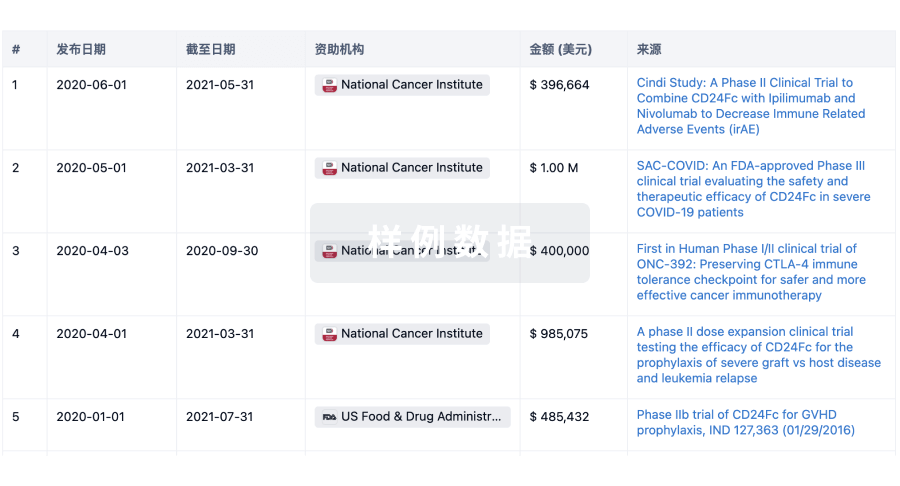
科研基金(NIH)
访问超过 200 万项资助和基金信息,以提升您的研究之旅。
登录
或
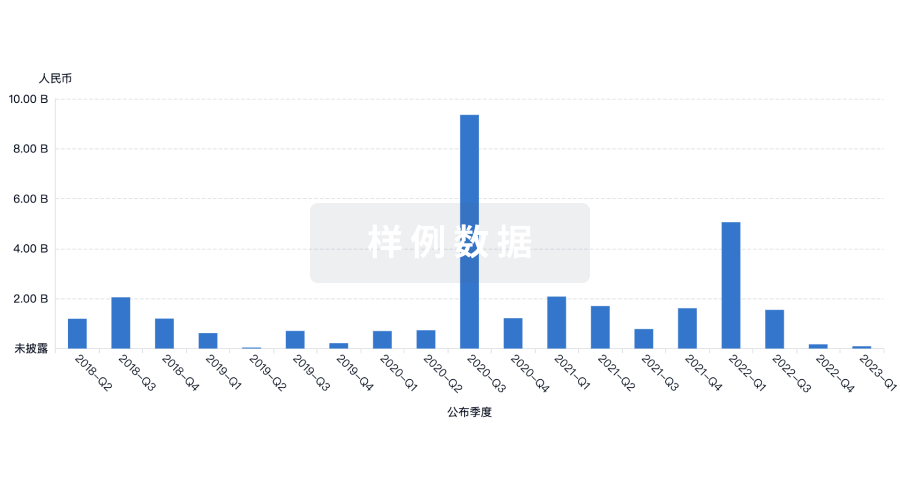
投资
深入了解从初创企业到成熟企业的最新公司投资动态。
登录
或
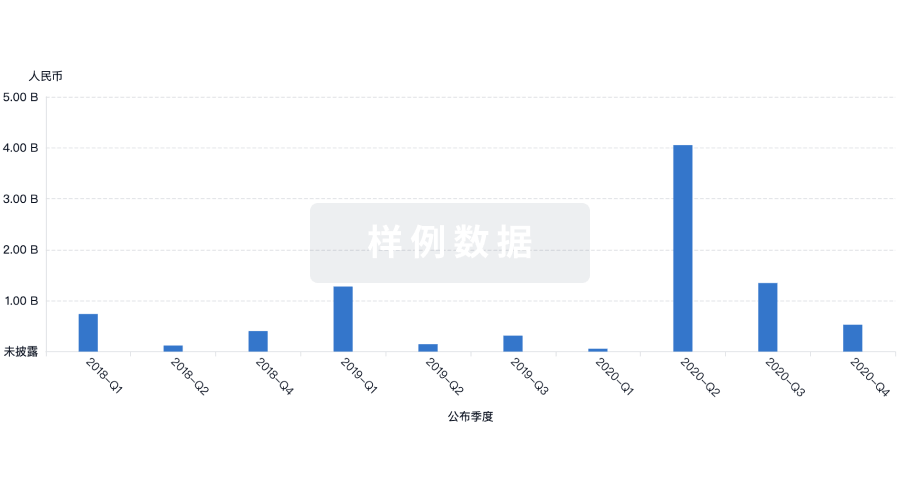
融资
发掘融资趋势以验证和推进您的投资机会。
登录
或
生物医药百科问答
全新生物医药AI Agent 覆盖科研全链路,让突破性发现快人一步
立即开始免费试用!
智慧芽新药情报库是智慧芽专为生命科学人士构建的基于AI的创新药情报平台,助您全方位提升您的研发与决策效率。
立即开始数据试用!
智慧芽新药库数据也通过智慧芽数据服务平台,以API或者数据包形式对外开放,助您更加充分利用智慧芽新药情报信息。
生物序列数据库
生物药研发创新
免费使用
化学结构数据库
小分子化药研发创新
免费使用