预约演示
更新于:2025-08-14

AlphaSense
更新于:2025-08-14
概览
关联
100 项与 AlphaSense 相关的临床结果
登录后查看更多信息
0 项与 AlphaSense 相关的专利(医药)
登录后查看更多信息
17
项与 AlphaSense 相关的新闻(医药)2025-04-03
·融中财经
导读THECAPITAL科技巨头的AI投资系列——谷歌篇本文3750字,约5.4分钟作者 | 英贤来源 | IT桔子Alphabet(谷歌)作为互联网时代的科技巨头之一,在AI技术重塑世界的浪潮中勇立潮头,不仅通过自有的产品和服务推动AI发展,也通过风险投资,赋能初创企业,积极参与全球AI创业生态的构建。作者根据IT桔子和Crunchbase的公开数据统计,2014年以来,Alphabet(谷歌)共对外投资 1586 起,其中AI领域271起,占比 17.1%。2022年以后,AI领域的投资事件占总投资事件的数量的比例逐年攀升——从 2022年仅占比13.1%,到2024年的32%。这种现象的背后既有技术趋势的推动,也反映出Alphabet(谷歌)资源对AI赛道的倾斜。2015年,谷歌内部组织架构进行重组后,变成了由Alphabet控股的公司,旗下投资主体呈现「4+1」的投资体系,分别是旗下最活跃的风险投资部门Google Ventures(GV)、最早从事投资的主体Google、以投资中后期项目为主的成长型基金Capital G和2017年成立的专投人工智能的基金Gradient Ventures,在少数情况下 Alphabet 也会亲自开展对外投资。其中,Google Ventures(GV)、Gradient Ventures、Google是主要的AI投资主体,共投资301起 AI事件,占总投资事件数量的90%以上。其中,Google Ventures共投资AI领域119起,Gradient Ventures 共投资AI领域87起,Google共投资AI领域39起。从投资轮次分布上可以看出,谷歌在AI领域的投资呈现「早期为主,全周期覆盖」的特征。早期投资占比最高,达51%,其中种子轮投资事件72起,占比 27%,A轮65起,占比24%。Alphabet(谷歌)旗下不同的投资主体侧重于投资AI行业不同的周期。Gradient Ventures 作为 AI 专项基金,聚焦于技术萌芽阶段,通过早期注资锁定AI前沿领域,其中种子轮43起,A轮25起,占其总投资事件比例78%,例如对3D设计工具Spline的种子轮投资、对企业级生成式AI平台Writer的A轮投资,投资金额以千万美元级别为主。CapitalG作为成长型基金,则聚焦已验证商业模式的AI企业,通过中后期注资帮助企业扩大市场规模、优化技术商业化路径,如对AI金融信息服务公司Alpha Sense的F轮投资,助推其从技术产品向成熟商业服务转型。在其21起总投资事件中,中后期投资事件有15起,占比 71%。Alphabet(谷歌)在人工智能领域的投资中,应用层占据绝对主导,超一半(53%)的投资事件集中于AI应用层,体现了对技术商业化落地的重视。应用层中以行业应用层为主,涵盖医疗、企业服务、金融、法律等多行业的AI解决方案。具体投资情况如下表:医疗+AIAlphabet(谷歌)对医疗领域的AI行业应用投资共22起,涉及13家公司,主要集中在三大场景,分别是临床决策支持(如医学影像协调工具Viz、心血管AI诊断 Ultromics),流程自动化(如理赔管理AI Olive、电话流程自动化工具 INfinitus),健康管理(如血糖分析Signos、帮助神经多样性支持产品 Spectrums AI)。Alphabet(谷歌)对AI精准医疗公司Owkin、基于AI的医学影像协调工具 Viz、AI自动化放射学报告编写公司Rad AI各出手3次。单次投资金额最高的是美国医疗对话AI服务商Abridge,今年2月份由 CapitalG投资25000万美元。企业服务+AI从公开数据看,Alphabet(谷歌)在企业服务+AI领域的投资有13起,涉及8 家公司,投资主要聚焦在企业核心痛点场景,即客户服务智能化、商业决策自动化和运维管理精细化三大方向,通过Gradient Ventures、Google Ventures、CapitalG三大投资主体的协同运作。Gradient Ventures 作为早期投资主力,重点关注具备技术潜力的初创公司,2022年两次投资Zowie的种子轮和A轮,支持其开发定制化AI客服系统,帮助电商企业减少40%的人工客服介入率。Google Ventures则倾向于中期投资,通过多轮注资推动企业规模化发展,如连续对UJET的B、C、D轮累计投资1.56亿美元,帮助其成长为全球前三的云客服平台。CapitalG则聚焦后期整合,连续参与AlphaSense的D、E、F轮中后期融资,助力其成为金融行业AI洞察标杆,服务贝莱德、摩根士丹利等机构。金融+AI在金融行业应用领域,Alphabet(谷歌)出手9次,投资5家公司,其中 Gradient Ventures 以出手7次占绝对主导(占比77.8%),均为种子轮和A 轮投资,并且在Spade、Fazeshift、Arva AI公司的种子轮投资中担任领投方。Google Ventures出手2次,分别投资金融科技公司Digits B轮和C轮。值得一提的是,Alphabet(谷歌)对金融领域的投资集中在2022年后,与AI 在金融领域的应用爆发期高度吻合,显示谷歌对技术商业化节奏的精准把握。当AI成为基础设施,能快速整合技术、数据和场景的公司,将掌握未来商业的钥匙。从医疗AI的精准诊断到金融科技的智能风控,从企业服务的效率革命到自动驾驶的场景落地,Alphabet(谷歌)的AI投资正在重塑多个行业的底层逻辑——不仅改变企业运营方式,更在悄然重构行业竞争规则。Alphabet(谷歌)投出过多家独角兽和上市公司,下面选取部分案例进行展示:Anthropic:以安全为核心理念的AI独角兽崛起之路Anthropic成立于2021年,由OpenAI前核心成员 Dario Amodei等人创立,是一家专注于通用人工智能(AGI)研发的初创公司。其核心产品为 Claude 系列大语言模型,强调「可解释性」与「安全性」,旨在构建符合人类价值观的 AI 系统。Anthropic 通过「宪法式 AI」(Constitutional AI)技术框架,将伦理规则嵌入模型训练过程,使其在内容生成、逻辑推理等任务中主动规避偏见与有害输出。这一技术差异化使其在生成式AI赛道中迅速崭露头角,成为 OpenAI 最强劲的竞争对手之一。Anthropic 自成立以来,经历14轮融资,累计融资额突破130亿美元,融资历程呈现高频、大额的特点,反映了资本市场对头部AI企业的狂热追逐:2021-2022 年:A 轮(1.24 亿美元)与 B 轮(5.8 亿美元)由新兴风投 Center for Emerging Risk Research 主导,资金主要用于技术验证与团队扩张。2023 年:全年完成 6 轮融资,总额超 16 亿美元。C 轮引入谷歌、Spark Capital 等巨头,战略投资方如亚马逊、SK Telecom 的加入,标志着 Anthropic 从纯技术研发转向商业化落地。2024-2025 年:D 轮(数亿美元)与 E 轮(35 亿美元)进一步吸纳高通、思科等产业资本,光速创投领投的 20 亿美元战略投资及谷歌追加的 10 亿美元注资,为其全球市场拓展与算力储备提供弹药。Alphabet(谷歌)对 Anthropic 的投资是谷歌多元化其 AI 业务、与微软、Meta、亚马逊等资金雄厚的竞争对手抗衡的一部分,对 Anthropic 出手 4 次,累计投资超 30 亿美元:2023 年 2 月,谷歌 Google 独家投资 3 亿美元;2023 年 5 月,由 Spark Capital 领投,谷歌 Google 等多家公司跟投 C 轮,总投资 4.5 亿美元;2023 年 10 月,CapitalG 战略投资 20 亿美元;2025 年 1 月,谷歌 Google 战略投资 10 亿美元;在资本催化下,AI 竞赛已从单点技术突破演变为算力、数据、场景的立体战争,Anthropic 凭借先发优势占据战略高地,但面对 OpenAI 的持续压制与科技巨头自研模型的围剿,能否将伦理护城河转化为可持续的商业模式,仍需时间检验。Harvey:法律AI赛道的资本宠儿与垂直颠覆者Harvey成立于2022年,总部位于美国,是一家专注于法律垂直领域的人工智能服务商。其核心产品为AI法律助手,通过自然语言交互帮助律师自动生成法律文件、检索案例、起草合同,并支持多轮对话优化输出结果。与通用型AI工具不同,Harvey 深度集成法律行业知识库与判例数据库,结合GPT-4等大模型技术,实现「零代码」操作体验——律师仅需用日常语言描述需求(如「起草一份加州房产买卖协议模板」),系统即可生成符合法律规范的可交付成果,准确率声称达95%以上。目前服务已覆盖合同审查、诉讼文书准备、合规咨询等场景,客户包括美国50强律所中的12家及企业法务部门。Harvey成立三年内完成5轮融资,累计吸金超4.5亿美元:2022 年 11 月,获 500 万美元的种子轮投资,投资方有 Open AI、Elad Gil、Convivtion Partners;2023 年 5 月,获 2000 万美元的 A 轮投资,红杉资本领投,Open AI、Elad Gil 继续跟投;2023 年 12 月,获 8000 万美元的 B 轮投资,投资方包括 Kleiner Perkins Caufield & Byers(KPCB 全球)、红杉资本、OpenAI。2024 年 7 月,完成 1 亿美元 C 轮融资,Google Ventures(GV)领投,OpenAI、KPCB 全球、红杉资本跟投。投后估值 15 亿美元,晋升成为独角兽。2025 年 2 月,完成 3 亿美元 D 轮融资,红杉资本领投,Conviction Partners、Google Ventures(GV)、KPCB 全球、Coatue Management、REV、EladGil 及 OpenAI Startup Fund 参与投资。OpenAI与Google Ventures(GV)对Harvey的连续加注,堪称生成式AI投资史上的标志性事件——两家本在通用大模型领域激烈交锋的巨头,竟罕见地在垂直赛道形成「资本同盟」,背后折射出法律AI的战略价值与资源争夺逻辑。OpenAI与Google的竞相投资,本质上是对「法律AI基础设施标准制定权」的争夺。当巨头们意识到通用模型难以通吃所有行业时,通过资本控制垂类头部玩家,便成为构建生态护城河的最短路径。对于创业公司而言,选择「站队」或许意味着丧失独立性,但拒绝巨头橄榄枝,则可能在新一轮算力竞赛中窒息而亡。Harvey的抉择,或许正在重定义AI创业的生存法则。出门问问:生成式AI赛道中的商业化突围困境出门问问(Mobvoi)成立于2012年,由前谷歌科学家李志飞创立,定位为以生成式AI与语音交互为核心的人工智能公司。其核心产品包括自研大模型「序列猴子」、AI配音助手「魔音工坊」(海外版 DupDub)、数字人分身「奇妙元」等,覆盖内容创作、企业服务与智能硬件三大领域。公司早期以智能手表 TicWatch切入消费电子市场,后转型押注AIGC,致力于构建「一站式内容创作平台」。出门问问的融资历程呈现阶段性的特点。2013-2015年间,出门问问融资节奏快,相继获得红杉中国、真格基金、SIG 海纳亚洲等机构的天使轮、A轮、A+轮、B轮等4轮投资;2015年10月,获得Google谷歌4000万美元的 C 轮投资;2015-2019年,这段时间出门问问以两年获得一次融资的频率发展,2017年获大众汽车1.4亿美元的D轮投资,2019年9月获得Google谷歌1687万美元的D+轮投资;接下来的2019-2024年长达5年的时间里,出门问问未获新融资。直到2024年4月24日,出门问问以「港股AIGC第一股」身份IPO,募资2.67亿港元。但上市后股价迅速破发,跌幅超90%,市值缩水至不足6亿港元,基石投资者浮亏超九成。IPO前,谷歌持有出门问问股份13.36%,作为出门问问的大股东,平均持股成本较IPO发行价相比,略有浮盈。前不久,出门问问交出了上市以来的第一份年报,显示全年亏损7.22亿元。出门问问未来如何扭亏为盈,有待持续关注。# 线索爆料 # rzcj@thecapital.com.cn融中官方粉丝群在这里,你可以获取丰富的股权投资行业资讯、热点报道;前沿行业报告、重点课题研究、最新业内动态。链接资本,连接市场,联结资源,共同打造创投交流新平台、合作共赢朋友圈。END媒体合作:010-84464881商务合作:010-84467811转载请点击菜单栏-联系我们
2025-02-05
Many Americans have flocked to cheaper, compounded versions of GLP-1 weight loss drugs in lieu of brand-name treatments. That competition is cutting into demand for Novo Nordisk’s prescriptions, a company exec said Wednesday.
“Our latest market intelligence does tell us and show us that it is having an impact and it is growing faster than we had anticipated,” David Moore, Novo’s head of US operations, said during the drugmaker’s
fourth-quarter earnings call
.
He was responding to a question about compounded drugs’ effects on demand for the company’s products. Compounded drugs are copies of brand-name treatments mixed up by pharmacies, and they’re typically permitted only when there’s a drug shortage.
Over the last couple of years, these
pharmacies have seized the opportunity
to make alternative versions of semaglutide, the main ingredient in Novo blockbusters Ozempic and Wegovy, as well as tirzepatide, sold by Eli Lilly as Mounjaro and Zepbound, while they’ve been in shortage.
Novo’s acknowledgment of the competition it faces contrasts sharply with Eli Lilly’s comments on the subject. During an earnings call in October, Lilly CEO Dave Ricks said the company hadn’t seen a financial impact from compounded GLP-1s.
“I wouldn’t characterize compounding as a crisis. It certainly isn’t one for us,” Ricks said, according to a transcript from AlphaSense.
In the past, Novo hasn’t said much about the business impact of compounded drug competition. Instead, it discussed its concerns with the safety of the drugs, which aren’t tested or approved by the FDA. During an earnings call in November, CEO Lars Fruergaard Jørgensen said the company didn’t know what share of the GLP-1 market compounding pharmacies had taken.
In any case, the availability of compounded GLP-1s may not last much longer. The FDA said late last year that
the shortage of tirzepatide had been resolved
, giving pharmacies until Feb. 18 or March 19 to stop compounding the drug, depending on the type of pharmacy. That order is being
challenged in court
by a trade group representing large compounding pharmacies.
Semaglutide remains on the FDA’s shortage list, even though all doses are listed as “available.” On Wednesday, Novo’s Moore said the company is talking with the FDA and working on increasing “resilience in our supply” to get off the shortage list.
“We are focused on doing that as fast as possible as we believe this will help our further actions to curtail compounding in the future,” he said.
(This story is from our Health Tech newsletter. If you’d like to sign up,
just click here.
)
2025-01-30
The world’s biggest alternative asset manager is further cementing itself in the life sciences industry with another fund dedicated to drug development.
Blackstone confirmed on its earnings call on Thursday that it’s raising another life sciences fund that it hopes will be “at least the size of the prior $5 billion fund,” president Jon Gray said on the call, according to a transcript from AlphaSense. So far, it’s held “initial closings” of $1.6 billion for the fund, Gray said. The
Wall Street Journal
reported
last month that Blackstone was raising another pool of capital to deploy into life sciences, one of the most capital-intensive industries.
Blackstone Life Sciences raised its last fund
in 2020
, about two years after the firm bought Nick Galakatos’ life sciences investment group
Clarus
.
The new capital follows a few other major funding hauls last year. Three firms raised $3 billion or more, including
Flagship Pioneering
,
Bain Capital Life Sciences
and
ARCH
Venture Partners. Forbion also garnered $2.3 billion, TCGX secured $1 billion and Foresite Capital put together a $900 million fund last year.
“Our dedicated life sciences platform delivered standout performance in 2024 with the funds appreciating 11.3% in the fourth quarter and 33% for the full year,” Blackstone CFO Michael Chae said on the earnings call, “driven by the achievement of positive milestones for multiple treatments under development.”
Unlike most other biotech investors, Blackstone has the weight to deploy hundreds of millions of dollars into individual deals, usually for late-stage clinical programs.
That includes
up to $750 million
for Moderna’s influenza work, about
$2 billion for RNAi
programs at Alnylam and approximately $330 million for an
anti-CD38 drug at Sanofi.
Blackstone has also committed $300 million to an asthma and COPD program at
Uniquity Bio
. Other beneficiaries of Blackstone are
approved
cell therapy maker
Autolus
, CRISPR company
Intellia
and anticoagulant biotech
Anthos
. It’s run into a few hurdles along the way, with gene therapy biotech
FerGene
faltering in 2021.
并购基因疗法细胞疗法
100 项与 AlphaSense 相关的药物交易
登录后查看更多信息
100 项与 AlphaSense 相关的转化医学
登录后查看更多信息
组织架构
使用我们的机构树数据加速您的研究。
登录
或
管线布局
2026年02月08日管线快照
无数据报导
登录后保持更新
药物交易
使用我们的药物交易数据加速您的研究。
登录
或
转化医学
使用我们的转化医学数据加速您的研究。
登录
或
营收
使用 Synapse 探索超过 36 万个组织的财务状况。
登录
或
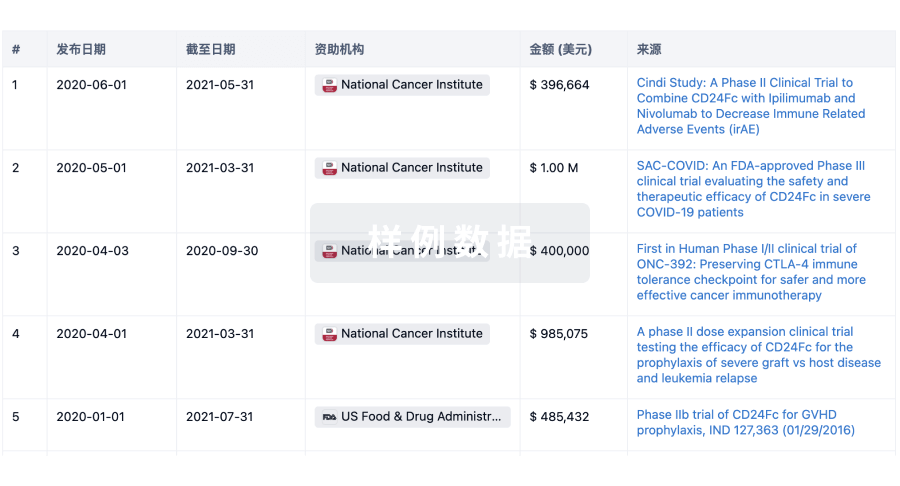
科研基金(NIH)
访问超过 200 万项资助和基金信息,以提升您的研究之旅。
登录
或
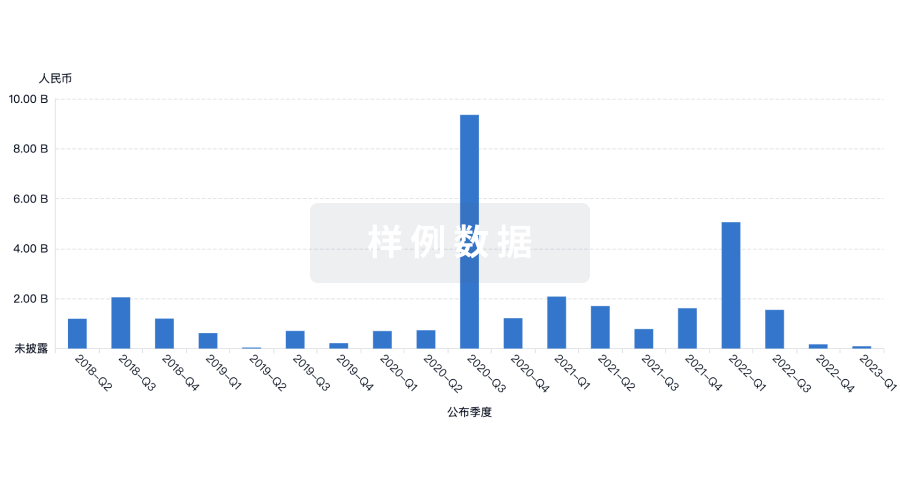
投资
深入了解从初创企业到成熟企业的最新公司投资动态。
登录
或
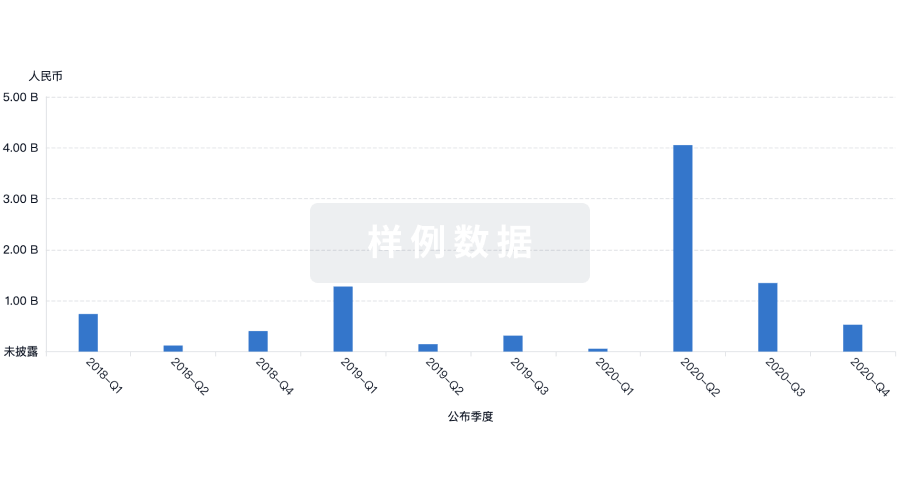
融资
发掘融资趋势以验证和推进您的投资机会。
登录
或
生物医药百科问答
全新生物医药AI Agent 覆盖科研全链路,让突破性发现快人一步
立即开始免费试用!
智慧芽新药情报库是智慧芽专为生命科学人士构建的基于AI的创新药情报平台,助您全方位提升您的研发与决策效率。
立即开始数据试用!
智慧芽新药库数据也通过智慧芽数据服务平台,以API或者数据包形式对外开放,助您更加充分利用智慧芽新药情报信息。
生物序列数据库
生物药研发创新
免费使用
化学结构数据库
小分子化药研发创新
免费使用