预约演示
更新于:2025-12-07

Dawood University of Engineering & Technology
更新于:2025-12-07
概览
关联
100 项与 Dawood University of Engineering & Technology 相关的临床结果
登录后查看更多信息
0 项与 Dawood University of Engineering & Technology 相关的专利(医药)
登录后查看更多信息
263
项与 Dawood University of Engineering & Technology 相关的文献(医药)2026-01-01·JOURNAL OF COLLOID AND INTERFACE SCIENCE
Platinum/nitrogen-co-doped TiO2 as photocatalyst and light-free catalytic adsorbent for gaseous formaldehyde
Article
作者: Younis, Sherif A ; Kim, Ki-Hyun ; Boukhvalov, Danil W ; Lee, Jechan ; Lim, Dae-Hwan ; Maitlo, Hubdar Ali
Platinum and nitrogen co-doped titanium dioxide (Pt/N-TiO2, with 1 wt% Pt and an N/Ti molar ratio of 1) has been synthesized. This Pt/N co-doping strategy creates Schottky junctions, reduces the bandgap energy (3.25 to 2.12 eV), and introduces a new energy level (N 2p). The modified catalyst exhibits dual functionality, serving as both a photocatalyst under light irradiation (λ = 365 nm, 32 W) and a light-free catalytic adsorbent against gaseous formaldehyde (FA). The Pt/N-TiO2 catalysts are immobilized on ceramic bead supports, placed in a tubular reactor system, and tested under controlled operating conditions, including FA concentrations (100-500 ppm), oxygen levels (0-21%), relative humidity (RH; 0-100%), and gas flow rates (100-500 mL min-1). The Pt/N-TiO2 achieves a photocatalytic oxidation efficiency of 94.2% (reaction rate of 9.24 μmol mg-1 h-1 and apparent quantum yield of 5.58%) against 200 ppm FA (100% RH). The catalyst's efficiency stems from a synergistic dual mechanism, as evidenced by molecular simulation using density functional theory. First, N doping enhances light absorption and extends the charge carrier lifetime, while the Pt as a co-catalyst promotes charge separation by acting as an electron sink. Second, the catalyst's ability to efficiently trap H2O and O2 molecules also contributes to the efficient mineralization of FA through the facile generation of reactive oxygen species. This dual functionality extends to dark conditions as a catalytic adsorbent, achieving a FA removal efficiency of 78.9% with a CO2 yield of 57%. In-situ diffuse reflectance infrared Fourier transform spectroscopy analysis confirms this mechanism by identifying the generation of Pt-OH hydroxylation and •O2- radicals from H2O vapor and O2, respectively. Overall, this research provides a practical guideline for constructing an advanced VOC abatement platform.
2025-09-01·JOURNAL OF HAZARDOUS MATERIALS
The smoking of heat-not-burn (HNB) cigarette products and its effects on indoor air quality
Article
作者: Kim, Ki-Hyun ; Lee, Yong-Seong ; Maitlo, Hubdar Ali ; Lim, Dae-Hwan
In this research, the concentration levels of volatile organic compounds (VOCs) are monitored in a designated smoking booth using heat-not-burn (HNB) cigarettes (in reference to 1R6F cigarette) with controlled variables of number of cigarettes smoked (1, 3, and 6 cigarettes), booth ventilation (closed vs. open), and time after the release of cigarette smoke (T0 = 0, T1 = 5, T2 = 10, and T3 = 20 min)). The total VOC concentration (TVOC) released from an HNB cigarette is compared as a collective group (TVall) and as three individual subgroups (TVn: TV1 for 14 standardized VOCs (G1), TV2 for 17 reference VOCs (G2), and TV3 for 10 carbonyl compounds (CCs: G3). Comparative analysis of TVOC emission concentration levels is performed in closed/open booth conditions. Accordingly, TVOC concentrations from HNB (1347/416 ppbC) are about one order of magnitude lower than those from 1R6F (14834/3435 ppbC). Nonetheless, the predominant components in G1/G2/G3 of HNB are clearly identified as isoprene (14.2 ppb), dodecane (16.8 ppb), and acetaldehyde (17.6 ppb), respectively. The VOC emission characteristics of HNB cigarettes are further evaluated against conventional cigarettes (i.e., 1R6F) and typical indoor cooking activities (data for the latter from a complementary experiment in this study). Overall, the results underscore the relative emission potential of different indoor sources, offering valuable insight into their comparative impact on indoor air quality.
2025-07-01·CHEMICAL PAPERS
Stability and efficiency of magnesium oxide–sodium alginate combination in low salinity EOR processes: an integrated approach of CCD
作者: Bilal, Muhammad ; Lalji, Shaine Mohammadali ; Lashari, Zeeshan Ali ; Aamir, Muhammad ; Murtaza, Muhammad ; Al-onozi, Wedad A. ; Iqbal, Rashid ; Haider, Masood ; Ahmed, Mazhar ; Al-Mohaimeed, Amal M. ; Yamin, Yumna
Abstract: The applications of nanofluid prepared with polymer and nanoparticles are being widely applied in oil reservoirs to get better oil recovery.An anal. and stability investigation of nanofluid prepared using Magnesium oxide nanoparticles with Sodium alginate at salinity (NaCl 1.0 wt%) was examined on laboratory basis.Nanofluid was characterized on the basis of sedimentation, effect of pH, morphol. with energy-dispersive X-ray anal. (EDX) of MgO nanoparticle, Sodium alginate and nanofluid, FTIR, and XRD of MgO to examine the applicability of nanofluids.The effect on stability and viscosity employing different concentrations of MgO was studied in brine solutionsSpecifically, three different concentrations of nanoparticles (0.30, 0.40 and 0.50 wt%) were used in brine solutions using fixed salt concentration of NaCl 1.0 wt%, whereas sodium alginate was employed with 0.30-0.50 wt% concentrationsThe morphol. of MgO and elemental anal. were carried out to investigate the composition and insight structure of MgO.In addition, the micrograph of sodium alginate with FTIR was investigated to better understand insight into structure of sodium alginate.Moreover, the settling down of MgO was observed in the solution with greater concentration of nanoparticles, which marks that MgO settles down in a short time, but with using low concentration the settling time can be delayed.Optimized concentration of nanofluid (sodium alginate 0.40 wt% and MgO 0.10 wt%) was achieved for applicability in low saline reservoirs.The key theme of this research article is to find optimum concentration to form stable nanofluid using sodium alginate with MgO at salinity NaCl 1.0 wt%, that can be employed in saline reservoirs to improve oil recovery.The application of nanofluid was confirmed using simulation (statistical method) with CCD approach that further confirmed the nanofluid under above-mentioned optimized conditions can be applied in low saline reservoirs.It can be marked that nanolfuid prepared emplying sodium alginate and MgO.
1
项与 Dawood University of Engineering & Technology 相关的新闻(医药)2023-09-02
2023年9月11-14/15日第二十八届中国国际家具展览会会📍上海新国际博览中心2023摩登上海时尚家居展📍上海世博展览中心全球关注 一城双展 惊艳浦东让世界看到中国力量!点此获得双展半价优惠🎫 也可参与组团,三人成团即可免费and享好礼!详情🔎组团逛展攻略这是一次阔别后的重逢,这是2635家中国和世界家具家居品牌期待已久的惊艳亮相!这是一场来自全球160个国家和地区的20万业内人士共赴的盛会,将在上海浦东双馆共计320,000平方米的展览中,见证中国家具家居行业的3年成绩单!18个室内展馆26个室外展馆2635家展商 亮点抢先看 新品、精品、臻品、爆品集中亮相呈现中国TOP级家居品牌设计新高度顾家、敏华、联邦、梦百合、亚振、麒盛、艾宝、迪信、INNOVATION、KUNDESIGN、达希、多曼风情、马斯登、米洛、高登顾、Tunni、鸿宾、致艺、屹泰、雷力、Marmo、各色、D.sky HOME、摩伽、万有、森川、晨曦、丹豆、源氏木语、崔佧、Ooland、诗歌、腾烨、凯芙、Dawood、NS Furniture、宅木、来舍、雅伊华、亚帝、腾飞科技、SOFAX舒凡克斯、三分之一睡眠HEKA、金志恒峰、凯高......上千家品牌带着新品如期而至。新6大海外国家展团146+国际品牌重磅回归全球家具精品荟萃在上海·浦东看世界家具LIGNE ROSET、FERMOB、SIFAS、GROSFILLEX、Actona、ASIADES、BELLAGIO ASIA、BOORI、KODA COMMUNE、Miyazaki、SERIP、MODULAX、Unique、VERDON等146+国际品牌重磅回归。 E1-E7馆 国际品牌馆、现代家具馆、品牌设计馆 W1-W5馆 沙发品牌馆、睡眠/客厅/卧室概念馆 N1-N4馆 办公家具/定制家具/跨境电商馆户外空间/餐桌椅馆 26个室外馆 左右滑动查看更多左右滑动查看更多700多家优质供应链企业推动全球家具智能制造提质、进化、升级格林、伦博/乔尔乔、玛雅、美线之家、纳布、诺华、宜侃、奥坦斯、艾赛西、佰家丽、晨光、华立、伟宏、捷昌、嘉丽、凯迪、乐歌、理莫斯、力纳克、乐鑫、莫干山、慕林、锐迈、南洋、OKIN、欧美来、鹏翔、兔宝宝、泰恩、威洋、向阳、怡黄、一么么、正川、葡萄牙的Elastron,加拿大的QUEBEC WOOD,德国的SABA、EXOR、LUMAXA,乌拉圭的URUFOR,瑞士的ALFA,波兰的DAVIS,美国阔叶木协会,法国木业协会......精品材料品牌悉数到场。 N5馆 精品材料馆(FMP) E8A馆 布艺定制与设计馆7个材料室外馆 左右滑动查看更多世博展览馆H1/H2双馆313家参展品牌孵化新锐设计、引领中国家居时尚风潮在世博展览馆恭候来自全球最IN观众!DOD:候鸟陶、16开、挑时、雅辑、忆考工、本来设计、花前屋、几象、匠艺、玖申、觉一、旷野集、鹿鲲、曼叙、莫争、沐土、牧渔长物、融筑空间、无意、物体系、喜山漫物、Warmpaca......摩登饰家:安华、ASOS、D.sky Home、佛洛伦克、HAGIHARA、浩普、匠工坊、丽天画业、M&Sense蔓莎香氛、苏必丽、圣朵兰、Up House、香度、、优立、本心本来、凤凰美居、虹墙、皇城工坊、君潇、玲珑行、名汉彩、绮美、天昊格蕾、雨秋、赞璞、天画家居...... H1/H2馆 摩登饰家 H2馆 中国国际设计师作品展示交易会 DOD未来生活新风尚全景呈现,无界探索面对家居消费新趋势、新群体、新渠道、新场景,办公厨房Workplace Cafeteria、Design of Designers 、RE.d当代设计展、百饮+生活方式展、《融合之道—静若繁花》艺术与生活主题展5大前瞻创意特展和摩登时尚设计周,将跨界设计、艺术、生活、潮饮、科技、商业多个领域,全景呈现、无界探索年轻化、圈层化、多元化的生活新方式。点此了解更多👉真嘟假嘟?你居然还不知道这些展区?|逛展攻略聚变中国家具行业新视野由中国家具协会和《ELLE DECORATION 家居廊》联合主办的金点奖,由联合烩设计大宅设计研究中心和美间云设计平台共同发起2023金人奖-软装美学设计大赛,将带来家具和软装设计最新趋势奖项,为行业的创新带来灵感。金斧奖鼓励新材料、新工艺、新技术在材料研发应用方面的创新;创新奖以创新领衔设计,专业成就典范;展商荣誉奖今年迎来100多家10年展商;绿色搭建奖将以环保低碳推动参展商在搭建上降本增效。点此了解更多👉请收下这份指南!6大论坛区,30+精彩活动,数百位大咖金秋荟萃!线上数字展同步开展,30000+产品、1000+展商实景拍摄9.12-22日,线上将同期举办数字展,分别在DTS(出口)和博华家具优选小程序(内销)两大平台。将有1000+展商线下展厅实拍VR,以及50+展商3D模型虚拟展厅同步上线,同时,数字展上还能同步收看论坛直播、查阅电子会刊、与企业交换名片、获取产品电子图册 等,八大主栏目,解决你来不及逛的痛点,省去你整理展商名片和照片、图册的烦恼!此外在数字展主页,我们打造虚实结合的两种展厅形式,企业动态实时更新的形式,为你展现一个热闹非凡的家具盛会!企业最新动态与发布,一览无遗!F君说阔别三年,IN NOW 正当时!2023浦东家具家居双展以320000平展览规模,携2600+优质参展企业向全球20万专业买家和家具精英人士发出邀约:看中国家具和家居业的创新看中国时尚家居的风潮就来浦东家具家居双展扫描太阳码,获取双展半价优惠门票也可参与组团,三人成团即可免费!详情🔎组团逛展攻略 扫描二维码,免费获取摩登展门票 扫描二维码,获取浦东双展高清平面图END点击阅读原文,免费领取2023浦东家具家居双展门票
专利到期
100 项与 Dawood University of Engineering & Technology 相关的药物交易
登录后查看更多信息
100 项与 Dawood University of Engineering & Technology 相关的转化医学
登录后查看更多信息
组织架构
使用我们的机构树数据加速您的研究。
登录
或
管线布局
2026年02月09日管线快照
无数据报导
登录后保持更新
药物交易
使用我们的药物交易数据加速您的研究。
登录
或
转化医学
使用我们的转化医学数据加速您的研究。
登录
或
营收
使用 Synapse 探索超过 36 万个组织的财务状况。
登录
或
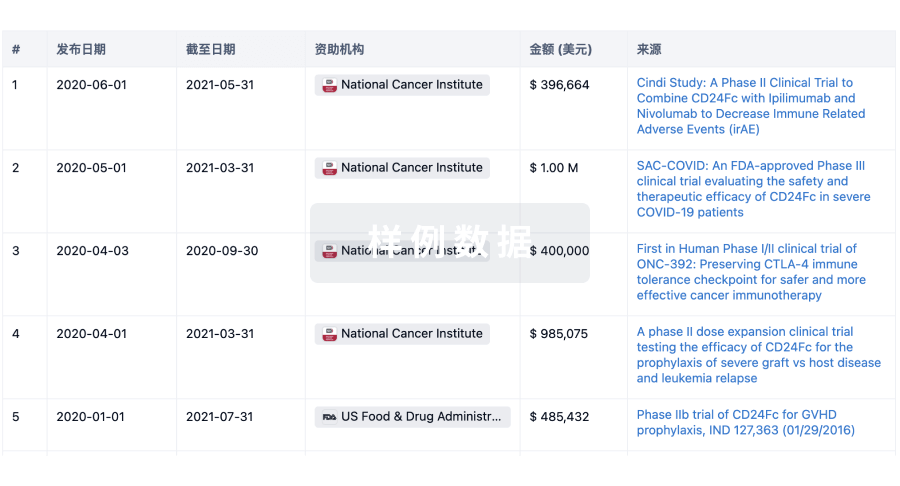
科研基金(NIH)
访问超过 200 万项资助和基金信息,以提升您的研究之旅。
登录
或
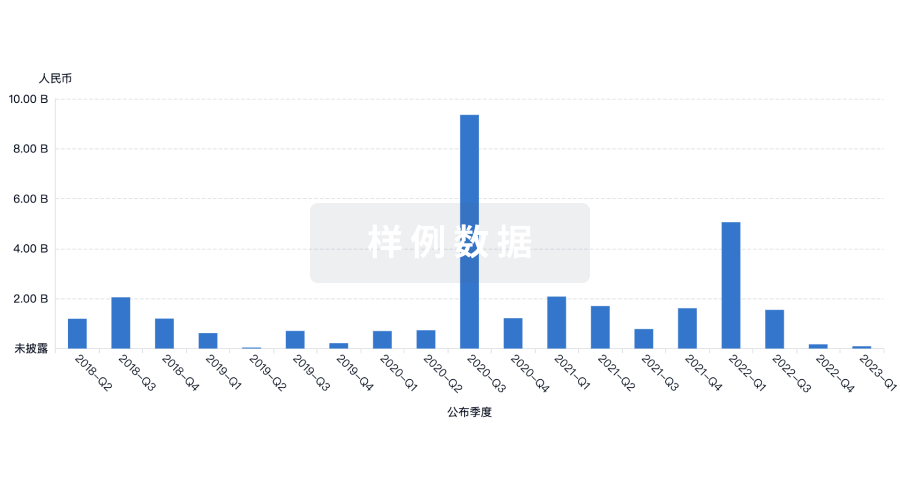
投资
深入了解从初创企业到成熟企业的最新公司投资动态。
登录
或
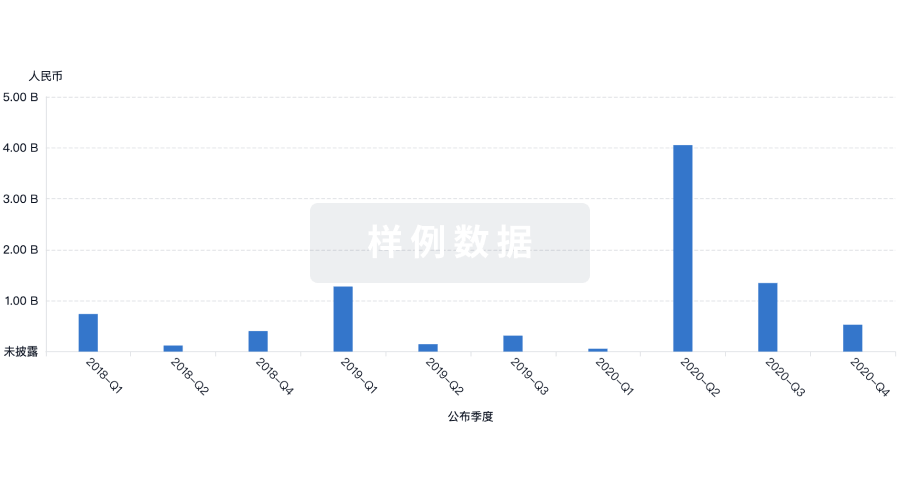
融资
发掘融资趋势以验证和推进您的投资机会。
登录
或
生物医药百科问答
全新生物医药AI Agent 覆盖科研全链路,让突破性发现快人一步
立即开始免费试用!
智慧芽新药情报库是智慧芽专为生命科学人士构建的基于AI的创新药情报平台,助您全方位提升您的研发与决策效率。
立即开始数据试用!
智慧芽新药库数据也通过智慧芽数据服务平台,以API或者数据包形式对外开放,助您更加充分利用智慧芽新药情报信息。
生物序列数据库
生物药研发创新
免费使用
化学结构数据库
小分子化药研发创新
免费使用