预约演示
更新于:2026-02-02
QIAGEN GmbH
更新于:2026-02-02
概览
关联
NCT03739736
Tuberculosis Reduction Through Expanded Anti-retroviral Therapy and Screening of Active TB Project

100 项与 QIAGEN GmbH 相关的临床结果
登录后查看更多信息
登录后查看更多信息
2026-01-01Methods in molecular biology (Clifton, N.J.)
A Beginner Step-by-Step Guide for Gene Expression Analysis Using QIAcuity Digital PCR
Article
作者: Schaepe, Katharina ; Matthaei, Kevin ; Peist, Ralf ; Schock, Gerald ; Weiss, Jonathan ; Nour, Afif Abdel
Gene expression (GEX) is the process by which information from a gene is used to synthesize functional gene products, typically proteins, with messenger ribonucleic acid (mRNA) playing a crucial role. This process is tightly regulated to ensure genes are expressed at the right time, in the right cell type, and in appropriate amounts, which is essential for cellular function, development, and response to environmental signals. Aberrant gene expression can significantly impact cellular behavior and contribute to various diseases, making it a key area of research. Digital PCR (dPCR) offers a robust method for highly precise gene expression analysis by partitioning the PCR reaction into thousands of individual reactions, allowing for absolute quantification of nucleic acids without the need for standard curves. This method addresses several limitations of quantitative PCR (qPCR), such as the need for high PCR efficiency and susceptibility to inhibitors. dPCR's ability to accurately quantify low-abundance targets minimizes variability, artifacts, and nonreproducibility that may be observed with qPCR at low expression levels. However, qPCR remains advantageous for analyzing targets with widely different expression levels, provided that proper optimization and sample dilution are applied. Overall, dPCR offers substantial advantages for gene expression analysis, providing improved accuracy and greater resistance to inhibitors compared to qPCR. These capabilities empower researchers across diverse fields to explore gene expression hypotheses that were previously inaccessible or difficult to access using qPCR.
2024-05-08Journal of clinical microbiology
Multi-center evaluation of the Research Use Only NeuMoDx monkeypox virus (MPXV) fully automated real-time PCR assay
Article
作者: Su, Szu-Chi ; de Salazar, Adolfo ; Garcia, Federico ; Hysa, Gerta ; Viñuela, Laura ; Sklenovská, Nikola ; Gong, Lijie ; Padalko, Elizaveta ; De Smet, Delphine ; Cheung, Helen ; Pekosz, Andrew ; Laenen, Lies ; Mostafa, Heba H ; Fuentes, Ana ; Dadjeu, Urbain Charly ; Wall, Gavin
ABSTRACT:
The mpox outbreak, caused by monkeypox virus (MPXV), accelerated the development of molecular diagnostics. In this study, we detail the evaluation of the Research Use Only (RUO) NeuMoDx MPXV assay by multiple European and US sites. The assay was designed and developed by Qiagen for the NeuMoDx Molecular Systems. Primers and probes were tested for specificity and inclusivity
in silico
. The analytical sensitivity of the assay was determined by testing dilutions of synthetic and genomic MPXV DNA. A total of 296 clinical samples were tested by three sites; the Johns Hopkins University (US), UZ Gent (Belgium, Europe), and Hospital Universitario San Cecilio (Spain, Europe). The analytical sensitivity of the assay was 50 copies/mL for both clades I and II. The assay showed 100%
in silico
identity for 80 clade I and 99.98%
in silico
identity for 5,162 clade II genomes. Clade II primers and probes showed 100%
in silico
specificity; however, identity of at least one of the two sets of clade I primers and probes with variola, cowpox, camelpox, and vaccinia viruses was noticed. The clinical validation showed sensitivity of 99.21% [95% confidence interval (CI): 95.66–99.98%] and specificity of 96.64% (95% CI: 91.62–99.08%) for lesion swab samples. The NeuMoDx MPXV Test shows acceptable analytical and clinical performance. The assay improves the laboratory’s workflow as it consolidates nucleic acid extraction, PCR, data analysis, and interpretation and can be interfaced. The Test Strip can differentiate clades I and II, which has important laboratory safety implications.
IMPORTANCE:
In this manuscript, we provide detailed
in silico
analysis and clinical evaluation of the assay using a large cohort of clinical samples across three academic centers in Europe and the United States. Because the assay differentiates MPXV clades I and II, this manuscript is timely due to the current need to rule out the regulated clade I by diagnostic clinical laboratories. In December 2023, and due to first report of cases of sexually transmitted clade I infections in the Democratic Republic of the Congo, when generic assays that do not differentiate the clades are used, samples are considered regulated. The assay meets the need of full automation and has a marked positive impact on the laboratory workflow.
2024-05-01Nature protocols
Improved sampling and DNA extraction procedures for microbiome analysis in food-processing environments
Article
作者: O'Neil, Dominic ; Margolles, Abelardo ; Quijada, Narciso M ; Pinto, Federica ; Dzieciol, Monika ; Marteinsson, Viggó Thór ; Mahler de Sanchez, Lisa ; Carlino, Niccolò ; Alvarez-Ordóñez, Avelino ; Calvete-Torre, Inés ; Ercolini, Danilo ; Cabrera Rubio, Raul ; Wagner, Martin ; Puente, Alba ; López, Mercedes ; Knobloch, Stephen ; Skírnisdóttir, Sigurlaug ; Prieto, Miguel ; Valentino, Vincenzo ; Ruas-Madiedo, Patricia ; Cobo-Díaz, José F ; Armanini, Federica ; Delgado, Susana ; Cotter, Paul D ; Segata, Nicola ; Sabater, Carlos ; De Filippis, Francesca ; Blanco-Míguez, Aitor ; Barcenilla, Coral
Deep investigation of the microbiome of food-production and food-processing environments through whole-metagenome sequencing (WMS) can provide detailed information on the taxonomic composition and functional potential of the microbial communities that inhabit them, with huge potential benefits for environmental monitoring programs. However, certain technical challenges jeopardize the application of WMS technologies with this aim, with the most relevant one being the recovery of a sufficient amount of DNA from the frequently low-biomass samples collected from the equipment, tools and surfaces of food-processing plants. Here, we present the first complete workflow, with optimized DNA-purification methodology, to obtain high-quality WMS sequencing results from samples taken from food-production and food-processing environments and reconstruct metagenome assembled genomes (MAGs). The protocol can yield DNA loads >10 ng in >98% of samples and >500 ng in 57.1% of samples and allows the collection of, on average, 12.2 MAGs per sample (with up to 62 MAGs in a single sample) in ~1 week, including both laboratory and computational work. This markedly improves on results previously obtained in studies performing WMS of processing environments and using other protocols not specifically developed to sequence these types of sample, in which <2 MAGs per sample were obtained. The full protocol has been developed and applied in the framework of the European Union project MASTER (Microbiome applications for sustainable food systems through technologies and enterprise) in 114 food-processing facilities from different production sectors.
2024-12-23
100 项与 QIAGEN GmbH 相关的药物交易
登录后查看更多信息
100 项与 QIAGEN GmbH 相关的转化医学
登录后查看更多信息
组织架构
使用我们的机构树数据加速您的研究。
登录
或
管线布局
2026年02月09日管线快照
无数据报导
登录后保持更新
药物交易
使用我们的药物交易数据加速您的研究。
登录
或
转化医学
使用我们的转化医学数据加速您的研究。
登录
或
营收
使用 Synapse 探索超过 36 万个组织的财务状况。
登录
或
科研基金(NIH)
访问超过 200 万项资助和基金信息,以提升您的研究之旅。
登录
或
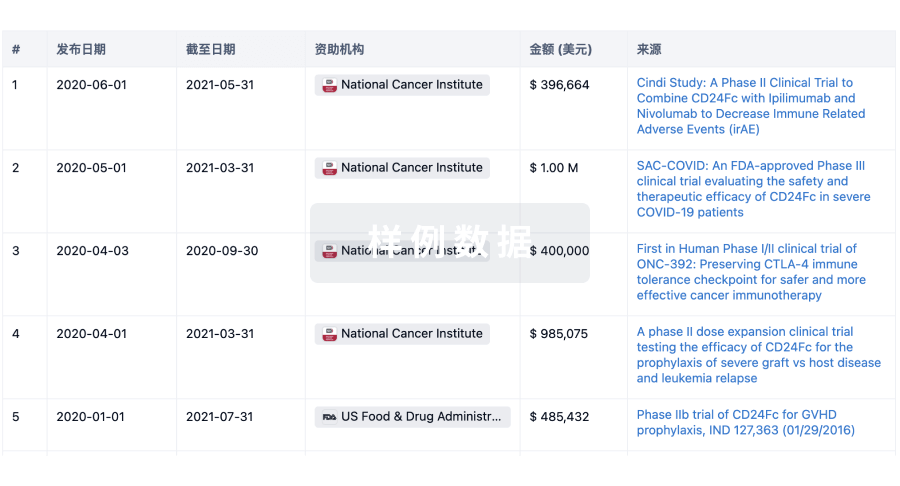
投资
深入了解从初创企业到成熟企业的最新公司投资动态。
登录
或
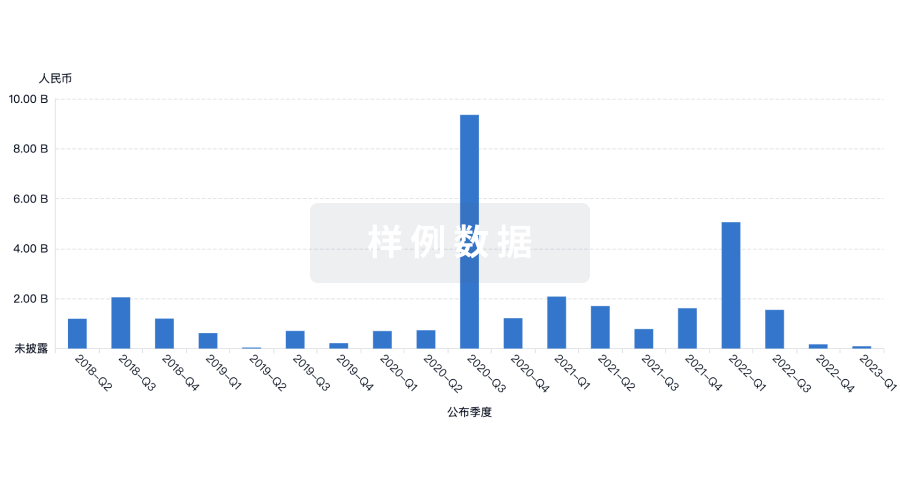
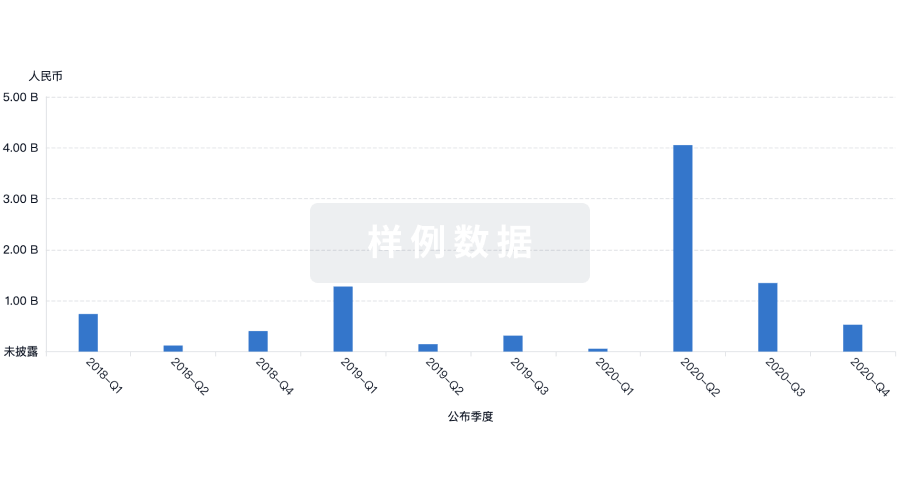
融资
发掘融资趋势以验证和推进您的投资机会。
登录
或
生物医药百科问答
全新生物医药AI Agent 覆盖科研全链路,让突破性发现快人一步
立即开始免费试用!
智慧芽新药情报库是智慧芽专为生命科学人士构建的基于AI的创新药情报平台,助您全方位提升您的研发与决策效率。
立即开始数据试用!
智慧芽新药库数据也通过智慧芽数据服务平台,以API或者数据包形式对外开放,助您更加充分利用智慧芽新药情报信息。
生物序列数据库
生物药研发创新
免费使用
化学结构数据库
小分子化药研发创新
免费使用