预约演示
更新于:2025-12-07

Istituto Nazionale di Astrofisica
更新于:2025-12-07
概览
关联
100 项与 Istituto Nazionale di Astrofisica 相关的临床结果
登录后查看更多信息
0 项与 Istituto Nazionale di Astrofisica 相关的专利(医药)
登录后查看更多信息
6,675
项与 Istituto Nazionale di Astrofisica 相关的文献(医药)2025-12-01·JOURNAL OF ENVIRONMENTAL MANAGEMENT
A new green protocol for selecting translocation sites for coastal cliff endemic plants: a case study from southern Italy
Article
作者: Lämmle, Luca ; D'Aniello, Mariarca ; Jacomini, Carlo ; Toscanesi, Maria ; Strumia, Sandro ; Di Natale, Gabriella ; Trifuoggi, Marco ; Cambria, Vito Emanuele ; Fabrini, Giuseppe ; Panero, Ilaria ; Verga, Martina Nicole ; Santangelo, Annalisa ; Donadio, Carlo
This multidisciplinary study integrates geobotanical and geochemical analyses, employing a green protocol, to identify key factors influencing the presence of Eokochia saxicola and Primula palinuri, two endemic species of sensitive cliff microhabitats in southern Italy. The analysis of physicochemical anthropogenic pressures has been demonstrated to reveal distinct patterns in soil characteristics, which in turn correlate with species occurrence. It is vital for effective species conservation strategies that appropriate microsites for translocation and long-term preservation are identified. This research makes an integral contribution to the realm of ecological restoration, integrating principles of restoration ecology, and thereby provides practical guidelines for future conservation strategies aimed at the ecological rehabilitation of threatened habitats. Beyond the specific case study, this protocol represents a transferable tool for environmental management of coastal cliff ecosystems facing degradation, aligning with restoration ecology and biodiversity conservation goals.
2025-10-01·SENSORS AND ACTUATORS A-PHYSICAL
Implementation of a high-sensitivity thermoresistive microcalorimetric flow sensor: Comparison with a proposed 1D mathematical model and simulations
作者: Valencia-Grisales, D. F. ; Reyes-Betanzo, C.
This study focuses on a Thermoresistive Microcalorimetric Flow (TMCF) sensor for measuring volumetric flow rates of deionized water.A one-dimensional model is proposed to analyze the thermal behavior of channel-type flow sensors, aiming to assess their sensitivity and operational performance.Simulations in COMSOL Multiphysics confirm that the model accurately predicts the sensor′s behavior, validating its effectiveness.Exptl. results further validate the math. model, confirming its accuracy.Addnl., the sensitivities, hysteresis, and response times of the TMCF sensor′s temperature sensors were evaluated while operating in Constant Temperature Difference (CTD) mode.Exptl. measurements of the sensor were performed on a voltage regulation circuit operating in Constant Temperature (CT) mode to obtain an anemometric response.These exptl. results showed good agreement with simulations in COMSOL Multiphysics and later in LTSpice.It was found that these responses were three orders of magnitude smaller than those obtained in CTD mode.The fabrication methodol. of the TMCF sensor was successfully implemented using glass substrates, as proposed in the math. model, and with the geometry defined in the simulations to enhance the sensor′s response.
2025-08-01·MATERIALS SCIENCE IN SEMICONDUCTOR PROCESSING
Impact of conductor losses and metal overetching on integrated superconducting coplanar waveguide resonators
作者: Molina-Reyes, Joel ; Mendez-Jeronimo, Gabriela ; Rocha-Aguilera, Daniel
In this work, basic guidelines for the development of superconducting coplanar waveguide resonators (CPWR) suitable for quantum computing applications are presented along with simulation and exptl. results that highlight the impact of pattern definition.CPWR with resonance frequencies between 5 and 20 GHz were designed, simulated, modeled using an RLC equivalent circuit model and a transmission line model, and fabricated using Al/Si and Al/SiO2/Si structures.Finite element simulations were done using resistivity values for Al corresponding to temperatures in the range between ambient temperature and the superconducting regime.From the simulations, the impact of conductor losses in the quality factors of the resonators was confirmed.To study the effect of the coupling structures, gap and finger coupling capacitors were considered.Results show that undercoupled and overcoupled conditions can be achieved from those coupling structures.Finally, simulations, models and ambient-temperature measurements were correlated.From this comparison, it was found that differences between exptl. and theor. data can be attributed to an imperfect photolithog. definition of the critical dimensions for Al-based CPWR, pointing out the relevance and impact of fabrication processes for integrated circuits operating in the microwave regime.
100 项与 Istituto Nazionale di Astrofisica 相关的药物交易
登录后查看更多信息
100 项与 Istituto Nazionale di Astrofisica 相关的转化医学
登录后查看更多信息
组织架构
使用我们的机构树数据加速您的研究。
登录
或
管线布局
2026年02月09日管线快照
无数据报导
登录后保持更新
药物交易
使用我们的药物交易数据加速您的研究。
登录
或
转化医学
使用我们的转化医学数据加速您的研究。
登录
或
营收
使用 Synapse 探索超过 36 万个组织的财务状况。
登录
或
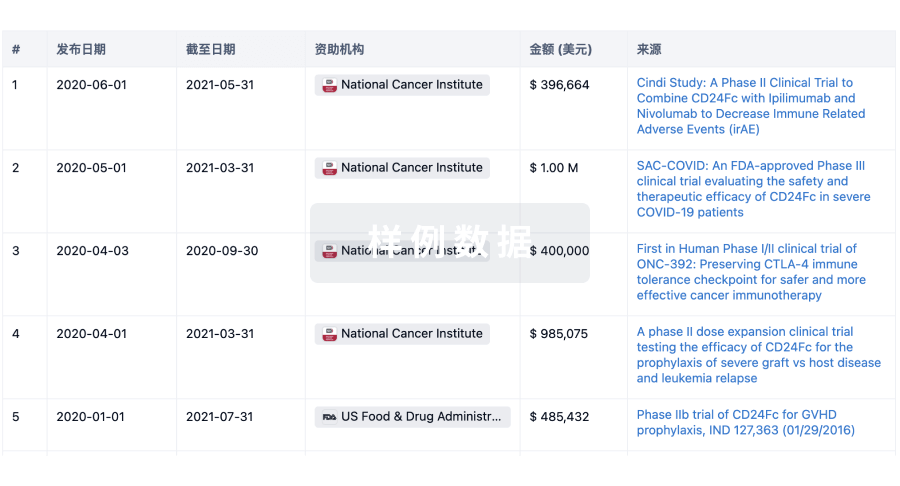
科研基金(NIH)
访问超过 200 万项资助和基金信息,以提升您的研究之旅。
登录
或
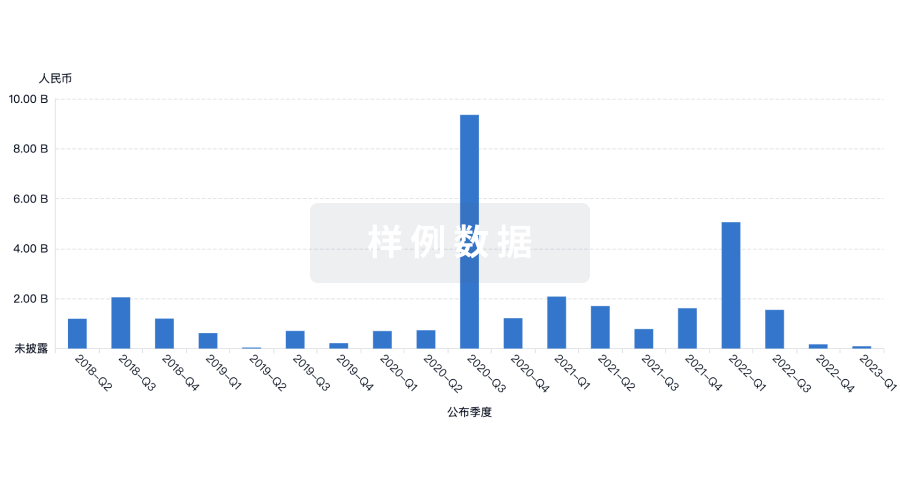
投资
深入了解从初创企业到成熟企业的最新公司投资动态。
登录
或
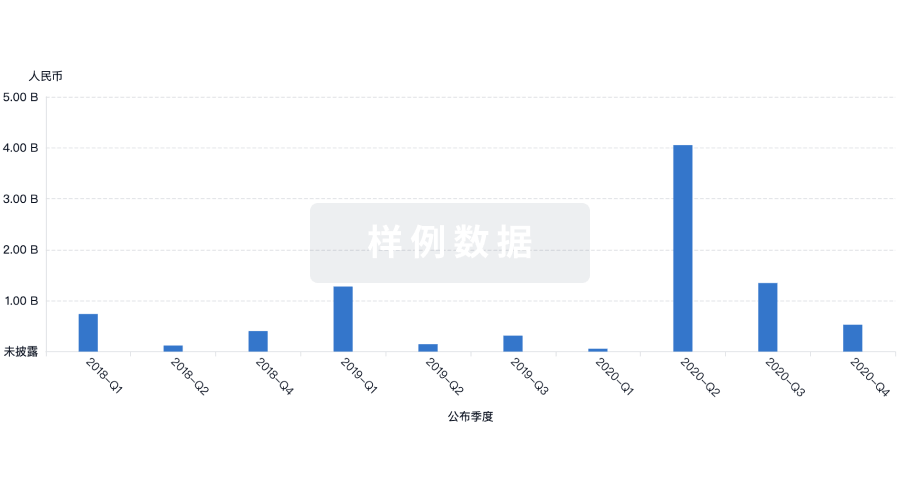
融资
发掘融资趋势以验证和推进您的投资机会。
登录
或
生物医药百科问答
全新生物医药AI Agent 覆盖科研全链路,让突破性发现快人一步
立即开始免费试用!
智慧芽新药情报库是智慧芽专为生命科学人士构建的基于AI的创新药情报平台,助您全方位提升您的研发与决策效率。
立即开始数据试用!
智慧芽新药库数据也通过智慧芽数据服务平台,以API或者数据包形式对外开放,助您更加充分利用智慧芽新药情报信息。
生物序列数据库
生物药研发创新
免费使用
化学结构数据库
小分子化药研发创新
免费使用