预约演示
更新于:2025-12-17

South African National Parks
更新于:2025-12-17
概览
关联
100 项与 South African National Parks 相关的临床结果
登录后查看更多信息
0 项与 South African National Parks 相关的专利(医药)
登录后查看更多信息
163
项与 South African National Parks 相关的文献(医药)2025-12-05·INTEGRATIVE AND COMPARATIVE BIOLOGY
Trunk Tip Wear in Wild African Savanna Elephants
Article
作者: Eigen, Lennart ; Hildebrandt, Thomas ; Fritsch, Guido ; Pottek, Tabea ; Holtze, Susanne ; Heise, Olivia ; de Klerk-Lorist, Lin-Mari ; Buss, Peter ; Göritz, Frank ; Brecht, Michael ; Wibbelt, Gudrun
Synopsis:
The anatomy and function of tactile structures, such as vibrissae, are typically studied in captive animals, but we know little about how tactile structures compare between captive and wild animals. We analyzed trunk tip morphology in wild (n = 6) and captive (n = 6) adult African savanna elephants (Loxodonta africana). We found striking differences in both vibrissae and skin structure between the two groups. Wild elephants showed significant vibrissae abrasion, with frontal trunk tip vibrissae often entirely worn down, whereas captive elephants retained proportionally more long vibrissae, particularly along the trunk tip rim. In wild elephants, vibrissae rarely exceeded 1 cm in length, whereas many captive individuals had vibrissae several centimeters long. In contrast, vibrissae inside the nostril—a trunk region not directly exposed to feeding—were similar in length and density between wild and captive elephants. Additionally, trunk tip skin in wild elephants appeared to be worn down to a smooth surface, whereas all captive elephants showed distinct papillary skin structure and folds at the lateral trunk tip opening and nasal septum. These findings suggest that wild elephants experience feeding-related trunk abrasion, leading to significant alterations in both vibrissa structure and skin texture. Our results highlight the importance of studying sensory structures in wild animals to understand sensing in natural environments.
2025-12-01·VETERINARY MICROBIOLOGY
Multi-locus sequence analysis of Anaplasma in the common warthog (Phacochoerus africanus) from South Africa
Article
作者: Bastos, Armanda ; Rea, Keaton ; Buss, Peter
The prevalence and diversity of Anaplasma in common warthog (Phacochoerus africanus) was investigated using a multi-locus sequence analysis (MLSA) approach targeting the 16S rRNA, citrate synthase (gltA) and heat-shock operon (groESL) genes. PCR screening of 100 warthog samples from the Kruger National Park in South Africa with eight published assays identified 50 positive animals, all of which were initially identified with the 16S rRNA assay. In contrast, the gltA and six groESL assays recovered PCR-positivity rates of 2 % and 0 %-4 %, respectively. As optimisation did not improve Anaplasma detection rates, an alternative groESL assay targeting a 923 bp region was designed. This new assay detected 45 positive animals, all of which were positive with the 16S rRNA assay. Nucleotide sequencing of the three MLSA gene targets confirmed that 50 % (50/100) of warthogs were Anaplasma-positive. Juvenile warthogs displayed a significantly higher infection rate (15/18; 83.3 %) than adults (35/82; 42,68 %). Phylogenetic analyses of individual and concatenated gene datasets confirmed that the Anaplasma species in warthogs is closely related to the species detected in Ornithodoros soft ticks from Zambia. This, together with the high levels of nucleotide sequence identity (≥98.97 %), suggests the likely existence of a host-restricted cycle involving warthogs and the soft ticks that inhabit their burrows. Based on the distinctiveness and monophyly of the Anaplasma species in warthogs and Ornithodoros soft ticks, confirmed through genetic characterisation of three gene regions, we propose that Candidatus status be assigned and suggest "Candidatus Anaplasma ornithodorii".
2025-08-01·VETERINARY IMMUNOLOGY AND IMMUNOPATHOLOGY
Optimisation of bronchoalveolar lavage fluid preparation for mononuclear cell isolation and cytologic evaluation in free-ranging African elephants (Loxodonta africana)
Article
作者: Jooste, Tracey ; Miller, Michele A ; Kerr, Tanya J ; Buss, Peter E ; van der Spuy, Gian D ; Engel, Stacey C ; Johns, Jennifer L ; Kleynhans, Léanie
Understanding immune responses to infectious diseases, such as tuberculosis (TB), is essential for developing diagnostic tests and studying disease progression. Although TB affects African savanna elephants (Loxodonta africana), few studies have investigated immune cells and function in this species, especially in the respiratory tract. Techniques for isolating immune cells from elephant bronchoalveolar lavage (BAL) samples have not been previously reported. Therefore, this study aimed to develop and optimise a protocol to isolate and characterise alveolar cell types in BAL fluid collected from free-ranging, African savanna elephants. The optimised protocol incorporated a mucin digestion step, filtration, Ficoll gradient separation and wash steps to remove contaminants and successfully isolate viable populations of alveolar mononuclear cells. The isolated cells were stained with Rapi-Diff and microscopically examined to differentiate and characterise each cell type present. Cells isolated from healthy African elephant BAL samples, using this method, were predominantly alveolar macrophages (92.5 - 100.0 %) followed by lymphocytes (0.0 - 6.0 %), neutrophils (0.0 - 3.0 %) and eosinophils (0.0 - 1.0 %). This study provides the first optimised protocol for the isolation of alveolar mononuclear cells for future investigations into local immune responses to respiratory diseases such as tuberculosis.
100 项与 South African National Parks 相关的药物交易
登录后查看更多信息
100 项与 South African National Parks 相关的转化医学
登录后查看更多信息
组织架构
使用我们的机构树数据加速您的研究。
登录
或
管线布局
2026年02月08日管线快照
无数据报导
登录后保持更新
药物交易
使用我们的药物交易数据加速您的研究。
登录
或
转化医学
使用我们的转化医学数据加速您的研究。
登录
或
营收
使用 Synapse 探索超过 36 万个组织的财务状况。
登录
或
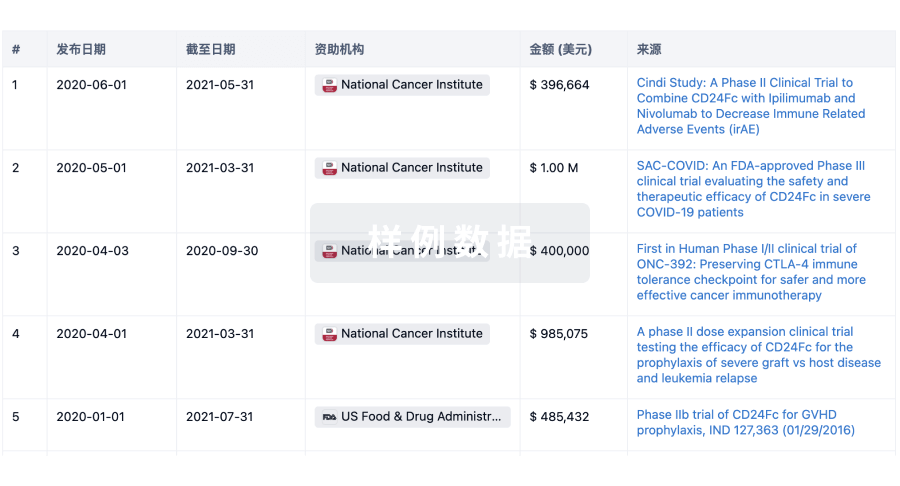
科研基金(NIH)
访问超过 200 万项资助和基金信息,以提升您的研究之旅。
登录
或
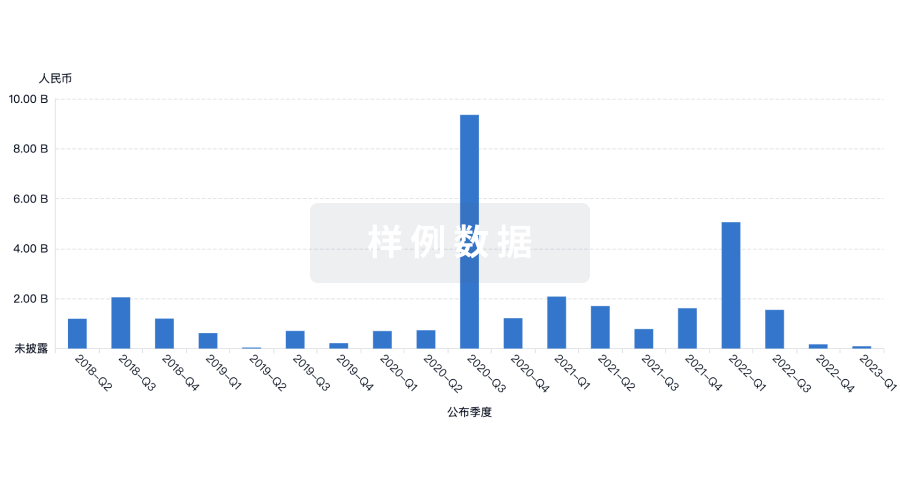
投资
深入了解从初创企业到成熟企业的最新公司投资动态。
登录
或
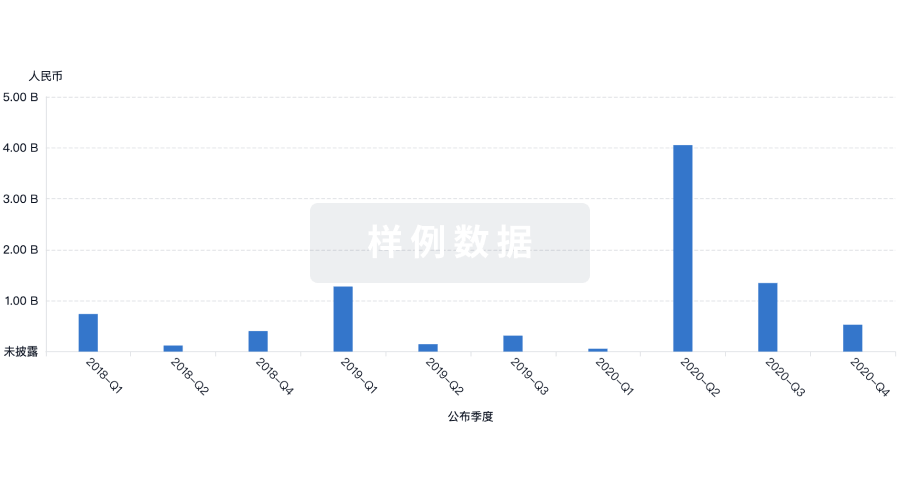
融资
发掘融资趋势以验证和推进您的投资机会。
登录
或
生物医药百科问答
全新生物医药AI Agent 覆盖科研全链路,让突破性发现快人一步
立即开始免费试用!
智慧芽新药情报库是智慧芽专为生命科学人士构建的基于AI的创新药情报平台,助您全方位提升您的研发与决策效率。
立即开始数据试用!
智慧芽新药库数据也通过智慧芽数据服务平台,以API或者数据包形式对外开放,助您更加充分利用智慧芽新药情报信息。
生物序列数据库
生物药研发创新
免费使用
化学结构数据库
小分子化药研发创新
免费使用