预约演示
更新于:2025-05-07
Africa Rice Centre
非盈利组织|South Africa
非盈利组织|South Africa
更新于:2025-05-07
概览
关联
100 项与 Africa Rice Centre 相关的临床结果
登录后查看更多信息
0 项与 Africa Rice Centre 相关的专利(医药)
登录后查看更多信息
336
项与 Africa Rice Centre 相关的文献(医药)2025-12-31·Cogent Food & Agriculture
Leaf reflectance and physiological attributes monitoring differentiate rice cultivars under drought-stress and non-stress conditions
作者: Gamenyah, Daniel Dzorkpe ; Adjah, Kossi Lorimpo ; Wairich, Andriele ; Yadav, Shailesh ; Asante, Maxwell Darko ; Frei, Michael ; Toure, Aboubacar ; Aziadekey, Mawuli ; Wu, Linbo
2025-04-01·Environmental Toxicology and Pharmacology
Mitigating pesticide risk on bee pollinators and angiosperm biodiversity in the Ndop wetlands: A conservation approach
Article
作者: Ndindeng, Sali Atanga ; Fai, Patricia Bi Asanga ; Nkwatoh, Therese Ncheuveu ; Nkwatoh, Louis Sevitenyi ; Elono, Alvine Larissa Meyabeme
2025-02-01·Euphytica
Phenotypic variation among IR64 × TOG5681 rice (Oryza sativa × O. glaberrima) chromosome segment substitution lines (CSSL) in response to iron toxicity, and its associated QTLs
作者: Bocco, Roland ; Sikirou, Mouritala ; Saito, Kazuki ; Drame, Khady Nani ; Lorieux, Mathias
2
项与 Africa Rice Centre 相关的新闻(医药)2024-02-07
African demand for rice is projected to more than double during the next 25 years because of population growth and increased rice consumption. A research project shows that the average yield for Africa's rice sector represents less than half the yield that could be achieved with improved agronomic practices. That means African farmers have the ability to significantly increase crop production without tilling more land.
Africa's rice sector has major opportunities to increase its yield gains through improved agronomic practices while avoiding massive land conversion, a study by international scientists including a Husker co-investigator finds. The production advances can be important in meeting Africa's projected food needs and reducing dependence on imports, the researchers concluded.
Rice demand in Africa is projected to more than double over the next 25 years due to population growth and increased rice consumption. At present, Africa imports nearly 40% of its rice.
"Nearly 15 million hectares of rice are waiting for yield improvement in Africa, but no yield gain can be achieved without better agronomy," said Patricio Grassini, the University of Nebraska-Lincoln professor of agronomy who coordinated the team working on the research study, "Intensifying rice production to reduce imports and land conversion in Africa," published in Nature Communications.
Agronomic practices involving improved land development, soil and plant nutrition, weed control and water management, as well as moderate cropland expansion, "could give the region a more optimistic future," said Kazuki Saito, a former researcher at the Africa Rice Center who is currently at the International Rice Research Institute, who also contributed to the research.
The research project received support from the Bill and Melinda Gates Foundation through the Consultative Group for International Agricultural Research Excellence in Agronomy 2030 (incubation phase).
The research, conducted by researchers from the University of Nebraska-Lincoln, Huazhong Agricultural University, Africa Rice Center, and Wageningen University and Research, shows that current average rice yield in Africa is very low in relation to other parts of the world, indicating a substantial opportunity to enhance African rice production.
By employing a process-based crop simulation modeling approach combined with extensive on-the-ground data collection, the research team found that the average yield for Africa's rice sector represents less than half the yield that could be achieved with improved agronomic practices.
Currently, domestic rice production in Africa meets about 60% of the continent's demand. That import dependence places Africa in a vulnerable position. Without a substantial increase in rice yields, meeting future rice demand will require more rice imports, as well as conversion of wildlife habitat to agricultural use.
"Africa's heavy reliance on imports not only poses a significant threat to food security, but also leaves the continent susceptible to external supply and price shocks, as has happened recently when India imposed bans on rice exports," said Martin van Ittersum, a professor of agronomy at Wageningen University.
Africa's rice imports represent about a third of the rice traded on the global market, said Shen Yuan, a professor of agronomy at Huazhong Agricultural University and lead author of the article.
Boosting African rice yields as outlined in the study can go far in "meeting the future rice demand of 150 million tons by 2050 without increases in current rice exports while reducing the pressure to convert land for rice cultivation," said Shaobing Peng, a professor of agronomy at Huazhong Agricultural University who also contributed to the study.
The process-based crop simulation modeling approach used in the study "is a powerful tool to evaluate and determine opportunities for crop improvement" and has practical relevance for producers in Nebraska and nationwide, said Derek McLean, dean of the Agricultural Research Division at Nebraska.
"This study is an excellent example of our global presence and collaborative nature of researchers at UNL," McLean said. "Supporting crop improvement, food security and agriculture stability throughout the world is good for Nebraska and will eventually catalyze opportunities for our producers." Informed decision-making is key for crop improvement, McLean said, and the technology in this study "provides the key information needed to identify opportunities on a large scale."
2023-08-23
The global demand for rice is projected to rise significantly by 2050, necessitating sustainable intensification of existing croplands. Now, researchers have made significant progress by developing deep-learning algorithms that can rapidly estimate rice yield through the analysis of thousands of photographs. The model exhibited high precision across diverse conditions and cultivars, surpassing previous methods, while effectively detecting yield differences between cultivars and also with different water management practices.
With the rise in global demand for staple crop products projected to substantially increase by 2050 due to population growth, rising per capita income, and the growing use of biofuels, it is necessary to adopt sustainable agricultural intensification practices in existing croplands to meet this demand. However, estimation processes currently employed in the global South remain inadequate. Traditional methods like self-reporting and crop cutting have their limitations, and remote sensing technologies are not fully utilized in this context.
However, recent advancements in artificial intelligence and machine learning, particularly deep learning with convolutional neural networks (CNNs), offer promising solutions here. To explore the scope of this new technology, researchers from Japan conducted a study focusing on rice. They used ground-based digital images taken at harvesting stage of the crop, combined with CNNs, to estimate rice yield. Their study appeared online on 29 June 2023 and was published on 28 July 2023 in Volume 5 of Plant Phenomics.
"We started by conducting an extensive field campaign. We gathered rice canopy images and rough grain yield data from 20 locations in seven countries in order to create a comprehensive multinational database," says Dr. Yu Tanaka, Associate Professor at the Graduate School of Environmental, Life, Natural Science and Technology, Okayama University, who led the study.
The images were captured using digital cameras which could gather the required data from a distance of 0.8-0.9 meters, vertically downwards from the rice canopy. With Dr. Kazuki Saito of the International Rice Research Institute (formerly Africa Rice Center) and other collaborators, the team successfully created a database of 4,820 yield data of harvesting plots and 22,067 images, encompassing various rice cultivars, production systems, and crop management practices.
Next, a CNN model was developed to estimate the grain yield for each of the collected images. The team used a visual-occlusion method to visualize the additive effect of different regions in the rice canopy images. It involved masking specific parts of the images and observing how the model's yield estimation changed in response to the masked regions. The insights gained from this method allowed the researchers to understand how the CNN model interpreted various features in the rice canopy images, influencing its accuracy and its ability to distinguish between yield-contributing components and non-contributing elements in the canopy.
The model performed well, explaining around 68%-69% of yield variation in the validation and test datasets. Study results highlighted the importance of panicles -- loose-branching clusters of flowers -- in yield estimation through occlusion-based visualization. The model could predict yield accurately during the ripening stage, recognizing mature panicles, and also detect cultivar and water management differences in yield in the prediction dataset. Its accuracy, however, decreased as image resolution decreased.
Nevertheless, the model proved robust, showing good accuracy at different shooting angles and times of day. "Overall, the developed CNN model demonstrated promising capabilities in estimating rough grain yield from rice canopy images across diverse environments and cultivars. Another appealing aspect is that it is highly cost effective and does not require labor-intensive crop cuts or complex remote-sensing technologies," says Dr. Tanaka enthusiastically.
The study emphasizes the potential of CNN-based models for monitoring rice productivity at regional scales. However, the model's accuracy may vary under different conditions, and further research should focus on adapting the model to low-yielding and rainy environments. The AI-based method has also been made available to farmers and researchers through a simple smartphone application, thus greatly improving accessibility of the technology and its real-life applications. The name of this application is 'HOJO', and it is already available on iOS and Android. The researchers hope that their work will lead to better management of rice fields and assist accelerated breeding programs, contributing positively to global food production and sustainability initiatives.
100 项与 Africa Rice Centre 相关的药物交易
登录后查看更多信息
100 项与 Africa Rice Centre 相关的转化医学
登录后查看更多信息
组织架构
使用我们的机构树数据加速您的研究。
登录
或
管线布局
2026年02月10日管线快照
无数据报导
登录后保持更新
药物交易
使用我们的药物交易数据加速您的研究。
登录
或
转化医学
使用我们的转化医学数据加速您的研究。
登录
或
营收
使用 Synapse 探索超过 36 万个组织的财务状况。
登录
或
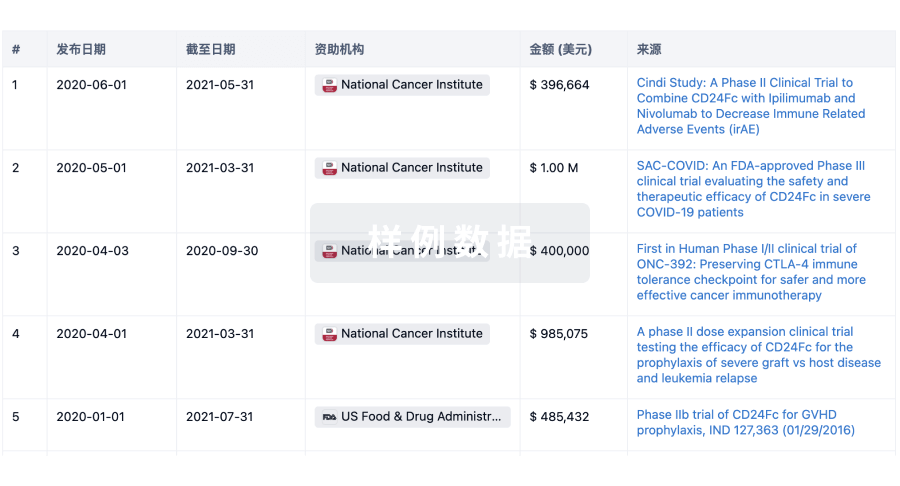
科研基金(NIH)
访问超过 200 万项资助和基金信息,以提升您的研究之旅。
登录
或
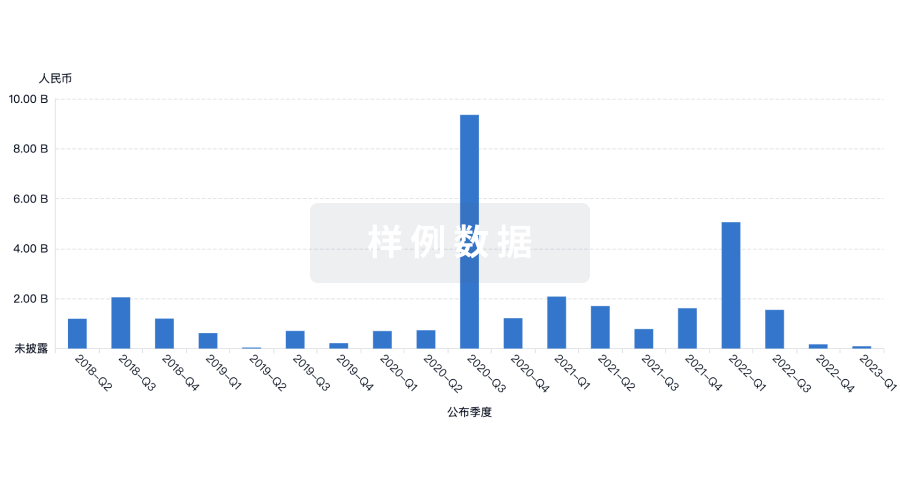
投资
深入了解从初创企业到成熟企业的最新公司投资动态。
登录
或
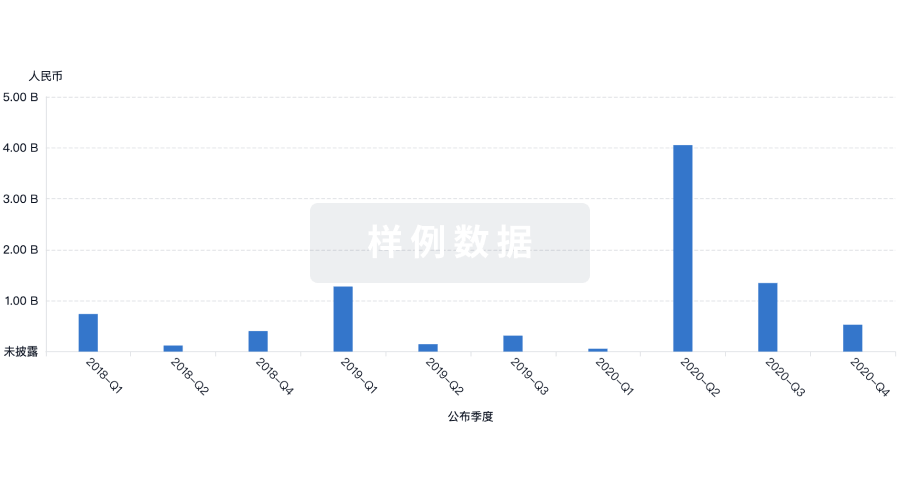
融资
发掘融资趋势以验证和推进您的投资机会。
登录
或
生物医药百科问答
全新生物医药AI Agent 覆盖科研全链路,让突破性发现快人一步
立即开始免费试用!
智慧芽新药情报库是智慧芽专为生命科学人士构建的基于AI的创新药情报平台,助您全方位提升您的研发与决策效率。
立即开始数据试用!
智慧芽新药库数据也通过智慧芽数据服务平台,以API或者数据包形式对外开放,助您更加充分利用智慧芽新药情报信息。
生物序列数据库
生物药研发创新
免费使用
化学结构数据库
小分子化药研发创新
免费使用