预约演示
更新于:2025-12-09

Institute of Advanced Research
更新于:2025-12-09
概览
关联
100 项与 Institute of Advanced Research 相关的临床结果
登录后查看更多信息
0 项与 Institute of Advanced Research 相关的专利(医药)
登录后查看更多信息
134
项与 Institute of Advanced Research 相关的文献(医药)2026-01-01·ARCHIVES OF MICROBIOLOGY
Strategies for biofilm inhibition: the role of synthetic drug- and nanotechnology-based agents
Review
作者: Mishra, Satyendra ; Rathod, Neha V
Biofilms are organized microbial communities that are surrounded by a matrix of extracellular polymeric substance (EPS), which raises significant challenges to environmental, and medical applications. Their intricate architecture and adaptive behavior enable them to resist conventional antimicrobial therapies, primarily due to restricted drug diffusion, altered metabolic activity, and the emergence of resistance mechanisms. To address these challenges, synthetic drug-based strategies have emerged, focusing on the disruption of key stages in biofilm development, such as bacterial adhesion, quorum sensing (QS), EPS production, and biofilm maturation. Quorum sensing inhibitors, including synthetic furanones, peptide-based inhibitors, and nanoparticles, have shown promising results in interfering with biofilm signaling pathways and preventing biofilm maturation. EPS matrix, such as chelating agents and enzymatic treatments, weaken the biofilm matrix, rendering the microbial cells more susceptible to antimicrobial agents. Nanotechnology-driven approaches, utilizing metal nanoparticles, functionalized nanoparticles, and nanocarrier-based drug delivery systems, enhance. These strategies enhance antimicrobial penetration and efficacy while reducing off-target effects; however, clinical translation is limited by cytotoxicity, pharmacokinetic constraints, and microbial adaptation. Future work should prioritize multi-targeted therapies, personalized biofilm disruption, and advanced drug delivery systems to combat biofilm-related infections and industrial biofouling.
2025-12-01·BIOORGANIC & MEDICINAL CHEMISTRY
Design, synthesis and molecular modelling studies of bile acid-curcumin conjugates as potential antiproliferative agents for breast cancer
Article
作者: Dalai, Parmeswar ; Agrawal-Rajput, Reena ; Mishra, Satyendra ; Rathod, Neha V
In this study, novel bile acid-curcumin conjugates (conjugates 3 and 4) were synthesized and structurally characterized using FT-IR, 1H NMR, and 13C NMR spectroscopy. The cytotoxic potential of these conjugates was evaluated against two triple negative breast cancer cell lines (TNBC), 4T1, and MDA-MB-231. Conjugate 3 displayed exceptional cytotoxic activity, with IC₅₀ values of 3.3 ± 0.06 μM for 4 T1 and 0.7 ± 0.01 μM for MDA-MB-231, significantly surpassing the activity of curcumin (IC₅₀ = 29.7 ± 0.9 μM and10.04 μM, respectively). Conjugate 4 also demonstrated enhanced efficacy, with IC₅₀ values of 5.3 ± 0.5 μM (4 T1) and 2.5 ± 0.03 μM (MDA-MB-231). Cell cycle analysis revealed a substantial reduction in the G0/G1 phase population from 89.90 % in untreated cells to 75.10 % for conjugate 3, which induced apoptosis of 37.10 % than curcumin 20.39 % and 75.90 % for conjugate 4, indicating disruption of cell cycle progression and enhanced antiproliferative effects. Both Conjugates 3 and 4 demonstrated excellent biocompatibility, exhibiting no toxicity toward normal macrophages. These findings confirm that bile acid conjugation significantly enhances the antiproliferative potential of curcumin.
2025-11-01·PROTOPLASMA
Cellular nitro-oxidative burden and survival through regulated cell death in the plants
Review
作者: Tiwari, Anand Krishna ; Sharma, Abhishek ; Tiwari, Budhi Sagar ; Ombale, Swapnil ; Bhatt, Mansi
Throughout the life of a plant, generations of different forms of reactive oxygen (ROS) and nitrogen species (RNS) are derived as a by-product of metabolic events. The quantum of ROS and RNS becomes higher once a plant encounters a perturbed situation either through biotic or abiotic factor. As each of reactive species is harmful to the cells beyond certain optimal level, it requires a mechanism to detoxify RONS induced cellular toxicity. For the purpose cell has instituted highly organized multi-layered defense mechanisms. In the first layer of defense, cell produces different antioxidant enzymes and non-enzyme molecules. Once generated, ROS and RNS become beyond the detoxification capacity of cellular antioxidant pool, another strategy comes into the operation wherein a few targeted cells undergo self-autolysis progression known as programmed cell death (PCD). The process of PCD has been partially dissected in plants emphasizing either under amplified ROS or RNS condition. However, there are evidences for reaction between species of ROS and RNS. It is unequivocally evident that superoxide has tendency to react with nitric oxide giving rise to a very potential oxidant called peroxynitrite that has ability to nitrosylate several biomolecules thus, altering cellular fate. This suggests that cellular damage caused by reactive species of nitrogen and oxygen is not only an outcome of accumulation of individual species of ROS and RNS, but a combinatorial product of ROS and RNS may have a key role to play. In this review, we intend to advocate role of cellular nitro-oxidative condition in PCD in plants.
2
项与 Institute of Advanced Research 相关的新闻(医药)2023-07-07
A group has discovered previously unidentified ovarian cancer-specific membrane proteins. Their findings suggest a new strategy to diagnose ovarian cancer.
A study led by Nagoya University in Japan has identified three previously unknown membrane proteins in ovarian cancer. Using a unique technology consisting of nanowires with a polyketone coating, the group succeeded in capturing the proteins, demonstrating a new detection method for identification of ovarian cancer.
The discovery of new biomarkers is important for detecting ovarian cancer, as the disease is difficult to detect in its early stages where it can most easily be treated. One approach to detecting cancer is to look for extracellular vesicles (EVs), especially small proteins released from the tumor called exosomes. As these proteins are found outside the cancer cell, they can be isolated from body fluids, such as blood, urine, and saliva. However, the use of these biomarkers is hindered by the lack of reliable ones for the detection of ovarian cancer.
A research group led by Akira Yokoi (he, him) of the Nagoya University Graduate School of Medicine and Mayu Ukai (she, her) at the Institute for Advanced Research extracted both small and medium/large EVs from high-grade serous carcinoma (HGSC), the most common type of ovarian cancer, and analyzed them using liquid chromatography-mass spectrometry to analyze the proteins.
Initially their research was challenging. "The validation steps for the identified proteins were tough because we had to try a lot of antibodies before we found a good target," said Yokoi. "As a result, it became clear that the small and medium/large EVs are loaded with clearly different molecules. Further investigation revealed that small EVs are more suitable biomarkers than the medium and large type. We identified the membrane proteins FRα, Claudin-3, and TACSTD2 in the small EVs associated with HGSC."
Now that the group had identified the proteins, they investigated whether they could capture EVs in a way that would allow for the identification of the presence of cancer. To do this, they turned to nanowire specialist Takao Yasui of the Graduate School of Engineering at Nagoya University who combined his research with that of Dr. Inokuma at the Japan Science and Technology Agency to create polyketone chain-coated nanowires (pNWs). This technology was ideal for separating exosomes from blood samples.
"pNW creation was tough," Yokoi said. "We must have tried 3-4 different coatings on the nanowires. Although polyketones are a completely new material to use to coat this type of nanowire, in the end, they were such a good fit."
"Our findings showed that each of the three identified proteins is useful as a biomarker for HGSCs," said Yokoi. "The results of this research suggest that these diagnostic biomarkers can be used as predictive markers for specific therapies. Our results allow doctors to optimize their therapeutic strategy for ovarian cancer, therefore, they may be useful for realizing personalized medicine."
2023-05-15
What does the inside of a carbon atom's nucleus look like? A new study provides a comprehensive answer to this question. In the study, the researchers simulated all known energy states of the nucleus. These include the puzzling Hoyle state. If it did not exist, carbon and oxygen would only be present in the universe in tiny traces. Ultimately, we therefore also owe it our own existence.
What does the inside of a carbon atom's nucleus look like? A new study by Forschungszentrum Jülich, Michigan State University (USA) and the University of Bonn provides the first comprehensive answer to this question. In the study, the researchers simulated all known energy states of the nucleus. These include the puzzling Hoyle state. If it did not exist, carbon and oxygen would only be present in the universe in tiny traces. Ultimately, we therefore also owe it our own existence. The study has now been published in the journal Nature Communications.
The nucleus of a carbon atom normally consists of six protons and six neutrons. But how exactly are they arranged? And how does their configuration change when the nucleus is bombarded with high-energy radiation? For decades, science has been searching for answers to these questions. Not least because they could provide the key to a mystery that has long puzzled physicists: Why is there a significant amount of carbon in space at all -- an atom without which there would be no life on Earth?
After all, shortly after the Big Bang, there was only hydrogen and helium. The hydrogen nucleus consists of a single proton, that of helium of two protons and two neutrons. All heavier elements were only created many billions of years later by aging stars. In them, helium nuclei fused into carbon nuclei at immense pressure and extremely high temperatures. This requires three helium nuclei to fuse together. "But it's actually very unlikely for this to happen," explains Prof. Dr. Ulf Meißner of the Helmholtz Institute of Radiation and Nuclear Physics at the University of Bonn and the Institute for Advanced Simulation at Forschungszentrum Jülich. The reason: The helium nuclei together have a much higher energy than a carbon nucleus. However, this does not mean that they fuse particularly readily -- on the contrary: It is as if three people wanted to jump onto a merry-go-round. But since they run much faster than the merry-go-round turns, they do not succeed.
Simulation on the supercomputer
As early as the 1950s, the British astronomer Fred Hoyle therefore postulated that the three helium nuclei first come together to form a kind of transition state. This "Hoyle state" has a very similar energy to the helium nuclei. To stay in the picture: It is a faster-spinning version of the merry-go-round, which the three passengers can therefore easily jump onto. When that happens, the carousel slows down to its normal speed. "Only by taking a detour via the Hoyle state can stars create carbon at all in any appreciable quantity," says Meißner, who is also a member of the Transdisciplinary Research Areas "Modeling" and "Matter" of the University of Bonn.
About ten years ago, together with colleagues from the USA, Forschungszentrum Jülich and Ruhr-Universität Bochum, he succeeded in simulating this Hoyle state for the first time. "We already had an idea then of how the protons and neutrons of the carbon nucleus are arranged in this state," he explains. "However, we were not able to prove with certainty that this assumption was true." With the help of an advanced method, the researchers have now succeeded. This is essentially based on confinement: In reality, the protons and neutrons -- the nucleons -- can be located anywhere in space. For their calculations, however, the team restricted this freedom: "We arranged our nuclear particles on the nodes of a three-dimensional lattice," Meißner explains. "So we allowed them only certain strictly defined positions."
Computing time: five million processor hours
Thanks to this restriction, it was possible to calculate the motion of nucleons. Since nuclear particles affect each other differently depending on their distance from each other, this task is very complex. The researchers also ran their simulation several million times with slightly different starting conditions. This allowed them to see where the protons and neutrons were most likely to be. "We performed these calculations for all known energy states of the carbon nucleus," Meißner says. The calculations were performed on the JEWELS supercomputer at Forschungszentrum Jülich. They required a total of about five million processor hours, with many thousands of processors working simultaneously.
The results effectively provide images from the carbon nucleus. They prove that the nuclear particles do not exist independently of each other. "Instead, they are clustered into groups of two neutrons and two protons each," the physicist explains. This means that the three helium nuclei can still be detected after they have fused to form the carbon nucleus. Depending on the energy state, they are present in different spatial formations -- either arranged into an isosceles triangle or like a slightly bent arm, with the shoulder, elbow joint and wrist each occupied by a cluster.
The study not only allows researchers to better understand the physics of the carbon nucleus. Meißner: "The methods we have developed can easily be used to simulate other nuclei and will certainly lead to entirely new insights."
Participating institutions and funding:
Forschungszentrum Jülich, Michigan State University (USA), the China Academy of Engineering Physics and the University of Bonn were involved in the study. The work was made possible by funding from the German Research Foundation, the National Natural Science Foundation of China, the Chinese Academy of Sciences (CAS), the Volkswagen Foundation, the European Research Council (ERC), the U.S. Department of Energy, the Nuclear Computational Low-Energy Initiative (NUCLEI), and the Gauss Center for Supercomputing e.V.
放射疗法
100 项与 Institute of Advanced Research 相关的药物交易
登录后查看更多信息
100 项与 Institute of Advanced Research 相关的转化医学
登录后查看更多信息
组织架构
使用我们的机构树数据加速您的研究。
登录
或
管线布局
2026年02月09日管线快照
无数据报导
登录后保持更新
药物交易
使用我们的药物交易数据加速您的研究。
登录
或

转化医学
使用我们的转化医学数据加速您的研究。
登录
或
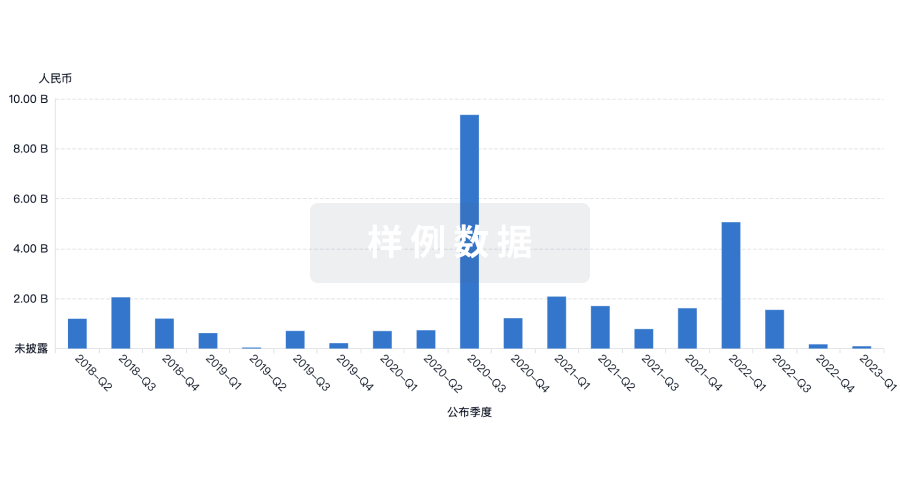
营收
使用 Synapse 探索超过 36 万个组织的财务状况。
登录
或
科研基金(NIH)
访问超过 200 万项资助和基金信息,以提升您的研究之旅。
登录
或
投资
深入了解从初创企业到成熟企业的最新公司投资动态。
登录
或
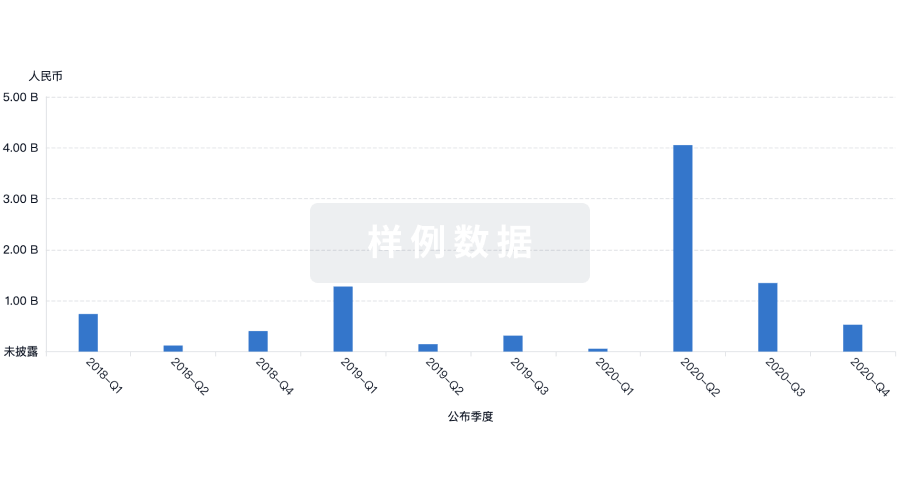
融资
发掘融资趋势以验证和推进您的投资机会。
登录
或
生物医药百科问答
全新生物医药AI Agent 覆盖科研全链路,让突破性发现快人一步
立即开始免费试用!
智慧芽新药情报库是智慧芽专为生命科学人士构建的基于AI的创新药情报平台,助您全方位提升您的研发与决策效率。
立即开始数据试用!
智慧芽新药库数据也通过智慧芽数据服务平台,以API或者数据包形式对外开放,助您更加充分利用智慧芽新药情报信息。
生物序列数据库
生物药研发创新
免费使用
化学结构数据库
小分子化药研发创新
免费使用