预约演示
更新于:2025-05-07
Celltrion Biopharma Ltd.
子公司|Ireland
子公司|Ireland
更新于:2025-05-07
概览
关联
100 项与 Celltrion Biopharma Ltd. 相关的临床结果
登录后查看更多信息
0 项与 Celltrion Biopharma Ltd. 相关的专利(医药)
登录后查看更多信息
3
项与 Celltrion Biopharma Ltd. 相关的新闻(医药)2016-01-15
January 16, 2016
By
Alex Keown
, BioSpace.com Breaking News Staff
THOUSAND OAKS, Calif. –
Amgen
stock is down this morning after U.S. patent officials denied company petitions to review patents on
AbbVie
’s
Humira
, which will hinder Amgen’s development of a biosimilar to the blockbuster anti-inflammatory treatment, Reuters
reported
this morning.
Amgen
sought the review of the patent in June, arguing that the patents in question should not have been granted in the first place for Humira, Reuters said. In its denial the patent agency said “we determine, based on the petition and the accompanying evidence, that
Amgen
has not shown a reasonable likelihood of prevailing on any of its challenges,” Reuters reported. Despite the denial,
Amgen
told Reuters it expected to challenge to the legality of the patents in the courts.
Amgen
has nine biosimilar molecules in its pipeline, with the potential to launch five of its biosimilars between 2017 and 2019. The most advanced is ABP 501, a biosimilar for Humira. In Oct. 2015,
Amgen
announced
positive Phase III results of ABP 501, a biosimilar to Humira (adalimumab) in patients with rheumatoid arthritis.
Biosimilars, which are made inside a living cell, are always uniquely different in composition, which differentiates them from generic drugs, which are exact replicas of other drugs. They have been widely available in Europe since 2006, but the
FDA
was only granted the right to review and approve them when Obamacare was passed in 2010.
Some see biosimilars as a threat to the profit margin of pharmaceutical companies.
Citigroup
analysts have predicted a transfer of at least $110 billion of value from innovator companies to copycat producers in the next decade, Reuters
said
.
Express Scripts
, a manager of drug benefit plans in the U.S., estimated the U.S. could save $250 billion over a 10 year span of 2014 and 2024 if 11 of the likeliest biosimilars reach the market.
In October,
Amgen
and Dublin-based
Allergan Inc.
announced positive results in a Phase III trial for ABP 215, a biosimilar to
Roche
’s cancer drug Avastin, used to treat advanced non-squamous non-small cell lung cancer (NSCLC).
While
Amgen
is fighting
AbbVie
’s patents, it lost its own fight with
Novartis
’s subsidiary Sandoz over biosimilars. In September,
Novartis
and
Sandoz
launched
the first approved biosimilar Zarxio in the United States after a U.S. court denied
Amgen
’s appeals to block sales of the drug, which is a “copycat” version of that company’s blockbuster treatment Neupogen.
Amgen
sought to protect its revenue stream by blocking the sale of Zarxio in the United States. In July, a U.S. appeals court
ruled
that
Novartis
had to wait until Sept. 2 to launch its biosimilar of
Amgen
’s.
Also in September, the
U.S. Food and Drug Administration
accepted
Sandoz
’ application for a biosimilar version to
Amgen
’s Neulasta, called pegfilgrastim, which is used to fight infection in cancer patients. Neulasta earned $1.26 billion in the third quarter, according to
Amgen
’s report. Over the summer the
FDA
accepted
Sandoz
’ submission for approval of a biosimilar copy of
Amgen
‘s blockbuster Enbrel drug.
In
August
,
Joe Jimenez
, Novartis’s chief executive officer,
predicted
the biosimilar market will hit a stride in three to five years. Currently biosimilar drugs earn
Novartis
about $500 million annually and Jimenez told Reuters then that he expected that amount to increase by about 20 percent annually. Jimenez predicted the biosimilar role will take off by 2020 at the latest as popular prescription medications lose patent protection. Swiss-based
Roche
may soon see biosimilar competition in Europe for its blood cancer drug MabThera (Rituxan in the United States), which lost patent protection in Europe in 2014.
Novartis
isn’t the only company to focus on biosimilar development. Companies such as Israel’s
Teva Pharmaceutical Industries Ltd.
and South Korea’s
Celltrion Biopharmaceuticals
are developing biosimilars to treat cancer and other autoimmune diseases.
临床3期上市批准临床结果生物类似药专利侵权
2015-11-18
November 18, 2015
By
Alex Keown
, BioSpace.com Breaking News Staff
ZURICH –
Novartis
’ subsidiary
Sandoz, Inc.
continues to take aim at
Amgen
by filing with another biosimilar to an
Amgen
drug. This morning,
Novartis
’s
Sandoz
announced
the
U.S. Food and Drug Administration (FDA)
accepted its application for a biosimilar version to Neulasta, called pegfilgrastim, which is used to fight infection in cancer patients.
This is the third biosimilar
Sandoz
has filed in the United States, which is part of plans to to 10 biosimilars over the next three years, the company said in a statement.
Mark McCamish
, head of
Global Biopharmaceutical & Oncology Injectables Development
at
Sandoz
said the ramping up of biosimilar filings is part of the company’s commitment “to expanding patient access to biologics in the U.S.”
Sandoz
said it has a pipeline of several biosimilars across various stages of development including five programs in Phase III clinical trials or registration preparation.
The Neulasta biosimilar is supported by three clinical trials that indicates the therapy is “highly similar to the reference product and therefore justifies use of biosimilar pegfilgrastim in the reference product`s indication,” the company said in a statement.
Neulasta earned $1.26 billion in the third quarter, according to
Amgen
’s report. That exceeded analysts’ expectations who pegged the drug to generate $1.17 billion, Reuters
said
.
Last month the
FDA
accepted
Sandoz
’s submission for approval of a biosimilar copy of
Amgen
‘s blockbuster Enbrel drug, Reuters reported.
In September,
Novartis
and
Sandoz
launched
the first approved biosimilar Zarxio in the United States after a U.S. court denied
Amgen
’s appeals to block sales of the drug, which is a “copycat” version of that company’s blockbuster treatment Neupogen.
Amgen
sought to protect its revenue stream by blocking the sale of Zarxio in the United States. In July, a U.S. appeals court
ruled
that
Novartis
had to wait until Sept. 2 to launch its biosimilar of
Amgen
’s.
By offering Zarxio at a price point 15 percent below Neupogen,
Novartis
and its biosimilar subsidiary
Sandoz
are looking to take a big chunk of the $1.2 billion the drug raked in last year. A 300 microgram syringe of Zarxio is expected to cost $275.66 and the 480 mcg version is expected to have a wholesale cost of $438.98, Reuters said. Wholesale price points for Neupogen are $324.30 and $516.45 for the same syringe formulations.
Biosimilars, which are made inside a living cell, are always uniquely different in composition, which differentiates them from generic drugs, which are exact replicas of other drugs. They have been widely available in Europe since 2006, but the
FDA
was only granted the right to review and approve them when Obamacare was passed in 2010.
Some see biosimilars as a threat to the profit margin of pharmaceutical companies.
Citigroup
analysts have predicted a transfer of at least $110 billion of value from innovator companies to copycat producers in the next decade, Reuters said.
Express Scripts Inc.
, a manager of drug benefit plans in the U.S., estimated the U.S. could save $250 billion over a 10 year span of 2014 and 2024 if 11 of the likeliest biosimilars reach the market, Reuters said.
In
August
,
Joe Jimenez
,
Novartis
’s chief executive officer,
predicted
the biosimilar market will hit a stride in three to five years. Currently biosimilar drugs earn
Novartis
about $500 million annually and Jimenez told Reuters then that he expected that amount to increase by about 20 percent annually. Jimenez predicted the biosimilar role will take off by 2020 at the latest as popular prescription medications lose patent protection. Swiss-based Roche may soon see biosimilar competition in Europe for its blood cancer drug MabThera (Rituxan in the United States), which lost patent protection in Europe in 2014.
Novartis
isn’t the only company to focus on biosimilar development. Companies such as Israel’s
Teva Pharmaceutical Industries Ltd.
and South Korea’s
Celltrion Biopharmaceuticals
are developing biosimilars to treat cancer and other autoimmune diseases.
临床3期上市批准生物类似药申请上市
2015-10-27
October 27, 2015
By
Alex Keown
, BioSpace.com Breaking News Staff
ZURICH – Following the approval of its landmark biosimilar drug in the United States,
Novartis AG
is looking for 10 more biosimilar filings within the next three years, Reuters
reported
in a brief this morning.
In August
Joe Jimenez
,
Novartis
’ chief executive officer,
predicted
the biosimilar market will hit a stride in three to five years. Currently biosimilar drugs earn Novartis about $500 million annually and Jimenez told Reuters then that he expected that amount to increase by about 20 percent annually. Jimenez predicted the biosimilar role will take off by 2020 at the latest as popular prescription medications lose patent protection. Swiss-based Roche may soon see biosimilar competition in Europe for its blood cancer drug MabThera (Rituxan in the United States), which lost patent protection in Europe in 2014.
Biosimilars, which are made inside a living cell, are always uniquely different in composition, which differentiates them from generic drugs, which are exact replicas of other drugs. They have been widely available in Europe since 2006, but the
FDA
was only granted the right to review and approve them when Obamacare was passed in 2010.
Citigroup
analysts have predicted a transfer of at least $110 billion of value from innovator companies to copycat producers in the next decade, Reuters said. Express Scripts, a manager of drug benefit plans in the U.S., estimated the U.S. could save $250 billion over a 10 year span of 2014 and 2024 if 11 of the likeliest biosimilars reach the market, Reuters said.
In September,
Novartis
launched
the first approved biosimilar in the United States after a U.S. court denied
Amgen
’s appeals to block sales of the drug, which is a “copycat” version of that company’s blockbuster treatment Neupogen.
By offering Zarxio at a price point 15 percent below Neupogen,
Novartis
and its biosimilar subsidiary
Sandoz
are looking to take a big chunk of the $1.2 billion the drug raked in last year. A 300 microgram syringe of Zarxio is expected to cost $275.66 and the 480 mcg version is expected to have a wholesale cost of $438.98, Reuters said. Wholesale price points for Neupogen are $324.30 and $516.45 for the same syringe formulations.
In addition to
Novartis
, companies such as Israel’s
Teva Pharmaceutical Industries Ltd.
and South Korea’s
Celltrion Biopharmaceuticals
are developing biosimilars to treat cancer and other autoimmune diseases, Reuters said.
Novartis
’
Zarxio
, which is manufactured by its subsidiary
Sandoz, Inc.
, was approved under the biosimilars pathway established by the Biologics Price Competition and Innovation Act. Data has shown Zarxio had “no clinically meaningful differences to the US-licensed reference product,” the company said. During the head-to-head
PIONEER
study between Zarxio and Neupogen, both products produced the expected reduction in the duration of severe neutropenia in cancer patients undergoing myelosuppressive chemotherapy (1.17 and 1.20 days for Zarxio and the reference product, respectively). The mean time to absolute neutrophil count recovery in cycle one was also similar (1.8 days ± 0.97 in ZARXIO arm vs 1.7 days ± 0.81 in reference product arm). No immunogenicity or antibodies against rhG-CSF were detected throughout the study. Neutropenia, the condition both drugs treat, happens when common white blood cells, neutrophils, dip below healthy levels, most commonly due to cancer treatment or advanced HIV/AIDS.
上市批准临床结果生物类似药专利到期
100 项与 Celltrion Biopharma Ltd. 相关的药物交易
登录后查看更多信息
100 项与 Celltrion Biopharma Ltd. 相关的转化医学
登录后查看更多信息
组织架构
使用我们的机构树数据加速您的研究。
登录
或
管线布局
2026年10月13日管线快照
无数据报导
登录后保持更新
药物交易
使用我们的药物交易数据加速您的研究。
登录
或
转化医学
使用我们的转化医学数据加速您的研究。
登录
或
营收
使用 Synapse 探索超过 36 万个组织的财务状况。
登录
或
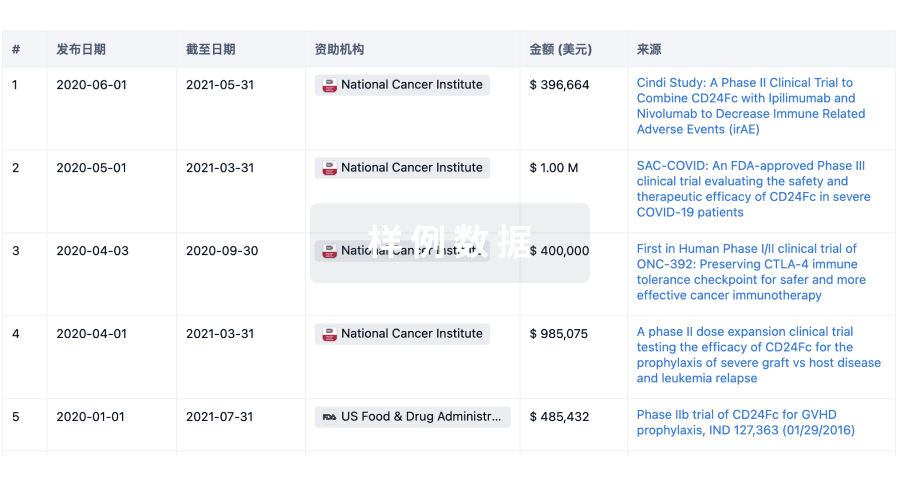
科研基金(NIH)
访问超过 200 万项资助和基金信息,以提升您的研究之旅。
登录
或
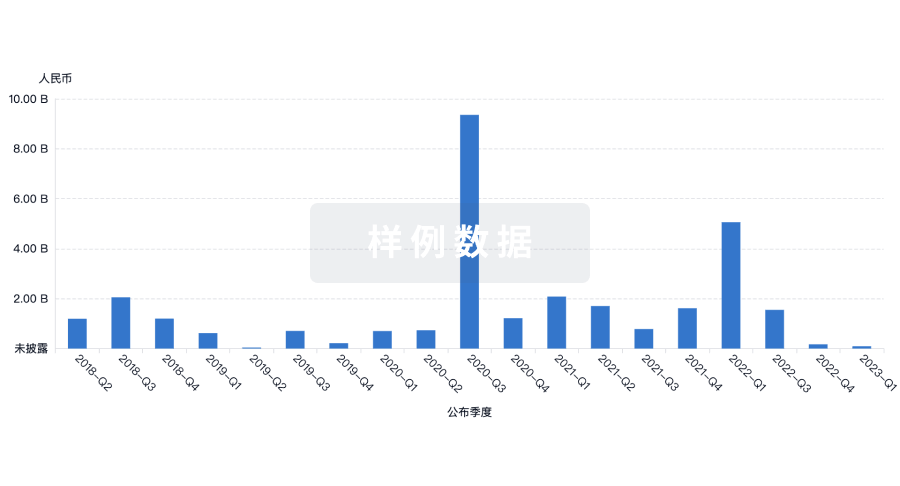
投资
深入了解从初创企业到成熟企业的最新公司投资动态。
登录
或
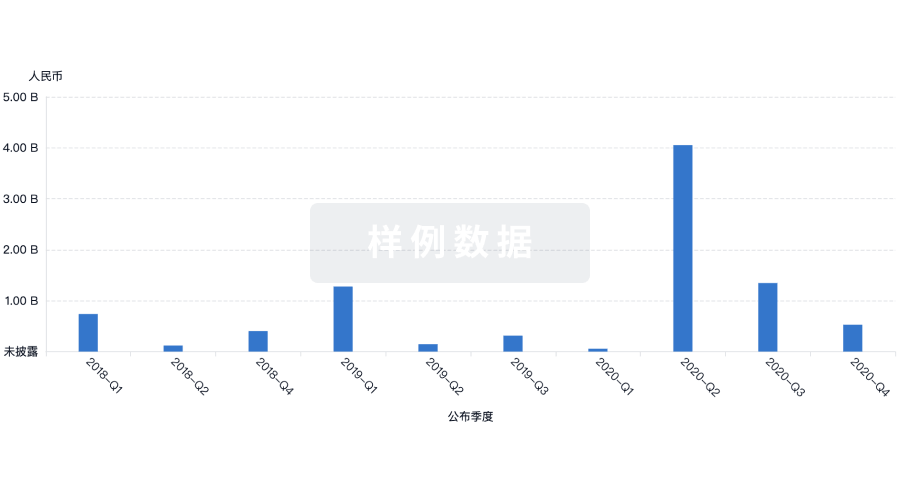
融资
发掘融资趋势以验证和推进您的投资机会。
登录
或
提出任何生物医药研究问题
让每一步生物医药决策都精准制胜
基于十亿级生物数据与全球情报的精准 AI,赋能早期药物发现
立即开始免费试用!
智慧芽新药情报库是智慧芽专为生命科学人士构建的基于AI的创新药情报平台,助您全方位提升您的研发与决策效率。
立即接入生物医药数据包
智慧芽新药库数据也通过智慧芽开放平台,以MCP或API服务形式对外开放。立即使用我们的MCP服务定制您的LLM智能体。
生物序列数据库
生物药研发创新
免费使用
化学结构数据库
小分子化药研发创新
免费使用