预约演示
更新于:2025-12-09

Lander University
更新于:2025-12-09
概览
关联
100 项与 Lander University 相关的临床结果
登录后查看更多信息
0 项与 Lander University 相关的专利(医药)
登录后查看更多信息
112
项与 Lander University 相关的文献(医药)2025-08-01·Journal of Physical Activity & Health
Primary Health Care Costs Associated With Trajectories of Physical Activity Over 10 Years
Article
作者: Brown, Wendy J. ; Morais, Luana Carolina de ; Turi-Lynch, Bruna Camilo ; Monteiro, Henrique Luiz ; Codogno, Jamile Sanches ; Lemes, Ítalo Ribeiro ; Mielke, Gregore Iven
Background: The aim of this study was to investigate whether health care costs were influenced by trajectories of physical activity (PA) over a 10-year period. Methods: Five hundred and forty-one users of primary health care services in Brazil were followed from 2010 to 2020. PA (questionnaire) was assessed every 2 years. The score of PA was used in latent class trajectory models, and 4 trajectories were chosen: (1) low (participants who started and finished the follow-up with the lowest PA values), (2) moderate (participants who started with moderate PA levels and had a slight decrease), (3) decreasing (participants who showed a marked decrease), and (4) high (participants who started and finished with the highest PA levels). Health care costs were retrieved from medical records. Quantile regression was performed to compare costs according to trajectories of PA. Results: Median values of PA scores decreased over time in all groups, but this was more evident in the Decreasing group (54% decline). Costs in each year became more highly skewed over time, with very high maximum costs (approximately US$ 200) noted in the Low and Decreasing groups. Moderate and High groups had lower costs than the Low group in both the median and 90th percentile analyses. Using the median data, compared with costs in the Low group, costs were reduced by 26% and 43% in the Moderate and High groups, respectively. In the 90th percentile, these reductions were 48% and 55%, respectively. Conclusion: The achieving and maintaining of moderate or high PA levels over 10 years was associated with significant cost savings.
2025-07-01·Obesity Research & Clinical Practice
Healthcare costs according to obesity and physical activity: 8-year longitudinal study among patients assisted by the Brazilian National Healthcare System
Article
作者: Turi-Lynch, Bruna Camilo ; de Morais, Luana Carolina ; Araujo, Monique Yndawe Castanho ; Codogno, Jamile Sanches ; Monteiro, Henrique Luiz ; Fernandes, Romulo Araújo ; Lemes, Ítalo Ribeiro ; Koyama, Kelly Akemi Kikuti
INTRODUCTION:
Obesity is a risk factor for the development of many chronic diseases, and, consequently, it is associated with an increase in the use of health services. On the other hand, practicing physical activity reduces healthcare costs. However, the long-term roles of physical activity and obesity in healthcare costs are not well explored in the literature.
OBJECTIVE:
This study aimed to investigate the physical activity (PA) and obesity trajectory in relation to health costs, in participants treated by primary care, over a period of eight years.
METHODS:
The sample included 291 participants, aged ≥ 50 years, evaluated between 2010 and 2018. Weight and height were used to calculate the body mass index (BMI), and PA was evaluated by a questionnaire. Healthcare costs were extracted from medical records. The General Structural Equation Model (GSEM) was used to analyze the trajectory of the variables in the eight-year follow-up.
RESULTS:
In 2010, the median healthcare cost was US$51.61, an increase of 54 % compared to 2018. BMI and PA decreased by around 2 % and 22.6 %, respectively. At baseline, BMI affected the trajectory of health costs, increasing costs by US$ 1.55 (p = 0.024).
CONCLUSION:
In conclusion, in eight years, participants presented decreases in BMI and PA and increases in health costs. BMI, but not PA, affected the increase in healthcare costs at baseline.
2024-10-30·INDUSTRIAL & ENGINEERING CHEMISTRY RESEARCH
Exploring the Potential of Novel ZnO-SnSe Composites for Efficient Photodegradation of Methylene Blue under Visible Light
作者: Zulfiqar, Sonia ; Shah, Attaullah ; Cochran, Eric W. ; Hussain, Afzal ; Riaz, Ayesha ; Hussain, Rafaqat ; Azeem, Muhammad
With increasingly strict water regulations, the removal of toxic organic pollutants from industrial wastewaters has become a critical challenge.Herein, a series of novel ZnO-SnSe composite-based photocatalysts were effectively synthesized by an inexpensive, facile chem. process.The prepared composites were analyzed thoroughly by utilizing different techniques, and their physiochem. characteristics were compared with pure ZnO rods and SnSe nanoparticles.X-ray diffraction (XRD) data showed the existence of a hexagonal wurtzite phase of ZnO and an orthorhombic structure of SnSe.The average crystallite sizes of ZnO and SnSe were determined to be 37 and 16 nm, while for the composite samples, the size varied between 20 and 26 nm, resp.The purity of the samples was confirmed through an elemental compositional study using energy-dispersive X-ray anal. (EDX).Field emission scanning electron micrographs (FESEM) showed that ZnO appeared to be rod-shaped with random orientation.Similarly, SnSe was composed of agglomerated particles.The microstructure of ZnO-SnSe composites showed the coexistence of both nanoparticles and rod-like structures.The PL spectra revealed defects associated with oxygen vacancies, which were dominant factors for the enhanced photocatalytic activities.The absorption spectra and band gap energies of ZnO-SnSe composites revealed a red shift compared to pure ZnO rods.The band gap values were reduced from 3.2 eV (pure ZnO) to 1.9 eV by increasing the concentration of SnSe in the composites.The prepared samples were tested for the visible light-mediated decomposition of methylene blue (MB) with and without H2O2.The ZnO-SnSe composites showed a significantly enhanced photocatalytic degradation of methylene blue compared to the pure ZnO and SnSe, achieving a degradation efficiency of over 98% in 300 min (without H2O2) and 97% in 160 min of exposure time (with H2O2).Furthermore, the degradation rate, determined via the Langmuir-Hinshelwood model, increased from 3.38 x 10⁻³ to 1.12 x 10⁻² min-1 for ZnO-SnSe composites.The scavenger studies elucidated that •OH radicals and holes were primarily responsible for the enhanced photodegradation of MB.
100 项与 Lander University 相关的药物交易
登录后查看更多信息
100 项与 Lander University 相关的转化医学
登录后查看更多信息
组织架构
使用我们的机构树数据加速您的研究。
登录
或
管线布局
2026年02月08日管线快照
无数据报导
登录后保持更新
药物交易
使用我们的药物交易数据加速您的研究。
登录
或
转化医学
使用我们的转化医学数据加速您的研究。
登录
或
营收
使用 Synapse 探索超过 36 万个组织的财务状况。
登录
或
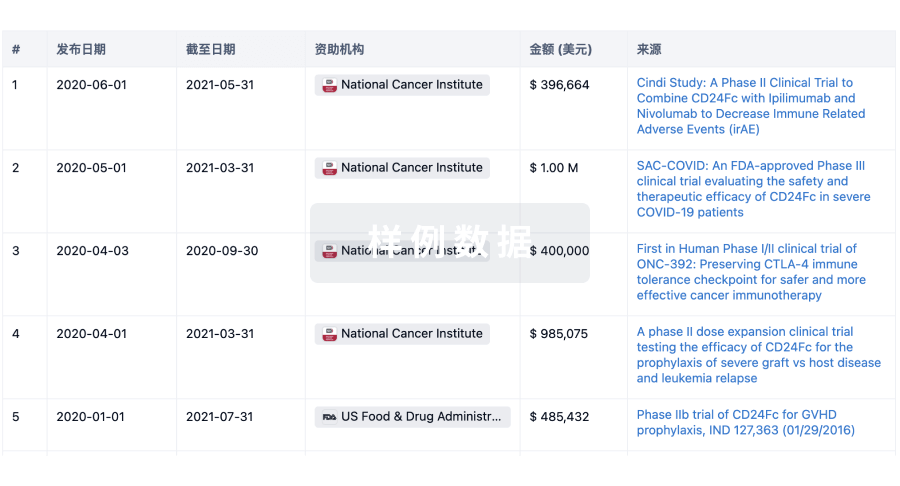
科研基金(NIH)
访问超过 200 万项资助和基金信息,以提升您的研究之旅。
登录
或
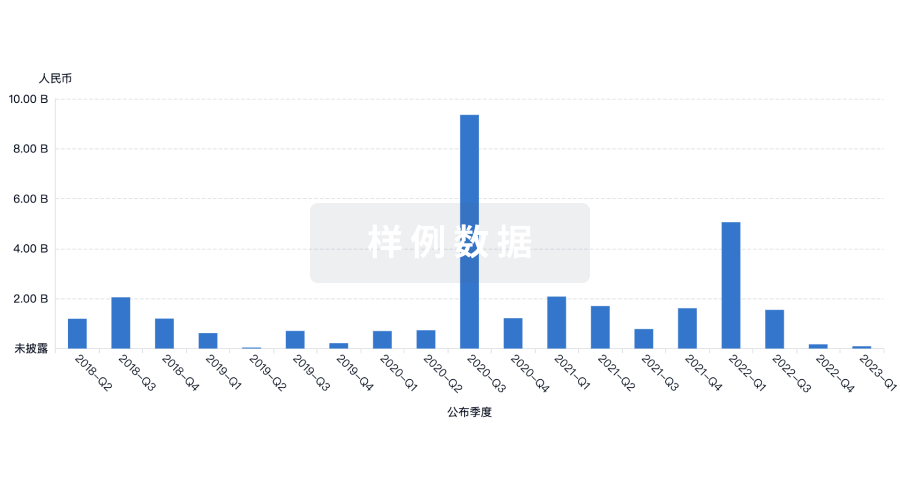
投资
深入了解从初创企业到成熟企业的最新公司投资动态。
登录
或
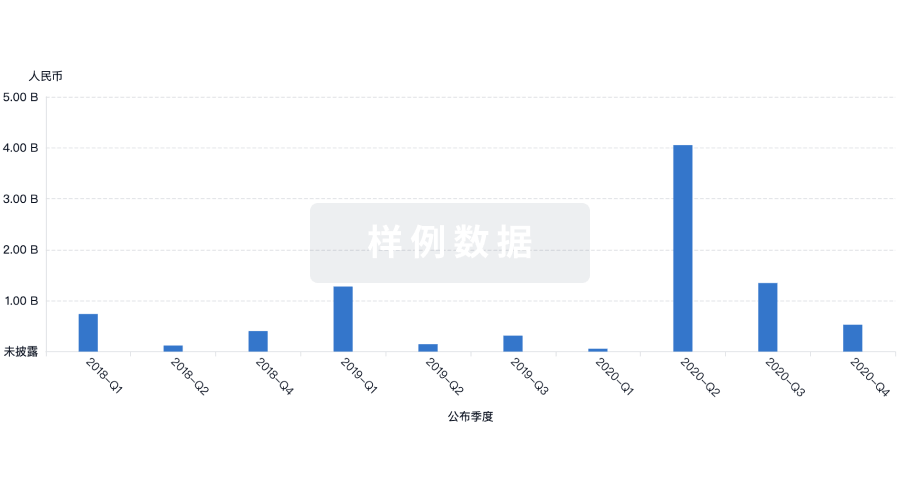
融资
发掘融资趋势以验证和推进您的投资机会。
登录
或
生物医药百科问答
全新生物医药AI Agent 覆盖科研全链路,让突破性发现快人一步
立即开始免费试用!
智慧芽新药情报库是智慧芽专为生命科学人士构建的基于AI的创新药情报平台,助您全方位提升您的研发与决策效率。
立即开始数据试用!
智慧芽新药库数据也通过智慧芽数据服务平台,以API或者数据包形式对外开放,助您更加充分利用智慧芽新药情报信息。
生物序列数据库
生物药研发创新
免费使用
化学结构数据库
小分子化药研发创新
免费使用