预约演示
更新于:2025-08-10

North Florida Regional Medical Center, Inc.
更新于:2025-08-10
概览
关联
100 项与 North Florida Regional Medical Center, Inc. 相关的临床结果
登录后查看更多信息
0 项与 North Florida Regional Medical Center, Inc. 相关的专利(医药)
登录后查看更多信息
43
项与 North Florida Regional Medical Center, Inc. 相关的文献(医药)2025-04-01·Annals of Medicine and Surgery
Recurrent choledocholithiasis with cholangitis 30 years post-cholecystectomy with negative ERCP: a case report
Article
作者: Iqbal, Junaid ; Noureldine, Hussein A ; Bishev, Daniel ; Gill, Ajaypal
Introduction and importance::
Recurrent primary choledocholithiasis refers to the recurrent presence of biliary stones in the bile duct. Recurrent Choledocholithiasis is not a rare occurrence within 3 years of Cholecystectomy (CCY), with an incidence of 27.9% in one study. However, it is uncommon after 30 years of CCY.
Case presentation::
A 64-year-old female patient with a history of CCY and recurrent choledocholithiasis and cholangitis with liver abscess presented with signs and symptoms of cholangitis despite a negative endoscopic retrograde cholangiopancreatography (ERCP) one week before presentation. Blood cultures were positive for gram-negative rods,` consistent with her cholangitis.
Clinical discussion::
This case poses a question on the utility of endoscopic ultrasound (EUS) and magnetic resonance cholangiopancreatography (MRCP) in high-risk patients for choledocholithiasis. Current guidelines recommend proceeding with ERCP directly in high-risk patients and obtaining EUS or MRCP in intermediate-risk patients. However, EUS or MRCP can be a helpful tool in scouting before proceeding with ERCP in complicated cases such as our case. Moreover, identification of patient-specific risk factors for such a rare entity would help with a better understanding of management and prevention of recurrent choledocholithiasis. Our patient had multiple other risk factors, including a dilated common bile duct and a history of multiple episodes of choledocholithiasis. Although not currently approved, certain oral medications can help reduce the risk of recurrence of primary choledocholithiasis.
Conclusion::
Early detection and localization of stones with EUS or MRCP is recommended in complicated cases of recurrent choledocholithiasis to prevent additional invasive procedures which in turn increase the risk of recurrence.
2025-03-01·The Senior care pharmacist
Pharmacists’ Intervention in Inappropriate Aspirin Prescribing in a Geriatric Primary Care Clinic
Article
作者: Koff, Andrea ; Atkinson, Kimberly ; Smith, Carl ; Tulcewicz, Paige
Background: In recent years, aspirin use has been controversial for primary prevention of atherosclerotic cardiovascular disease (ASCVD) events. Numerous clinical trials have proven that aspirin does not improve outcomes and increases major bleeding rates. Despite clinical
trial data and guideline recommendations, there remains a large number of older adults taking aspirin for primary prevention. Objective: Describe the impact that pharmacists had on the discontinuation of inappropriately prescribed aspirin in a geriatric primary care clinic.
Methods: This is a retrospective review of patients taking aspirin. A report was generated for all patients with aspirin on their medication list. The pharmacist determined the indication for aspirin. If patients were taking aspirin for primary prevention, the pharmacist recommended
aspirin be discontinued. Results: A total of 528 patients were included in this study. There were 321 (61%) females and 207 (39%) males. After analyzing aspirin indication, 122 (48%) were taking aspirin for primary prevention, 273 (52%) were taking aspirin for secondary
prevention, and 133 (52%) were taking aspirin for another indication. The recommendation to discontinue aspirin was accepted 91 times and declined 30 times, yielding a 75% acceptance rate. Conclusion: Aspirin has several appropriate indications for use; however, previous
studies have shown that risk outweighs benefit when used for primary prevention of ASCVD events in the geriatric population. When aspirin is on a patient’s medication list, it should be assessed routinely for appropriateness. This retrospective review by pharmacists highlights the need
for review and discontinuation of aspirin when appropriate.
2025-02-01·MINERVA MEDICA
Venous thromboembolism during pregnancy and postpartum period: an updated review
Review
作者: MOJADDEDI, Sanaullah ; Mojaddedi, Sanaullah ; JAMIL, Dawood ; ELGENDY, Islam Y. ; Jamil, Javairia ; Jamil, Dawood ; Elgendy, Islam Y ; MANSOOR, Hend ; JAMIL, Javairia ; ABRAHAM, Andrew ; Abraham, Andrew ; Mansoor, Hend
Venous thromboembolism (VTE) is a leading cause of maternal mortality. The risk of VTE in pregnant and postpartum women is ~ five times higher compared with non-pregnant women. There is a physiological tendency to a hypercoagulable state, from conception to the postpartum period. Several non-obstetric risk factors independently increase the risk of VTE. Since most signs and symptoms of VTE might mimic those of a normal pregnancy, a high index of suspicion is warranted to establish the diagnosis. D-dimer, ultrasonography and computed tomography pulmonary angiography are the primary tools for VTE diagnosis. Management mainly revolves around systemic anticoagulation with heparin. Advanced therapy options exist, but these can be considered for selected high-risk cases.
2
项与 North Florida Regional Medical Center, Inc. 相关的新闻(医药)2023-08-16
The MaxView 4K System is a towerless visualisation system designed to support ASC environments, with no associated capital equipment costs or impact on operating room space
MaxView 4K Imager Camera (Credit: Business Wire/Viseon Inc.)
Viseon has commercially rolled out the 4K MaxView System in the US and announced the initial clinical use of the 4K advanced visualisation system for minimally invasive spine surgery.
The MaxView 4K System is said to be an enabling, towerless visualisation system for use in an ambulatory surgery centre (ASC) setting without any capital equipment expense or operating room area.
It is made up of a reusable, non-sterile 4K Image Control Box and a single-use sterile 4K imaging camera to deliver a real 4K experience on a 4K operating room (OR) monitor for the entire OR team for observation.
Viseon, which is a US-based privately held medical device company, said that the digital platform can record real-time surgical videos even as it captures still images.
This enables surgeons to create a digital content database for teaching, presentations, publications, reviews of patient cases, and additional analysis using machine learning and artificial intelligence (AI) algorithms to optimise patient outcomes.
The MaxView 4K System, which is an implant agnostic, is also said to be compatible with all the major lateral access retractors that are currently on the market.
Viseon CEO Jeffrey Valko said: “Enabling advanced minimally invasive spine surgery procedures to be performed in a more safe, efficient and economic manner benefits the patient, the surgeon and the hospital.
“Visualisation seems to be such a fundamental requirement during spine surgery but advancing minimally invasive techniques require more advanced visualisation that significantly benefits patient’s safety without a large economic burden on the hospital. Viseon uniquely enables this with the first-ever MaxView 4K System.
“We are fortunate to have an exceptionally talented product development team who have repeatably demonstrated their ability to rapidly innovate next generation patented technology enabling us to expand into additional markets such as Neurosurgery, ENT, Endoscopy, and other Orthopaedic uses.”
The initial case series with the MaxView 4K system was accomplished by orthopaedic surgeons Rajiv Sethi and Philip Louie at Virginia Mason Medical Center, Seattle, neurosurgeon Alfred Ogden and Valley Hospital, Ridgewood, New Jersey, and orthopaedic surgeon Samuel Joseph at HCA South Tampa Hospital, Tampa, Florida.
2022-10-11
HCA Florida Northwest Hospital acquired Anovo for use in transvaginal benign gynecological procedures including hysterectomies.
The system represents the first and only FDA-authorized surgical robot with shoulder, elbow and wrist joints, Momentis said. Momentis — formerly Memic Innovative Surgery — designed Anovo (formerly Hominis) to mimic human arms. This allows it to provide human-level dexterity, the company said.
“It is essential for surgeons to use the most advanced tools and technologies to ensure we deliver optimal care to our patients, and this system presents several advantages compared to other available robotic technologies,” said Dr. Daniel Gomez, a minimally invasive gynecologic surgeon and assistant program director of the OBGYN Residency Program at HCA Florida Northwest Hospital. “By enabling the transvaginal approach to benign gynecological procedures including benign hysterectomies, we can perform minimally invasive surgery that may deliver benefits including less pain after surgery, leading to a faster recovery, and virtually no visible scarring.
“We are also excited to train the next generation of gynecologic surgeons on this new platform to further advance the surgical care that our current OBGYN residents will provide to their patients in the future.”
About Anovo from Momentis Surgical
Anovo received FDA de novo marketing authorization in February 2021. This authorization covered use in single-site, natural orifice laparoscopic-assisted transvaginal benign surgical procedures. These include benign hysterectomy, salpingectomy, oophorectomy, adnexectomy, and ovarian cyst removal.
The system allows for multiple instruments introduced to the body through a single portal. The articulation offers optimal access and working angles. Momentis said Anovo’s transvaginal approach enables benefits such as less patient pain. It also leads to less scarring, shorter recovery times and reduced infection rates.
Anovo also requires a smaller footprint and costs less than conventional robotic surgery systems, the company said.
“We are pleased to have growing support from leading medical facilities in Florida including HCA Florida Northwest Hospital and hope to continue our momentum as we work to build broader commercial adoption of the Anovo System,” said Dvir Cohen, CEO and co-founder of Momentis.
100 项与 North Florida Regional Medical Center, Inc. 相关的药物交易
登录后查看更多信息
100 项与 North Florida Regional Medical Center, Inc. 相关的转化医学
登录后查看更多信息
组织架构
使用我们的机构树数据加速您的研究。
登录
或
管线布局
2026年02月09日管线快照
无数据报导
登录后保持更新
药物交易
使用我们的药物交易数据加速您的研究。
登录
或
转化医学
使用我们的转化医学数据加速您的研究。
登录
或
营收
使用 Synapse 探索超过 36 万个组织的财务状况。
登录
或
科研基金(NIH)
访问超过 200 万项资助和基金信息,以提升您的研究之旅。
登录
或
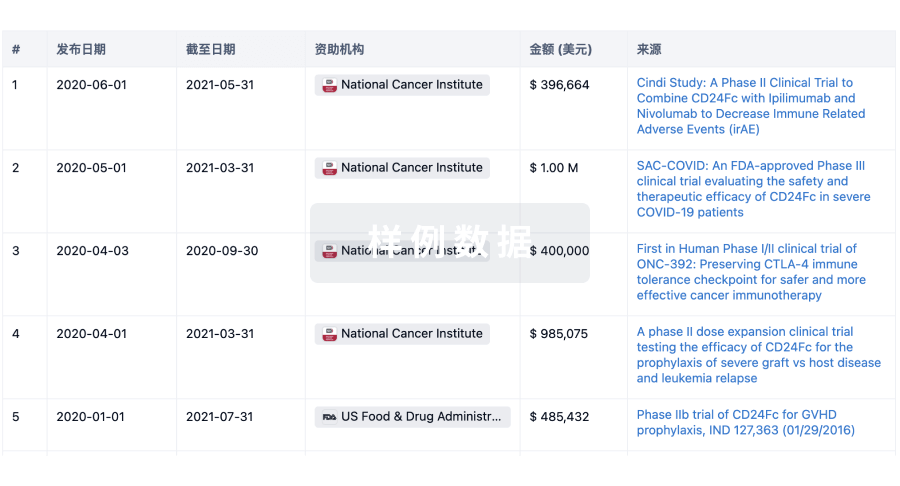
投资
深入了解从初创企业到成熟企业的最新公司投资动态。
登录
或
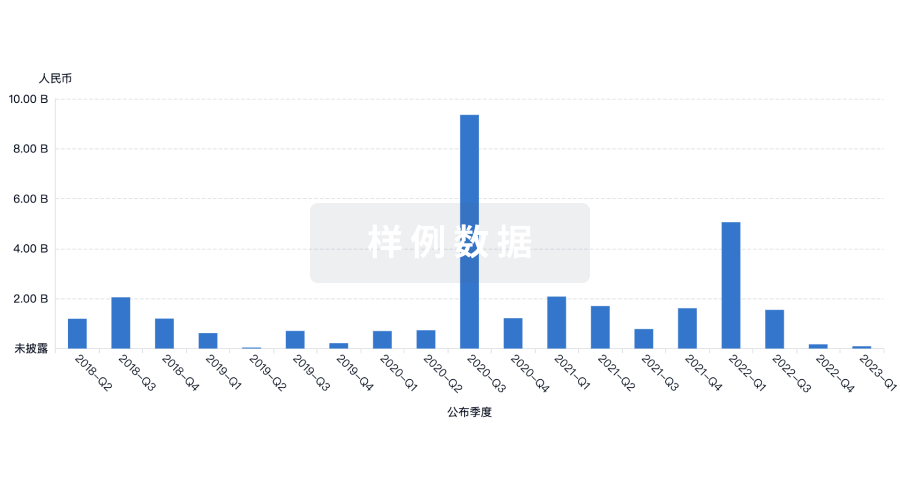
融资
发掘融资趋势以验证和推进您的投资机会。
登录
或
生物医药百科问答
全新生物医药AI Agent 覆盖科研全链路,让突破性发现快人一步
立即开始免费试用!
智慧芽新药情报库是智慧芽专为生命科学人士构建的基于AI的创新药情报平台,助您全方位提升您的研发与决策效率。
立即开始数据试用!
智慧芽新药库数据也通过智慧芽数据服务平台,以API或者数据包形式对外开放,助您更加充分利用智慧芽新药情报信息。
生物序列数据库
生物药研发创新
免费使用
化学结构数据库
小分子化药研发创新
免费使用