预约演示
更新于:2025-12-07

Universite Bordeaux Montaigne
更新于:2025-12-07
概览
关联
100 项与 Universite Bordeaux Montaigne 相关的临床结果
登录后查看更多信息
0 项与 Universite Bordeaux Montaigne 相关的专利(医药)
登录后查看更多信息
83
项与 Universite Bordeaux Montaigne 相关的文献(医药)2025-09-30·PROCEEDINGS OF THE NATIONAL ACADEMY OF SCIENCES OF THE UNITED STATES OF AMERICA
Châtelperronian cultural diversity at its western limits: Shell beads and pigments from La Roche-à-Pierrot, Saint-Césaire
Article
作者: Rougier, Hélène ; Garbé, Lisa ; Bordes, Jean-Guillaume ; Culioli, Gérald ; Bard, Edouard ; Todisco, Dominique ; Thibeault, Adrien ; Morin, Eugène ; Gravina, Brad ; Tartar, Elise ; Thomas, Marc ; Mallol, Carolina ; Regniers, Olivier ; Baillet, Mickaël ; Beauval, Cédric ; Guérin, Guillaume ; Lacrampe-Cuyaubère, François ; Lahaye, Christelle ; Tombret, Olivier ; Lesage, Camille ; Dayet, Laure ; Devièse, Thibaut ; Bachellerie, François ; Rigaud, Solange ; Crevecoeur, Isabelle ; Michel, Alexandre ; Teyssandier, Nicolas ; Maureille, Bruno ; Bahain, Jean-Jacques ; Flas, Damien ; Lebreton, Loïc ; Muth, Xavier ; Falguères, Christophe ; Marot, Josserand
The timing and mechanisms underlying the gradual replacement of Neanderthal populations by
Homo sapiens
groups have elicited heated debate for decades. The Châtelperronian of France and northern Spain has figured prominently in these discussions. While the Neanderthal authorship of this techno-complex is far less certain than previously thought, the Châtelperronian is now generally accepted as being among the first genuine Upper Paleolithic industries in Eurasia rather than a “transitional” stone tool technology. Here, we report the first association of shell beads with Châtelperronian artifacts from new excavations at the site of La-Roche-à-Pierrot, Saint-Césaire (France), supported by a multiproxy spatial analysis that incorporates site formation processes. Similar types of personal ornaments are unknown from Middle Paleolithic contexts. Comparable examples have, however, been recovered from contexts penecontemporaneous with the Châtelperronian in south-eastern Europe and around the Mediterranean. This hitherto undocumented combination of an early Upper Paleolithic industry and shell beads provides insights into cultural variability in western Europe and raises the question as to whether the makers of the Châtelperronian were influenced by or formed part of the earliest dispersals of
H. sapiens
into the region.
2025-09-01·CHEMOSPHERE
Microplastics detection and characterisation in the urban water cycle of Geneva, Switzerland: Assessing the supply network impacts
Article
作者: Zimmermann, Stéphane ; Perdaems, Pauline ; Ramaciotti, Pascal ; Borboën, Delphine ; Stoll, Serge ; Le Coustumer, Philippe ; Negrete Velasco, Angel ; Jeanneret, Blaise ; Ramirez Arenas, Lina ; Ramseier Gentile, Stéphan
Microplastics (MPs) are increasingly detected in aquatic environments and are a growing concern due to their persistence, mobility, and potential risks to ecosystems and human health. This study aims to investigate the presence of MPs (>20 μm) across the urban water cycle of Geneva (Switzerland). The scope of the assessment includes large water volumes (50-2000 L) of raw water sources (groundwater and surface water), drinking water treatment, water supply network, and effluents of three wastewater treatment plants. MPs concentrations, size distributions, and chemical compositions were determined across these interconnected systems. Sampling and analysis followed a strict quality assurance protocol aligned with current MP analysis guidelines and standards. Fourier-transform infrared spectroscopy (FTIR) was used to characterise MPs. Geneva's main conventional drinking water treatment plant (serving approximately 500,000 consumers) showed high removal efficiency, reducing MPs concentrations from 640 ± 292 MP/m3 in raw water to 10 ± 6 MP/m3 after treatment (including coagulation, sand filtration, ozonation and granular activated carbon filtration), demonstrating a removal efficiency of 97 ± 3 %. Groundwater samples showed low concentration of MPs (8 ± 7 MP/m3). However, the drinking water supply network (DWSN) contributed to an increase of MPs concentration, with values equal to 27 ± 37 MP/m3 in the eastern section and 23 ± 19 MP/m3 in the western section. Effluents from wastewater treatment plants (WWTPs) exhibited the highest concentrations, averaging 5829 ± 5108 MP/m3. This study highlights the importance of full-cycle monitoring and supports the need for improved mitigation strategies across all stages of the urban water cycle.
2025-07-01·ARTHROPOD STRUCTURE & DEVELOPMENT
Unraveling the insect head: Segmentation and pancrustacean homologies
Article
作者: Azar, Dany ; Nel, André ; Jacquelin, Lauriane ; Pont, Sylvain ; Desutter-Grandcolas, Laure ; Dollinger, Laurence ; Garrouste, Romain ; Soriano, Carmen ; Robillard, Tony ; Nel, Patricia ; Engel, Michael S
The segmental composition of the arthropodan head is a long-standing biological question. This is particularly controversial in insects where considerable fusion and modification obfuscate the postembryonic segmentation. Here we propose a reinterpretation of the insect head morphology and segmentation, which also accords with current genetic and embryological data. The new interpretation of a generalized insect head is based on the discovery of intercalary segment remnants (the intercalates), thanks to the use of 3D-reconstruction of a Cretaceous thripidan and to a reassessment of the 'anterior tentorial arm' as the anteriormost part of a lateral segmental suture from the contact of the head lobe and gnathal segments during development. We show that the two-jointed mandibular articulation is likely symplesiomorphic for Insecta, no longer supporting the clade 'Dicondylia', the most diverse lineage of all insects. We discuss new perspectives on the 'labrum' in Pancrustacea.
100 项与 Universite Bordeaux Montaigne 相关的药物交易
登录后查看更多信息
100 项与 Universite Bordeaux Montaigne 相关的转化医学
登录后查看更多信息
组织架构
使用我们的机构树数据加速您的研究。
登录
或
管线布局
2026年09月20日管线快照
无数据报导
登录后保持更新
药物交易
使用我们的药物交易数据加速您的研究。
登录
或
转化医学
使用我们的转化医学数据加速您的研究。
登录
或
营收
使用 Synapse 探索超过 36 万个组织的财务状况。
登录
或
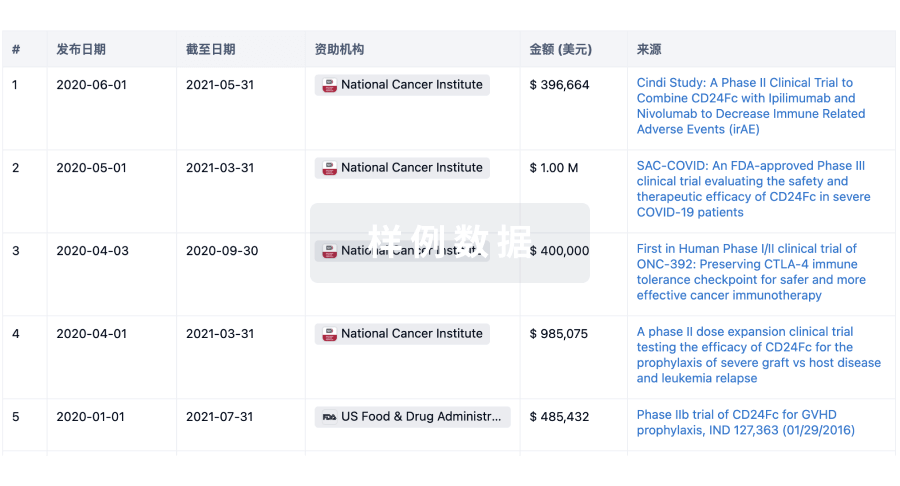
科研基金(NIH)
访问超过 200 万项资助和基金信息,以提升您的研究之旅。
登录
或
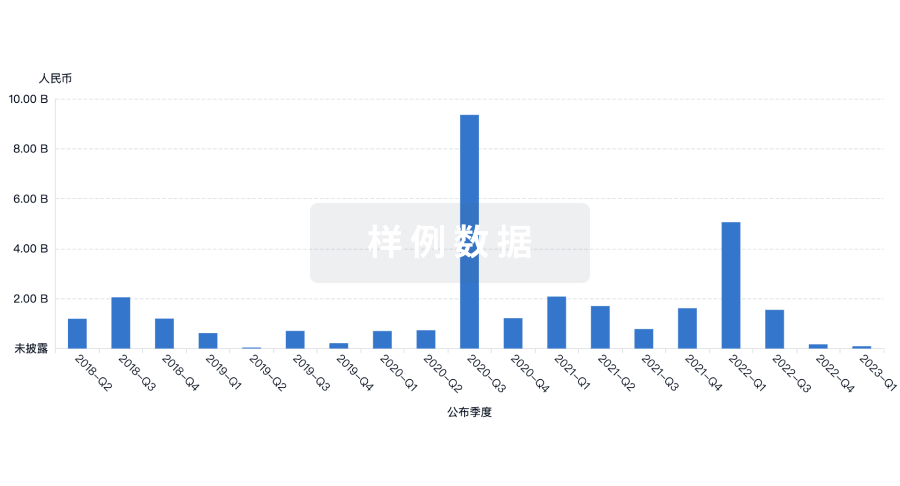
投资
深入了解从初创企业到成熟企业的最新公司投资动态。
登录
或
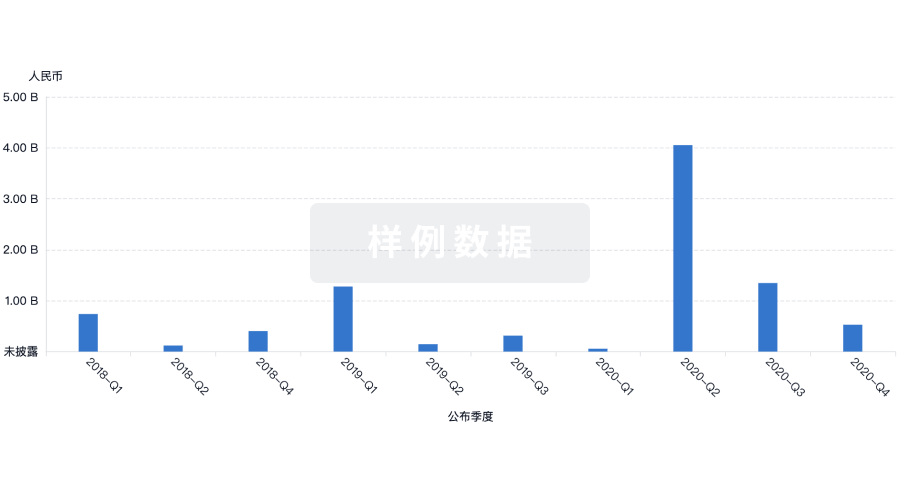
融资
发掘融资趋势以验证和推进您的投资机会。
登录
或
提出任何生物医药研究问题
让每一步生物医药决策都精准制胜
基于十亿级生物数据与全球情报的精准 AI,赋能早期药物发现
立即开始免费试用!
智慧芽新药情报库是智慧芽专为生命科学人士构建的基于AI的创新药情报平台,助您全方位提升您的研发与决策效率。
立即接入生物医药数据包
智慧芽新药库数据也通过智慧芽开放平台,以MCP或API服务形式对外开放。立即使用我们的MCP服务定制您的LLM智能体。
生物序列数据库
生物药研发创新
免费使用
化学结构数据库
小分子化药研发创新
免费使用