预约演示
更新于:2025-05-07
FACITs
更新于:2025-05-07
基本信息
别名 FACIT |
简介- |
关联
100 项与 FACITs 相关的临床结果
登录后查看更多信息
100 项与 FACITs 相关的转化医学
登录后查看更多信息
0 项与 FACITs 相关的专利(医药)
登录后查看更多信息
975
项与 FACITs 相关的文献(医药)2025-06-01·Poultry Science
Spatial transcriptomic differences in the breast muscle of grower broilers at 21 and 28 days of age
Article
作者: Bowker, Brian ; Zhuang, Hong ; Gudidoddi, Seshidhar Reddy ; Goo, Doyun ; Choppa, Venkata Sesha Reddy ; Han, Gippeum ; Shakeri, Majid ; Lee, Jihwan ; Kong, Byungwhi ; Choi, Janghan ; Kim, Woo Kyun
2025-05-01·Biological Psychiatry Global Open Science
A Transcriptomic Signature of Depressive Symptoms in Late Life
Article
作者: Felsky, Daniel ; Matan-Lithwick, Stuart ; Dunn, Jeffrey T ; Fisher, Daniel W ; Bennett, David A ; DeLong, Thomas ; Dong, Hongxin ; De Jager, Philip L ; Tripathy, Shreejoy ; Yang, Mu ; Wang, Yanling ; Misztal, Melissa C
2025-04-23·Current Alzheimer Research
Unraveling the Intricacies: The Role of mRNAs in the Progression and
Initiation of Alzheimer's Disease
Article
作者: Farzadifar, Elnaz ; Amerizadeh, Forouzan
12
项与 FACITs 相关的新闻(医药)2024-11-23
·生物世界
编辑丨王多鱼
排版丨水成文
大规模蛋白质组学研究能够深化对健康和疾病的理解,但现有研究仍集中于有限的疾病结局,蛋白与健康和疾病之间的关系仍然存在许多未解之谜。疾病相关的蛋白质是特异性的还是共同的?这些蛋白质能否启示疾病的生物学分类?它们能否作为疾病预测和诊断的生物标志物及潜在的治疗靶点?
2024年11月22日,复旦大学附属华山医院郁金泰、毛颖团队与复旦大学类脑智能科学与技术研究院程炜、冯建峰团队合作,在国际顶尖学术期刊 Cell 上发表了题为:Atlas of the plasma proteome in health and disease in 53,026 adults 的研究论文。
这项研究全面绘制了人类健康与疾病蛋白质组图谱,并结合人工智能大数据分析方法,构建了疾病诊断预测模型以及发现了26个药物治疗新靶点,为精准医学的实施提供了重要科学依据。
该研究通过深入分析53026名个体的血浆蛋白质组数据,纳入了2920种血浆蛋白质与406种既往患病、660种随访新发疾病以及986种健康相关特征,跨越了14.8年的中位随访期,揭示了168100个蛋白质-疾病关联和554488个蛋白质-表型关联。研究中发现超过650种蛋白质与至少50种疾病存在联系,而超过1000种蛋白质表现出性别和年龄的异质性,这些发现深化了对疾病间共享和特异分子机制的理解,揭示了不同人群在疾病易感性上的差异。
人类健康与疾病血浆蛋白质组图谱
研究团队发现免疫系统相关通路在绝大部分疾病中富集,强调了炎症在人类健康中的重要作用。此外,对不同疾病之间的生物学通路的比较完善了对疾病病理生理学相似性和异质性的理解。例如,阿尔茨海默病(AD)和血管性痴呆(VaD)相关的蛋白质在与神经系统相关的共同通路中富集,而AD特异性通路大多与脂质代谢有关,VaD特异性通路与心肌有关。传统的疾病分类策略通常基于相似的临床症状和表型特征,而忽略了共同的分子病因。利用蛋白质组学特征对660种疾病进行聚类,能够根据其共享的生物学特性将这些疾病联系起来,从而重新审视疾病的类别和亚型。例如,各种痴呆亚型被划分到同一疾病亚群,该亚群还包含精神、内分泌、心血管等系统疾病,基于此,研究团队进一步揭示了该亚群的特征性生物学功能,将生物学上相关的疾病联系在一起,有助于解释为何患者身上会同时出现看似不相关的症状,并进一步加深对机制的理解和提高治疗的有效性。
血浆高通量测序蛋白质数据存在复杂交互作用,往往难以单独处理,而人工智能算法,能够高效提取关键特征,构建精确预测/诊断模型。研究团队利用机器学习等人工智能大数据分析技术,识别出了具有潜在诊断和预测价值的生物标志物,发现基于蛋白质的模型在183种疾病中的AUC值超过0.80,明显优于基于人口统计学的模型,将有助于提高疾病的早期诊断率。
值得一提的是,GDF15被发现是预测和诊断多种疾病的关键蛋白,其在对200种疾病的预测中的重要度均排名第一,这表明GDF15在疾病的早期识别和风险评估中具有重要作用,可能成为一个重要的生物标志物。此外,EDA2R、NTproBNP、COL9A1和NEFL等蛋白也在多个疾病中表现出良好的预测和诊断性能,表明它们在多种生物过程中发挥着核心作用,具有广泛的临床应用潜力。
对历史药物开发项目数据的评估显示,有遗传证据支持的靶点-适应症对在药物开发中更有可能获得成功。该研究通过整合蛋白质数量性状位点(pQTL)和疾病全基因组关联研究(GWAS)数据,使用孟德尔随机化分析(MR)确定了474个具有潜在因果关联的蛋白质-疾病对。通过检索DrugBank和Therapeutic Target Database中的药物靶点信息以及进行安全性评估,该研究提供了对25个已知靶点的37种潜在药物重新利用机会,并确立了26个具有治疗潜力且安全性良好的新靶点,为老药新用和新药开发提供了重要线索。
为了进一步推动科学研究和精准医疗的发展,该研究建立了一个可开放访问的蛋白质组-表型组资源数据库Proteome-Phenome Atlas(https://proteome-phenome-atlas.com/)。这个数据库不仅有助于科学家们更好地理解疾病的生物学机制,还将加速疾病生物标志物、预测诊断模型和治疗靶点的开发,为精准医学的实施提供强有力的支持。
Proteome-Phenome Atlas数据库首页
总的来说,这项研究绘制的人类健康与疾病蛋白质组图谱揭示了血浆蛋白在疾病诊断、预测和治疗中的潜在应用价值。研究为临床实践提供了科学依据,有助于疾病的早期检测、精准分层和个性化治疗。未来,基于这一开放获取的蛋白质组学图谱,研究人员将能够更深入地探索疾病发病机制,推动生物标志物和预测/诊断模型开发,并探寻全新治疗靶点,为精准医学发展奠定了基础。
论文链接:
https://www.cell.com/cell/fulltext/S0092-8674(24)01268-6
设置星标,不错过精彩推文
开放转载
欢迎转发到朋友圈和微信群
微信加群
为促进前沿研究的传播和交流,我们组建了多个专业交流群,长按下方二维码,即可添加小编微信进群,由于申请人数较多,添加微信时请备注:学校/专业/姓名,如果是PI/教授,还请注明。
点在看,传递你的品味
2024-09-19
·生物谷
文章解读+创新点拓展,为您带来科研新体验~
导读
一项发表在Cell Research的前沿研究Single-cell RNA sequencing reveals the developmental program underlying proximal–distal patterning of the human lung at the embryonic stage,通过单细胞RNA测序(scRNA-seq)与空间转录组技术的强强联合,为人类肺脏早期发育提供了前所未有的精细视图。本文将为您揭示这项技术如何帮助科学家们洞察肺部近端-远端模式形成的关键机制,并探讨其对临床实践的重大意义。
研究背景
肺脏发育是一个复杂的过程,涉及多种细胞类型的分化与互动。传统研究手段虽能提供部分信息,但在捕捉细胞层面动态变化方面显得力不从心。单细胞RNA测序(scRNA-seq)技术的问世改变了这一局面,它使研究人员得以前所未有的精度观察细胞内部活动,尤其是那些在早期发育阶段发生的变化。
此外,空间转录组技术进一步增强了研究能力,它能够在保持细胞空间位置的同时分析其基因表达情况,这对于理解器官发育过程中细胞间的相互作用至关重要。
值得注意的是,此前对于早期发育阶段的数据相对匮乏,而本研究选取了从第4周到第8周的胚胎期乃至早期假腺期的人类样本进行单细胞测序分析。相比之下,已有较多研究关注于更晚发育阶段的单细胞测序。因此,本研究填补了这一领域的空白,提供了早期胚胎肺发育的重要数据支撑。
研究设计与结果
研究者使用了单细胞RNA测序技术对4-8周的人类胚胎肺组织进行分析,构建了一个包含超过16万个细胞的转录组图谱。通过这个图谱,研究者们不仅识别出了近端与远端上皮细胞之间明显的基因表达差异,而且还发现了多个调控近端-远端模式形成的转录因子,如THRB、EGR3、ETV1以及SOX6。
更重要的是,通过对早期胚胎基质细胞群的细致剖析,揭示了一个BDNF+的基质细胞群体,它们在近端-远端模式形成中扮演着重要角色,并具有空间特异性。
接着采用了空间转录组技术,对6周的肺组织切片进行了空间转录组学分析。将分子特征映射到了解剖尺度上,对细胞类型及其分子标志物在近端与远端上皮中的分布情况进行展示。
图1:主要的肺细胞类型出现在人类胚胎肺发育的开始
研究者选取了人类胚胎肺(4-8周)进行采样,涵盖了胚胎和早期假腺体阶段。通过单细胞转录组测序分析,鉴定了六种人类胚胎肺细胞类型:间质细胞、上皮祖细胞、神经嵴祖细胞、内皮祖细胞、原红细胞和巨噬细胞(图1b-d)。研究发现,在第4周时,所有六种细胞类型均已出现,表明肺器官发生始于复杂的细胞相互作用(图1e)。
图2:TFs调节早期上皮细胞的近端-远端模式
进一步分析发现,在4-8周,大多数近端(如基底细胞和纤毛细胞)和远端(如肺泡I型和II型细胞(AT1和AT2)祖细胞已经出现(图2a)。近端/远端祖细胞的异质性促使我们研究了转录因子的作用,这些转录因子是发育过程中细胞命运决定的主要驱动因素。研究表明,KLF5/SOX2调控近端细胞命运,而ETV5/SOX9则调控远端细胞命运(图2c)。
自第4周起,便观察到明显的近端-远端表达模式,直到第6周后SOX2hi/ETV5lo上皮细胞中远端因子显著下调,而SOX2和SOX9在这两个细胞群体中一直共表达(图2e-f),这表明近端特异性大约在第6周开始形成。由此得出结论,肺上皮细胞的近端-远端模式自第4周起就开始形成,并由不同的转录因子组合引导。
图3:多种基质细胞类型表现出近端-远端空间异质性
除了内在的转录因子,由中胚层衍生的间充质细胞所形成的微环境对于肺上皮形态发生至关重要。为了进一步了解间质细胞的空间特性,特别是它们与上皮层的距离,研究者利用空间转录组测序技术,将分子特征映射到解剖尺度上(图3d)。通过该技术,研究者观察到在近端和远端上皮中分布的不同上皮亚型,包括SOX2hi/ETV5lo和SOX9hi/ETV5hi及其分子标记物(图3e-f)。
通过计算间质亚型与近端/远端上皮之间的空间距离(图3g),研究者发现CRABP1+基质细胞密集地包围着气管管腔,而COL9A2+上皮细胞则位于左、右支气管附近。相反,BDNF+上皮细胞主要分布在边界区域,暗示其在建立远端上皮微环境中的关键作用。气道 平滑肌细胞(ASMC)围绕上皮分布,而血管平滑肌细胞(VSMC)则分散,没有典型的模式。单分子荧光原位杂交(smiFISH)技术验证了COL9A2+细胞和ASMC的定位(图3h)。
值得注意的是,LIMS2被鉴定为新的ASMC标志物。这些结果揭示了间质亚型在空间上的特异性分布及其在胚胎肺器官发生过程中作为上皮形态发生微环境提供者的多样性作用。
图4:SC_BDNF+基质细胞为早期肺上皮细胞的发育提供信号
进一步的研究发现,BDNF+基质细胞亚型是上皮受体相关的间质来源配体(图4a)。这类细胞在胚胎第4周出现,并随肺发育逐渐减少(图4b)。BDNF+细胞的标志基因BDNF和FGF10在器官形成期间下调(图4c),显示出其在早期发育中的特殊作用。配体-受体分析表明,BDNF+间质亚型主要表达BDNF、FGF9/10、WNT2/2B等配体,这些配体的受体主要由上皮细胞表达,提示BDNF+间质细胞与上皮细胞之间存在特异性通信(图4d)。
smiFISH验证了这一结果(图4e)。此外,向肺上皮祖细胞类器官中添加BDNF可以改善其存活、生长和分支(图4g-h)。这些结果表明,SC_BDNF+间质细胞作为一种胚胎特异性亚型,在早期肺发育中对上皮分支形态发生具有重要作用。
图5:ASMC和VSMC的发展轨迹推断
为了进一步推断了ASMC和VSMC的分化调控程序,作者对SMC细胞进行了拟时序分析(图5a-b),在4周时就发现SMC向ASMC或VSMC分化的偏向性,早于之前研究解剖学的观察(6周时)。间充质细胞中的核心转录因子如MEIS2、SHOX2、TWIST1在SMC发育过程中逐渐下调,而SMC标记物ACTA2和TAGLN在两类SMC中均逐步上调,ASMC和VSMC各自的标记物MYH11和MEF2C也随着发育时序在各自亚型中上调(图5c)。
进一步研究还发现了一系列具有有高调控子活性和特定的转录模式的调控SMC向VSMC和ASMC分化的新型转录因子,如EBF1对VSMC,FOXF1对ASMC(图5d),并通过smiFISH验证了这一结果(图5e)。
此外,ASMC特异性表达IGF1、CXCL14、SSC5D和ENPP作为与上皮受体相互作用的配体(图5f)。这些发现揭示了ASMC在肺发育中的关键作用,表明表达这些配体的SMCs可以建立支持上皮发育的微环境,有助于改进体外肺器官模型的生成。
拓展延伸
单细胞RNA测序(scRNA-seq)和空间转录组技术在其他许多科研领域也有广泛的应用前景。下面我们将探讨这两种技术如何在不同的生物学研究中产生深远影响。
●癌症研究
单细胞RNA测序技术能够帮助科学家们识别肿瘤微环境中的细胞异质性,这对于理解癌症的发生发展机制至关重要。通过分析肿瘤细胞及其周围非肿瘤细胞(如免疫细胞、成纤维细胞等)的基因表达谱,研究人员可以发现肿瘤细胞如何逃避免疫监视,以及它们是如何与周围的微环境相互作用以促进肿瘤生长。此外,空间转录组技术还能提供这些细胞在肿瘤组织中的精确位置信息,进一步揭示细胞间复杂的相互作用,从而为制定更有效的个性化治疗方案提供理论依据。
●免疫学应用
免疫系统是一个复杂的网络,包含了多种多样的细胞类型。单细胞RNA测序技术使得研究人员能够详细分析免疫细胞的多样性,了解不同免疫细胞亚群的功能特性。例如,在病毒感染或自身免疫性疾病中,通过比较健康个体与患病个体的免疫细胞组成差异,可以发现新的免疫反应机制。空间转录组技术则有助于理解免疫细胞在感染部位的分布情况,这对于研究免疫应答的局部化效应具有重要意义。
●神经科学应用
大脑是人体中最复杂的器官之一,其功能依赖于高度异质化的神经元和其他支持细胞的协调工作。单细胞RNA测序技术使神经科学家能够对不同类型的神经元进行分类,并研究它们之间的功能差异。特别是在发育神经生物学领域,这些技术帮助揭示了神经元如何从前体细胞分化而来,以及它们如何形成复杂的神经网络。空间转录组技术则允许研究者在保留细胞空间位置的情况下分析基因表达模式,这对于理解大脑发育过程中细胞排列规律及功能区划分具有不可替代的价值。
●发育生物学应用
除了肺发育之外,单细胞RNA测序和空间转录组技术也被广泛应用于其他器官系统的发育研究中。例如,在心脏发育研究中,这些技术有助于鉴定参与心肌细胞分化和心脏形态发生的转录因子;在肝脏发育研究中,则可以用来追踪肝细胞的起源和成熟过程。通过整合这些数据,研究人员能够构建出更加完整的器官发育图谱,为理解各种发育缺陷提供新的线索。
●再生医学应用
再生医学致力于通过细胞疗法或组织工程手段修复受损组织和器官。单细胞RNA测序技术能够帮助鉴定具有再生潜能的干细胞群体,并揭示它们在特定生理或病理条件下的行为变化。空间转录组技术则有助于确定这些细胞在体内的确切位置,这对于指导细胞移植和组织重建具有实际意义。
临床应用与展望
从临床角度看,单细胞RNA测序与空间转录组技术通过精确定位基因表达变化,促进了肺疾病如先天性肺发育不良和慢性阻塞性肺病的深入理解,有望催生更精准的诊断与治疗方案。这两项技术不仅推进了基础科学研究,也为临床医学带来了革新机遇,预期未来将有更多基于这些技术的新疗法出现,改善患者的生活质量。
注:本文旨在介绍医学研究进展,不做治疗方案推荐。如有需要,请咨询专业临床医生。
参考文献:
Cao S, Feng H, Yi H, Pan M, Lin L, Zhang YS, Feng Z, Liang W, Cai B, Li Q, Xiong Z, Shen Q, Ke M, Zhao X, Chen H, He Q, Min M, Cai Q, Liu H, Wang J, Pei D, Chen J, Ma Y. Single-cell RNA sequencing reveals the developmental program underlying proximal-distal patterning of the human lung at the embryonic stage. Cell Res. 2023 Jun;33(6):421-433.
点击下方「阅读原文」,前往梅斯官网查询更多实验技术服务支持~
2024-04-01
4月1日,阿斯利康宣布,FDA已经批准first-in-class口服补体因子D抑制剂Voydeya(danicopan)上市,作为标准疗法补体因子C5抑制剂Ultomiris(ravulizumab)或Soliris(eculizumab)的附加疗法,用于治疗临床上经历显著血管外溶血(EVH)的阵发性睡眠性血红蛋白尿症(PNH)患者。
阵发性夜间血红蛋白尿(PNH)是一种罕见且严重的血液疾病,其特征是血管内的红细胞破坏(也称为血管内溶血)以及白细胞和血小板活化,可导致血栓形成。PNH患者体内的补体系统异常激活,因此可通过C5补体抑制剂来治疗。然而,接受C5补体抑制剂治疗的患者常发生临床上显著的血管外溶血(EVH)。
本次获批主要是基于一项随机、安慰剂对照的III期ALPHA研究数据。结果显示,与安慰剂组相比,danicopan组的患者在12周时血红蛋白水平较基线的变化具有显著的统计学意义和临床意义上的改善,研究达到主要终点。该项研究还满足了关键的次要终点,包括避免输血和FACIT疲劳评分变化。总体上,danicopan的安全性和耐受性良好。
上市批准临床3期
分析
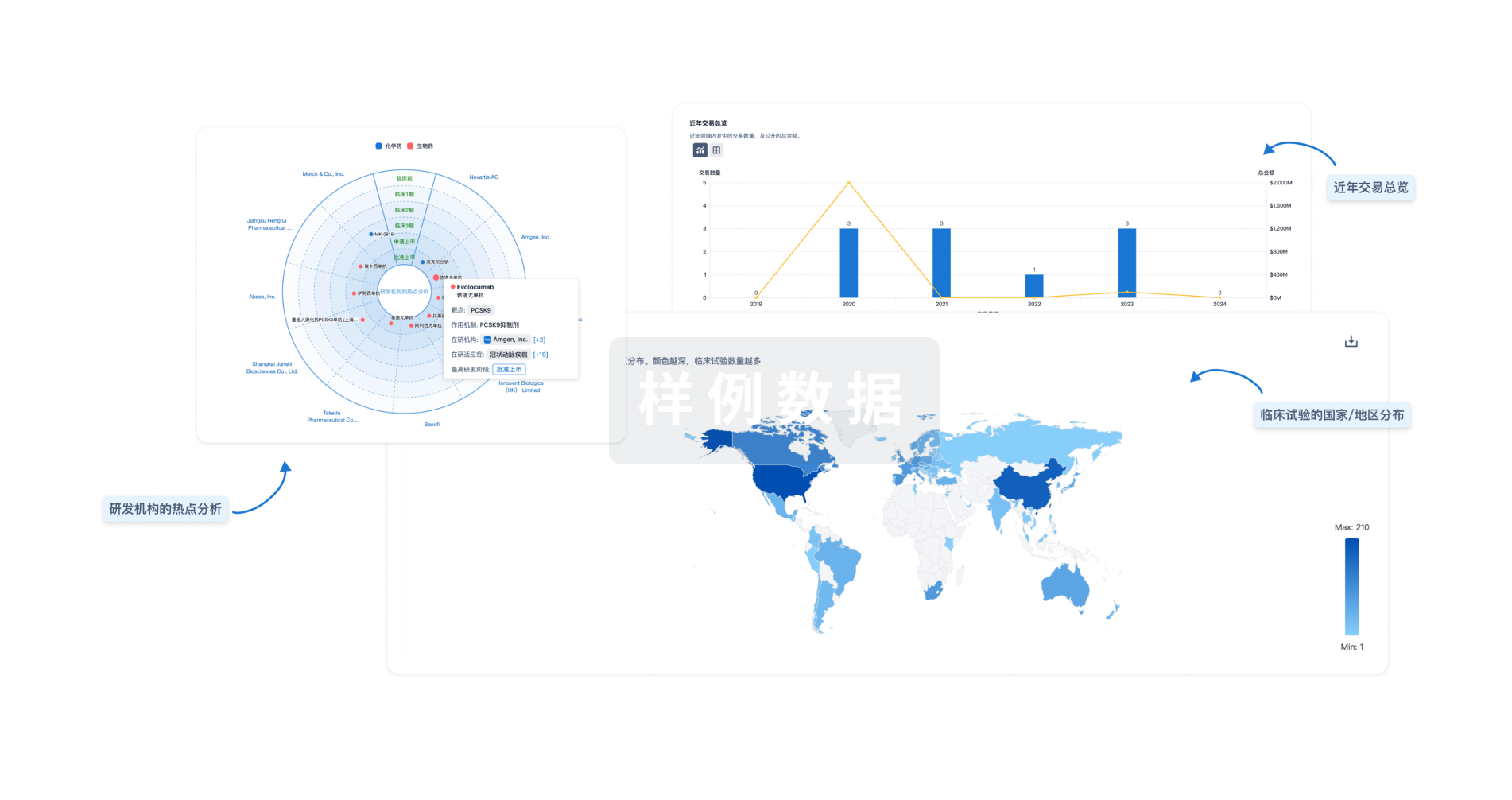
对领域进行一次全面的分析。
登录
或
生物医药百科问答
全新生物医药AI Agent 覆盖科研全链路,让突破性发现快人一步
立即开始免费试用!
智慧芽新药情报库是智慧芽专为生命科学人士构建的基于AI的创新药情报平台,助您全方位提升您的研发与决策效率。
立即开始数据试用!
智慧芽新药库数据也通过智慧芽数据服务平台,以API或者数据包形式对外开放,助您更加充分利用智慧芽新药情报信息。
生物序列数据库
生物药研发创新
免费使用
化学结构数据库
小分子化药研发创新
免费使用