预约演示
更新于:2026-06-20
Tat-Beclin 1
更新于:2026-06-20
概要
基本信息

关联
100 项与 Tat-Beclin 1 相关的临床结果
登录后查看更多信息
100 项与 Tat-Beclin 1 相关的转化医学
登录后查看更多信息
100 项与 Tat-Beclin 1 相关的专利(医药)
登录后查看更多信息
4
项与 Tat-Beclin 1 相关的文献(医药)2025-12-01·IMMUNOLOGIC RESEARCH
BECN1 activator peptide Tat-beclin 1 promotes ferroptosis via the BECN1-SLC7A11 axis to inhibit NSCLC progression
Article
作者: Gou, Jian ; Ma, Yanfang ; Wu, Chen ; Zhang, Tian ; Jia, Ting
Non-small-cell lung cancer (NSCLC) is associated with high mortality. Beclin 1 (BECN1), an autophagy regulator, and ferroptosis, a lipid peroxidation-driven cell death, are both linked to cancer suppression. This study examines whether the BECN1 activator peptide, Tat-Beclin 1, induces ferroptosis in NSCLC by targeting solute carrier family 7 member 11 (SLC7A11). BECN1 expression in NSCLC tissues and cells was assessed using RT-qPCR, western blot, and immunohistochemistry. Functional assays included CCK-8 for cell viability, C11-BODIPY for lipid peroxidation, glutathione (GSH) and glutamate release, glutathione peroxidase 4 (GPX4) activity, and western blotting for iron metabolism markers (ferritin heavy chain 1 [FTH1], ferritin light chain [FTL], and transferrin receptor [TFRC]). BECN1-SLC7A11 interactions were examined using co-immunoprecipitation and immunofluorescence. BECN1 was knocked down using small hairpin RNA (shRNA), and its effects on ferroptosis were evaluated. System Xc⁻ activity was assessed in control, Tat-beclin 1, Tat-beclin 1 + shRNA-NC, and Tat-Beclin 1 + shRNA-BECN1 groups. Tumor suppression by Tat-beclin 1, erastin, and their combination was assessed in vivo using xenograft models. BECN1 expression was downregulated in NSCLC tissues and cells. Treating NSCLC cells with Tat-beclin 1 upregulated BECN1 expression and promoted ferroptosis, as evidenced by increased lipid peroxidation and malondialdehyde content, reduced GSH and GPX4 activity, and decreased cell viability, without affecting Fe2+ levels or the expression of iron metabolism-related proteins (FTH1, FTL, and TFRC). Knocking down BECN1 attenuated these effects, confirming its central role. BECN1 interacted with SLC7A11 to inhibit system Xc⁻, an effect abolished by knocking down BECN1. Co-treatment with Tat-beclin 1 and erastin enhanced BECN1-SLC7A11 complex formation, more strongly inhibited system Xc⁻, enhanced lipid peroxidation, inhibited the Nrf2-Keap1 signaling pathway and significantly suppressed tumor growth in vivo. Tat-beclin 1 promotes ferroptosis and tumor suppression in NSCLC by activating BECN1 and inhibiting SLC7A11-mediated system Xc⁻ activity.
2020-10-01·Osteoarthritis and cartilage2区 · 医学
TAT-Beclin-1 induces severe synovial hyperplasia and does not protect from injury-induced osteoarthritis in mice
2区 · 医学
Article
作者: Espin-Garcia, O ; Nakamura, S ; Rossomacha, E ; Rockel, J S ; Gandhi, R ; Kapoor, M ; Wu, B
OBJECT:
Autophagy maintains cartilage homeostasis and is compromised during osteoarthritis (OA), contributing to cartilage degeneration. We sought to determine if D-isomer TAT-Beclin-1, a potent inducer of autophagy, could attenuate post-traumatic OA in mice.
METHODS:
10-week-old mice underwent destabilization of the medial meniscus (DMM) surgery to induce post-traumatic OA, or sham surgery (control), and injected intra-articularly with D-isomer TAT-Beclin-1 (0.5-2 mg/kg) or PBS 1 week post-surgery for up to 9 weeks. Mice were sacrificed at 2 or 10 weeks post-surgery. Knee joint sections were evaluated by histopathology for cartilage degeneration and synovitis, and immunostaining for key markers of autophagy (LC3B), cell proliferation (nuclear Ki67), activated fibroblasts (αSMA), and cells of hematopoietic origin (CD45).
RESULTS:
All D-isomer TAT-Beclin-1-treated DMM mice had no difference in the degree of cartilage degeneration compared to PBS-injected DMM mice. Surprisingly, all D-isomer TAT-Beclin-1-treated mice exhibited substantial synovial hyperplasia, with increased cellularity and ECM deposition (fibrosis-like phenotype), as compared to PBS-injected mice. Synovial effects of D-isomer TAT-Beclin-1 were dose- and injection frequency-dependent. An increased percentage of cells positive for LC3B and nuclear Ki67 were found in the synovial intima early after injection, which persisted after frequent injections.
CONCLUSIONS:
D-isomer TAT-Beclin-1 did not attenuate cartilage degeneration, but rather induced synovial hyperplasia associated with increased expression of key markers of autophagy and cell proliferation and a fibrosis-like phenotype, independent of markers of fibroblast activation or persistent hematopoietic-origin cell infiltration. These data suggest that, if not tissue-targeted, caution should be taken using autophagy activators due to diverse cellular responses in the joint.
2016-04-01·Nature medicine1区 · 医学
Out with the bad: Studying autophagy to fight infectious disease
1区 · 医学
作者: Leah Shaffer
A review.The term autophagy, which means 'self-eating' in Greek, was coined at a conference in 1963 by Christian de Duve, one of the scientists who first studied how lysosomes degrade cell debris.In the subsequent years, most researchers viewed autophagy as a basic metabolic process.The first autophagy-related genes were discovered in experiments with starved yeast in the 1990s.Autophagy is an old, well-conserved cellular pathway, which means that it has had many years for its underlying genes to develop into multi-taskers that do not just handle processes of cell metabolism, such as recycling cell bits during times of starvation, but also serve a role in cellular defense mechanisms.Autophagy is a "primordial defense mechanism," says Washington University School of Medicine immunologist Herbert Virgin."There's an evolutionary battle of wills where the pathogen is blocking the pathway, and the pathway is blocking the pathogen.".When a cell needs fuel, it activates a process that brings cell material such as old mitochondria or ribosomes to a lysosome, which then degrades these parts into needed nutrients, such as amino acids and essential proteins.But as it turns out, this is not an all-or-nothing process.The autophagy machinery can be selective in what bits of debris get designated for this fate.One of the main goals of the CETR's work is to identify the pathways of autophagy that selectively target intracellular pathogens.When seeking out ways to increase autophagy to fight pathogens, scientists' biggest focus is to refine the Tat-beclin 1 peptide into a "drug-like mol. that can advance through preclin. development," Levine says.But, she adds, they are also on the lookout for the 'next' Tat-beclin 1, by doing several genome-wide RNA-interference screens to identify autophagy proteins that respond to different viral infections.Tat-beclin 1 is a good general-autophagy enhancer, but these screens could lead researchers to a peptide that selectively targets specific types of pathogens even more effectively."In the past decade or so, there's been an explosion of work on selective autophagy," says Levine.Such research has drawn in scientists from a variety of backgrounds.Virgin, for instance, was chasing after the proteins that controlled interferon-γ, an immune signaler, when he found that some of the same genes also controlled autophagy.He then developed mice with a depleted version of a core mammalian autophagy-related gene called Apg16l1 (later changed to Atg16l1).This gene was first discovered in 2003, as the mammalian version of the yeast autophagy-related gene Atg16.The mutated gene expressed lower than normal levels of its autophagy protein.At a conference a decade ago, Virgin met Ramnik Xavier, a gastroenterologist at Massachusetts General Hospital, who was studying the same autophagy gene and its role in Crohn's disease.The two started to collaborate.They found that mice with a mutated Atg16l1 gene produce malfunctioning Paneth cells, which normally secrete a lysozyme to help limit and control the types of bacterial growth in the lining of the gut.The same mutation and abnormal Paneth cells can be found Crohn's disease patients."The study of autophagy is this amazing thing, where you start studying one thing and if you keep an open mind, you discover that there's relationships between autophagy and a lot of different kinds of biol.," Virgin says.Xavier now heads one branch of the CETR project, focusing on the genetic mechanisms behind selective bacterial autophagy.In unpublished work, he says, his team has been able to take advantage of the link between Crohn's disease and autophagy by using the disorder as way to screen for even more autophagy-related genes.
100 项与 Tat-Beclin 1 相关的药物交易
登录后查看更多信息
研发状态
10 条进展最快的记录, 后查看更多信息
登录
| 适应症 | 最高研发状态 | 国家/地区 | 公司 | 日期 |
|---|---|---|---|---|
| 非小细胞肺癌 | 临床前 | 中国 | 2025-11-13 |
登录后查看更多信息
临床结果
临床结果
适应症
分期
评价
查看全部结果
| 研究 | 分期 | 人群特征 | 评价人数 | 分组 | 结果 | 评价 | 发布日期 |
|---|
No Data | |||||||
登录后查看更多信息
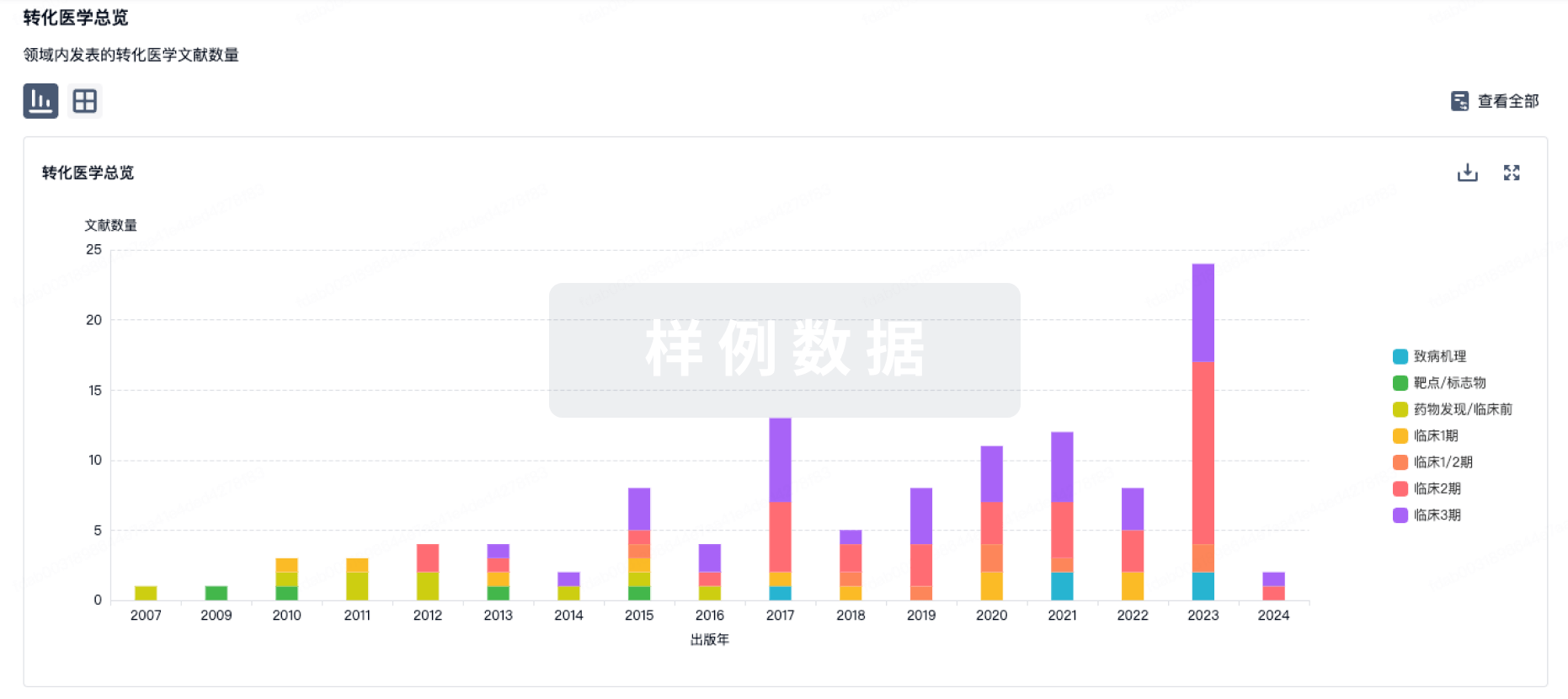
转化医学
使用我们的转化医学数据加速您的研究。
登录
或
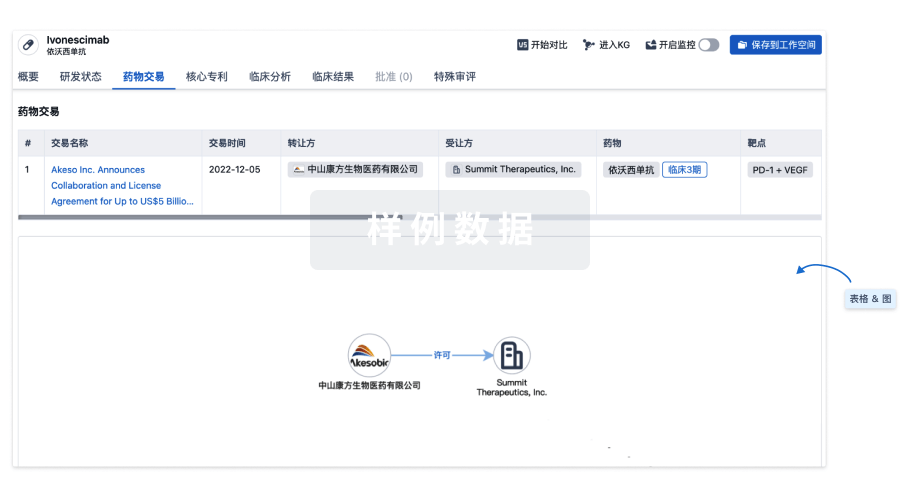
药物交易
使用我们的药物交易数据加速您的研究。
登录
或
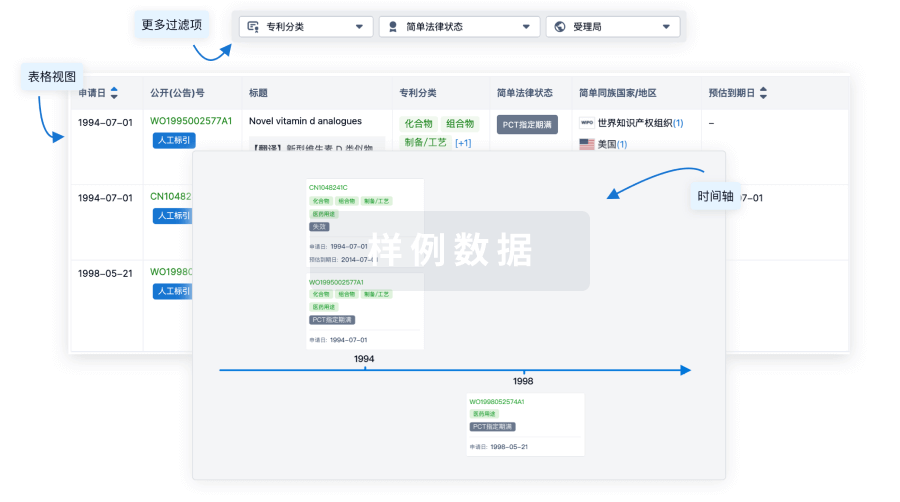
核心专利
使用我们的核心专利数据促进您的研究。
登录
或
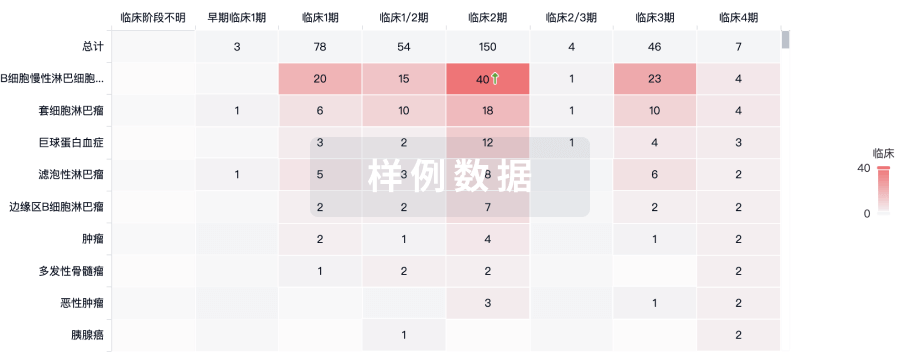
临床分析
紧跟全球注册中心的最新临床试验。
登录
或
批准
利用最新的监管批准信息加速您的研究。
登录
或
生物类似药
生物类似药在不同国家/地区的竞争态势。请注意临床1/2期并入临床2期,临床2/3期并入临床3期
登录
或
特殊审评
只需点击几下即可了解关键药物信息。
登录
或
芽仔
全新生物医药AI Agent 覆盖科研全链路,让突破性发现快人一步
立即开始免费试用!
智慧芽新药情报库是智慧芽专为生命科学人士构建的基于AI的创新药情报平台,助您全方位提升您的研发与决策效率。
立即开始数据试用!
智慧芽新药库数据也通过智慧芽数据服务平台,以API或者数据包形式对外开放,助您更加充分利用智慧芽新药情报信息。
生物序列数据库
生物药研发创新
免费使用
化学结构数据库
小分子化药研发创新
免费使用