预约演示
更新于:2026-08-22
AZD7507
更新于:2026-08-22
概要
基本信息
原研机构 |
在研机构- |
非在研机构 |
权益机构- |
最高研发阶段无进展临床前 |
首次获批日期- |
最高研发阶段(中国)- |
特殊审评- |

结构/序列
分子式C23H27FN6O3 |
InChIKeyCPDGCAFPSYOTGO-UHFFFAOYSA-N |
CAS号1041852-85-0 |
关联
100 项与 AZD7507 相关的临床结果
登录后查看更多信息
100 项与 AZD7507 相关的转化医学
登录后查看更多信息
100 项与 AZD7507 相关的专利(医药)
登录后查看更多信息
6
项与 AZD7507 相关的文献(医药)2026-07-01·MOLECULAR IMMUNOLOGY
CSF1R signaling contributes to macrophage-associated CCL11 production and eosinophil recruitment in murine allergic conjunctivitis
Article
作者: Gu, Jingyi ; Lan, Huifei ; Zhuang, Zhudan ; Du, Jingheng ; Li, Zhijie ; Liu, Jun ; Fu, Ting ; Xue, Yunxia ; Wu, Jiaxin ; Tan, Xiukui ; Xie, Jingbin
Allergic conjunctivitis (AC) is a prevalent ocular surface inflammatory disorder with limited therapeutic options. In this study, we investigated the role of colony-stimulating factor 1 receptor (CSF1R) in an ovalbumin (OVA)-induced murine model of AC. Conjunctival expression of CSF1R and its ligands, interleukin-34 (IL-34) and colony-stimulating factor 1 (CSF1), was significantly upregulated following OVA challenge. Pharmacological inhibition of CSF1R with BLZ945 alleviated clinical symptoms, reduced the infiltration of CD45⁺ leukocytes and eosinophils, and attenuated an M2-associated macrophage phenotype in the conjunctiva. Similar suppression of eosinophil infiltration was observed with a second CSF1R inhibitor, AZD7507. In addition, conjunctival CD206⁺ macrophages with an M2-associated phenotype expressed C-C motif chemokine ligand 11 (CCL11), which was elevated in AC and downregulated by CSF1R inhibition. Recombinant CCL11 significantly restored eosinophil infiltration in BLZ945-treated mice, supporting a role for CCL11 as a downstream effector of CSF1R signaling in this model. Collectively, these findings support a contributory role for CSF1R signaling in macrophage-associated eosinophilic inflammation in murine AC and suggest that targeting CSF1R may represent a potential therapeutic strategy for ocular allergic disease.
2019-05-01·Toxicological sciences : an official journal of the Society of Toxicology2区 · 医学
A Systems Toxicology Approach for the Prediction of Kidney Toxicity and Its Mechanisms
In Vitro
2区 · 医学
Article
作者: Todorov, Petar ; Pavkovic, Mira ; Shankaran, Harish ; Dohlman, Anders ; Muhlich, Jeremy ; Chen, William W ; Chandrasekaran, Vidya ; Ramm, Susanne ; Monteiro, Maria B ; Vaidya, Vishal S ; Mettetal, Jerome T
Abstract:
The failure to predict kidney toxicity of new chemical entities early in the development process before they reach humans remains a critical issue. Here, we used primary human kidney cells and applied a systems biology approach that combines multidimensional datasets and machine learning to identify biomarkers that not only predict nephrotoxic compounds but also provide hints toward their mechanism of toxicity. Gene expression and high-content imaging-derived phenotypical data from 46 diverse kidney toxicants were analyzed using Random Forest machine learning. Imaging features capturing changes in cell morphology and nucleus texture along with mRNA levels of HMOX1 and SQSTM1 were identified as the most powerful predictors of toxicity. These biomarkers were validated by their ability to accurately predict kidney toxicity of four out of six candidate therapeutics that exhibited toxicity only in late stage preclinical/clinical studies. Network analysis of similarities in toxic phenotypes was performed based on live-cell high-content image analysis at seven time points. Using compounds with known mechanism as reference, we could infer potential mechanisms of toxicity of candidate therapeutics. In summary, we report an approach to generate a multidimensional biomarker panel for mechanistic de-risking and prediction of kidney toxicity in in vitro for new therapeutic candidates and chemical entities.
2018-05-01·Cell reports1区 · 生物学
CSF1R+ Macrophages Sustain Pancreatic Tumor Growth through T Cell Suppression and Maintenance of Key Gene Programs that Define the Squamous Subtype
1区 · 生物学
ArticleOA
作者: Lisa Drew ; Aarthi Gopinathan ; Juliana B. Candido ; Jennifer P. Morton ; Laura Lapienyte ; T.R. Jeffry Evans ; Peter Bailey ; Duncan I. Jodrell ; Rebecca Arkell ; Raphael Zollinger ; Ewan J. McGhee ; Loveena Rishi ; Andrew V. Biankin ; Simon T. Barry ; Frances R. Balkwill ; Jun Wang ; Robert W. Wilkinson ; Saadia A. Karim ; Colin Nixon ; Monica Escorcio-Correia ; William Clark ; Andrew D. Campbell ; Owen J. Sansom ; Thomas Jamieson ; Rozita Roshani
Pancreatic ductal adenocarcinoma (PDAC) is resistant to most therapies including single-agent immunotherapy and has a dense desmoplastic stroma, and most patients present with advanced metastatic disease. We reveal that macrophages are the dominant leukocyte population both in human PDAC stroma and autochthonous models, with an important functional contribution to the squamous subtype of human PDAC. We targeted macrophages in a genetic PDAC model using AZD7507, a potent selective inhibitor of CSF1R. AZD7507 caused shrinkage of established tumors and increased mouse survival in this difficult-to-treat model. Malignant cell proliferation diminished, with increased cell death and an enhanced T cell immune response. Loss of macrophages rewired other features of the TME, with global changes in gene expression akin to switching PDAC subtypes. These changes were markedly different to those elicited when neutrophils were targeted via CXCR2. These results suggest targeting the myeloid cell axis may be particularly efficacious in PDAC, especially with CSF1R inhibitors.
100 项与 AZD7507 相关的药物交易
登录后查看更多信息
研发状态
10 条进展最快的记录, 后查看更多信息
登录
| 适应症 | 最高研发状态 | 国家/地区 | 公司 | 日期 |
|---|---|---|---|---|
| 肿瘤 | 临床前 | 美国 | 2013-08-15 |
登录后查看更多信息
临床结果
临床结果
适应症
分期
评价
查看全部结果
| 研究 | 分期 | 人群特征 | 评价人数 | 分组 | 结果 | 评价 | 发布日期 |
|---|
No Data | |||||||
登录后查看更多信息
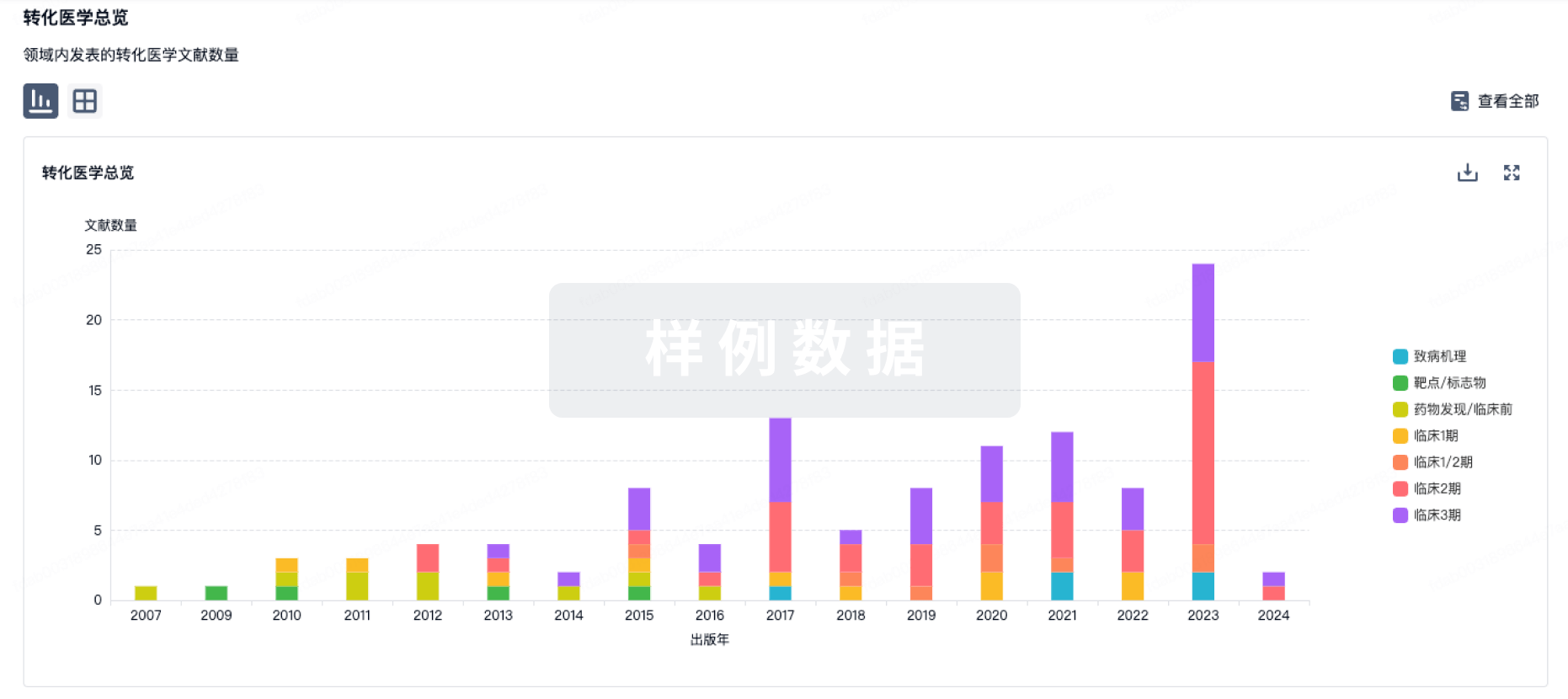
转化医学
使用我们的转化医学数据加速您的研究。
登录
或
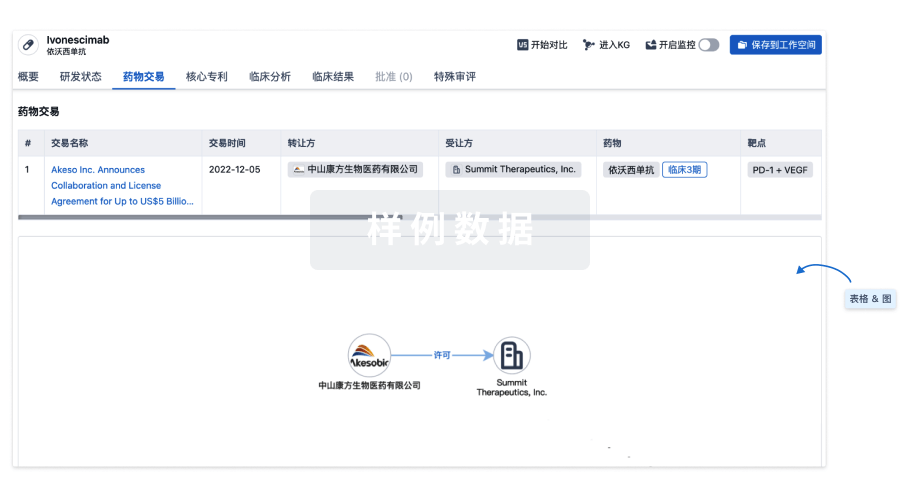
药物交易
使用我们的药物交易数据加速您的研究。
登录
或
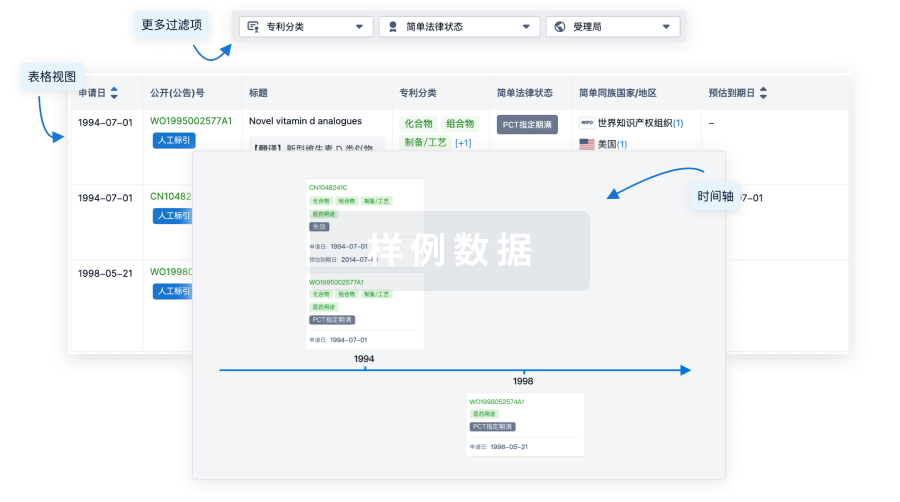
核心专利
使用我们的核心专利数据促进您的研究。
登录
或
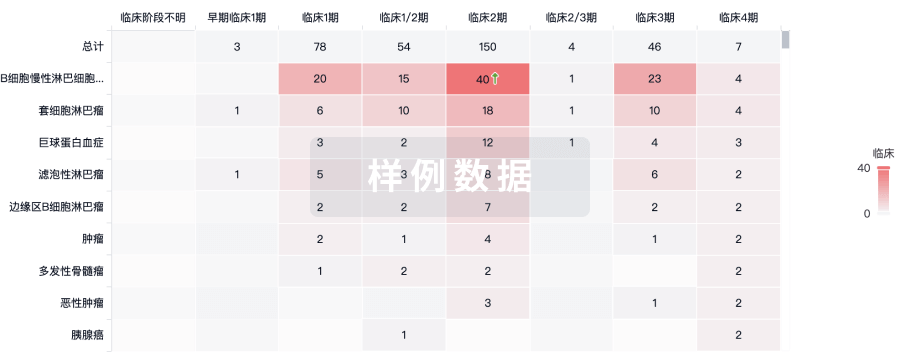
临床分析
紧跟全球注册中心的最新临床试验。
登录
或
批准
利用最新的监管批准信息加速您的研究。
登录
或
特殊审评
只需点击几下即可了解关键药物信息。
登录
或
提出任何生物医药研究问题
让每一步生物医药决策都精准制胜
基于十亿级生物数据与全球情报的精准 AI,赋能早期药物发现
立即开始免费试用!
智慧芽新药情报库是智慧芽专为生命科学人士构建的基于AI的创新药情报平台,助您全方位提升您的研发与决策效率。
立即接入生物医药数据包
智慧芽新药库数据也通过智慧芽开放平台,以MCP或API服务形式对外开放。立即使用我们的MCP服务定制您的LLM智能体。
生物序列数据库
生物药研发创新
免费使用
化学结构数据库
小分子化药研发创新
免费使用