预约演示
更新于:2026-08-22
Interleukin-4/13 Trap
更新于:2026-08-22
概要
基本信息
药物类型 白细胞介素 |
别名 IL-4/13 antagonist、IL-4/IL-13 trap、Interleukin-4/13 antagonist + [1] |
作用方式 抑制剂 |
作用机制 IL-13抑制剂(白细胞介素-13抑制剂)、IL-4抑制剂(白细胞介素-4抑制剂) |
在研适应症- |
在研机构- |
权益机构- |
最高研发阶段无进展临床阶段不明 |
首次获批日期- |
最高研发阶段(中国)- |
特殊审评- |

关联
100 项与 Interleukin-4/13 Trap 相关的临床结果
登录后查看更多信息
100 项与 Interleukin-4/13 Trap 相关的转化医学
登录后查看更多信息
100 项与 Interleukin-4/13 Trap 相关的专利(医药)
登录后查看更多信息
43
项与 Interleukin-4/13 Trap 相关的文献(医药)2026-08-01·BRAIN BEHAVIOR AND IMMUNITY
Reduced dementia risk in middle-aged and older atopic dermatitis patients treated with dupilumab: A target trial emulation
Article
作者: Fan, Yi-Hsuan ; Lin, Teng-Li ; Fan, Kuo-Sheng
BACKGROUND:
Middle-aged and older adults with atopic dermatitis (AD) are at increased risk of dementia, possibly driven by chronic inflammation and involving IL-4 and IL-13 pathways. Whether treatment with dupilumab, an IL-4/IL-13 inhibitor, influences subsequent dementia risk in this population remains unclear.
METHODS:
This target trial emulation study utilized the TriNetX database. Patients aged ≥ 50 years with AD were identified and divided into two groups: those newly prescribed dupilumab and those newly prescribed conventional systemic agents without dupilumab exposure. Propensity score matching (1:1) was performed based on age, sex, race, and comorbidities. Dementia risk was assessed using Cox regression.
RESULTS:
After matching, each group included 10,039 patients (∼52% female; mean age, 63 years; 63% White). The 5-year cumulative incidence of dementia was lower among dupilumab users than controls (2.37% vs 3.33%; P = 0.001). Dupilumab use was associated with a reduced risk of all-cause dementia (HR 0.68; 95% CI, 0.54-0.86), with similar reductions observed across dementia subtypes, including secondary (HR 0.69; 95% CI, 0.48-0.99), unspecified (HR 0.70; 95% CI, 0.53-0.93), and Alzheimer's dementia (HR 0.61; 95% CI, 0.40-0.93). Subgroup and sensitivity analyses showed consistent results, with control outcome analyses supporting the robustness of the findings. In a validation analysis of middle-aged and older asthma patients, dupilumab users likewise had a lower dementia risk than omalizumab users (HR 0.68; 95% CI, 0.47-0.98).
CONCLUSIONS:
Dupilumab use was associated with a reduced risk of dementia in middle-aged and older adults with AD compared with conventional systemic agents.
2026-01-01·Dermatitis
Dupilumab for Chronic Hand Eczema: A Systematic Review and Meta-Analysis
Review
作者: Riva, Hannah R. ; Chisholm, Cary D. ; Singh, Vishwajeet ; Hendricks, Aleksi J. ; Yoon, Teresa ; Guevara, Adrian ; Housewright, Chad D. ; Malick, Hamza
Abstract:
Chronic hand eczema (CHE) is a distressing and pervasive dermatologic condition, and effective treatment can be challenging. The novel IL-4/13 inhibitor dupilumab has shown clinical efficacy for atopic dermatitis (AD) and is being studied for CHE.
PubMed database was searched for terms dupilumab and chronic hand eczema/dermatitis, including CHE subtypes (dyshidrotic, hyperkeratotic, allergic, contact, atopic, occupational, vesicular). Twenty-two study publications met inclusion and exclusion criteria for evaluation.Two multicenter prospective studies, one randomized controlled trial, two prospective observational studies, one retrospective study, nine case series, and seven case reports were included in the analysis with 374 total patients. Any partial response or complete resolution of CHE occurred in 80.3% of patients treated with dupilumab within 4–16 weeks of treatment. The patient response tended to increase throughout the duration of these studies for a significant percentage of patients, and for many it lasted beyond the study duration. Significant improvement in hand eczema severity scores and quality-of-life scores were noted. Efficacy was reported in over half of the cases of hyperkeratotic hand eczema; however, efficacy was decreased compared with relatively high consistent efficacy in other CHE subtypes such as dyshidrotic, vesicular, atopic, and contact CHE. Patients with current or previous AD had increased improvement scores compared to those without. The most common adverse effects were conjunctivitis (9.9%), herpes viral infection (1.4%), and facial erythema/dermatitis (1.3%).Dupilumab shows therapeutic efficacy in treating CHE. Further randomized controlled studies of dupilumab use in CHE subtypes are needed.
2025-12-31·JOURNAL OF DERMATOLOGICAL TREATMENT
Dupilumab monotherapy in super-elderly patients with bullous pemphigoid: a retrospective study on long-term efficacy and safety in mild to moderate cases
Article
作者: Zhang, Qiuli ; Bao, Yingqiu ; Lv, Haozhen ; Yang, Kun ; Zhou, Yuxi ; Han, Zhenxin ; Fang, Xing ; Gong, Qi ; Fu, Yu
BACKGROUND:
Bullous pemphigoid (BP) is a common autoimmune subepidermal bullous disease. Dupilumab, an IL-4/IL-13 inhibitor, represents a novel therapeutic approach for BP, but real-world long-term data in super-elderly patients are limited.
METHODS:
This retrospective, single-center observational study included super-elderly BP patients (≥80 years) receiving dupilumab monotherapy from September 2022 to September 2024. Disease severity was assessed using BPDAI and NRSP, and BP180 antibody, total IgE, and eosinophil count were monitored over 52 weeks.
RESULTS:
Thirteen patients with mild to moderate BP were enrolled. Ten (76.9%) achieved Complete remission (CR) within a mean of 7.4 weeks. BPDAI and NRSP significantly improved, with BPDAI scores decreased from 16.08 ± 9.00 at baseline to 1.23 ± 1.64 at week 16 and 0.23 ± 0.44 at week 52 (both p < 0.001). BP180 and total IgE also showed significant improvement. Two patients experienced relapse after discontinuing treatment. Comorbidities were generally well managed, though three patients passed away due to worsening comorbidities. One patient experienced mild drowsiness and erythema; no other dupilumab-related adverse events were observed.
CONCLUSION:
Dupilumab demonstrates significant long-term efficacy and safety in super-elderly BP patients (≥80 years) with mild to moderate disease and multiple comorbidities, offering a promising alternative to traditional therapies.
20
项与 Interleukin-4/13 Trap 相关的新闻(医药)2026-08-11
With all the fretting from the pharmaceutical industry about competition from China, patent protection losses, price reduction initiatives and other government measures with the potential to hit profits, one might think that drugmakers are struggling these days to make a buck.
Not so, according to the second quarter financial results. During the period, nine of the industry’s top 25 drugmakers accomplished year-over-year double-digit revenue increases. The lone company in the top 25 that saw a sales decrease was Teva and that came in at less than 1%.
The revenue boom was even more pronounced when comparing figures between the first and second quarters. Of the top 25 drugmakers, more than half (13) realized double-digit sequential gains and only one, Daiichi Sankyo, saw a decline, at 2%.
While biopharma companies typically expect sales to increase from the first to the second quarter, double-digit gains are not the norm. From the first to second quarter of 2025, for example, there were five companies that achieved double-digit sequential increases to go along with three drugmakers in decline. In 2024, six companies had double-digit sequential increases from Q1 to Q2, while three saw a decrease.
With sales booming in 2026's Q2, 16 of the top 25 companies raised their 2026 guidance. Some of the increases were particularly notable, including a $2.75 billion increase at the midpoint from Bristol Myers Squibb, which credited the boost to surprisingly robust sales of Eliquis. BMS now expects resales from the aging blood thinner to increase by between 20% and 25%, versus a previous expectation of 10% to 15%.
Eli Lilly raised the midpoint of its guidance by $2.5 billion, which was no surprise as quarterly increases in projected revenue have been standard practice for the Indianapolis drugmaker thanks to staggering sales of its tirzepatide products. After the first quarter, for example, Lilly hiked its annual projection by $2 billion at the midpoint. In 2025, the company opened the year projecting sales of between $58 and $61 billion before closing the year with a haul of $65 billion.
Providing the biggest guidance double-take, however, was Novo Nordisk. After projecting three months earlier that its revenue would decline by between 4% and 12% this year, the Danish company adjusted its projection to a 0% to 6% decline window. Much of the catalyst for the upgrade is the company’s promising launch of its oral version of obesity drug Wegovy, which generated sales of 3.22 billion Danish kroner ($497 million) in the second quarter.
Nine years after it first reached the market, meanwhile, Dupixent is getting its second wind as an anti-inflammatory powerhouse—and its co-developers are enjoying the ride. Sanofi and Regeneron achieved year-over-year revenue increases of 16% and 17%, respectively, in the second quarter. The companies' sales were up sequentially by 10% and 19%, respectively. This marked the largest quarterly gain for Sanofi since Q2 of 2022, when its sales spike also was largely attributed to Dupixent.
The key to Dupixent’s rejuvenation has come in the form of label expansions over the last two years to treat diseases such as chronic obstructive pulmonary disease (COPD), chronic spontaneous urticaria (CSU), bullous pemphigoid (BP) and allergic fungal rhinosinusitis (AFRS).
In the fourth quarter of 2024, Dupixent’s growth had shrunk to 15%. But approaching two years on, sales have increased significantly. In the second quarter of this year, Sanofi reported worldwide revenue from Dupixent up 38% year over year, reaching 5.2 billion euros ($6 billion) for the period.
With the results, Sanofi boosted its projection for the IL-4/IL-13 inhibitor to achieve sales of 25 billion euros in 2030. That date looms large as it is the last year that Sanofi and Regeneron are expected to hold patent protection for Dupixent. During the company's recent earnings call, however, Sanofi’s legal chief Roy Papatheodorou said that the company expects extend its exclusivity rights beyond 2031.
For its part, Eli Lilly had another quarter of outsized growth at 48%, despite some unexpected struggles in the launch of its oral obesity drug Foundayo. Lilly reported sales of the GLP-1 pill at $98 million in the period, lagging well behind those of Novo Nordisk’s rival weight-loss pill Wegovy, which had a three-month, first-to-market advantage.
Nevertheless, Lilly topped the industry rankings for the seventh straight quarter and did it with ease over second-place Astellas (+27%). During its recent metabolic medicine run, Lilly has achieved quarterly year-over-year sales of at least 38% in each period, carried by the success of its tirzepatide products.
In Q2, Lilly reported worldwide sales of Mounjaro at $9.9 billion, which were up 91%, and Zepbound at $4.9 billion, good for a 46% year-over-year increase. Helping explain the disparity in sales between the two is that outside the U.S., Mounjaro is the brand name for the medication's use in both Type 2 diabetes and obesity.
Meanwhile, Lilly continued to put distance between itself and Novo in the sales of their injected diabetes and obesity products. Novo reported quarterly sales of Ozempic for diabetes at around 31.4 billion Danish kroner ($4.8 billion), which were down 6%, and injected Wegovy at 19.5 billion Danish kroner ($3.0 billion), which were up 3%.
Meanwhile, three of the nine companies that pulled off double-digit revenue increases in the quarter are based in Japan. This is nothing new for Astellas, which achieved a 27% sales boost in the period, signaling the ninth time in the last 10 quarters that the company has delivered double digit growth. Those days are likely to end soon, however, as Astellas is expected to lose patent protection in the U.S. next year for prostate cancer treatment Xtandi, which accounted for sales of 277 billion Japanese yen ($1.7 billion) in the quarter, up 19% and accounting (PDF) for 43% of Astellas’ revenue.
Daiichi Sankyo achieved a 21% revenue increase in the quarter, which also has been commonplace for the Tokyo-based drugmaker, as it has seen double-digit growth in each of the last four years on the success of its ADC blockbuster Enhertu. During its quarterly presentation earlier this year, Daiichi unveiled a 5-year plan to become one of the top five oncology companies in the industry, establishing a goal to reach sales of 3 trillion yen ($19.1 billion) in 2030, up from 2.1 trillion yen ($13.2 billion) in its 2025 fiscal year.
After stagnant sales in 2025, Takeda has regained its footing too as it posted a 10% revenue increase in the most recent period. The last time the company achieved double-digit growth was in the second quarter of FY 2024. After bearing the brunt of the loss of patent protection for ADHD drug Vyvanse last year, Takeda is back in growth mode thanks to its top-selling product Entyvio and a clutch of new drugs, including Fruzaqla, Livtencity and newly approved narcolepsy treatment Orzeyful.
With a 10% boost in Q2, AbbVie had its third straight quarter of double-digit growth. The last time the Illinois company put three double-digit quarters together was in 2021, when its immunology superstar Humira was in its prime. After four straight quarters of sales declines in 2023 as Humira faced biosimilar competition, AbbVie has recovered behind Skyrizi and Rinvoq.
In the second quarter, Skyrizi achieved a landmark, generating sales of $5.55 billion and prompting the company to increase its revenue projection for Skyrizi to $21.7 billion for this year. The figure would top the $21.2 billion sales high achieved by Humira in 2022, which was the megablockbuster's last full year of patent protection in the U.S.
Boehringer Ingelheim accomplished a 12% revenue increase for the first half of 2026, fueled largely by an increase in U.S. demand for Type 2 diabetes and heart failure medicine Jardiance. Also realizing a 12% increase in Q2 was Vertex, which has pulled off double-digit growth in four of the last five quarters thanks to its cystic fibrosis franchise. The company is anxious to expand its rare disease portfolio, however, as evidenced by its largest-ever acquisition last month of Crinetics Pharmaceuticals for $10 billion.
Other drugmakers likely poised to join the double-digit revenue club in the third quarter are Amgen, Gilead, Johnson & Johnson and Bristol Myers Squibb. The U.S. companies had respective sales increases of 9%, 8%, 7% and 6% in the second quarter, and each company also raised their 2026 sales guidance.
2026-08-06
·药研网
2025年全球销售额药品清单前10榜单中,自免领域药物无疑吸引一众目光。
赛诺菲的度普利尤单抗以超180亿美元销售额跻身前列,艾伯维的Skyrizi、强生的Stelara等自免药物也纷纷迈入“百亿美元俱乐部”,用销售额数据呈现了自免领域药物的旺盛需求。
01
千亿级蓝海市场
根据行业调研数据,2022年全球自免药物市场规模约1686亿美元,预计至2035年将达到2262亿美元,期内复合年增长率为3.0%。[1]
自免市场还有个特点,就是“稳定”: 用药周期长、患者依从性高、复购率极强。一旦产品建立临床优势和医生使用习惯,生命周期往往可以持续十年以上。某种意义上自免药特别像“长期收租”。
这也是为何全球巨头现在都在疯狂加码。因为谁占领自免赛道,谁就控制未来最稳定的现金流。
随着研究进展,自免药物靶点呈现代际更迭。据药研网统计,在2025年全球TOP自免药物中,仅剩Humira一款TNF-α产品仍位居核心阵营,其余市场份额几乎被IL-4R、IL-23、IL-17等新一代靶点瓜分。这背后,不仅是疗效和安全性的升级,更代表着整个行业研发逻辑的改变。
下一代“药王”,很可能就诞生在这些新靶点之中。
02
热销自免市场主流靶点
1
自免药王:IL-4R
自赛诺菲与再生元联手推出这款全球首个靶向IL-4Rα的全人源单抗以来,度普利尤单抗的商业曲线几乎一路垂直上升。2024年,度普利尤单抗接力阿达木单抗成为新的“自免药王”,2025年销售额已飙升至157.14亿欧元(约合182.91亿美元),再次蝉联该宝座!另据Frost & Sullivan报告,全球IL-4Rα靶向疗法的市场规模预计2030年将达到287亿美元,国内市场规模将达到40.8亿美元。[2]
白细胞介素-4(IL-4)是一种糖基化的I型细胞因子,具有三个链内二硫键,呈四螺旋束状结构。它仅由一部分活化的造血细胞( T 细胞、肥大细胞和嗜碱性粒细胞)产生。
IL-4通过两种不同的受体复合物启动信号转导:一种是表达于造血细胞上的I型受体(IL-4Rα/γc),主要表达于造血细胞,介导 IL-4 诱导 Th0 向 Th2 分化、促进 B 细胞 Ig 类别转换为 IgE,是体液免疫和过敏反应的关键机制;另一种是表达于非造血细胞上的II型受体。IL-4Rα/IL-13Rα1):IL-4 与 IL-13 共用此受体,主要表达于上皮细胞、成纤维细胞和平滑肌细胞等非造血细胞。通过该复合体激活 JAK-STAT(主要是 STAT6)路径,诱导黏液分泌、黏膜屏障炎症、组织重塑和嗜酸粒细胞募集。
正常情况下,IL-4和IL-13受体亚基在动态平衡条件下低水平表达。作为诱导和维持2型炎症反应的关键细胞因子,它们与多种特应性疾病密切相关,例如哮喘、特异性皮炎(AD)、和慢性鼻窦炎伴鼻息肉病(CSwNP)等。目前,靶向IL-4Rα的生物制剂如度普利尤单抗已成功应用于这些疾病的治疗。[3,4]
IL-4Rα介导的炎症抑制反应
哮喘 是IL-4Rα靶向疗法布局的重要适应症之一。哮喘是一种以气道慢性炎症和气道高反应性为主要特征的异质性呼吸系统疾病,其中2型炎症驱动的嗜酸性粒细胞型哮喘是最主要的免疫表型之一。在该过程中,IL-4和IL-13可促进Th2细胞分化、IgE产生、气道黏液分泌以及气道重塑,推动慢性炎症持续进展。由于IL-4Rα是IL-4和IL-13信号通路的共同关键节点,靶向IL-4Rα能够同时抑制两条核心炎症通路,为中重度哮喘患者提供精准治疗策略。
与此同时,特应性皮炎(AD)也是IL-4Rα靶向疗法商业化价值最高的核心适应症之一。AD是一种慢性、复发性炎症性皮肤疾病,其发生发展与IL-4、IL-13介导的2型免疫异常密切相关。持续激活的Th2炎症通路可导致皮肤屏障功能受损、炎症细胞浸润以及瘙痒症状加重,而IL-4Rα作为两条信号通路的共同受体亚基,成为阻断AD关键炎症反应的重要靶点。
目前,国内外企业多款管线处于临床阶段,适应症主要集中于哮喘和AD两大领域:
IL-4Rα部分药物研发进展
自2017年以来,Dupilumab在美国、欧盟和日本等多个国家和地区获批上市,以2型炎症反应为核心,其适应症在哮喘、特应性皮炎、CRSwNP 与嗜酸性食管炎不断延伸,如今又推向了鼻窦的真菌感染相关炎症。
今年2月,度普利尤单抗在国内迎来新进展——国家药监局同日批准其两项新适应症:用于治疗成人大疱性类天疱疮(BP),以及用于6岁及以上儿童哮喘患者的维持治疗,直接填补了国内BP靶向治疗的空白,更使其成为中国首个覆盖低龄儿童哮喘人群的抗IL-4Rα单抗,进一步巩固了其基石地位。
在度普利尤单抗一路高歌猛进的背后,专利悬崖的阴影悄然逼近,这直接引发全球范围内众多“追赶者”涌入赛道。
一方面,辉瑞启动了IL-4/IL-13/TSLP三特异性抗体PF-07275315治疗COPD的III期临床试验,试图通过多靶点协同在更广泛的呼吸道疾病中寻求突破。
另一方面,国产创新药也发起了强力冲击,赛诺菲用十年时间挖掘并证实的“金矿”,正迎来国产药物的集中收割:
2月25日,康方生物的曼多奇单抗(AK120,IL-4Rα抑制剂)通过阻断IL-4/IL-13信号,用于中重度特应性皮炎(AD),新药上市申请获NMPA受理。
紧随其后,三生国健的SSGJ-611上市申请也获CDE受理,同样聚焦成人中重度AD。
近日,江苏景行生物的GS101(IL-4Rα靶点生物类似药)启动III期头对头临床试验(vs Dupixent,NCT07386743)用于中重度特应性皮炎,也是全球首款启动III期临床试验的Dupixent生物类似药。
与此同时,纳米抗体、口服小分子IL4Rα拮抗剂及IL4Rα靶向ADC等前沿管线也开始进行了早期探索。
2
银屑病: TNF-α、IL-17、IL-23
银屑病 是现代免疫学研究最成功的疾病之一。早期研究认为TNF-α是炎症反应网络中的核心调控因子,因此早期生物制剂开发的重要靶点主要围绕TNF展开。TNF-α是一种主要的促炎细胞因子,靶向TNF-α的单克隆抗体,如英夫利昔单抗(Infliximab)和阿达木单抗(Adalimumab),已经在多种自身免疫疾病中取得了良好的临床效果。
TNF-α和TNFR结合,通过激活下游信号通路发挥调控作用。TNF-α不适当或过度激活与慢性炎症有关,并导致自身免疫性疾病如类风湿关节炎、炎症性肠病、银屑病和非感染性葡萄膜炎的发展。
目前,国内已有多款靶向TNF-α的药物获批上市,用于风湿免疫疾病治疗,主要包括阿达木单抗、英夫利昔单抗、依那西普、培塞利珠单抗、戈利木单抗等。此外,还有一些TNF-α抑制剂药物正处于临床试验阶段。
抗TNF-α药物的成功应用证实了炎症细胞因子在银屑病发病中的重要作用,但仍有部分患者无法获得理想疗效,提示疾病可能存在更为关键的致病机制。2005年前后,Th17细胞被鉴定为独立于Th1和Th2之外的新型辅助T细胞亚群。
随后研究发现,Th17细胞产生的IL-17A、IL-17F及IL-22等细胞因子能够直接作用于角质形成细胞,诱导表皮异常增殖并放大局部炎症反应,其中IL-17A被认为是银屑病发病过程中最关键的效应细胞因子之一。
之后研究焦点逐渐从TNF-α转向Th17介导的免疫炎症通路,推动了靶向IL-17生物制剂的开发与应用。研究表明,IL-23位于Th17免疫反应的上游,能够促进致病性Th17细胞的扩增、维持及IL-17的持续产生。因此,IL-23/Th17轴逐渐被认为是银屑病发病机制中的关键免疫通路,并推动了靶向IL-12/23和IL-23生物制剂的相继问世。
白细胞介素 17 (IL-17,又称 IL-17A)是IL-17细胞因子家族的原型成员,该家族包括 IL-17A 至 IL-17F 六种配体以及 IL-17RA 至 IL-17RD 和 SEF 等受体。
IL-17A 与同源性较高的 IL-17F 在结构和功能上高度相似,二者可以形成同源或异源二聚体,并通过与靶细胞表面的受体复合体结合来介导信号传导,从而发挥炎症调节的生物学作用。[5]
IL-17 细胞因子和受体家族[6]
IL-17是一种主要由活化的T 细胞产生的致炎细胞因子,可以促进T细胞的激活和刺激上皮细胞、内皮细胞、成纤维细胞产生多种细胞因子,如IL-6、IL-8、粒细胞- 巨噬细胞刺激因子(GM-CSF)和化学增活素及细胞黏附分子1(cellular adhesion molecule 1,CAM-1),从而导致炎症的产生。
当IL-17与其受体 IL-17R 结合时,能够激活ACT1和NF-κB等相关下游通路,进而促使IL-6和IL-8等炎症因子的释放,从而引发一系列炎症反应。
随着银屑病诊疗率提升和生物制剂渗透率提高,IL-17抑制剂凭借优异的疗效逐渐成为市场主流。首个获批上市的IL-17药物司库奇尤单抗全球累计销售额已超400亿美元,2025年销售额达66.68亿美元。礼来的依奇珠单抗同期销售额达35.62亿美元。
与此同时,新一代IL-17抑制剂也快速崛起,优时比的比奇珠单抗凭借同时阻断IL-17A和IL-17F的机制优势,2025年销售额达到22.27亿欧元,同比增长约2.7倍。近期,比奇珠单抗在银屑病关节炎头对头研究中显示出优于利生奇珠单抗的疗效,在治疗活动性银屑病关节炎的IIIb期头对头研究中,其疗效在第16周达到ACR50的比例显著优于AbbVie的利生奇珠单抗。
而司库奇尤单抗则进一步获批用于治疗化脓性汗腺炎,使该药物成为该患者群体中唯一获批的 IL-17A 抑制剂,也是近十年来该领域首个具有不同作用机制的疗法。
从头对头临床竞争到新适应症拓展,IL-17 通路正在不断巩固其在炎症性疾病治疗版图中的核心地位。
全球已获批 IL-17靶向药物
尽管IL-17抑制剂已在多种炎症性疾病中验证了显著临床价值,并持续扩展适应症边界,但其本质仍属于炎症级联反应的下游效应阻断。随着Th17轴机制逐步厘清,研究视角开始从“阻断炎症输出”转向“干预上游驱动信号”。在这一逻辑下,IL-23因其在维持致病性Th17反应中的关键作用,被认为更具上游控制潜力,并逐渐成为下一代靶点竞争的核心方向。
IL-23能否成为下一个重磅免疫靶点?全球药企又将如何布局这一赛道?答案将在下篇揭晓。
基于细胞的检测方法加速自免药物研发
自身免疫疾病的发生与免疫系统异常激活密切相关,其核心机制涉及T细胞与B细胞的异常活化,以及白介素家族细胞因子的调控失衡。异常免疫信号持续激活,导致自身反应性免疫细胞扩增并产生炎症反应,最终引发组织损伤。
随着治疗靶点数量的不断增加,可靠的功能性检测对于识别和表征新的候选药物变得越来越重要。
细胞检测通过模拟生理相关信号通路,提供受体激活和细胞内信号传导等功能信息,与生化检测相辅相成,可覆盖药物发现全过程,包括早期筛选、先导优化以及候选药物评价。
01
产品应用
识别新型激动剂、拮抗剂或通路调节剂
筛选大分子药物
表征作用机制
确定效力(EC₅₀/IC₅₀)
支持先导分子的发现和优化
比较候选治疗药物的信号转导效率
评估通路选择性或偏向性信号转导
02
吉满优势
稳定的报告基因细胞系
经过广泛的功能验证
定量且可重复的发光读数
适合常规实验室使用的简便检测流程
适用于高通量筛选
提供完整的培养和检测方案
优化检测性能的辅助试剂,包括专用细胞培养基和 ONE-Step Luciferase Assay System
吉满生物围绕自免药物研发热点靶点,开发了一系列报告基因细胞系、蛋白及抗体产品。报告基因细胞系通过目标受体激活诱导萤火虫荧光素酶表达,将细胞信号转导事件转化为可量化的发光信号,使研究人员能够评价药物对通路激活或抑制作用,并进一步分析EC₅₀、IC₅₀等药效参数。
03
产品部分数据展示
01
TNFɑ蛋白数据展示
GM-88209RP
Human TNF alpha Protein; His Tag
GM-88209RP Human TNF-α Protein; His Tag 经SDS-PAGE纯度分析及多款TNF-α靶向抗体结合活性验证,具备良好的蛋白质量与生物活性,可用于TNF-α相关抗体药物研发及功能检测。
01
TNFɑ抗体数据展示
GM-49267AB
Anti-TNF-α hIgG1 Antibody(CT-P17)
The recommended usage range is 0.5-4 μg per test.
Recombinant Human TNF-α. IC50 for this effect is 0.4315 ng/mL.(下图)
GM-49267AB Anti-TNF-α hIgG1 Antibody(CT-P17)经TNF-α结合能力及细胞信号阻断活性验证,可特异性结合膜型TNF-α并有效抑制TNF-α/TNFR2通路激活。
01
TNFɑ细胞系数据展示
GM-C27615
H_TNFR2 Null Reporter Cell Line与Membrane Bound H_TNFα(cleavage-resistant) CHO共培养,使用Anti-TNF-α hIgG1 Antibody(CT-P17)抗体验证数据
使用Recombinant Human TNF-α稳定性验证数(下图)
该产品经TNF-α刺激响应及Anti-TNF-α抗体阻断功能验证,表现出稳定的TNFR2信号通路响应能力和良好的药物评价性能,为TNF-α靶向药物研发提供可靠的功能检测模型。
02
IL17蛋白数据展示
GM-87869RP
Human IL-17F Protein; His Tag
On SDS-PAGE under reducing (R) conditio(下图)
GM-87869RP Human IL-17F Protein; His Tag 经SDS-PAGE纯度分析及细胞功能活性验证,表现出良好的蛋白纯度和稳定的IL-17F/IL-17R信号激活能力,为IL-17F相关药物筛选、功能评价及机制研究提供可靠工具。
02
IL17抗体数据展示
GM-27267AB
Human IL-17F Protein; His Tag
该产品经细胞功能活性验证,展现出良好的IL-17A信号阻断能力,可用于IL-17A靶向药物筛选、活性评价及作用机制研究
02
IL17 细胞系数据展示
GM-C28790
Membrane Bound H_IL17A CHO-K1 Cell Line使用Membrane Bound H_IL17A CHO-K1 Cell Line流式验证结果
该产品经流式细胞术验证,表现出稳定的膜结合型IL-17A表达能力和良好的细胞模型一致性,为IL-17A靶向药物研发提供可靠的结合检测模型。
03
IL4 蛋白数据展示
GM-88042RP
Human IL-4 Protein; His Tag
On SDS-PAGE under reducing (R) condition(下图)
该产品经流式细胞术验证,表现出稳定的膜结合型IL-17A表达能力和良好的细胞模型一致性,为IL-17A靶向药物研发提供可靠的结合检测模型。
03
IL4 抗体数据展示
GM-88648AB
Anti-IL-4 hIgG1 Antibody (pascolizumab)
On SDS-PAGE under reducing (R)/non-reducing(N-R) condition(下图)
经SDS-PAGE纯度分析验证,表现出高纯度特征,为IL-4靶向药物研究、抗体功能评价及相关实验应用提供高质量工具。
03
IL4 细胞系数据展示
GM-C36365
GM-C36365:H_IL4R CHO-K1 Cell Line与GM-C01521: H_IL4R CHO-K1 Cell Line (Low Expression)使用Anti-IL4R hIgG4 Reference Antibody (Dupbio)验证结果
经流式验证,H_IL4R CHO-K1 Cell Line可稳定表达IL-4R靶点,并展现良好的抗体结合响应能力,为IL-4R靶向药物研发提供可靠检测模型。
assay 检测平台
让抗体药效验证更简单
案例展示
IL-4/IL-13信号通路阻断剂评估
IL14/IL13 Reporter 293 Cell Line for evaluation of the blocking activity of receptor inhibitors.
依托吉满生物专业的ASSAY检测平台,我们以IL-4/IL-13 Reporter 293 Cell Line为例,展示了该细胞系对多种受体阻断剂的有效响应。实验结果表明,该细胞系能够灵敏检测药物对IL-4/IL-13下游信号的抑制作用,为中和抗体的体外筛选提供了强有力的工具。
参考资料
[1]https://www.futuremarketinsights.com/reports/autoimmune-disease-therapeutics-market
[2]https://www1.hkexnews.hk/listedco/listconews/sehk/2021/0625/2021062500031.pdf
[3]doi.org/10.1146/annurev-immunol-101921-041206
[4]Nur Husna SM, Md Shukri N, Mohd Ashari NS, Wong KK. IL-4/IL-13 axis as therapeutic targets in allergic rhinitis and asthma. PeerJ. 2022 May 30;10:e13444. doi: 10.7717/peerj.13444. PMID: 35663523; PMCID: PMC9161813.
[5]https://www.sciencedirect.com/topics/neuroscience/interleukin-17
[6]Huangfu, L., Li, R., Huang, Y. et al. The IL-17 family in diseases: from bench to bedside. Sig Transduct Target Ther 8, 402 (2023).https://doi.org/10.1038/s41392-023-01620-3
2026-05-17
全球免疫与自身免疫疾病药物研发全景深度报告:靶点通路、临床验证与下一代重塑疗法引言
全球自身免疫性疾病及炎症性疾病的治疗正处于从“症状控制”向“免疫重塑与疾病治愈”跨越的历史性拐点。随着对免疫系统分子机制的深入理解,全球药物研发管线正经历前所未有的爆发式增长。最新行业分析显示,全球自身免疫领域的在研药物数量已超过6,600款,同比实现27%的大幅增长;仅在2025年上半年,便启动了超过1,100项新的临床试验 。随着1,186项临床试验计划于2025年底前完成,大量关键数据即将重塑现有的治疗路径 。
这一领域的竞争已从早期突破性单抗疗法的“跑马圈地”,演变为围绕更优靶点、更高激酶选择性以及下一代新分子实体(如双特异性抗体、CAR-T细胞疗法、靶向蛋白降解剂)的“超级竞争(Hypercompetitive race)”阶段 。各大跨国制药企业(MNC)不再局限于单一靶点的开发,而是通过管线整合、外部收购(如默沙东108亿美元收购Prometheus、罗氏71亿美元收购Televant)加速抢占上游关键枢纽和新兴靶点 。本报告将系统性梳理目前已上市及处于研发前沿的各类免疫通路靶点,深度解析其分子信号的上下游关系与靶点选择的科学逻辑,盘点已被三期临床验证的获批适应症及核心申办方,并对未来的研发趋势及临床应用价值进行全面展望。1. 免疫系统信号通路基础及靶点选择的分子逻辑
在探讨具体的治疗药物之前,必须从分子生物学层面理解免疫系统的“通讯网络”。免疫反应并非单一免疫细胞的孤立行为,而是一场由上游触发器、中游传导器和下游效应器共同参与的复杂级联反应(Cascade) 。在药物研发中,对于上游生物工艺与下游分子加工的考量,同样映射在针对疾病靶点的上下游选择上 。1.1 免疫通路的“上下游”层级关系
免疫系统的信号传导可以被精确地划分为三个层级:
上游信号(Upstream Signals):组织屏障的触发与警报上游因子通常驻扎在身体的屏障组织(如皮肤表皮、气道黏膜、肠道上皮细胞)中。当这些屏障细胞遇到外界刺激(如过敏原、病毒、机械损伤或上皮应激)时,它们会最先拉响警报,释放诸如 TSLP(胸腺基质淋巴细胞生成素)、IL-33、IL-25 等被称为“警报素(Alarmins)”的细胞因子,或 TGF-β 等多效性生长因子 。上游因子并不直接杀伤病原体或破坏组织,而是通过结合特异性受体,将信号传递给驻留在组织中的先天免疫细胞(如树突状细胞、先天性淋巴细胞 ILCs)。转化生长因子-β (TGF-β) 便是典型的上游多效性细胞因子,其信号传导通过类型 I 和类型 II 激酶受体复合物,磷酸化细胞质内的 R-Smads 蛋白,从而调控细胞稳态与分化 。
中游信号(Midstream Signals):免疫细胞的极化与扩增接收到上游警报后,抗原递呈细胞(如树突状细胞)和初始辅助性T细胞(Naïve CD4+ T cells)开始工作,并释放中游细胞因子(如 IL-4、IL-12、IL-23)。这些因子的核心作用是“指令分发”,促使T细胞向特定的效应亚群发育。例如,IL-23 的存在是维持致病性 Th17 细胞存活和扩增的绝对必要条件 ;而 IL-4 则不仅驱动初始T细胞向 Th2 细胞分化,还控制淋巴结内的 B 细胞进行抗体类别转换,大量合成 IgE 。
下游信号(Downstream Signals):效应机制与组织破坏分化成熟的免疫细胞(如 Th17、Th2、巨噬细胞)最终迁移至靶器官,并释放下游效应因子,如 IL-17A、IL-17F、IL-13、IL-22、IL-31 以及 TNF-α(肿瘤坏死因子-α)。这些下游因子是直接导致临床症状的“执行部队”。例如,IL-17 刺激角质形成细胞异常增生并释放趋化因子(形成银屑病斑块) ;IL-13 破坏皮肤屏障并导致气道高反应性 ;IL-31 则直接作用于神经元,引发强烈的瘙痒感 。1.2 靶点选择的系统性权衡与科学依据
制药企业在确立研发靶点时,核心逻辑在于在“系统覆盖广度”与“分子打击精准度”之间寻找最佳平衡点:
拦截上游靶点(如 TSLP、IL-33、IL-4):由于上游信号控制着多条下游分支网络,阻断上游可以实现“一石多鸟”的广泛抗炎效果。例如,IL-4 是驱动全身性系统免疫反应的核心,靶向阻断 IL-4 受体不仅能够抑制下游 IL-13 的外周组织破坏作用,还能从源头上阻断 IgE 的合成,从而实现对多种特应性合并症(如特应性皮炎合并哮喘和过敏性鼻炎)的全面控制 。此外,靶向转录因子(如驱动细胞从静止期进入增殖期的 OLIG2)也属于对上游通路的根本性干预 。然而,过度阻断上游也可能干扰机体正常的免疫监视和防御功能。
拦截下游靶点(如 IL-17、TNF-α、IL-13):下游靶点的优势在于极高的特异性和起效速度。由于它们直接负责产生局部症状,阻断下游往往能在数周甚至数天内迅速缓解皮损或关节红肿。以 IL-17A 为例,其被抑制后能够极速切断角质形成细胞的增殖信号,清除银屑病皮损 。然而,下游封锁的劣势在于疾病可能通过复杂的旁路途径(Bypass pathways)发生逃逸。在哮喘和特应性皮炎中,仅单独阻断下游 IL-13(如 Lebrikizumab 和 Tralokinumab)的临床获益,往往不及同时阻断 IL-4 和 IL-13 双通路的疗效显著 。2. 细胞内信号传导的核心中枢:JAK/STAT 通路深度解析
大多数细胞因子的受体并不具备内在的激酶活性,它们必须依赖细胞质内的激酶网络来传递信号。Janus 激酶(JAK)及其下游的信号转导与转录激活因子(STAT)构成了这一网络的核心 。2.1 JAK/STAT 的分子激活机制
当细胞因子(如 IL-6)与细胞膜上的受体结合后,受体链发生空间构象的重排。经典理论认为这导致了受体二聚化,但近期的 FRET(荧光共振能量转移)分析表明,许多受体在无配体状态下已是预先形成的二聚体,细胞因子的结合引发了受体胞内结构域的几何空间分离与重新定向,使得连接在受体上的 JAK 激酶相互靠近并发生反式自身磷酸化(Trans-phosphorylation) 。在哺乳动物中,JAK 家族包含四个成员(JAK1, JAK2, JAK3, TYK2),STAT 家族包含七个成员(STAT1 至 STAT6)。活化后的 JAK 会进一步磷酸化受体上的酪氨酸残基,为具有 SH2 结构域的 STAT 蛋白提供停泊位点。随后,STAT 被 JAK 磷酸化,形成二聚体并转移至细胞核内,激活或抑制特定靶基因的转录 。
除了核心的 JAK/STAT 轴,细胞因子的结合还会同步激活 MAPK(丝裂原活化蛋白激酶)和 PI3K/AKT/mTOR 等其他信号级联反应。例如,IL-6 能够诱导磷酸酶 SHP2 结合到受体 gp130 亚基上,进而通过 Grb2 等衔接蛋白激活 MAPK 通路 。在此过程中,细胞内部存在着严格的负反馈调节机制。例如,SOCS3(细胞因子信号传导抑制蛋白 3)的表达会被诱导,它能够结合到受体上,同时抑制 STAT3 和 MAPK 引发的转录反应,防止免疫系统失控 。2.2 泛 JAK 抑制剂与高选择性 TYK2 的临床分野
由于 JAK 通路负责介导超过 50 种细胞因子的信号,抑制 JAK 意味着能够产生强大的广谱抗炎效果 。然而,不同 JAK 亚型在体内的生理功能存在显著差异,这导致了第一代药物与新一代药物在安全性上的巨大分水岭。
泛 JAK 抑制剂(Pan-JAK Inhibitors)的安全性困境:第一代泛 JAK 抑制剂(如 Tofacitinib、Upadacitinib、Baricitinib)广泛抑制 JAK1、JAK2 和 JAK3。临床和基因敲除模型证实:JAK1 和 JAK3 对于介导干扰素和共同 γ 链细胞因子的信号至关重要,抑制它们会严重削弱淋巴细胞(T细胞、NK细胞)介导的抗病毒能力,导致带状疱疹(Herpes Zoster)和严重感染的风险显著升高 。更为严重的是,JAK2 是介导促红细胞生成素(EPO)、血小板生成素等造血因子的唯一通路,广泛抑制 JAK2 会改变止血机制,导致深静脉血栓(DVT)、肺栓塞(PE)以及心血管不良事件(MACE)的风险增加。为此,FDA 对此类药物发布了严格的“黑框警告(Black Box Warning)”,限制了其作为一线疗法的广泛应用 。
高选择性 TYK2 抑制剂的破局:为了平衡疗效与安全性,研发重心迅速转向了高选择性的同工酶抑制剂。TYK2(酪氨酸激酶 2)特异性地参与 IL-12、IL-23 以及 I 型干扰素信号传导,而不干预 JAK1/2/3 所负责的造血和广泛免疫防御功能 。BMS 开发的 Deucravacitinib 是首个获批的别构 TYK2 抑制剂,它结合在 TYK2 的假激酶结构域(Pseudokinase domain)而非高度保守的活性 ATP 结合位点,从而实现了极高的选择性 。临床数据显示,TYK2 抑制剂有效避免了血栓栓塞风险,且带状疱疹和脂质升高的发生率大幅下降,为银屑病及其他自身免疫疾病提供了一种安全性极佳的小分子口服选项 。3. IL-23/IL-17 与 TNF-α 轴:银屑病与肠道炎症的靶向进化
IL-23/IL-17 炎症轴是介导银屑病(PsO)、银屑病关节炎(PsA)、中轴型脊柱关节炎(axSpA)以及炎症性肠病(IBD)的核心致病通路 。3.1 Th17 细胞的致病级联反应
在环境诱因刺激下,浆细胞样树突状细胞(pDCs)和髓系树突状细胞(mDCs)被激活,大量分泌 IL-12、IL-23 及 TNF-α 。IL-23 由 p19 和 p40 两个亚基组成,当其结合到表达于 CD4+ T细胞表面的 IL-23R 时,通过 JAK2 和 TYK2 介导 STAT3 的激活,上调核心转录因子 ROR-γt 的表达 。这促使初始 T 细胞分化为致病性的 Th17 细胞谱系。值得注意的是,Th17 细胞可分为宿主保护性亚群(分泌 IL-17 和抗炎因子 IL-10)和高度致病性亚群(分泌 IL-17、IL-22、IFN-γ 及 GM-CSF)。IL-23 的持续存在不仅驱动向致病性表型转化,还通过刺激释放 IL-1β 和 IL-6 形成正反馈放大回路 。下游分泌的 IL-17A 和 IL-17F 随后结合到靶组织(如表皮或关节滑膜)的 IL-17RA 和 IL-17RC 受体上,触发 NF-κB 和 MAPK 通路,导致角质形成细胞过度增殖、抗菌肽及趋化因子大量释放,最终形成典型的银屑病斑块或关节侵蚀 。3.2 靶向药物的世代演进与临床应用
随着对该通路解析的深入,药物靶点经历了从广谱到极度精准的演化。
TNF-α 抑制剂: 作为早期的奠基性生物制剂(如阿达木单抗 Humira),通过广谱阻断炎症因子,在多个自免领域确立了疗效基准。但其全身性免疫抑制可能增加机会性感染和结核复发风险 。
抗 IL-12/23 (p40) 单抗: Ustekinumab(Stelara)靶向 IL-12 和 IL-23 共享的 p40 亚基,同时阻断了 Th1 和 Th17 两条通路,在银屑病和炎症性肠病中取得了巨大成功 。
抗 IL-23 (p19) 特异性单抗: 为了保留 IL-12 介导的正常细胞免疫功能,新一代药物(如 Guselkumab, Risankizumab, Tildrakizumab)特异性靶向 IL-23 的 p19 亚基。这些药物在诱导深层缓解和长期维持治疗(如每 12 周给药一次)中表现出极高的有效性和优异的安全性 。
抗 IL-17 单抗及其受体阻断剂: 针对极速起效的需求,直接阻断下游的 IL-17A(Secukinumab, Ixekizumab)或其受体(Brodalumab)展现了超越早期制剂的 PASI 100(皮损完全清除)达成率。UCB 开发的 Bimekizumab 更进一步,同时阻断了 IL-17A 和 IL-17F,在多项头对头试验中树立了疗效新标杆 。
表1:IL-23/IL-17 及 TNF-α 轴主要获批临床药物及三期验证适应症核心靶点药物名称 (商品名)药物结构及类型主要申办方FDA/EMA 三期验证获批适应症TNF-αAdalimumab (Humira)全人源 IgG1 单抗AbbVie
银屑病(PsO), 银屑病关节炎(PsA), 强直性脊柱炎(AS), 幼年特发性关节炎(PJIA), 克罗恩病(CD), 溃疡性结肠炎(UC), 化脓性汗腺炎(HS), 葡萄膜炎(UV) IL-12/23 (p40)Ustekinumab (Stelara)人源 IgG1κ 单抗J&J (Janssen)
PsO (6岁以上), PsA (6岁以上), 中重度 CD (2岁以上), 中重度 UC IL-23 (p19)Guselkumab (Tremfya)抗 p19 单抗J&J (Janssen)
中重度 PsO (6岁以上), 活跃期 PsA (6岁以上), CD, UC IL-23 (p19)Risankizumab (Skyrizi)抗 p19 单抗AbbVie
中重度 PsO, 活跃期 PsA, 中重度 CD, 中重度 UC IL-23 (p19)Tildrakizumab (Ilumya)抗 p19 单抗Sun Pharma
中重度 PsO IL-23 (p19)Mirikizumab (Omvoh)抗 p19 单抗Eli Lilly
溃疡性结肠炎(UC) IL-17ASecukinumab (Cosentyx)全人源抗 IL-17A 单抗Novartis
PsO (6岁以上), PsA (2岁以上), AS, 非放射学中轴型脊柱关节炎(nr-axSpA), 附着点炎相关关节炎(ERA), HS IL-17AIxekizumab (Taltz)人源化抗 IL-17A 单抗Eli Lilly
PsO (6岁以上), PsA, AS, nr-axSpA IL-17A/FBimekizumab (Bimzelx)双特异性 IL-17A/F 单抗UCB
中重度 PsO, 活跃期 PsA IL-17RBrodalumab (Siliq)抗 IL-17 受体单抗Valeant/Ortho
中重度 PsO 4. IL-4/IL-13 轴与警报素:重塑2型炎症的广阔版图
以特应性皮炎(AD)、哮喘、慢性鼻窦炎伴鼻息肉(CRSwNP)以及嗜酸性食管炎(EoE)为代表的“2型炎症(Type 2 Inflammation)”,构成了另一个庞大的疾病领域。在这条通路中,IL-4 和 IL-13 起到了如同双引擎般的驱动作用 。4.1 IL-4、IL-13 与 IL-31 的致病机制网络
IL-4:全局免疫的总指挥。 IL-4 能够直接促进未分化的 T 细胞向 Th2 效应细胞发育。更重要的是,它在淋巴结等中心免疫器官中起作用,控制 B 细胞进行同种型转换以大量合成致敏性 IgE 抗体。此外,IL-4 的过度表达还会诱发全身性过敏反应和慢性瘙痒 。
IL-13:外周组织的破坏者。 IL-13 的受体主要表达于非造血细胞(如上皮细胞、成纤维细胞)。它在靶组织中造成直接的结构性破坏:在皮肤中,IL-13 显著降低角质形成细胞对抗菌肽(AMPs)的合成,导致表皮防御崩溃,引发生物群落失调(特别是金黄色葡萄球菌的早期定植);同时,它增加经表皮水分流失,导致屏障功能受损。在呼吸道中,IL-13 驱动杯状细胞增生和黏液过度分泌,导致严重的气流受限 。
IL-31:奇痒难忍的“神经信使”。 IL-31 主要由活化的 Th2 细胞和肥大细胞分泌。它的特殊性在于其受体(IL-31R)广泛存在于感觉神经元上。当 IL-31 与受体结合后,通过 JAK/STAT、ERK/MAPK 和 PI3K/AKT 途径向大脑传递强烈的瘙痒信号。它同时还会上调多种基质金属蛋白酶(MMPs)和趋化因子的表达。临床数据表明,在患有严重瘙痒的 AD 和结节性痒疹患者中,IL-31 呈现特异性的上调 。4.2 靶点拦截与临床疗效的对比
赛诺菲与再生元联合开发的 Dupilumab(度普利尤单抗)通过结合 IL-4Rα 亚基,同时阻断了 IL-4 和 IL-13 两条信号通路。这种“双重抑制”展现出压倒性的临床优势。由于 IL-4 驱动早期免疫激活,而 IL-13 负责组织损伤,同时封锁两者不仅极大降低了哮喘恶化率,还显著减轻了过敏性鼻炎中的 IgE 负担 。相比之下,仅针对单一下游细胞因子的抑制剂(如靶向 IL-13 的 Lebrikizumab 和 Tralokinumab),在部分适应症(如重度哮喘)的三期试验中未能引发同等水平的显著临床改善 。
表2:2型炎症核心通路三期验证获批药物及适应症靶点药物名称 (商品名)主要申办方FDA/EMA 获批适应症大全IL-4Rα (双重阻断 IL-4/13)Dupilumab (Dupixent)Sanofi / Regeneron
特应性皮炎(AD, 6个月以上), 中重度哮喘(6岁以上), 慢性阻塞性肺病(COPD), 慢性鼻窦炎伴鼻息肉(CRSwNP, 12岁以上), 嗜酸性食管炎(EoE, 1岁及15kg以上), 结节性痒疹(PN), 慢性自发性荨麻疹(CSU) 4.3 上游警报素的全面拦截:TSLP 与 IL-33
针对严重且异质性极高的哮喘,仅阻断下游的 IL-4/13 往往不够,将防线前移至上皮细胞衍生的“警报素”成为全新的研发热点 。
TSLP(胸腺基质淋巴细胞生成素): 阿斯利康与安进合作开发的 Tezepelumab(抗 TSLP 单抗)已获批用于严重哮喘(无表型限制)。作为上游始动因子,阻断 TSLP 能够在二期及三期临床中实现高达 56% - 70% 的哮喘恶化率(AAER)降低。目前,阿斯利康正在开展针对 COPD(SUNRISE 试验)和 CRSwNP(WAYPOINT 试验)的三期扩展研究 。
IL-33: 另一种关键上游介质。赛诺菲管线中的 Itepekimab(抗 IL-33 单抗)已在二期临床中证实可降低 36% 的 AAER,目前正处于针对 COPD 和不伴鼻息肉的慢性鼻窦炎的关键三期研究中;阿斯利康同样在推进其 IL-33 单抗 Tozorakimab 的临床开发 。5. IL-6 经典通路与突破性新兴靶点的研发布局
除了上述两大核心轴,免疫学领域仍在不断挖掘能解决特殊组织病变和顽固性自身抗体的新靶点。5.1 IL-6 与 IL-1:全身性炎症的风暴中心
IL-6 是一种多效性细胞因子,深度参与全身性炎症反应、急性期蛋白合成以及 B 细胞向浆细胞的终末分化 。通过阻断 IL-6 及其受体,可以有效遏制“细胞因子风暴”。
Tocilizumab (Actemra): 作为经典的人源化抗 IL-6 受体单抗,其已获得极为广泛的适应症批准,包括类风湿关节炎(RA)、巨细胞动脉炎(GCA)、多关节型和全身型幼年特发性关节炎(PJIA/SJIA,2岁以上)、嵌合抗原受体T细胞疗法引发的重度细胞因子释放综合征(CRS,2岁以上),甚至用于减缓系统性硬化症相关间质性肺病(SSc-ILD)的肺功能衰退及重症 COVID-19 感染 。同类药物还包括 Sarilumab 。
IL-1 受体拮抗剂: 如 Anakinra (Kineret),作为重组人 IL-1 受体拮抗剂,主要用于治疗痛风发作、成人斯蒂尔病及严重 RA 。5.2 肠道纤维化的克星:TL1A 靶点
炎症性肠病(IBD)最大的未解难题之一是肠壁的不可逆纤维化和狭窄,传统的抗 TNF-α 或 IL-23 制剂难以逆转这一结构性改变。TL1A(肿瘤坏死因子样配体 1A)的异常持续升高,不仅导致免疫细胞在消化道过度浸润形成溃疡,更是驱动成纤维细胞过度活化、造成组织损伤和纤维化的直接元凶 。 鉴于其极高的潜力,该靶点引发了巨头间的百亿美元级并购大战:默沙东豪掷 108 亿美元收购 Prometheus 获得 Tulisokibart (MK-7240);罗氏斥资 71 亿美元拿下 Televant 获取 RVT-3101 的部分权益;赛诺菲与 Teva 也在紧锣密鼓地推进 Duvakitug (TEV'574)。目前,这些药物均已进入针对溃疡性结肠炎(UC)和克罗恩病(CD)的晚期试验,并同步探索向系统性硬化症、特应性皮炎等扩展的可能性 。5.3 不耗竭 T 细胞的免疫重塑:OX40/OX40L 共刺激信号
传统免疫抑制疗法(如抗 CD20 单抗或钙调磷酸酶抑制剂)的通病在于对正常免疫细胞的无差别“耗竭(Depletion)”或深层抑制。针对这一痛点,靶向 T 细胞共刺激途径的创新药物应运而生。
赛诺菲研发的 Amlitelimab 是一种全人源化单抗,它高选择性地阻断抗原递呈细胞表面的 OX40 配体(OX40L),阻止其与 T 细胞表面的 OX40 结合。这种机制的革命性在于:它仅仅剥夺了致病性 T 细胞继续活化和存活所需的“共刺激确认信号”,从而促使免疫系统逐步“正常化(Normalize)”,但并不直接杀死或耗竭整体 T 细胞群 。
在 COAST 1 和 COAST 2 两项国际多中心三期研究中,无论每 4 周还是每 12 周给药一次,Amlitelimab 均使中重度特应性皮炎(AD)患者的皮肤清除率和疾病严重程度获得显著改善;同时,在针对中重度哮喘的二期试验(TIDE-Asthma)中,Amlitelimab 在异质性炎症群体中同样显示出长效的临床获益 。6. 深入 B 细胞枢纽:自身抗体驱动疾病的靶向演进
在系统性红斑狼疮(SLE)、干燥综合征(SjD)、温抗体型自身免疫性溶血性贫血(Warm AIHA)以及全身型重症肌无力(gMG)中,异常克隆增殖的 B 细胞及其源源不断产生的致病性自身抗体是摧毁器官的核心推手。研发策略正在从初期的细胞表面抗原清除,深化为对生长因子和抗体代谢生命周期的全面阻断 。6.1 B 细胞增殖的核心抑制:BTK 与 BAFF/APRIL 通路
BTK(布鲁顿酪氨酸激酶)抑制剂: 作为 B 细胞受体(BCR)信号通路的关键激酶,抑制 BTK 能直接阻断 B 细胞的活化与分化。诺华(Novartis)开发的 Remibrutinib 是一种高选择性小分子共价 BTK 抑制剂,已作为首个无黑框警告且无需常规实验室监测的口服靶向药,获批用于慢性自发性荨麻疹(CSU),并正在 RECLAIM 三期头对头试验中对标 Dupilumab,同时探索多发性硬化(MS)和化脓性汗腺炎(HS) 。此外,赛诺菲的 Tolebrutinib 正在针对原发进展型和非复发继发进展型多发性硬化(PPMS/nrSPMS)进行晚期开发 。
BAFF 与 APRIL 的双重锁死: BAFF(B细胞活化因子)和 APRIL(增殖诱导配体)是维持自身反应性 B 细胞和浆细胞存活的关键营养因子。由于两者的受体网络存在代偿机制,单一阻断效果往往受限。Vertex 开发的 Povetacicept 是一种经过定向进化工程改造的 TACI-Fc 融合蛋白,通过增强的结合亲和力,实现了对 BAFF 和 APRIL 的强效双重拮抗。在临床前和早期临床中,其对降低 IgA、IgM、IgG 等致病抗体水平的表现优于野生型 TACI-Fc(如泰它西普)或单纯 CD20 耗竭疗法,目前正被广泛用于治疗 IgA 肾病及狼疮 。
双重机制的 BAFF-R 单抗: 诺华管线中的 Ianalumab 采取了极为独特的双重 MOA:它一方面阻断 BAFF-R 接收生存信号,另一方面其工程化的 Fc 段通过抗体依赖性细胞毒性作用(ADCC)直接引发深度的组织 B 细胞耗竭。在干燥综合征(SjD)的关键三期研究(NEPTUNUS-1和2)中,它展现出减轻淋巴细胞浸润和缓解症状的卓越疗效 。6.2 阻断抗体回收的“加速器”:FcRn 抑制剂
新生儿 Fc 受体(FcRn)在体内的主要功能是与游离的 IgG 抗体结合,使其免受溶酶体降解,从而维持 IgG 在血液中的长半衰期。对于由高滴度致病性 IgG 自身抗体(如重症肌无力中的抗 AChR 抗体)驱动的疾病,阻断 FcRn 相当于拆除了抗体的“救生艇”,使得致病抗体被机体快速代谢清除 。
强生(J&J)开发的 Nipocalimab 是一种完全人源化、无糖基化的 IgG1 亚型 FcRn 阻断剂。在三期 Vivacity-MG3 及二/三期 Vibrance-MG 试验中,Nipocalimab 展示了迅速降低 IgG 滴度的能力,使重症肌无力(gMG)患者获得了长达 20 个月的稳定疾病控制,现已获得欧盟及全球多地监管机构批准 。同时,它正被强生快速推进至温抗体型 AIHA(ENERGY 试验)、系统性红斑狼疮(JASMINE 试验)以及慢性炎症性脱髓鞘性多发性神经病(CIDP,ARISE 试验)的注册临床阶段 。市场上同类的竞品还包括已上市的 Efgartigimod 和 Rozanolixizumab 。7. 迈向“治愈”的终极武器:双特异性抗体与自身免疫 CAR-T 疗法
当传统生物制剂面临必须终身服药且停药极易复发的瓶颈时,医药界将目光投向了肿瘤免疫治疗的基石——细胞接合器与嵌合抗原受体 T 细胞(CAR-T)疗法。这些下一代技术有望在严重系统性自身免疫病中实现“免疫重启(Immune Reset)” 。7.1 双特异性 T 细胞接合器(T-Cell Engagers, TCEs)
双特异性抗体拥有“双靶向”能力,能够在体内搭建细胞间的物理桥梁 。在自身免疫领域,TCE 正在崛起:
BCMAxCD3 双抗: 大多数产生自身抗体的长寿浆细胞表面高表达 BCMA,但缺乏经典的 B 细胞标志物 CD20,因此传统 CD20 单抗(如利妥昔单抗、Ocrevus)无法将其彻底根除。UCB 以最高 22 亿美元收购 Candid Therapeutics 获得的 Cizutamig,就是一款同时结合靶细胞 BCMA 和 T 细胞 CD3 的双抗。它能引导人体自身的 T 细胞直接对顽固的致病浆细胞实施穿孔素和颗粒酶介导的精准击杀,同时经过结构优化限制了过度的细胞因子释放,具备最佳同类药物的潜力 。
多通路阻断双抗: 赛诺菲管线中不仅拥有 CD28xOX40 双特异性抗体(SAR446422),还开发了同时结合 TSLP 和 IL-13 的五价纳米双特异性抗体 Lunsekimig,展现了通过单一分子实现上下游双重拦截的新高度 。7.2 自身免疫的 CAR-T 破局:从长期控制到“无药缓解”
CAR-T 疗法通过在体外对患者自身的 T 细胞进行基因编辑,赋予其精准识别并消灭特定 B 细胞的能力 。
深层清除与重置: 与单抗药物仅仅在血液层面抑制不同,针对 CD19 或 BCMA 的 CAR-T 细胞能够主动渗透到组织甚至深层淋巴器官内部,彻底扫除所有携带自身抗原记忆的异常 B 细胞谱系。当新生的幼稚 B 细胞重新从骨髓中产生时,免疫系统相当于得到了一次“硬重启”,大量早期的难治性系统性红斑狼疮(SLE)病例报告了停药后持续数年的完全缓解期(Drug-free remission),验证了其潜在的治愈价值 。
龙头管线布局:
诺华 (YTB323): 一款靶向 CD19 的 CAR-T 细胞疗法。在严重难治性系统性红斑狼疮(srSLE)患者的 1/2 期临床随访中,证明了深度 B 细胞耗竭后长达 12 个月的整体疾病活动度(SLEDAI-2K)的实质性改善,并在 2026 年启动针对硬皮病、多发性肌炎等更为广泛的枢纽性三期试验 。
阿斯利康 (AZD0120): 阿斯利康在细胞疗法上更进一步,开发了同时靶向 CD19 和 BCMA 的双靶点 CAR-T 疗法(AZD0120)。这一设计旨在通过一张“天罗地网”,将处于各个生命周期阶段的异常 B 细胞与最终端分泌自身抗体的浆细胞一网打尽,以实现最彻底的重塑 。
规避毒性的可控开关: CAR-T 面临的最大障碍在于必须使用强效化疗进行“淋巴细胞清除(Lymphodepletion)”预处理,且易引发细胞因子风暴。为此,以 Calibr-Skaggs 研究所的 CLBR001 为代表的新一代“可控开关 CAR-T(Switchable CAR-T)”应运而生。通过引入外源性抗体开关分子(SWI019),医生可以在体外随意启停 CAR-T 的活化,有望彻底免除化疗预处理,将这一“大杀器”安全地推向更广泛的自身免疫病门诊患者群 。8. 全球头部药企(MNC)自身免疫管线战略透视
面对极度拥挤的市场和专利悬崖的威胁,全球制药巨头正依托各自的优势底盘,加速战略重构与管线升级。
AbbVie(艾伯维): 在上一代霸主 Humira(阿达木单抗)面临生物类似药冲击后,艾伯维成功打造了双核驱动矩阵:利用靶向 IL-23 p19 的 Skyrizi 和靶向 JAK1 的 Rinvoq,不仅无缝承接了银屑病、克罗恩病、溃疡性结肠炎等大适应症,更将 Rinvoq 迅速推进至白癜风、斑秃等新兴脱发和皮肤病变领域。此外,其处于早期开发的 ABBV-141(LPAR1 拮抗剂)直指特发性肺纤维化和系统性硬化症的难点 。
Sanofi(赛诺菲): 凭借重磅炸弹 Dupixent 在 2 型炎症(哮喘、AD、慢阻肺)中的绝对统治力,赛诺菲雄心勃勃地提出在 2030 年创造超百亿欧元的免疫学新增销售额目标。其管线布局极具创新性,拥有多款潜在的重磅首创药物:包括非耗竭型 OX40L 单抗 Amlitelimab、抗 CD40L 的 Frexalimab(多发性硬化症)、以及口服 TNFR1 抑制剂 Balinatunfib,专注于具有高壁垒的未满足医疗需求市场 。
Novartis(诺华): 诺华在确立了 Cosentyx(抗 IL-17A 单抗)的基石地位后,正在向给药途径的两极化演进。一方面,大力推进高选择性小分子(如口服 BTK 抑制剂 Remibrutinib)的广谱化应用;另一方面,则豪赌极其复杂的细胞重塑疗法(YTB323 CAR-T)和双效单抗(Ianalumab),力图攻克 SLE、干燥综合征等目前被认为不可治愈的系统性风湿病 。
J&J(强生): 强生的免疫战略双管齐下。在肠道和皮肤领域,深度挖掘 IL-23 通路,通过 Tremfya(单抗)和处于三期的 Icotrokinra(口服 IL-23 多肽)巩固护城河。在自身抗体介导的罕见病领域,则重金押注 Nipocalimab(FcRn 阻断剂),试图全面统治重症肌无力、AIHA 等由 IgG 抗体驱动的庞大血液与神经免疫市场 。
AstraZeneca(阿斯利康): 传统优势在于呼吸免疫(如抗 TSLP 的 Tezepelumab 和 IL-33 抑制剂)。当前,阿斯利康正利用其在血液肿瘤中积累的细胞工程技术,强势越界进入风湿免疫领域。其研发不仅涵盖 CAR-T 细胞疗法,还包括靶向 Treg 细胞的工程化改造,旨在治愈 IBD 及 1 型糖尿病等难治性疾病 。
Eli Lilly(礼来): 依托 Taltz 和 Omvoh 在斑块状银屑病和溃疡性结肠炎中的稳定产出,礼来开始执行“管线即产品”的前瞻性战略。公司逐步剥离了部分早期神经内科管线(如取消针对痴呆症的 LY3884963 基因疗法),将庞大的研发资金导向以 GLP-1/GIP 靶点为核心的代谢与免疫炎症交叉网络,探索肥胖与全身系统性炎症相互交织的底层病理机制 。
Roche(罗氏)/ Genentech: 罗氏维持了其在神经免疫和眼科免疫领域的优势(如靶向 CD20 的 Ocrevus 治疗多发性硬化,靶向 IL-6R 的 Enspryng 治疗视神经脊髓炎和甲状腺眼病)。同时,通过巨资收购获得的 RVT-3101 (TL1A) 直接杀入肠道炎症与纤维化的核心战场 。9. 结论:临床价值演进与未来研发展望
综合当前繁荣的研发管线、密集的资本并购以及不断突破的临床数据,全球免疫学和自身免疫疾病的未来发展轨迹已然清晰。针对临床应用,三大核心变革将深刻重塑未来的医疗实践:
第一,向“基于标志物(Biomarker-driven)”的精准干预转型。
既往的治疗多依赖于“试错法”下的泛免疫抑制,而未来将步入极其精细的个体化医疗时代。具有高特异性的新型小分子(如 TYK2 抑制剂 Deucravacitinib)和不消耗正常细胞的调控单抗(如 OX40L 抑制剂 Amlitelimab)已经证明,我们可以且必须在阻断疾病源头的同时,最大限度地保全患者的正常抗病毒与肿瘤免疫监视功能。未来,临床医生将越来越依赖对血清嗜酸性粒细胞、特异性 IgE、致病性 IgG 亚类或基因多态性的精确定量,来决定是投放大分子单抗还是特定的 FcRn 拦截剂,实现真正的“量体裁衣”。
第二,靶向病理网络交汇点的“多机制整合”。
当前,单一通路(如 IL-23/IL-17 和 IL-4/13)的赛道已经严重拥挤,导致红海化竞争。未来的突破方向在于同时切断多条冗余的炎症通路。无论是在药物分子层面设计如 Lunsekimig(IL-13 x TSLP)这样直接封死上下游的双特异性抗体,还是通过联合用药方案应对高度异质性的疾病(如复杂的重度气道炎症或纤维化合并症),“多点打击”将成为克服单一靶点易发生旁路逃逸或耐药性的关键策略。针对 TL1A 这一兼具抗炎与抗纤维化双重潜力的靶点所引发的军备竞赛,便是业界力图一举解决复杂致病网络的最佳印证。
第三,“免疫重启”有望将自身免疫性疾病从“可控”推向“可治愈”。
对重度系统性红斑狼疮、多发性肌炎、难治性硬皮病等患者而言,传统的生命维持意味着无休止的激素和生物制剂消耗,以及器官功能的不可逆恶化。双特异性 T 细胞接合器与工程化 CAR-T 细胞疗法的跨界引入,提供了直接摧毁致病源头(长寿自身反应性浆细胞及记忆 B 细胞)的技术路径。通过一次深度的细胞水平清除,辅以新一代无化疗预处理的脱毒技术(如 Switchable CAR-T),重新生长的免疫细胞网络有望打破长期建立的耐受缺陷。这一“免疫重启(Immune Reset)”理念,将彻底把治疗目标从临床终点上的“疾病活动度缓解(Remission)”,跃升至令患者重返正常生理状态的“无药长期治愈(Drug-free Cure)”。
展望未来五年,在这场新靶点发掘与下一代分子形态创新的技术浪潮中,免疫学正在以前所未有的深度与广度解码人类疾病的底层逻辑。随之而来的丰富武器库,必将为全球数以千万计深受慢性免疫疾病折磨的患者带来突破性的生存质量改善与治愈曙光。
100 项与 Interleukin-4/13 Trap 相关的药物交易
登录后查看更多信息
研发状态
10 条进展最快的记录, 后查看更多信息
登录
| 适应症 | 最高研发状态 | 国家/地区 | 公司 | 日期 |
|---|---|---|---|---|
| 过敏反应 | 临床阶段不明 | 美国 | 2002-10-01 | |
| 哮喘 | 临床阶段不明 | 美国 | 2002-10-01 |
登录后查看更多信息
临床结果
临床结果
适应症
分期
评价
查看全部结果
| 研究 | 分期 | 人群特征 | 评价人数 | 分组 | 结果 | 评价 | 发布日期 |
|---|
No Data | |||||||
登录后查看更多信息
转化医学
使用我们的转化医学数据加速您的研究。
登录
或

药物交易
使用我们的药物交易数据加速您的研究。
登录
或

核心专利
使用我们的核心专利数据促进您的研究。
登录
或

临床分析
紧跟全球注册中心的最新临床试验。
登录
或

批准
利用最新的监管批准信息加速您的研究。
登录
或

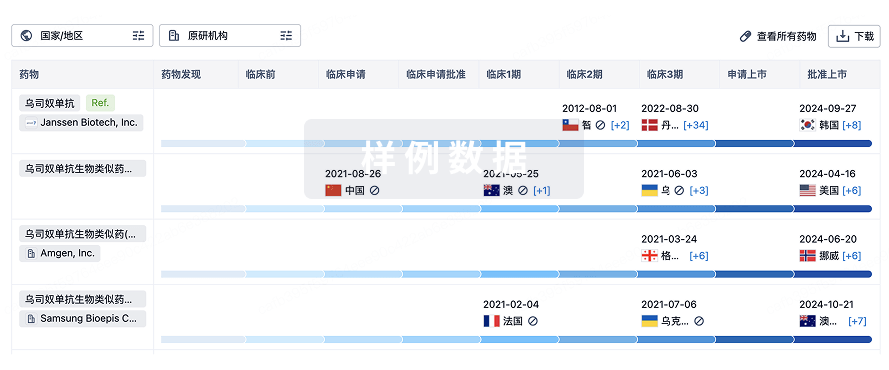
生物类似药
生物类似药在不同国家/地区的竞争态势。请注意临床1/2期并入临床2期,临床2/3期并入临床3期
登录
或
特殊审评
只需点击几下即可了解关键药物信息。
登录
或

提出任何生物医药研究问题
让每一步生物医药决策都精准制胜
基于十亿级生物数据与全球情报的精准 AI,赋能早期药物发现
立即开始免费试用!
智慧芽新药情报库是智慧芽专为生命科学人士构建的基于AI的创新药情报平台,助您全方位提升您的研发与决策效率。
立即接入生物医药数据包
智慧芽新药库数据也通过智慧芽开放平台,以MCP或API服务形式对外开放。立即使用我们的MCP服务定制您的LLM智能体。
生物序列数据库
生物药研发创新
免费使用
化学结构数据库
小分子化药研发创新
免费使用