预约演示
更新于:2026-02-08
PF-9601N
更新于:2026-02-08
概要
基本信息
在研机构- |
权益机构- |
最高研发阶段无进展药物发现 |
首次获批日期- |
最高研发阶段(中国)- |
特殊审评- |

关联
100 项与 PF-9601N 相关的临床结果
登录后查看更多信息
100 项与 PF-9601N 相关的转化医学
登录后查看更多信息
100 项与 PF-9601N 相关的专利(医药)
登录后查看更多信息
153
项与 PF-9601N 相关的文献(医药)2025-12-01·Movement Disorders Clinical Practice
Foslevodopa/Foscarbidopa Continuous Subcutaneous Infusion in Parkinson's Disease: Real‐World Short‐Term Data on Tolerability, Infusion Rate Adjustments and Concomitant Medication
Article
作者: Gruber, Doreen ; Rukavina, Katarina ; Ebersbach, Georg
Abstract:
Background:
Foslevodopa/foscarbidopa (LDp/CDp) significantly reduced motor fluctuations in people with Parkinson's disease (PwP) in clinical trials, but its real‐world tolerability and optimal dosing remain unclear.
Objectives:
To assess tolerability, dosing patterns, and modifications to concomitant medication with LDp/CDp in clinical practice.
Methods:
A single‐center retrospective cross‐sectional analysis.
Results:
The LDp/CDp was initiated in 53 PwP (41% women, mean age 66 ± 11.3 years, mean disease duration 14.1 ± 5.7 years, median H&Y 4 (3–5); history of cognitive impairment: 40%, history of psychosis: 62%, previous device aided therapies failure: 39%). After an optimization period (18.4 ± 6.8 days), the mean Base hourly infusion rate was significantly higher than recommended (0.39 ± 0.18 vs. 0.32 ± 0.13 ml/h,
p
< 0.001) and the LDp/CDp was co‐administered with MAO‐B‐inhibitors (50%), COMT‐inhibitors (44%), and dopamine agonists (12%). Adverse events occurred in 40%: skin reactions (31%), psychosis (8%), falls (2%), and nausea (2%). Thirteen patients discontinued therapy.
Conclusions:
LDp/CDp may be an effective and well‐tolerated non‐surgical option for managing motor fluctuations in PD, though higher dosing and combination therapy are often required.
2025-10-01·Pharmacology Research & Perspectives
The MAO ‐B Inhibitor Selegiline Reduces the Viability of Different Prostate Cancer Cell Lines and Enhances the Effects of Anti‐Androgen and Cytostatic Agents
Article
作者: Tóth, Norbert ; Kálai, Tamás ; Pohóczky, Krisztina ; Steib, Anita ; Kun, József ; Kormos, Viktória ; Mátyus, Péter ; Mangel, László ; Helyes, Zsuzsanna
ABSTRACT:
The current treatments for advanced prostate adenocarcinoma (PAC) include the androgen receptor antagonist enzalutamide and docetaxel‐based chemotherapy. Elevated monoamine oxidase‐A (MAO‐A) mRNA expression and activity in tumorous prostate positively correlate with disease progression and therapy resistance. While MAO‐B mRNA expression was also demonstrated in PAC cell lines, its role remained unclear. Therefore, this study evaluates the effects of the irreversible MAO‐B inhibitor selegiline and rasagiline and their combinations with conventional therapies on androgen‐insensitive (PC‐3, DU145) and androgen‐sensitive (22Rv1, LNCaP, VCaP) PAC cell lines. MAO activity was determined by the MAO‐Glo luminescence assay, viability by the ATP‐based chemiluminescence method, proliferation by the Luna‐II automated cell counter, and mRNA expressions by RT‐qPCR. MAO‐B mRNA was stably expressed by all PAC cell lines, with the highest expression in 22Rv1 and LNCaP cells. Selegiline reduced MAO‐B activity by 75%–80% and decreased cell counts by 40%–50% at 100 μM in PC‐3 and 22Rv1 cells. Selegiline concentration‐dependently inhibited cell proliferation (100 μM–10 mM) and reduced viability (1–10 mM) similar to rasagiline in all cell lines. Combination with enzalutamide in 22Rv1, and with docetaxel in PC‐3 demonstrated potentiating and additive effects, respectively. Selegiline reduced FOXA1 and GLUT1 mRNA expressions related to cancer progression and metabolism in both cell lines, increased the apoptosis‐related BAX in PC‐3, and decreased AR, EGFR, and SNAI2 in 22Rv1 linked to proliferation and metastasis. These findings suggest potential for selegiline repurposing in both androgen‐sensitive and ‐insensitive PAC therapy by promoting apoptosis and inhibiting cancer growth and survival signals, respectively.
2025-07-01·Alzheimers & Dementia-Translational Research & Clinical Interventions
Cognitive effects of dopaminergic treatment in Alzheimer's disease: Systematic review and meta‐analysis
Article
作者: Del Giovane, Martina ; Estrada Obeso, Marta ; David, Michael C. B. ; Bonet Olivares, Cristina ; Malhotra, Paresh A. ; Reeves, Suzanne
Abstract:
INTRODUCTION:
Despite advances in disease‐modifying drugs, better treatments for symptomatic Alzheimer's disease (AD) are needed, with dopaminergic neurotransmission representing a potential target. The objective of this systematic review and meta‐analysis was to evaluate the efficacy of drugs with predominantly dopaminergic action in improving cognitive symptoms in AD.
METHODS:
The MEDLINE, Embase, and ClinicalTrials.gov databases were searched from 1980 to January 2023. We used random effect models to generate pooled effect estimates
RESULTS:
We included 19 prospective randomized controlled AD trials (1408 total participants), of which 7 were of “good” quality, 8 “fair,” and 4 “poor.” All were included in the analysis. The overall pooled effect was small but showed a significant positive effect of dopaminergic drugs compared to placebo (standardized mean difference [SMD]: 0.33, 95% confidence interval [CI]: 0.08 to 0.59,
P
= 0.01;
I2
= 79%). Significance remained after removing outliers to account for heterogeneity. When exploring subgroups (divided by mechanism of action), 5 trials of dopamine reuptake inhibitors did not show a significant effect on cognition, whereas 12 monoamine oxidase B (MAO‐B) inhibitor trials showed a moderately significant positive effect (SMD: 0.52, 95% CI: 0.13 to 0.90,
P
= 0.01;
I2
= 84%).
DISCUSSION:
We show evidence of the benefit of dopaminergic medications, specifically MAO‐B inhibitors, on cognitive symptoms in AD. Several studies included here also used drugs with both noradrenergic and dopaminergic action, highlighting a potential dual stimulation that could lead to better clinical efficacy. Trials targeting well‐defined patient populations, ideally supported by biomarker evidence of dopaminergic dysfunction, are needed to compare noradrenergic and dopaminergic agents—both separately and in combination—on cognitive function to maximize treatment effects. Particularly, further research should explore the impact of MAO‐B drugs on specific aspects of cognitive function to better understand their mechanism given the upregulation of MAO‐B expression in AD.
Highlights:
We conducted a meta‐analysis investigating the efficacy of dopaminergic drugs in improving cognitive symptoms in Alzheimer's disease (AD).Our findings highlight the potential cognitive benefits of dopaminergic medications, particularly monoamine oxidase B inhibitors, in AD.Future trials are warranted and could focus on biomarker‐defined patient groups to enhance effectiveness.
100 项与 PF-9601N 相关的药物交易
登录后查看更多信息
研发状态
10 条进展最快的记录, 后查看更多信息
登录
| 适应症 | 最高研发状态 | 国家/地区 | 公司 | 日期 |
|---|---|---|---|---|
| 帕金森病 | 药物发现 | 西班牙 | - |
登录后查看更多信息
临床结果
临床结果
适应症
分期
评价
查看全部结果
| 研究 | 分期 | 人群特征 | 评价人数 | 分组 | 结果 | 评价 | 发布日期 |
|---|
No Data | |||||||
登录后查看更多信息
转化医学
使用我们的转化医学数据加速您的研究。
登录
或
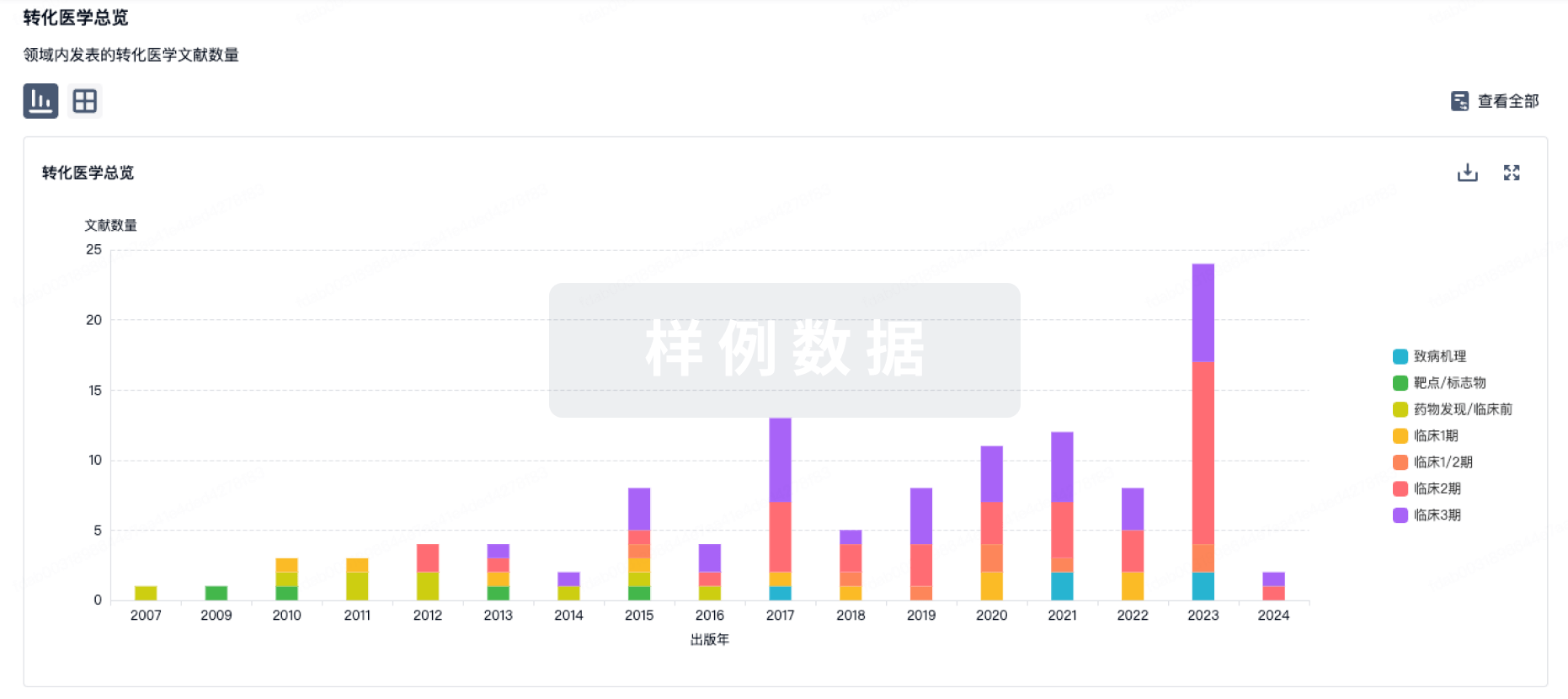
药物交易
使用我们的药物交易数据加速您的研究。
登录
或
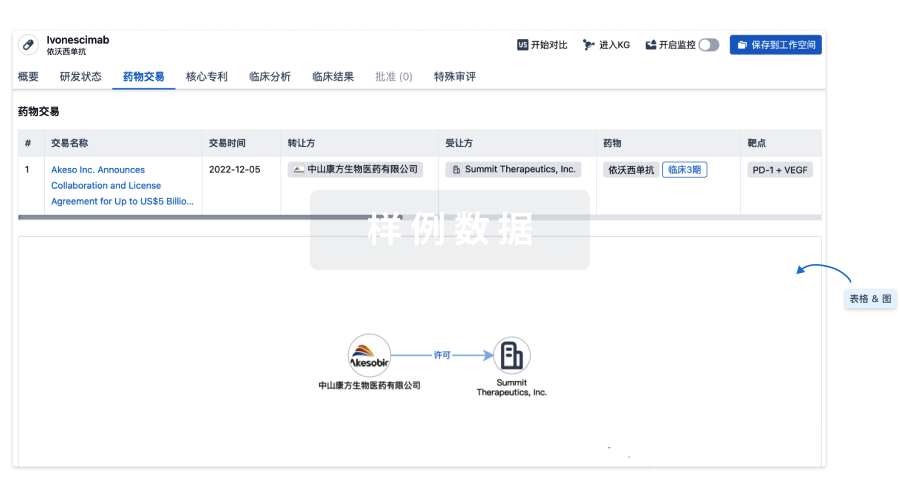
核心专利
使用我们的核心专利数据促进您的研究。
登录
或
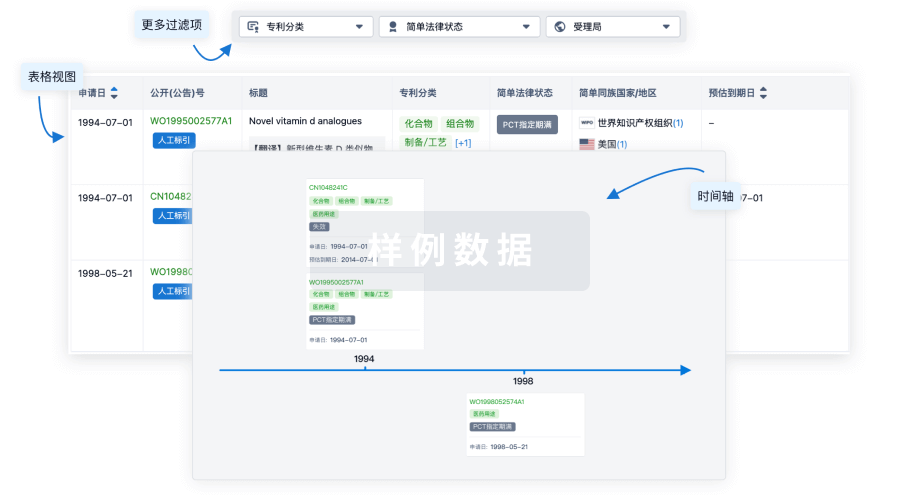
临床分析
紧跟全球注册中心的最新临床试验。
登录
或
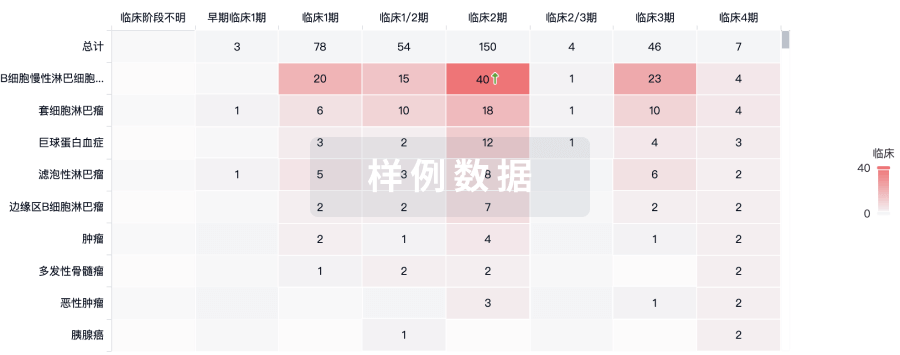
批准
利用最新的监管批准信息加速您的研究。
登录
或
特殊审评
只需点击几下即可了解关键药物信息。
登录
或
生物医药百科问答
全新生物医药AI Agent 覆盖科研全链路,让突破性发现快人一步
立即开始免费试用!
智慧芽新药情报库是智慧芽专为生命科学人士构建的基于AI的创新药情报平台,助您全方位提升您的研发与决策效率。
立即开始数据试用!
智慧芽新药库数据也通过智慧芽数据服务平台,以API或者数据包形式对外开放,助您更加充分利用智慧芽新药情报信息。
生物序列数据库
生物药研发创新
免费使用
化学结构数据库
小分子化药研发创新
免费使用